
How Much Does It Cost to Pressure Wash a Driveway
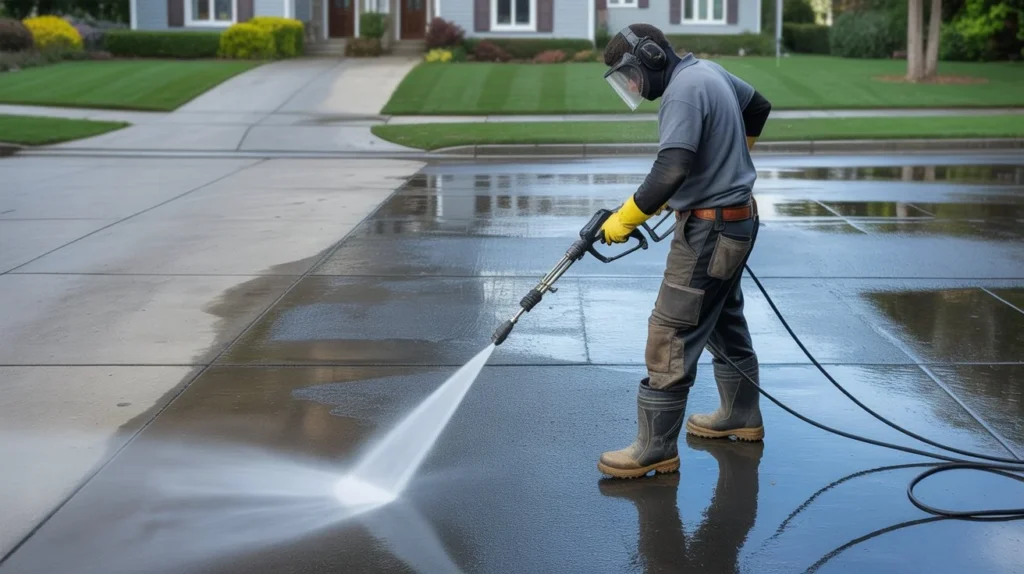
A clean driveway improves curb appeal and helps prevent long-term surface damage. Dirt, oil stains, mold, and algae build up over time. Pressure washing removes these layers and restores the original look of the surface. Many homeowners schedule this service once or twice a year to maintain property value and safety. How Much Does It Cost to Pressure Wash a Driveway depends on size, condition, and service type. Most homeowners spend between $100 and $350. Larger or heavily stained driveways cost more due to extra labor and cleaning time. Typical Cost Range Average Cost to Pressure Wash a Driveway Here is a quick breakdown of what you can expect to pay: Driveway Size Estimated Cost Small (1-car, ~400 sq ft) $80 – $130 Medium (2-car, ~600 sq ft) $130 – $200 Large (3-car+, ~1,000 sq ft) $200 – $350 Extra-large / circular $300 – $500+ Most contractors charge by the square foot, usually $0.15 to $0.35 per square foot. Some charge a flat rate per job, especially for standard residential driveways. If you are searching for a local driveway washing service Tracy CA, VJ Pressure Washing offers transparent pricing with no hidden fees. You can get a free quote based on your exact driveway size and condition. The national average for pressure washing driveway cost sits around $180 to $220 for most homes. That price includes labor, water, and equipment. It does not include add-ons like sealing or stain treatment. Factors That Affect Driveway Pressure Washing Costs A dirty driveway stands out. Oil stains, mold, and grime build up fast, especially in wet climates. The good news? Pressure washing fixes all of it in a few hours. Costs are lower than most homeowners expect, and the results are instant. So, how much does it cost to pressure wash a driveway? Most homeowners pay between $100 and $300. The average lands around $180 for a standard two-car driveway. Your final price depends on size, material, condition, and where you live. Average Cost to Pressure Wash a Driveway No two driveways are the same. Several things push your price up or down. Driveway Size The bigger the driveway, the higher the cost. Most pros measure in square feet and charge accordingly. A 400 sq ft driveway costs far less than a 1,200 sq ft one. Level of Dirtiness Heavy staining, oil buildup, mold, or algae takes more time and product to remove. Expect to pay 20–40% more for badly neglected driveways. Driveway Material Concrete, asphalt, brick, and pavers all clean differently. Some need lower pressure to avoid damage. More delicate surfaces require extra care and time. Location Labor rates vary by city and region. Urban areas and high cost-of-living cities tend to charge more. Rural areas are often cheaper. Access and Layout A tight driveway with fencing or landscaping close by takes longer. Wide, open driveways are faster to clean. Additional Services If you add sealing, degreasing, or mold treatment, the price goes up. These are worth it in many cases, but they add to the base cost. Driveway Pressure Washing Costs by Material Different surfaces need different treatment. Here is what to expect for each: Concrete Driveways Concrete is the most common material. It handles high-pressure water well. Cleaning costs range from $0.15 to $0.30 per square foot. A typical concrete driveway runs about $120 to $220 total. Asphalt Driveways Asphalt is softer than concrete. Too much pressure can damage it. Professionals use lower PSI settings and charge slightly more for the extra care. Expect $130 to $250 depending on size. Brick and Paver Driveways These take more time. Grout lines trap dirt and require careful, targeted cleaning. Costs range from $0.25 to $0.45 per square foot or $150 to $350+ for a full driveway. Gravel Driveways Pressure washing is rarely used on gravel because it displaces the stones. If you have gravel, ask about alternative cleaning methods. Additional Costs and Services The base power wash driveway cost covers basic cleaning. But some jobs need extras. Add-On Service Typical Cost Concrete sealing $100 – $250 Oil/grease stain treatment $20 – $75 Mold and mildew treatment $25 – $80 Rust stain removal $30 – $100 Edging and curb cleaning $20 – $50 Dumpster pad or apron cleaning $40 – $100 Sealing after pressure washing is the most popular add-on. It protects concrete from future stains and extends the life of your driveway. If you plan to seal, do it right after washing while the surface is clean and open. DIY vs. Hiring a Professional You have two options: rent a pressure washer and do it yourself, or hire a pro. Both have merit. Here is an honest comparison. DIY Cost Breakdown Pressure washer rental: $50 – $100 per day Cleaning detergent: $10 – $30 Your time: 2 to 4 hours Total: $60 – $130 (not counting your time) DIY works well if you are comfortable with equipment and your driveway is in decent shape. But there are real risks. Using the wrong PSI on asphalt or pavers can cause permanent damage. Without proper technique, you can leave streaks or uneven patches. Hiring a Pro A professional team like VJ Pressure Washing brings commercial-grade equipment, the right cleaning agents, and years of hands-on experience. Our team finishes the job faster and delivers better results on tough stains, oil spots, and heavy buildup. The cost to power wash driveway surfaces professionally usually ranges from $100 to $350 depending on the driveway size, material, and condition. When to hire a pro: Your driveway has oil stains, rust, or heavy mold You have pavers, brick, or an older asphalt surface You do not want to risk damaging the surface You want sealing done at the same time When DIY makes sense: Your driveway is lightly soiled and in good shape You have experience with pressure washers You want to save money on a simple job Signs Your Driveway Needs Pressure Washing Not sure if it is time to clean? Look for these signs: Dark staining
Why Gutter Cleaning is Important
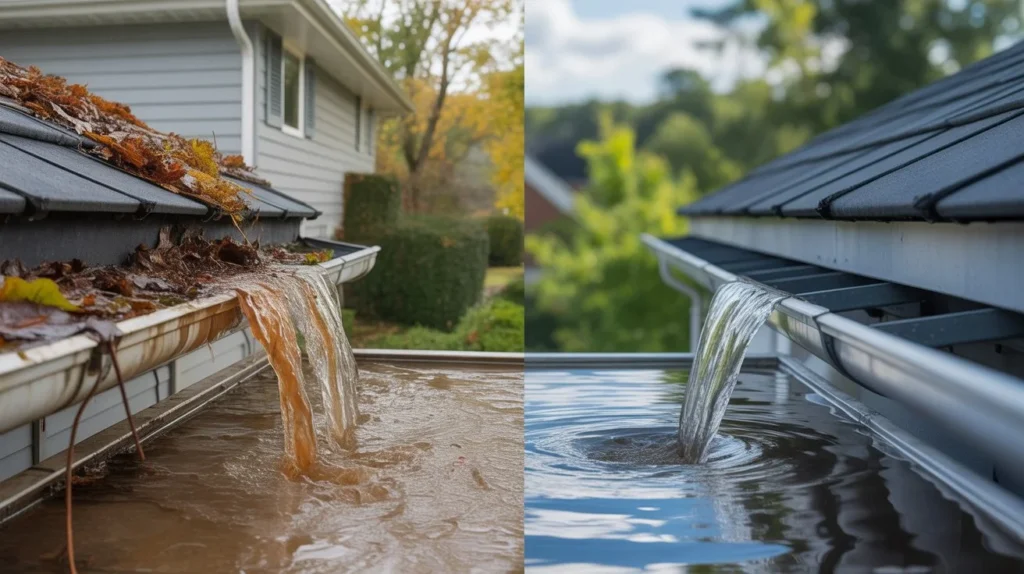
Most homeowners focus on what they can see. Clean floors, painted walls, a mowed lawn. But gutters sit quietly above it all, doing one of the most important jobs on your property. When they get clogged, the damage spreads fast and quietly. Water backs up, seeps into walls, and destroys foundations before you even notice. A few hours of neglect can turn into thousands of dollars in repairs. Understanding why gutter cleaning is important could be the single best thing you do for your home this year. Clean gutters protect your roof, your walls, your foundation, and your family. This guide covers every reason you need to take gutter maintenance seriously and what happens when you do not. What Do Gutters Actually Do? Gutters channel rainwater away from your home. That is their only job. But that one job protects nearly every part of your property. Without gutters, rainwater falls directly off your roof and pools around your foundation. With clogged gutters, the same thing happens. Water overflows the sides and goes exactly where it should not go. A healthy gutter system moves water from your roof, through the downspout, and away from your home’s structure. When leaves, twigs, dirt, and debris block that path, water has nowhere to go but over the edge or backward under your roofline. Prevents Water Damage to Your Home Water is the number one enemy of any home structure. Clogged gutters cause water to overflow and run down the sides of your house. Over time, this soaks into your siding, your walls, and your interior. Here is what water damage from clogged gutters looks like in real life: Water stains on interior ceilings and walls Peeling paint on exterior siding Rotting wood around window frames and doors Warped or damaged drywall inside the home Wet insulation that loses its effectiveness One clogged gutter can direct hundreds of gallons of water toward your home during a single heavy rainstorm. That water does not disappear. It finds the path of least resistance and works its way into your structure. The importance of cleaning gutters regularly cannot be overstated when it comes to water damage prevention. It is one of the most cost-effective ways to protect your home. Protects Your Roof Life Your roof is one of the most expensive parts of your home to replace. A full roof replacement can cost anywhere from $8,000 to $25,000 depending on the size and materials. Keeping your gutters clean is one of the simplest ways to extend your roof’s life. When gutters clog, water pools on the edge of the roof. This is called roof ponding. Standing water seeps under shingles, softens the decking beneath, and causes rot. In winter, clogged gutters cause ice dams. Ice dams form when melting snow refreezes at the roof’s edge, forcing water back under the shingles. The benefits of gutter cleaning for your roof are direct and measurable. Clean gutters mean water moves off the roof quickly. No pooling. No ice dams. No premature shingle damage. At VJ Pressure Washing, we see roof edge damage regularly on homes with neglected gutters. If you are in the area and need professional gutter cleaning tracy ca services, getting this done before the rainy season can add years to your roof’s life. Avoids Foundation Problems This is where gutter neglect gets truly expensive. Foundation repairs are among the most costly home repairs a homeowner will ever face. Costs can range from $5,000 to over $50,000 depending on the severity. Here is how clogged gutters damage your foundation. When water overflows from a blocked gutter, it pools around the base of your home. The soil around your foundation absorbs this water and expands. When it dries, it contracts. This repeated cycle of expansion and contraction puts enormous pressure on your foundation walls. Over time this causes: Cracks in the foundation Bowing or leaning foundation walls Uneven or sinking floors inside the home Doors and windows that stick or no longer close properly Clean gutters direct water at least 6 to 10 feet away from your foundation through properly positioned downspouts. That distance makes all the difference. Why clean out gutters regularly? This reason alone is enough. Foundation damage is silent, slow, and devastating to both your home’s structure and its resale value. Prevents Pest and Insect Infestation Clogged gutters are not just a water problem. They are a pest problem too. Wet leaves, standing water, and decomposing debris create the perfect environment for insects and pests to nest. Here is what moves in when gutters stay clogged: Mosquitoes breed in standing water. Even a small amount of trapped water in a gutter is enough for a mosquito colony to thrive. Carpenter ants are attracted to damp, rotting wood. Clogged gutters that cause water to back up into your fascia boards give carpenter ants exactly what they need. Rodents like mice and squirrels use debris-filled gutters as nesting spots. Once they are in the gutters, they often find their way into the attic. Birds build nests in clogged gutters. While less harmful, bird nests block water flow and make the problem worse. Regular gutter cleaning removes the debris and standing water that these pests depend on. It is a simple step that keeps your home less attractive to unwanted visitors. Stops Mold and Mildew Growth Mold needs three things to grow: moisture, a surface, and warmth. Clogged gutters provide all three. When water overflows from a blocked gutter and runs down your siding or seeps into your walls, it creates persistent moisture. Mold and mildew begin to grow within 24 to 48 hours of a surface staying wet. Mold is not just a cosmetic issue. Black mold and other strains produce spores that affect indoor air quality. For people with allergies, asthma, or respiratory conditions, mold inside the home is a serious health risk. Removing mold from interior walls is expensive and disruptive. Preventing mold by keeping gutters clean costs a fraction of the price. This is