
What does a house wash include?
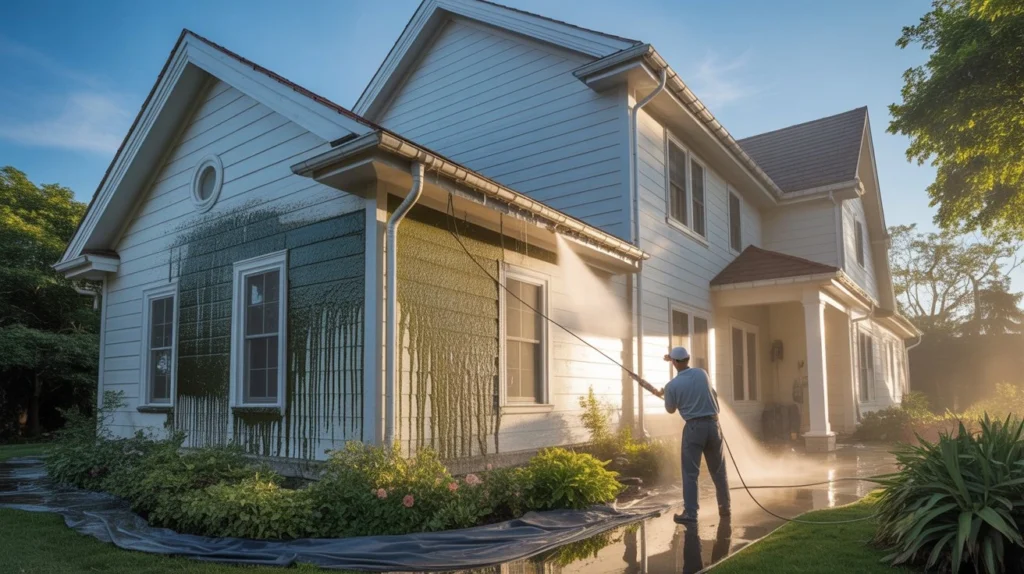
A house wash includes pressure washing or soft washing of your siding, soffits, gutters, windows, and walkways to remove dirt, mold, and grime. Most professional packages also cover light fixtures, the front porch, and outdoor furniture spots. So what does a house wash include exactly? It depends on the company, but a solid service hits every visible surface on your home’s exterior. If you’re getting quotes from house washing services, knowing what’s included helps you compare them fairly. Some companies do the bare minimum. Others go all in. Let’s break down what you should expect. What Is a House Wash? A house wash is an exterior cleaning service that removes dirt, algae, mold, pollen, and grime from your home’s outside surfaces. It’s different from just blasting your siding with a garden hose. Most companies use one of two methods: pressure washing or soft washing. Pressure washing uses high water pressure to strip away buildup. Soft washing uses lower pressure combined with cleaning solutions to kill mold and mildew at the root, not just rinse it off the surface. Your home’s siding material matters here. Vinyl siding can usually handle higher pressure. Stucco, wood siding, and painted surfaces often need the gentler soft wash approach to avoid damage. A good company checks your siding type before picking a method. What Does a Standard House Wash Include? A standard house wash covers the main exterior surfaces of your home. Here’s what’s typically part of the package: Siding cleaning comes first. This is the biggest part of the job since siding covers the most surface area and collects the most grime over time. Soffits and fascia get washed too. These are the parts under your roofline, and they trap spider webs, dust, and mildew that you can’t easily reach yourself. Window exteriors are usually included, at least a basic rinse to remove dirt and water spots. Some companies offer detailed window cleaning as an add-on. Gutter exteriors (not the inside) often get a once-over to remove streaking and grime buildup. Walkways and porches near your front entrance are typically cleaned as part of the package since they’re the first thing visitors see. This is the core of what does a house wash include for most companies. Anything beyond this list is usually an upgrade or add-on service. Areas Commonly Cleaned During a House Wash Beyond the basics, here’s where pros usually focus their attention: Vinyl, wood, brick, or stucco siding – the main surface getting treated, regardless of material. Soffits and eaves – these collect cobwebs and mildew that build up out of sight. Window frames and screens – exterior glass and frames get rinsed, though interior cleaning isn’t included. Garage doors – often overlooked by homeowners but easy for grime to collect on. Front porch and entryway – first impression areas that get extra attention. Outdoor light fixtures – wall-mounted lights collect dust and bugs over time. Driveways and walkways (sometimes as an add-on) – concrete surfaces near the house. Deck or patio areas attached to the home – depending on the package, this might be bundled in or sold separately. Knowing this list helps when you’re trying to figure out the best way to wash outside of house surfaces without missing spots that matter. What Is Usually Not Included in a House Wash? Not everything gets cleaned during a standard house wash. Here’s what’s commonly left out unless you ask for it specifically: Roof cleaning is its own service. Most house washing companies don’t include roof cleaning because it requires different equipment and safety precautions. Gutter interior cleaning (removing leaves and debris from inside the gutter) is usually a separate add-on, not part of the standard wash. Window interior cleaning almost never makes the list. House washing focuses on the outside, so interior glass stays untouched. Detailed power washing of large concrete areas like full driveways or large patios sometimes costs extra, depending on square footage. Fence cleaning is often optional too, especially if your fence isn’t directly attached to the house. Always ask your provider directly what’s bundled in and what costs more. This avoids surprise charges after the job is done. How Do Professionals Wash a House? Professional house washing follows a process that protects your home while getting it clean. Here’s how it usually works. First, the technician inspects your siding and identifies problem areas like mold, mildew, or heavy staining. This step decides whether they’ll use pressure washing or soft washing. Next, they apply a cleaning solution if soft washing is the method. This solution breaks down mold, algae, and grime before rinsing. Then comes the rinse. Using a pressure washer set to the right PSI for your siding material, they rinse from top to bottom. Working top down prevents dirty runoff from re-staining areas already cleaned. After the main wash, they spot check problem areas like corners, under eaves, and around windows where grime tends to hide. Finally, they do a walk-around to inspect the finished job and make sure nothing was missed. This process is why DIY attempts sometimes go wrong. Using too much pressure or the wrong angle can crack siding, force water behind panels, or strip paint. Benefits of Professional House Washing Hiring a professional comes with real advantages beyond just convenience. Better curb appeal. A clean exterior makes your whole property look newer and better maintained. This matters if you’re selling or just want your home to look good. Protects your siding investment. Mold, algae, and grime slowly damage siding over time if left untreated. Regular washing extends the life of your exterior materials. Prevents pest issues. Spider webs, wasp nests, and other pest hideouts get knocked down during a house wash, which can reduce pest problems near your home. Saves you time and effort. Washing a two-story home yourself with a ladder and pressure washer is risky and time consuming. Pros have the right equipment and experience to do it faster and safer. Identifies hidden issues. A good technician often
Can I Powerwash in October? Your Complete Fall Guide
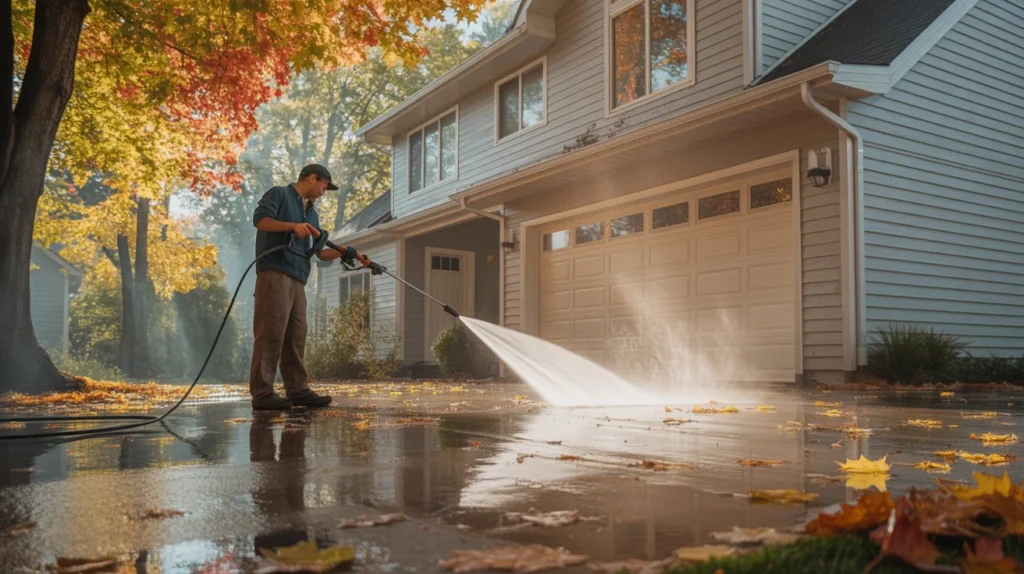
Fall is a great time to clean your home’s exterior. Leaves are falling, mud is building up, and winter is just around the corner. Getting ahead of that mess now can protect your siding, driveway, and deck from long-term damage. So, can I powerwash in October? Yes, you absolutely can. October is actually one of the best months to power wash, as long as temperatures stay above 40°F and no rain is expected for 24 to 48 hours after the job. What Is Power Washing? Power washing uses heated, high-pressure water to blast away dirt, grime, mold, algae, and stains from surfaces. The heat makes it more effective than cold-water pressure washing, especially on grease and oil. It works well on: Concrete driveways and sidewalks Vinyl, wood, and brick siding Decks and patios Fences Roofs (with the right technique) Power washing is not the same as pressure washing. Pressure washing uses cold or room-temperature water. Power washing uses heated water. Both clean well, but power washing cuts through tougher buildup faster. Can You Powerwash in October? Yes. October is a solid month for power washing in most parts of the United States. Here’s why it works. By October, summer algae and mold have had months to build up on your home’s exterior. Cleaning it now stops it from spreading further during wet fall and winter months. If you live in Tracy, CA, or similar climates in Central California, October is one of the best times of year to wash. Temperatures are mild, humidity is low, and rain is rare. Services like VJ Pressure Washing handle house power washing in Tracy, CA regularly in October because the conditions are nearly perfect. In colder states like Minnesota or Maine, you need to be more careful. If overnight temps drop below freezing, water can get into cracks and freeze, which makes existing damage worse. Bottom line: October works for most homeowners. Just check your local 5-day forecast before booking or starting. Ideal October Weather for Power Washing Temperature and weather are the two biggest factors. Here’s what to look for. Temperature The water needs time to dry after washing. Surfaces hold moisture longer when it’s cold. Aim for days where the temperature stays above 40°F throughout the day and the following night. If temps drop close to freezing right after you wash, standing water in cracks can expand and cause cracks in concrete or siding. No Rain Plan your wash on a day when no rain is forecast for at least 24 to 48 hours afterward. Washing right before rain is pointless. The rain will undo the work and leave surfaces wet longer than needed. Wind Light wind is fine. It actually helps surfaces dry faster. Avoid washing on windy days if you’re using cleaning solutions. The chemicals can drift onto plants, cars, or windows. Sunlight Sunny days are ideal. The sun speeds up drying and helps cleaning solutions activate properly. Early morning or late afternoon cleaning works best. Avoid washing in direct afternoon sun when surfaces are extremely hot, as solutions can dry too fast and leave streaks. What Surfaces Should Be Power Washed in October? Some surfaces need attention more than others going into fall. Here’s a surface-by-surface breakdown. Driveways and Sidewalks Concrete absorbs oil, tire marks, leaves, and moisture over the summer. A good wash in October preps the surface before winter. It also removes leaf stains before they set permanently. Home Siding Algae and mold love to grow on north-facing siding where the sun rarely hits. October is your last good chance to remove it before the cold locks in the moisture and spreads the growth further. Clean siding also improves curb appeal going into the holiday season. Decks and Patios Decks take a beating all summer. Food stains, mildew, bird droppings, and algae build up fast. Washing your deck in October, then sealing it, protects the wood from freeze-thaw cycles during winter. This one step can add years to the life of your deck. Fences Wooden fences are prone to mildew and dark staining. Washing before winter keeps the wood in better shape and reduces the need for repainting or staining in spring. Gutters (Exterior) The outside of your gutters collects black streaks from oxidation and organic buildup. October is the perfect time to clean them before they’re full of fall leaves. Roofs Roof washing requires a low-pressure approach (soft washing) to avoid damaging shingles. Black streaks on your roof are algae. Removing them in October protects the shingles through winter and stops further spread. When You Should Avoid Power Washing in October October isn’t perfect for every situation. Here’s when to wait. When temps are below 40°F If your area is already seeing frost or near-freezing nights, hold off. Water in cracks and porous surfaces can freeze and expand, making damage worse. After heavy rain Washing right after a storm is wasteful. Surfaces are already wet and saturated. Wait 24 to 48 hours after rain before washing. On fragile or aging surfaces Old, cracked concrete or weathered wood can’t handle high pressure well. In these cases, use a soft wash approach or hire a professional to assess the surface first. On painted surfaces that need repainting If you’re planning to repaint siding or a deck, wash first. But if the paint is chipping or peeling badly, high pressure will strip it off fast. That may actually be useful if you’re repainting, but it can be a mess if you’re not ready for it. Tips for Safe October Power Washing Follow these practical steps to get the best results without causing damage. Check the forecast first. Pick a 2-day window with no rain and above-40°F temperatures overnight. Use the right pressure for each surface. Concrete handles high pressure (3,000+ PSI). Wood siding needs lower pressure (1,200 to 1,500 PSI). Roofs need soft washing under 1,000 PSI. Apply a cleaning solution before washing. A pre-soak with a surface-appropriate cleaner loosens dirt and kills mold before the water hits.