

Can You Power Wash a Fridge?
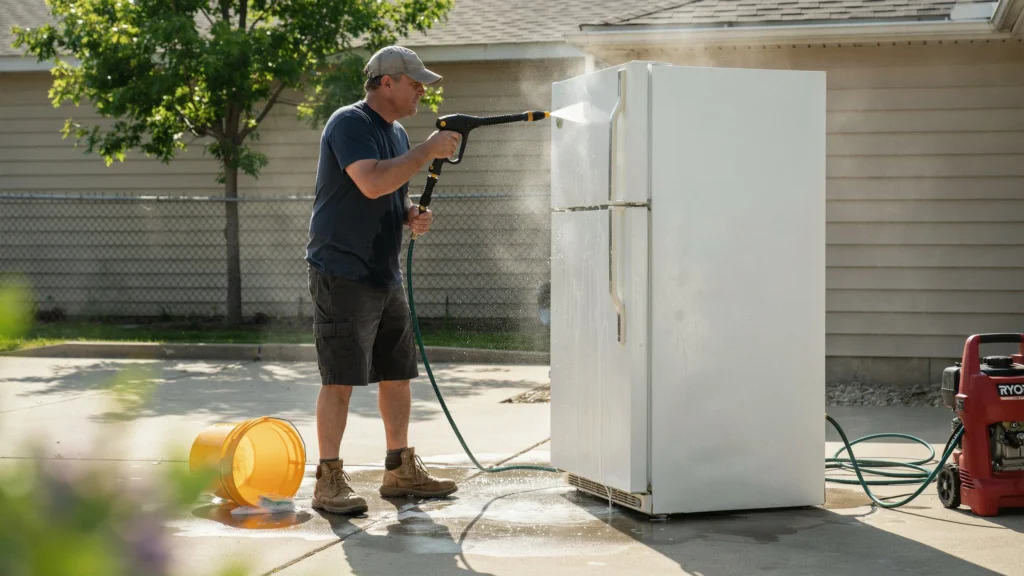
A refrigerator is necessary in the kitchen. From keeping food fresh, drinks cold, and making frozen treats, to perhaps even helping make the kitchen a safe place to work, the refrigerator is a staple in at-home cooking. Since refrigerators come in contact with food spills, dust, grease, and the general daily grime, cleaning and maintenance are required. Some homeowners wondered, “Can I power wash a fridge?” In other words, don’t power-wash your fridge. Unlike outdoor spaces such as your driveway or the side of your home, refrigerators have electrical components and insulation, plus motors and other sensitive parts that could get damaged by water at high pressure. A pressure washer could cause you to have electrical issues, rust, and a fridge that you have had to pay to fix. Can You Power Wash a Fridge? Does a pressure washer clean a refrigerator? Power washing is great for outdoor cleaning, but not kitchen appliances. It’s best to never power wash a fridge because… Water can get into electrical parts. The pressure can force dust and dirt into the seals or insulation Moisture can lead to rust and corrosion Internal components may cease functioning properly Could your appliance be dangerous to you? If it is Morse? Refrigerators are meant to be cleaned with the help of a clean cloth, a mild detergent, and some common sense about maintenance. It is always better to err on the side of caution and be too gentle with your cleaning instead of too harsh with the pressure wash. For exterior surfaces and tough outdoor grime, professional house washing Tracy CA services are a safer and smarter choice. When it’s dirty, the answer is to scrub it with your hands, not with power washing. How to Clean a Refrigerator Safely Safe cleaning techniques for the refrigerator ensure the protection of both your appliance and your food. They say a well cleaning routine will remove bacteria, odors, and buildup without damage to your appliance. Following are the steps to clean a refrigerator safely safe to clean refrigerator 1: Unplug the Refrigerator. Please remember to always unplug the outlet in English! Before cleaning deeply, unplug your refrigerator from the wall. This minimizes the chance of an electrical problem and enables you to clean safely. Quick cleaning: You probably don’t need to unplug the appliance for regular quick cleanings, but for a deep cleaning it’s best to turn the power off. 2: Take Everything Out and Toss First Things First, you need to take everything out of your fridge and check the expiration dates. Throw away any that are spoiled and place any products that need refrigeration in a cooler. Taking food off the shelves also makes it easier to clean the shelves and drawers and scrub the corners. 3: Drain and rinse all in warm water with a few drops of mild dish soap. Let the glass shelves warm up to room temperature before cleaning, as temperature shocks can cause them to shatter. 4: Clean Inside Surfaces Clean inside surfaces Twice a week, clean the inside surfaces with a baking soda solution. Make a paste of half a cup of baking soda with a quart of warm water, and use a clean cloth or sponge to apply the paste. Wipe out the following with a clean cloth: Walls Shelves Door compartments Drawers Seals around the door Avoid harsh chemicals that may have toxic residues near your food storage. 5: Everything Should Be Dry After Cleaning. Before you handle food again, everything had better be dry. Excess moisture can lead to mold growth and bad odors. Cleaning Refrigerator Coils A quick tip (and yes, I’ve seen skinks do this!) is that you clean the coils. Coils of the refrigerator are usually found at the back or bottom of the unit. They release heat, so the fridge can remain cool at the correct temp Striped coils on the back or underneath your fridge are part of its cooling system, but when they get covered in dust and grime, it makes the fridge work harder. This may cause: An increase in your energy bill. Decreased cooling capacity Overheating Reduced life expectancy of the appliance How to Clean Refrigerator Coils Follow these steps: Unplug the refrigerator. / Locate the coils. / Vacuum up any dust that is loose. For Any Stubborn Dirt That’s Stuck, Use a Coil Cleaning Brush. Clean up the area around you. Tuck it into the fridge. Coils must be cleaned well, as they are an important component of the cooling system. HOW DO I CLEAN A FRIDGE? How do you clean inside your fridge? Keep away from: Pressure washers Abrasive scrubbers Harsh chemicals Excess water It should clean well and not harm the materials and electrical parts of the refrigerator. Refrigerator Maintenance Tips Following some basic refrigerator maintenance guidelines can boost its performance and avoid some of the common issues. 1: Keep the door seals clean. The rubber seals on your fridge door must help to keep the cold air in. Cooling issues may result if the seals are dirty or damaged. Clean them with a warm cloth and water regularly. 2: Don’t Pack the Fridge too Full. A fridge requires good airflow to ensure a consistent temperature. Overcrowded shelves can impede airflow. 3: Verify temperature settings Maintain your refrigerator at the proper temperature to keep your food safe and your energy bills low. 4: Clean spills at once Spills are easy to clean with your towels before it dries. Cleaning spills immediately will prevent odors and sticky residue. 5: Defrost If Needed A few fridges need to have the ice taken off every now and then. Too much ice build-up can impair performance. 6: Look for Unusual Problems Watch For: Off sounds Leaks of water No or poor cooling Too much frost Early attention can stop bigger issues Conclusion So, is it safe to use a power washer on a fridge? No, applying water under high pressure to clean a fridge isn’t any sort of safe cleaning