How to Remove Graffiti Fast: 7 Proven Methods That Actually Work

Graffiti can show up overnight and turn a clean wall into an eyesore. Whether it’s on your fence, brick wall, or storefront, the longer it sits, the harder it gets. The good news? You don’t always need a professional to fix it. Learning how to remove graffiti the right way saves you time and money. This guide covers every surface, every method, and every mistake to avoid so you can get your property looking clean again. What Is Graffiti and Why It’s Hard to Remove Graffiti is spray paint, markers, or other paint applied to surfaces without permission. It bonds quickly with porous surfaces like brick and concrete. Paint soaks into tiny gaps in the material, making it tough to lift out. The type of paint matters. Aerosol spray paint is oil-based and designed to stick. Permanent markers are alcohol-based. Both resist regular soap and water completely. Surface type also plays a role. Smooth surfaces like glass or metal are easier to clean. Rough or porous surfaces like brick, stone, and concrete hold paint deep inside the material. This is why graffiti removal is not as simple as wiping something down. The age of the graffiti also matters. Fresh graffiti from the past few hours is far easier to remove than paint that has cured for days or weeks. How to Remove Graffiti (Quick Overview) Here’s a simple breakdown of the process: Identify your surface type Choose the right removal method Test on a small hidden area first Apply your cleaner or solvent Scrub or pressure wash Rinse thoroughly Repeat if needed Apply anti-graffiti coating to prevent future vandalism Tools and Materials You’ll Need Before you start, gather your supplies. Having the right tools makes a real difference. For light graffiti: Acetone or nail polish remover Rubbing alcohol Graffiti remover spray (commercial grade) Soft cloths or rags Stiff-bristle brush Bucket of warm water For heavy graffiti: Pressure washer (1,500–3,000 PSI) Chemical graffiti stripper Wire brush (metal surfaces only) Safety gloves and eye protection Respirator mask (for enclosed spaces) Paint thinner or mineral spirits For finishing: Matching paint (for repainting) Anti-graffiti coating or sealant Painter’s tape (if painting over) Always wear gloves and eye protection when working with chemicals. Work in a well-ventilated area. How to Remove Graffiti from Different Surfaces Different surfaces need different approaches. Here’s how to handle the most common ones. Brick and Concrete These are the hardest surfaces to clean because they’re porous. Paint sinks into the material. Method: Apply a commercial graffiti remover or gel-based stripper Let it sit for 10–15 minutes Scrub with a stiff brush Rinse with a pressure washer at 2,000–3,000 PSI Repeat if paint remains For stubborn stains, a hot water pressure washer works better than cold water. If you’re in the Tracy, California area, tracy graffiti removal by VJ Pressure Washing uses professional-grade hot water systems specifically designed for brick and concrete surfaces. Wood Fences and Surfaces Wood is porous but softer than brick. Be careful not to damage the grain. Method: Try mineral spirits or paint thinner first Rub gently with a cloth in the direction of the wood grain If that doesn’t work, use a commercial graffiti remover Rinse with water and let dry Sand lightly if staining remains Repaint or restain the affected area Avoid wire brushes on wood. They’ll scratch and damage the surface. Metal Surfaces (Fences, Garage Doors, Dumpsters) Metal is non-porous, which makes removal easier. Method: Apply acetone, nail polish remover, or graffiti remover Let it sit for 2–3 minutes Wipe with a cloth or soft-bristle brush Rinse with water For stubborn areas, use a light sandpaper (400 grit) then repaint Avoid steel wool on painted metal. It causes rust. Glass and Windows Fresh graffiti on glass comes off easily. Older graffiti takes more work. Method: Apply acetone or rubbing alcohol to a cloth Rub the graffiti in circular motions For thick paint, use a razor blade scraper at a low angle Wipe clean and rinse with glass cleaner Never use abrasive pads on glass. They’ll scratch permanently. Stucco and Painted Walls These surfaces need a gentler approach to avoid damaging the paint underneath. Method: Try warm soapy water first for fresh graffiti Use a graffiti remover spray designed for painted surfaces Apply, wait 5 minutes, then wipe gently If graffiti remains, painting over is often the best option Plastic Surfaces Plastic is tricky because solvents can melt or warp it. Method: Use a product labeled safe for plastics Try baby wipes or rubbing alcohol first for light marks Avoid acetone it melts most plastics Rinse well after cleaning Best Graffiti Removal Methods 1. Chemical Graffiti Removers These are the most effective commercial solutions. Products like Graffiti Safewipes, Taginator, and Motsenbocker’s Lift Off are designed to break down spray paint fast. Best for: Brick, concrete, metal, wood How to use: Spray or apply to the surface Wait the recommended dwell time (usually 5–15 minutes) Scrub with a brush Rinse thoroughly Always read the label. Some products are not safe for certain surfaces. 2. Pressure Washing Pressure washing alone works on fresh graffiti. Combined with a chemical remover, it handles most cases effectively. Best for: Brick, concrete, stone, metal A pressure washer between 2,000 and 3,500 PSI removes most surface-level paint. Use a 25-degree nozzle for a good balance of power and coverage. Hot water pressure washing is even more effective because heat softens the paint. 3. Baking Soda Blasting This is a gentler alternative to pressure washing. It uses fine baking soda particles blasted at high speed to lift paint without damaging the surface underneath. Best for: Brick, stone, historic surfaces It’s used on surfaces where pressure washing could cause damage. It’s also more environmentally friendly than chemical solvents. 4. Dry Ice Blasting A newer method where dry ice pellets are blasted onto the graffiti. The extreme cold causes the paint to crack and flake off. Best for: Delicate surfaces, heritage buildings It leaves no chemical residue and is non-toxic. It’s typically a professional-only
How Much Does Roof Cleaning Cost
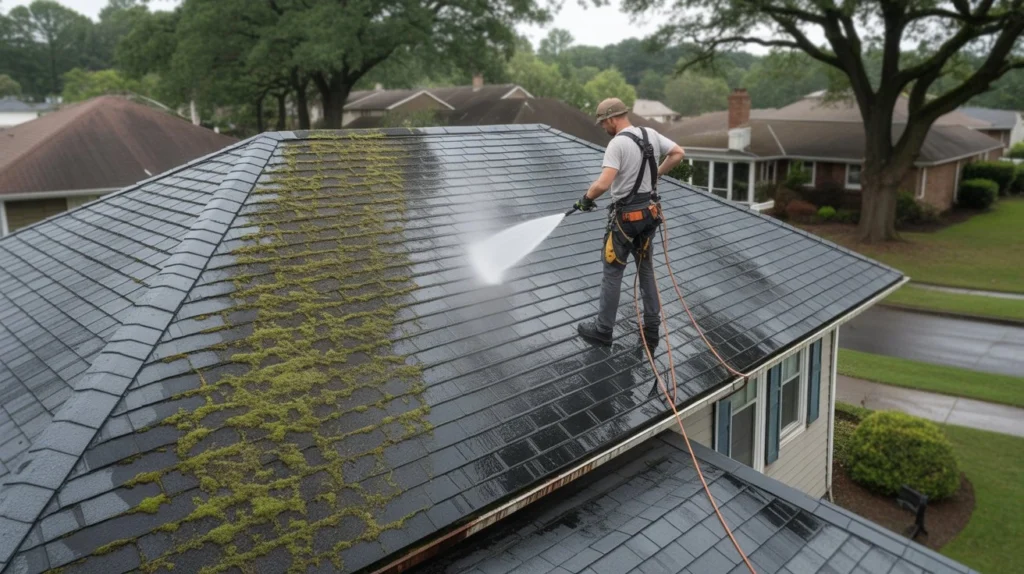
A dirty roof is not just ugly. It can cause real damage over time. Moss, algae, and debris trap moisture and break down your shingles faster than you’d expect. Cleaning your roof now can save you thousands later. So, how much does roof cleaning cost in 2026? Most homeowners pay between $300 and $900, with the average sitting around $500 to $600. The final number depends on your roof size, material, cleaning method, and where you live. This guide breaks it all down clearly. Average Roof Cleaning Cost in 2026 Here’s a simple breakdown of what you can expect to pay: Service Type Average Cost Soft wash cleaning $250 – $600 Pressure wash roof cost $150 – $400 Chemical treatment $200 – $500 Full roof cleaning (large home) $600 – $1,200 Most professional companies charge by square foot. The average rate is $0.20 to $0.70 per square foot. For a 1,500 sq ft roof, expect to pay $300 to $1,050. A 3,000 sq ft roof can run $600 to $2,100. Roof washing cost also varies by region. Urban areas and coastal markets tend to charge more. Rural areas are usually cheaper. Factors That Affect Roof Cleaning Costs At VJ Pressure Washing, we understand that no two roofs are the same. Here’s what can push the price up or down. 1. Roof Size Bigger roofs cost more to clean. Simple as that. Most companies use per-square-foot pricing, so a larger surface area means a higher bill. 2. Roof Pitch and Slope Steep roofs are harder and more dangerous to work on. Contractors charge more for steep pitches because it takes longer and requires more safety equipment. 3. Type of Debris or Growth Light dust or dirt costs less to clean. Heavy moss, black algae streaks, or lichen buildup takes more time and product. Expect to pay 20% to 40% more for heavy growth. 4. Location of Your Home Labor costs differ by city and state. In California, New York, or Seattle, prices are higher. In the Midwest or South, rates tend to be lower. 5. Roof Age and Condition An older roof may need gentler methods to avoid damage. This can add cost, especially if the contractor has to hand-scrub certain areas. 6. Accessibility If your roof is hard to reach or surrounded by landscaping, it adds time to the job. Time equals money in any service industry. 7. Season and Demand Prices can spike in spring and early summer. That’s peak season for roof cleaning. Booking in fall or winter may get you a better deal. Roof Cleaning Methods and Their Costs There are three main cleaning methods. Each works better in different situations. Soft Washing Soft washing uses low water pressure combined with a cleaning solution. It kills moss, algae, and mildew at the root without damaging shingles. Best for: Asphalt shingles, tile, cedar shake Average cost: $250 – $600 Why choose it: Safe, thorough, long-lasting results Pressure Washing Pressure wash roof cost tends to be lower, but it’s not always the safest option. High pressure can crack tiles, strip granules from asphalt, or force water under shingles. Best for: Metal roofs, concrete tiles, flat roofs Average cost: $150 – $400 Why choose it: Fast, effective on hard surfaces Chemical Treatment (Biocidal Wash) This method uses a spray-applied chemical solution. It kills biological growth without any water pressure at all. The dirt rinses off over time with rain. Best for: Delicate roofs, homeowners who want minimal disruption Average cost: $200 – $500 Why choose it: No pressure risk, works over weeks A good contractor will recommend the right method for your roof type. If they push only one option regardless of your roof, that’s a red flag. Roof Cleaning Cost by Roof Type Different materials need different care. Here’s what you’ll typically pay by roof type. Asphalt Shingles The most common roof in the U.S. Soft washing is the preferred method. Average roof cleaning cost runs $300 to $600. Metal Roofs Metal can handle pressure washing better than most materials. Average cost is $200 to $500. Rust stains may require extra treatment. Clay or Concrete Tile Tile roofs are fragile under high pressure. Soft washing is best. Average cost falls between $400 and $800. Cedar Shake Cedar needs gentle care. Harsh chemicals can dry it out and crack it. Average cost ranges from $350 to $700. Flat Roofs (TPO, EPDM, etc.) Flat roofs are easier to access but require careful treatment around seams. The average cost is $200 to $500. Slate Roofs Slate is delicate and expensive to repair. Only hire specialists. Average cost starts at $400 and can exceed $1,000. If you’re in the Tracy, CA area, VJ Pressure Washing offers expert professional roof cleaning Tracy CA for all roof types. Their team uses the right method for your specific material to protect your investment. Additional Roof Cleaning Services and Costs Sometimes cleaning is just one part of the job. Here are extra services and what they add to your bill. Add-On Service Estimated Cost Gutter cleaning $100 – $250 Moss treatment/prevention $150 – $300 Algae inhibitor spray $50 – $150 Roof inspection $100 – $300 Fascia and soffit cleaning $75 – $200 Bundling services often saves money. Ask your contractor about package pricing. Signs Your Roof Needs Cleaning You might not check your roof often. Here are signs it’s time to book a clean. Dark streaks or stains — Usually caused by Gloeocapsa magma, a type of algae Green patches — Moss or lichen growth Black spots or blotches — Mold or mildew Debris buildup in valleys — Leaves, twigs, and dirt collecting in low spots Sagging gutters from weight — A sign of long-term debris buildup Water stains on ceilings inside — Can indicate trapped moisture from a dirty roof If you spot any of these, don’t wait. Organic growth spreads fast and can cause permanent shingle damage. Is Roof Cleaning Worth the Cost? Short answer: yes, in most cases. Here’s why roof cleaning pays