
Is Pressure Washing Driveway Illegal? 5 Laws You Must Know
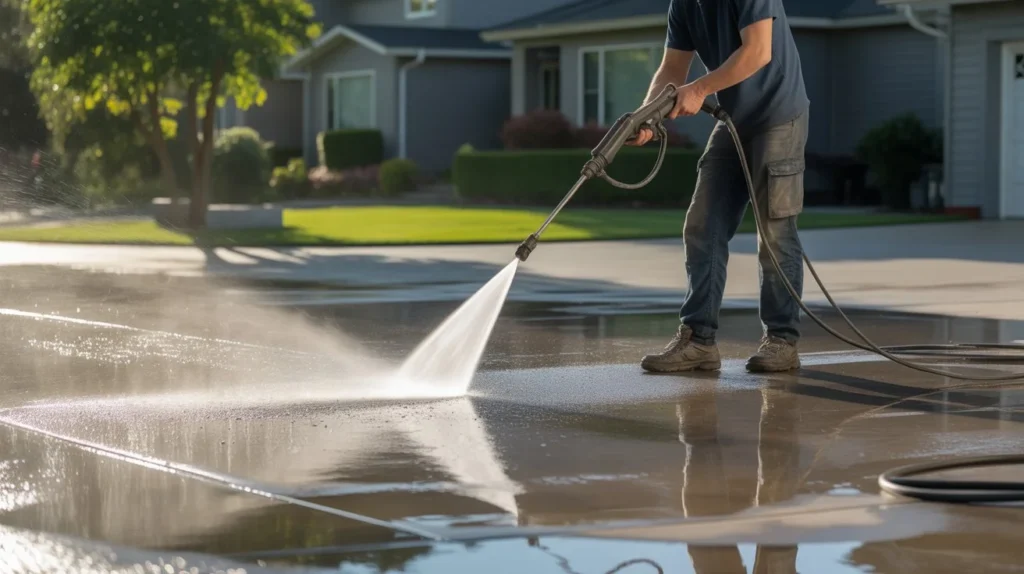
Most homeowners don’t think twice before grabbing a pressure washer and blasting their driveway. It looks harmless. Water, dirt, done. But in many cities across the US, that runoff water carries oil, chemicals, and debris straight into storm drains. And that can get you in real trouble. So, is pressure washing driveway illegal? The short answer is: it depends on where you live and how you handle the wastewater. In this guide, we break down the actual laws, what can get you fined, and how to stay on the right side of the rules. Is Pressure Washing Your Driveway Illegal? Pressure washing your driveway is not automatically illegal. The act itself is perfectly legal in most places. The problem is what happens to the water afterward. In the US, the Clean Water Act (CWA) is the main federal law that governs water pollution. Under this law, allowing contaminated runoff to flow into storm drains or waterways is illegal. Local municipalities enforce this at the city and county level. So if you pressure wash your driveway and dirty water flows into the street gutter, you may be violating local pressure washing rules and regulations without even knowing it. The key factors that determine legality: What’s on your driveway: Oil, paint, pesticides, or chemical stains make the runoff hazardous. Where the water goes: Into a lawn or grass is usually fine. Into a storm drain is often illegal. Your city’s specific rules: Some cities ban all driveway washing runoff from entering the street. Whether you use cleaning chemicals: Detergents or degreasers make runoff more regulated. Why Pressure Washing Can Be Illegal in Some Areas The reason comes down to storm drains. Most people don’t realize that storm drains do not connect to water treatment plants. They flow directly into local rivers, lakes, and the ocean. Untreated. When you pressure wash a driveway, that water picks up motor oil, heavy metals from brake dust, fertilizer residue, and soap. All of that goes straight into the storm drain if you don’t control it. driveway power washing Tracy CA services should always hire a licensed contractor like VJ Pressure Washing who knows local runoff regulations and handles wastewater containment properly. Violating these rules isn’t just a fine risk. Repeated violations can trigger inspections, citations from the local water authority, and in extreme cases, civil liability if contamination is traced back to your property. What Happens to the Dirty Water? (The Real Issue) This is the heart of the whole legal question. Where does the water go? Here’s what happens when you pressure wash a typical driveway: Water hits the concrete surface at high pressure. It loosens dirt, oil, algae, and any chemicals on the surface. That mix of water and contaminants flows across the driveway. It enters the street, flows down the gutter, and drops into the storm drain. From there, it travels untreated directly into a local waterway. Most homeowners never think past step one. But environmental agencies track water quality at the point where it enters waterways. If your neighborhood’s water quality drops and they trace it back to residential washing activity, enforcement follows. The EPA classifies motor oil, pesticides, and many cleaning agents as hazardous pollutants. Even small amounts from driveways add up across an entire city. When Is Pressure Washing a Driveway Legal? Pressure washing your driveway is completely legal when you manage the wastewater properly. Here’s when you’re in the clear: Runoff flows onto grass or soil: Natural ground filters out most contaminants. Many cities explicitly allow this. You collect and dispose of wastewater properly: Using a wet/dry vacuum, containment berm, or squeegee to collect water and dispose of it in the sanitary sewer (with permission) is legal in most areas. Your driveway has no hazardous materials: A driveway with no oil stains, no chemicals, and no paint residue produces relatively clean runoff. You follow local permit rules: Some cities require a simple permit for commercial washing. Homeowners often don’t need one, but it’s worth checking. You use biodegradable cleaners: Some cities are more lenient if you use environmentally safe cleaning products. The safest approach is to assume your city has strict rules and plan your wash accordingly. That way you’re always covered. Local Laws and Regulations You Should Check There’s no single national law that covers every driveway wash in the US. Laws vary by state, city, and county. Here’s where to look: Federal Level The Clean Water Act (Section 402) prohibits discharging pollutants into navigable waters. The EPA’s National Pollutant Discharge Elimination System (NPDES) permits govern stormwater runoff. Violations can carry civil penalties of up to $25,000 per day. State Level Most states have their own version of the Clean Water Act. California’s Porter-Cologne Water Quality Control Act is one of the strictest in the country. Texas, Florida, and New York also have specific state rules about stormwater discharge. City and County Level This is where most enforcement actually happens. Cities like Los Angeles, Seattle, and Portland have specific municipal codes that address residential pressure washing runoff. Check your city’s stormwater management or public works website. You can also call your local public works or environmental services department. Most will tell you exactly what’s allowed and what isn’t for your specific neighborhood. HOA Rules If you live in a neighborhood with a homeowners association, there may be additional rules about when and how you can wash your driveway. Some HOAs require professional contractors for exterior cleaning work. Fines and Penalties for Illegal Pressure Washing Yes, people do get fined. Here’s a realistic picture of what violations can cost: First-time warning: Many cities start with a written warning for minor violations. No fine, but it’s on record. Civil fines: Range from $100 to $1,000 for