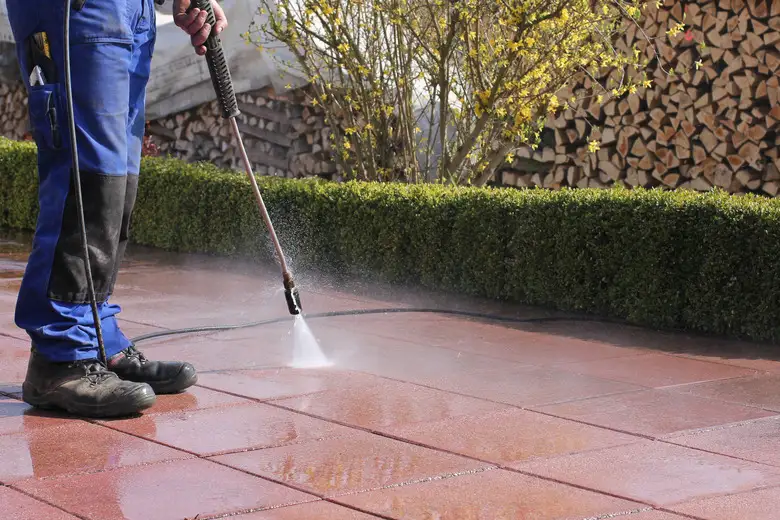

Is Pressure Washing Driveway Illegal? The answer depends on where you live and how the washing is performed.In many places, homeowners can clean their own driveways, but that does not mean there are no rules. Local governments may restrict the use of potable water on hard surfaces, particularly during water shortages. Stormwater regulations can also restrict where driveway wash water is allowed to flow. For example, the City of Tracy, California currently lists restrictions on using potable water to wash driveways, patios, sidewalks, buildings, and similar hardscape surfaces.
The city’s current Stage III conservation measures specifically include pressure washing, with an exception for certain work such as surface preparation for painting or masonry. That means the safest answer is not simply “yes” or “no.” You need to check the rules that apply to your location, water use, and property.
- Quick Answer
- Is Pressure Washing a Driveway Illegal?
- Why Do Local Rules Matter?
- What Are the Pressure Washing Rules in Tracy, CA?
- Can Driveway Wash Water Go Into a Storm Drain?
- What Should You Do With Driveway Runoff?
- Do You Need a License to Pressure Wash Driveways?
- Is Power Washing Safe for Concrete Driveways?
- How Can You Pressure Wash Concrete More Safely?
- Start With the Right Setting
- Keep the Nozzle Moving
- Test a Small Area
- Be Careful Around Cracks
- Control the Runoff
- Is It Illegal to Pressure Wash a Public Sidewalk?
- What Happens If You Ignore Local Pressure Washing Rules?
- What Should You Check Before Pressure Washing Your Driveway?
- 1. Check Local Water Restrictions
- 2. Check Stormwater Rules
- 3. Check HOA Rules
- 4. Check the Concrete
- 5. Plan for Runoff
- Should You Pressure Wash Your Driveway Yourself or Hire a Professional?
- DIY Pressure Washing
- Professional Driveway Washing
- Key Takeaways
- Conclusion
- Frequently Asked Questions
Quick Answer
Pressure washing a driveway is not automatically illegal everywhere, but local rules can restrict when and how you can do it. Water conservation laws, stormwater regulations, HOA rules, and public-property restrictions may apply. Before washing, check your local requirements and make sure dirty water does not enter a storm drain.
Is Pressure Washing a Driveway Illegal?
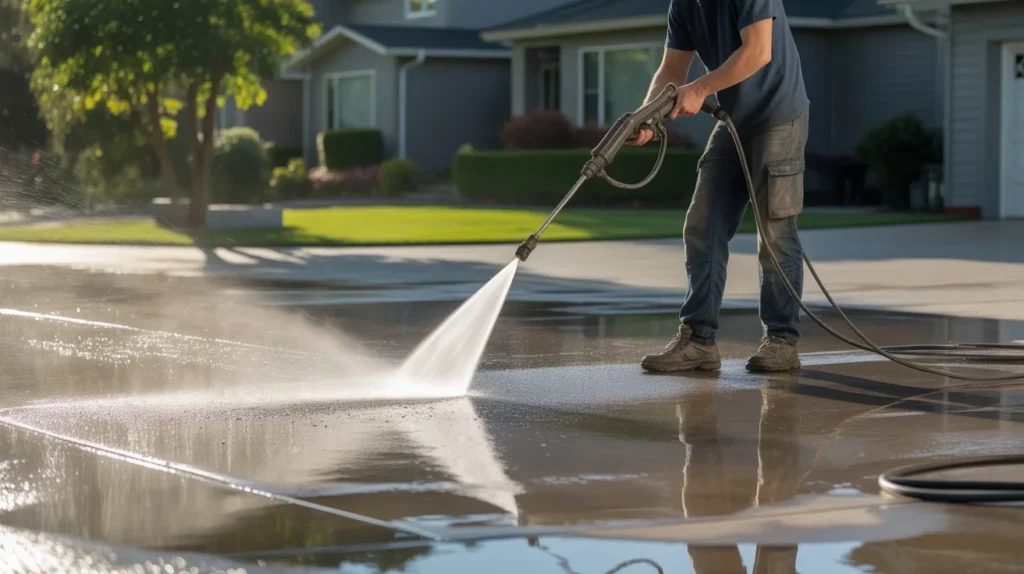
Not necessarily. Pressure washing a driveway is not universally illegal, but some cities and water agencies restrict it under water conservation or stormwater rules.
The important distinction is between the act of cleaning the driveway and how water is used and where the resulting runoff goes.
Local regulations may address:
- Potable water use
- Water waste
- Runoff
- Storm drains
- Wastewater disposal
- Drought restrictions
- Public sidewalks and streets
- HOA requirements
A homeowner in one city may be allowed to pressure wash a driveway under certain conditions, while a homeowner somewhere else may face restrictions.
That is why checking your local city or water utility before starting the job is important.
Why Do Local Rules Matter?
Pressure washing uses water to remove dirt, oil residue, algae, mud, and other material from a hard surface. That cleaning process creates wastewater.
The wastewater can contain substances that were already sitting on the driveway, such as:
- Dirt and sediment
- Oil or vehicle fluids
- Cleaning chemicals
- Lawn and landscaping debris
- Pet waste
- Small pieces of trash
If that water flows into a storm drain, it may be discharged through a stormwater system rather than being treated like ordinary household wastewater.
California’s Water Boards explain that wash water from driveways and other impervious surfaces should not be allowed to enter storm drains and recommend using appropriate best management practices to control the runoff.
This is one reason local pressure washing rules can involve more than simply conserving water.
What Are the Pressure Washing Rules in Tracy, CA?
If you live in Tracy, California, the answer is especially important because the city currently has Stage III water conservation measures.
The City of Tracy states that using potable water to wash driveways, patios, sidewalks, buildings, and similar hardscape surfaces is not allowed unless an applicable exception applies. The city’s guidance specifically says the restriction also applies to pressure washing, except when the washing is being done for purposes such as preparing a surface for painting, masonry, or similar work.
The Tracy Municipal Code also defines a driveway as hardscape and establishes restrictions related to water waste and runoff.
Because local rules can change, homeowners should verify the current requirements before starting a driveway cleaning project.
For homeowners who want professional assistance with their property, Driveway Washing in Tracy CA is a relevant service option from VJ Pressure Washing.
Can Driveway Wash Water Go Into a Storm Drain?
You should not allow driveway wash water to flow into a storm drain unless local authorities specifically allow that discharge.
Storm drains are designed to manage stormwater, but they can also carry pollutants into local waterways.
This is particularly important when pressure washing a driveway because the water may pick up oil, dirt, chemicals, metals, and other contaminants from the surface.
California Water Boards guidance specifically identifies driveway and patio wash water as a type of non-stormwater discharge that should be prevented from entering municipal storm drain systems. Recommended approaches can include controlling the water, preventing it from reaching the drain, and directing or recovering the wash water appropriately.
What Should You Do With Driveway Runoff?
The appropriate method depends on your local requirements and the type of wastewater involved.
Before pressure washing:
- Identify nearby storm drains.
- Check your local runoff requirements.
- Avoid allowing dirty water to flow into the street.
- Use appropriate runoff-control methods.
- Follow local instructions for collecting or disposing of wash water.
Do not assume that because the water looks relatively clean, it is automatically acceptable to send it into a storm drain.
Do You Need a License to Pressure Wash Driveways?
A homeowner generally should not assume that a special professional pressure washing license is required simply to clean their own driveway, but requirements for operating a pressure washing business can be different.
Licensing and business registration are location-specific. A person washing their own residential driveway is in a different situation from a company charging customers for pressure washing services.
If you are hiring a professional, you can ask whether the business has the registrations, permits, or local business requirements applicable to its services.
Also remember that a requirement applying to a pressure washing business does not automatically mean a homeowner needs the same credential to clean their own property.
Is Power Washing Safe for Concrete Driveways?
Yes, pressure washing can be safe for concrete when the equipment and technique are appropriate, but excessive pressure or improper technique can damage the surface.
Concrete may develop surface damage if it is cleaned too aggressively.
Potential problems include:
- Surface etching
- Uneven cleaning
- Damage to weak or deteriorated concrete
- Removal of surface material
- Damage around cracks or joints
A driveway power washer can produce significant pressure, so the nozzle should not be held extremely close to the concrete simply to remove stubborn stains.
Before cleaning, inspect the driveway for:
- Existing cracks
- Crumbling areas
- Loose concrete
- Damaged expansion joints
- Previous surface coatings
- Areas that have already deteriorated
If the concrete is already weak, pressure washing may make visible damage worse.
How Can You Pressure Wash Concrete More Safely?
If local rules allow you to wash your driveway, use a controlled approach rather than maximum pressure.
Start With the Right Setting
More pressure is not automatically better. Use an appropriate pressure and nozzle for the surface and cleaning task.
Keep the Nozzle Moving
Holding a high-pressure stream in one spot can create uneven marks or damage the surface.
Test a Small Area
Try your cleaning method in an inconspicuous area first.
This lets you see how the concrete reacts before cleaning the entire driveway.
Be Careful Around Cracks
Avoid forcing high-pressure water directly into damaged cracks or deteriorated sections.
Control the Runoff
Cleaning the concrete is only part of responsible pressure washing. Make sure the wastewater is handled in accordance with local requirements.
Is It Illegal to Pressure Wash a Public Sidewalk?
It can be restricted, and the rules may be different from those for washing a privately owned driveway.
A public sidewalk is generally part of public infrastructure rather than the homeowner’s private property. Local governments may have rules concerning water use, runoff, cleaning activities, or maintenance responsibilities.
For example, Tracy’s water conservation guidance specifically includes sidewalks among the hardscape surfaces covered by its potable-water washing restrictions.
If you want to clean a sidewalk outside your property, check with the relevant city or local authority first rather than assuming the same rules that apply to your private driveway also apply to the sidewalk.
What Happens If You Ignore Local Pressure Washing Rules?
The consequences depend on the specific law or ordinance involved.
Possible issues can include:
- Warnings from the local authority
- Water-use enforcement
- Fines or penalties
- Problems related to stormwater discharge
- Responsibility for cleaning up an improper discharge
The exact consequences vary by jurisdiction, so homeowners should not assume that one city’s penalty applies somewhere else.
In Tracy, for example, the municipal code gives the city authority to enforce certain water-management requirements and establishes prohibited water-waste activities.
What Should You Check Before Pressure Washing Your Driveway?
A quick check can prevent a legal or environmental problem.
1. Check Local Water Restrictions
Look at your city’s current water conservation requirements.
Restrictions can become more stringent during droughts or other water-supply problems.
2. Check Stormwater Rules
Find out whether driveway wash water can enter the street, gutter, or storm drain.
Do not assume that normal garden-hose washing and pressure washing are treated identically.
3. Check HOA Rules
If your property is governed by a homeowners association, review any rules concerning driveway appearance, cleaning, water use, or work hours.
4. Check the Concrete
Look for cracks, deterioration, loose material, and previous surface treatments before using high-pressure equipment.
5. Plan for Runoff
Know where the water will go before you turn on the machine.
This is especially important when the driveway slopes toward a public street or storm drain.
Should You Pressure Wash Your Driveway Yourself or Hire a Professional?
That depends on the condition of the driveway, your equipment, and the local requirements.
DIY Pressure Washing
Doing it yourself may make sense when:
- Local rules allow it.
- You have appropriate equipment.
- The concrete is in good condition.
- You understand how to control the runoff.
- You are comfortable operating a pressure washer safely.
Professional Driveway Washing
Professional service may be useful when:
- The driveway has heavy staining.
- The concrete is old or deteriorated.
- You are unsure how much pressure to use.
- Runoff needs to be controlled carefully.
- You do not have suitable equipment.
- Local requirements make wastewater management more complicated.
The main advantage is not simply having a more powerful machine. Proper surface assessment, cleaning technique, and runoff management are important parts of the job.
Key Takeaways
- Is Pressure Washing Driveway Illegal? There is no universal yes-or-no answer because local rules differ.
- Water conservation restrictions can limit driveway pressure washing, especially during water shortages.
- Driveway wash water should not be allowed to enter storm drains where local stormwater rules prohibit that discharge.
- Pressure washing can damage concrete if excessive pressure or an unsuitable technique is used.
- Public sidewalks may have different rules from private driveways.
- Homeowners should check local water, stormwater, and HOA requirements before starting.
- Tracy, CA currently has Stage III water conservation measures that restrict potable-water washing of driveways and similar hardscape, including pressure washing, subject to stated exceptions.
Conclusion
So, is pressure washing a driveway illegal? Not necessarily. The answer depends on your location and the rules governing water use, stormwater runoff, public property, and private communities.
Before cleaning your driveway, check your local requirements and make sure wastewater is handled properly. If you are in Tracy, CA, pay particular attention to the city’s current water conservation restrictions because potable-water washing of driveways and similar hardscape is currently restricted, including pressure washing except for specified purposes.
If you prefer professional help, VJ Pressure Washing can provide driveway cleaning services while helping you address the practical considerations involved with cleaning your property.
Frequently Asked Questions
Is pressure washing your own driveway illegal?
Not everywhere. The legality depends on local water conservation, stormwater, property, and other applicable rules. Check with your city or water provider before pressure washing.
Do you need a license to pressure wash driveways?
A homeowner cleaning their own driveway and a company providing pressure washing services are different situations. Business licensing and registration requirements depend on the location and type of business.
Is power washing safe for concrete driveways?
It can be, provided the equipment and cleaning technique are appropriate for the condition of the concrete. Excessive pressure or holding the nozzle too close can damage the surface.
Is it illegal to pressure wash a public sidewalk?
It may be restricted depending on local rules. Public sidewalks can be subject to different water-use, runoff, and maintenance requirements than privately owned driveways.
Can pressure washing water go into a storm drain?
Do not allow driveway wash water to enter a storm drain where local stormwater regulations prohibit it. California Water Boards guidance specifically addresses driveway wash water as a potential illicit discharge.
Can I pressure wash my driveway during a drought?
That depends on the current restrictions where you live. Some cities impose additional limitations on outdoor potable-water use during droughts or water shortages.
Does an HOA have rules about pressure washing driveways?
It can. An HOA may have community rules concerning driveway appearance, maintenance, cleaning schedules, or water use. Check your current HOA documents before starting.
Why is driveway pressure washing sometimes restricted?
Restrictions can be related to water conservation and stormwater pollution. Pressure washing can create runoff containing dirt, vehicle fluids, chemicals, and other contaminants that should not enter storm drains.
What should I do before using a driveway power washer?
Check local water restrictions, identify nearby storm drains, inspect the concrete for damage, choose an appropriate cleaning method, and plan how you will control the wastewater