
Can I Pressure Wash at Night? 5 Honest Truths You Need to Know
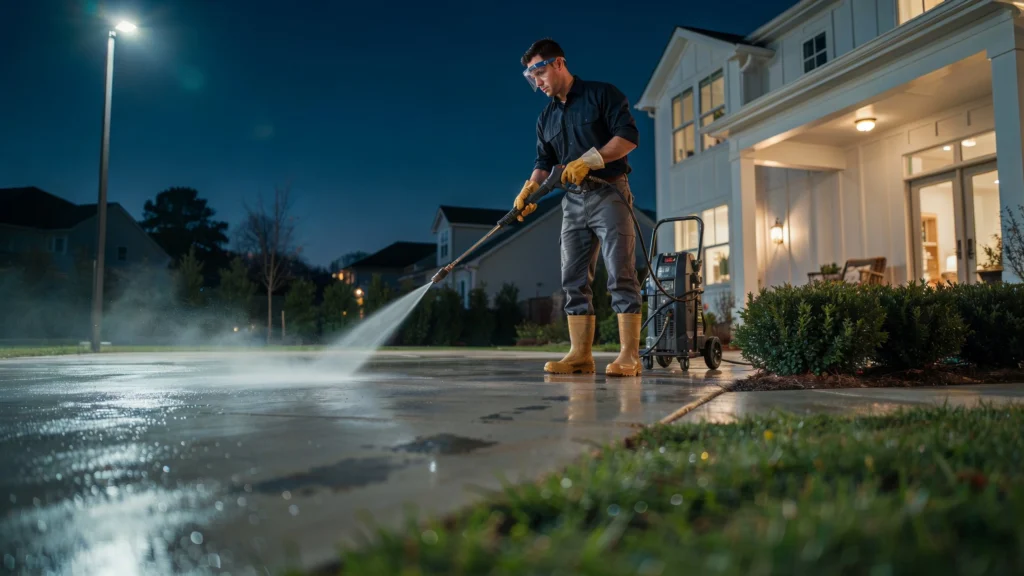
You had a long day. The driveway still looks grimy. The kids are finally in bed. And now you’re thinking about grabbing the pressure washer before it gets too late. It sounds like a good plan. But is it actually safe, smart, or even allowed? Yes, you can pressure wash at night in most cases but there are real safety risks, noise concerns, and visibility problems you need to think through first. Can I pressure wash at night without causing problems? That depends on where you live, what you’re cleaning, and how prepared you are. This article covers everything you need to know. Is It Safe to Pressure Wash at Night? The short answer: it can be safe, but the risks go up after dark. Pressure washing uses water at high force. That alone demands full attention. Now add low-light conditions, wet surfaces, and tired eyes and your risk of slipping or making mistakes increases. Here’s what actually changes at night: Visibility Drops Fast You can’t clearly see what you’re spraying, where water is pooling, or if a surface is cracking. Missing these cues can cause surface damage or personal injury. Wet Surfaces Are Harder to See Puddles look invisible in poor light. One wrong step on a slick driveway or patio tile and you’re down. Electrical Hazards Become More Serious Water near outdoor outlets, extension cords, or lighting fixtures is always a risk. At night, it’s easier to miss a hazard you’d spot in daylight. Fatigue Affects Your Control Operating a pressure washer when you’re tired reduces reaction time. The machine kicks back. Your grip matters. None of this means nighttime pressure washing is off the table. It means you need to take it more seriously than a daytime job. Benefits of Pressure Washing at Night Despite the risks, there are real reasons people choose to pressure wash after dark. Some of those reasons are actually quite practical. 1. Cooler Temperatures Help Surfaces Dry Properly In summer, daytime heat can cause water to evaporate too fast. This can leave streaks or detergent residue on concrete and siding. Cooler nighttime air gives surfaces time to rinse and dry evenly. 2. Lower Water Pressure on City Systems In some areas, municipal water pressure drops slightly during peak daytime hours. Late at night, you get more consistent water flow, which can improve your wash results. 3. No Direct Sunlight Means Less Glare Bright sun on a wet concrete driveway can cause serious glare. At night, with a proper work light, you control the lighting and reduce eye strain from reflections. 4. Less Foot Traffic and Distraction Daytime washing means dealing with neighbors walking by, vehicles, kids, and pets. Nighttime pressure washing is often quieter in terms of activity, which lets you focus. 5. Cooler Surfaces Absorb Cleaning Solutions Better Hot concrete in the sun repels some cleaning solutions before they can work. Cooler surfaces at night allow dwell time, which means your detergent actually does its job. These are real advantages especially for residential pressure washing tips that focus on getting the best clean possible. Potential Drawbacks of Nighttime Pressure Washing The benefits are real, but so are the downsides. Here are the ones that matter most. Noise Complaints Are a Major Issue Pressure washers are loud. Most residential areas have noise ordinances that kick in after 10 p.m. or even 9 p.m. in some neighborhoods. Pressure washing after dark, especially near bedrooms or in close quarters, can lead to complaints or fines. You Miss What You’re Cleaning Without full visibility, it’s easy to over-spray delicate areas, miss grimy patches, or damage a surface without realizing it. You won’t know until daylight shows you the result. Setup Takes Longer Laying out hoses, finding outlets, setting up work lights everything takes more time and effort at night. A 30-minute job in daylight can take twice as long after dark. Runoff Is Harder to Manage Dirty water and cleaning solutions run into driveways, lawns, and storm drains. At night, you can’t see where it’s going. Some of those chemicals can harm plants or local waterways if not managed properly. Slip and Fall Risk Is Higher This is the biggest safety concern. Wet concrete, tile, wood decking all of these become more dangerous when you can’t see the water clearly. Best Surfaces to Pressure Wash at Night Some surfaces handle nighttime washing better than others. If you’re going to clean after dark, these are your safest choices: Concrete Driveways and Walkways Flat, open, and easy to light. Use portable work lights and you’ll be fine. Fences and Walls Vertical surfaces that don’t pool water underfoot. You stand back and spray, which reduces slip risk. Vinyl Siding As long as you’re careful around windows and light fixtures, vinyl handles nighttime washing well. Patios with Good Lighting If your patio already has overhead lights or you set up temporary ones, it’s a manageable surface at night. Garbage Bins and Outdoor Furniture These can be moved to a well-lit area for an easy nighttime clean. Surfaces That Are Better Cleaned During the Day Some jobs are just better done when you have full visibility and proper lighting. Wood Decks Wood is sensitive to pressure, and you need to see grain direction and any soft or rotten spots clearly. Nighttime washing on a deck increases the risk of over-washing or missing problem areas. Roof Washing This requires height, balance, and full visibility at all times. Never do roof work after dark. Painted Surfaces You need to watch closely for paint lifting, blistering, or streaking. You can’t catch those issues at night. Stone and Brick Mortar joints can be damaged if you spray at the wrong angle. Daytime gives you the visibility to avoid that. Vehicles and RVs Even with pressure washer-safe settings, cleaning a vehicle at night risks missing paint chips, seals, and trim details that need careful attention. Essential Safety Tips for Night Pressure Washing If you decide to move forward with pressure washing after dark, follow
What to Use to Wash a Driveway?
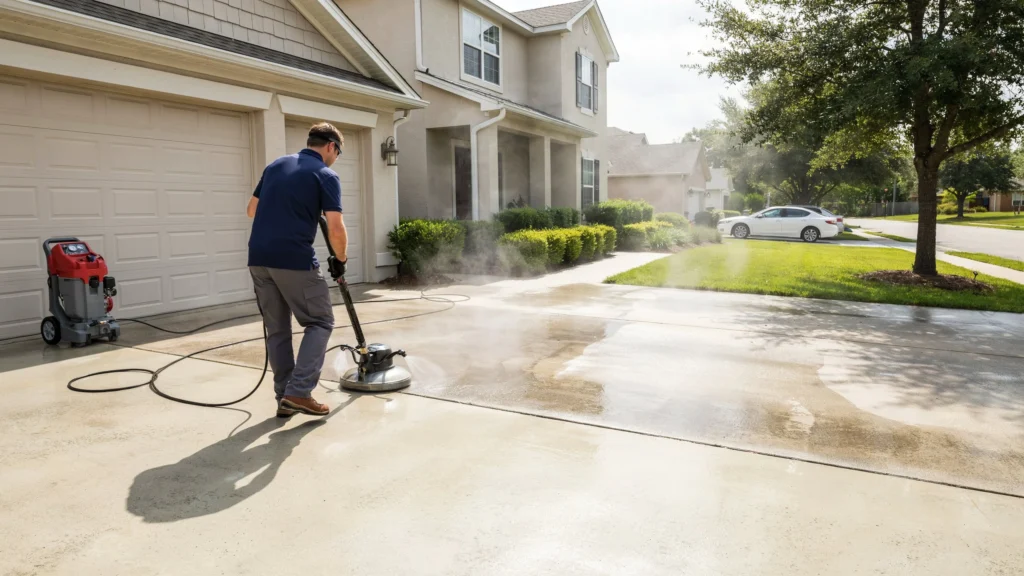
Your house will be more stylish with a clean driveway. Dust, tire tracks, oil stains, mold, mildew, algae, and other natural debris can settle on your driveway, which makes it look greasy and dull. Many people are curious to ask, what do you wash a driveway with, and how do you make it look like the job of a professional without impairing it? Which product to use will depend on the surface of your driveway, the kind of stains, and how much you want to clean up. No matter if your driveway is constructed from concrete, asphalt, brick, or pavers, there are cleaners and cleaning methods that will breathe new life into your driveway and help it last for years longer. Why Regular Driveway Cleaning Matters A driveway is among the most used parts of your home’s exterior. Vehicles, weather, and pedestrians continually batter it with dirt and grime. The benefits of regular cleaning are numerous: Helps your curb appeal, Prevents Stains from becoming permanent, Mold and Algae Growth is reduced, Life of Driveway is Prolonged, Safety is improved – wet and slippery surfaces are decreased, Property Value and your investment in your home is protected. Understanding what to use to clean a driveway can help a homeowner keep a clean and safe outdoor environment all year round. With VJ Pressure Washing, you can ensure your driveway stays spotless and well-maintained throughout the year. Best Driveway Cleaning Solution Choose the most suitable driveway cleaner appropriate for the kind of soil or stain on your driveway. 1. Mild Detergent and Water Warm water and mild dish detergent are all you need for routine cleaning. The solution penetrates dirt on the surface. Oil and grease stains, however, will call for stronger cleaning agents. 2. Degreasers Professional degreasers emulsify oil-based soils so they can be flushed away. Surface and light stains can be applied to the majority of driveway materials. 3. Oxygen Bleach Oxygen bleach is a safe and effective, environmentally friendly product that kills mold, mildew, and algae without any harsh chemicals. 4. Vinegar Remedy A solution of water and white vinegar is effective in removing organic stains and mildew. But take care with some surfaces you don’t want to damage them. Pressure Washing Driveway Tips Power washing is the only effective way to clean a grimy driveway. Using the correct driveway washing Tracy CA tips will enable you to get results that are comparable to those of a professional, but without compromising the surface. 1. Pre-washing Treatment Before pressure washing, treat oil stains, grease spots, and dirt with a degreaser or driveway cleaner with good reviews. Allow the cleaner to work on breaking down the substances for 10 to 15 minutes. 2. Sweep the Driveway First Remove leaves, dirt, stones, and other debris from the area before pressure washing. This allows the soil to be washed away, rather than coming between the water and the surface that you’re cleaning. 3. Use a Surface Cleaner Attachment A surface cleaner attachment delivers uniform cleaning, minimizing streaks. It also makes the job go faster than a regular spray nozzle. 4. Work in Small Sections Break up the job into little pieces, and take each one at a time. This way you won’t switch rooms, and dirt will be deeper. 5. Rinse Well After you have finished scrubbing, use a hose to rinse the driveway off of all the detergent along with the dirt and grime. A good rinse will also help to whiten the floor and prevent stains. Concrete Driveway Cleaner A good quality concrete driveway cleaner will significantly impact how well it cleans. Choose from products that: Get rid of the oil and grease stains Remove mold & mildew Are biodegradable Are safe for the plants around them Use with pressure washers Professional products can make a big difference in deep cleaning driveways. How to Remove Driveway Stains Knowing how to clean driveway stains is vital to keeping up a neat look. 1. Oil Stains Oil stains are also a popular driveway issue. To remove them: Cover the stain with an absorbent material, apply a degreaser, scrub vigorously, rinse thoroughly. 2. Grease Stains Grease needs to be treated several times with a special degreaser. 3. Rust Stains Apply a rust remover that is suitable for use on concrete. 4. Mould and Mildew Use an oxygen bleach or a solution of mildew remover, then scrub well. 5. Skid Marks Skid marks also can cause black lines to appear on your driveway, especially on concrete. These are typically the result of hot tires leaving rubber on the driveway over time. A good detergent and a special cleaner for tire marks applied with a stiff bristle brush can help you get rid of tire marks and bring back a clean look for your driveway. Conclusion If you’re wondering, “How do you clean a driveway?” It depends on the type of driveway you have and what stains are on it. Soap and water should suffice for standard cleaning. For heavy-duty stains, a concrete driveway cleaner or commercial degreaser is the best bet. The best product to clean a driveway and a few simple tips to pressure wash a driveway will bring your driveway back to life and protect it from damage again. Knowing how to get stains out of a driveway is just as crucial in keeping an eye-catching exterior as it is when it comes to having a driveway that lasts a long time. By maintaining your driveway regularly using the right cleaning approach and occasionally providing it with a deep clean, you will be able to enjoy a clean, good-looking, and strong driveway for many years. For more information or professional assistance, feel free to Contact Us today! FAQs What is the best solution to wash a driveway? For routine cleaning, warm water and mild dish detergent work well. For tougher stains like oil and grease, a professional degreaser or concrete driveway cleaner is the best option. Oxygen bleach is ideal for mold and