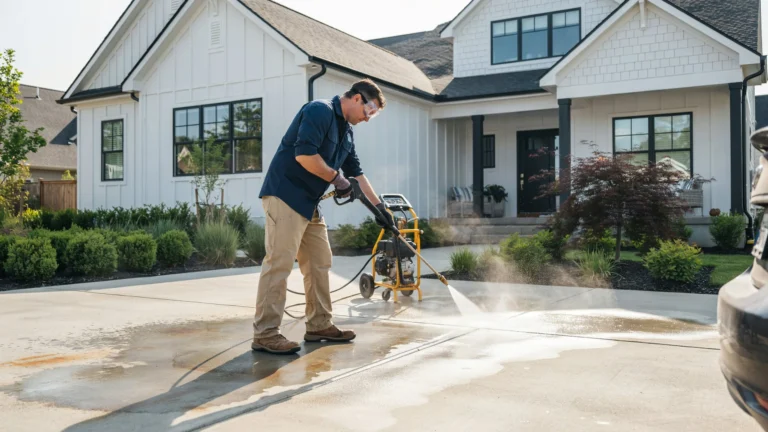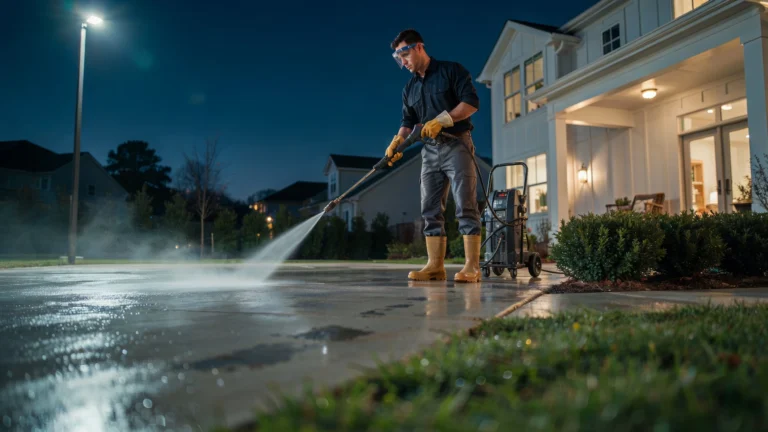

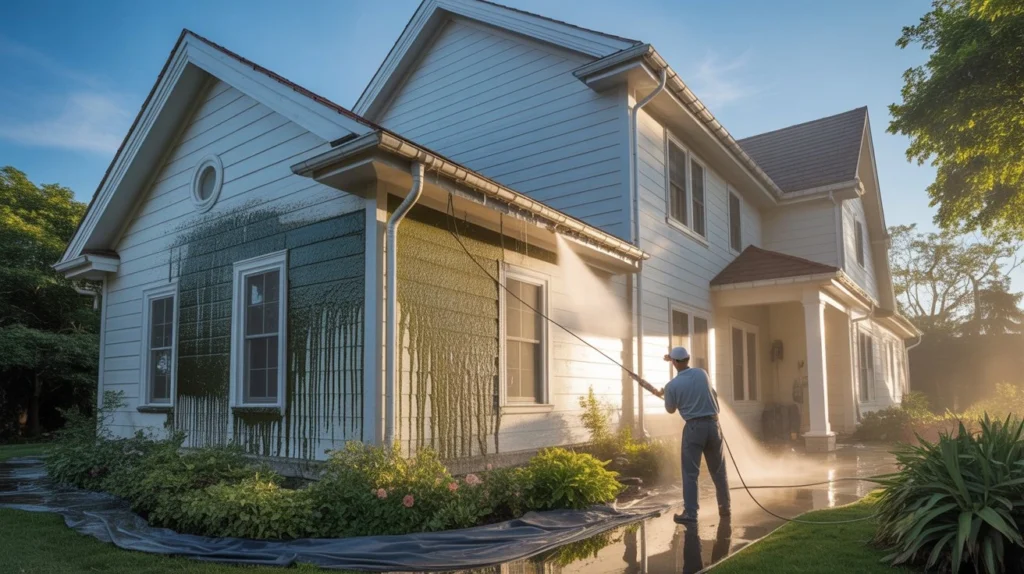
A house wash includes pressure washing or soft washing of your siding, soffits, gutters, windows, and walkways to remove dirt, mold, and grime. Most professional packages also cover light fixtures, the front porch, and outdoor furniture spots. So what does a house wash include exactly? It depends on the company, but a solid service hits every visible surface on your home’s exterior.
- What Is a House Wash?
- What Does a Standard House Wash Include?
- Areas Commonly Cleaned During a House Wash
- What Is Usually Not Included in a House Wash?
- How Do Professionals Wash a House?
- Benefits of Professional House Washing
- How Often Should You Schedule a House Wash?
- DIY House Washing vs. Professional House Washing
- Factors That Affect House Washing Costs
- Signs Your Home Needs a House Wash
- FAQs
If you’re getting quotes from house washing services, knowing what’s included helps you compare them fairly. Some companies do the bare minimum. Others go all in. Let’s break down what you should expect.
What Is a House Wash?
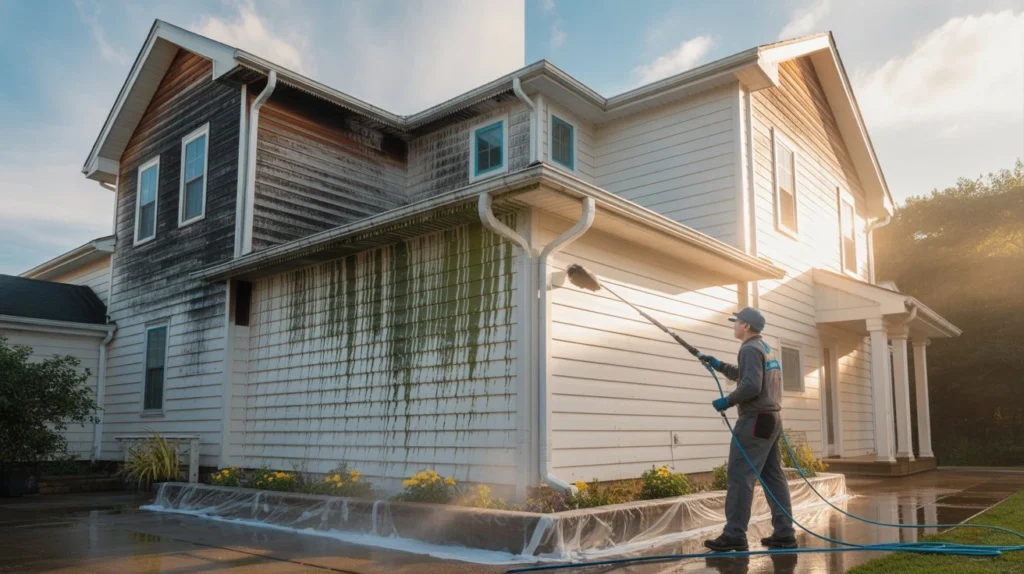
A house wash is an exterior cleaning service that removes dirt, algae, mold, pollen, and grime from your home’s outside surfaces. It’s different from just blasting your siding with a garden hose.
Most companies use one of two methods: pressure washing or soft washing. Pressure washing uses high water pressure to strip away buildup. Soft washing uses lower pressure combined with cleaning solutions to kill mold and mildew at the root, not just rinse it off the surface.
Your home’s siding material matters here. Vinyl siding can usually handle higher pressure. Stucco, wood siding, and painted surfaces often need the gentler soft wash approach to avoid damage. A good company checks your siding type before picking a method.
What Does a Standard House Wash Include?
A standard house wash covers the main exterior surfaces of your home. Here’s what’s typically part of the package:
Siding cleaning comes first. This is the biggest part of the job since siding covers the most surface area and collects the most grime over time. Soffits and fascia get washed too. These are the parts under your roofline, and they trap spider webs, dust, and mildew that you can’t easily reach yourself.
Window exteriors are usually included, at least a basic rinse to remove dirt and water spots. Some companies offer detailed window cleaning as an add-on. Gutter exteriors (not the inside) often get a once-over to remove streaking and grime buildup.
Walkways and porches near your front entrance are typically cleaned as part of the package since they’re the first thing visitors see. This is the core of what does a house wash include for most companies. Anything beyond this list is usually an upgrade or add-on service.
Areas Commonly Cleaned During a House Wash
Beyond the basics, here’s where pros usually focus their attention:
Vinyl, wood, brick, or stucco siding – the main surface getting treated, regardless of material.
Soffits and eaves – these collect cobwebs and mildew that build up out of sight.
Window frames and screens – exterior glass and frames get rinsed, though interior cleaning isn’t included.
Garage doors – often overlooked by homeowners but easy for grime to collect on.
Front porch and entryway – first impression areas that get extra attention.
Outdoor light fixtures – wall-mounted lights collect dust and bugs over time.
Driveways and walkways (sometimes as an add-on) – concrete surfaces near the house.
Deck or patio areas attached to the home – depending on the package, this might be bundled in or sold separately.
Knowing this list helps when you’re trying to figure out the best way to wash outside of house surfaces without missing spots that matter.
What Is Usually Not Included in a House Wash?
Not everything gets cleaned during a standard house wash. Here’s what’s commonly left out unless you ask for it specifically:
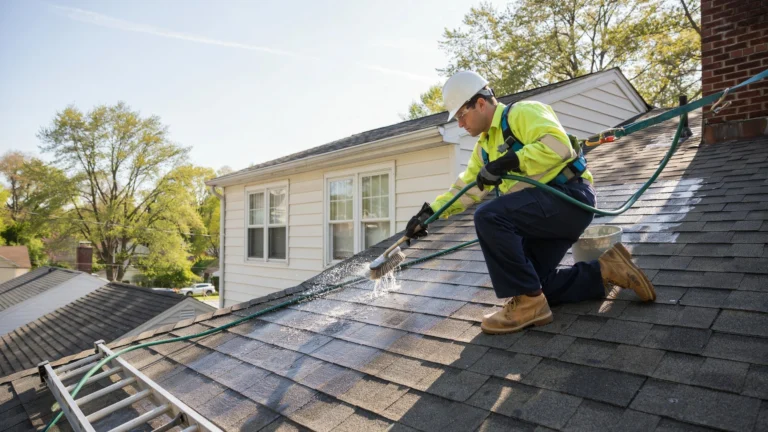
Roof cleaning is its own service. Most house washing companies don’t include roof cleaning because it requires different equipment and safety precautions. Gutter interior cleaning (removing leaves and debris from inside the gutter) is usually a separate add-on, not part of the standard wash.
Window interior cleaning almost never makes the list. House washing focuses on the outside, so interior glass stays untouched. Detailed power washing of large concrete areas like full driveways or large patios sometimes costs extra, depending on square footage. Fence cleaning is often optional too, especially if your fence isn’t directly attached to the house.
Always ask your provider directly what’s bundled in and what costs more. This avoids surprise charges after the job is done.
How Do Professionals Wash a House?
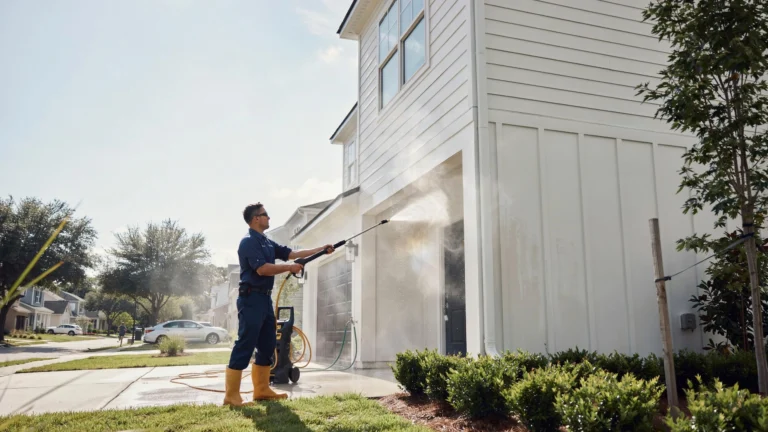
Professional house washing follows a process that protects your home while getting it clean. Here’s how it usually works. First, the technician inspects your siding and identifies problem areas like mold, mildew, or heavy staining. This step decides whether they’ll use pressure washing or soft washing. Next, they apply a cleaning solution if soft washing is the method. This solution breaks down mold, algae, and grime before rinsing.
Then comes the rinse. Using a pressure washer set to the right PSI for your siding material, they rinse from top to bottom. Working top down prevents dirty runoff from re-staining areas already cleaned. After the main wash, they spot check problem areas like corners, under eaves, and around windows where grime tends to hide. Finally, they do a walk-around to inspect the finished job and make sure nothing was missed.
This process is why DIY attempts sometimes go wrong. Using too much pressure or the wrong angle can crack siding, force water behind panels, or strip paint.
Benefits of Professional House Washing
Hiring a professional comes with real advantages beyond just convenience.
Better curb appeal. A clean exterior makes your whole property look newer and better maintained. This matters if you’re selling or just want your home to look good.
Protects your siding investment. Mold, algae, and grime slowly damage siding over time if left untreated. Regular washing extends the life of your exterior materials.
Prevents pest issues. Spider webs, wasp nests, and other pest hideouts get knocked down during a house wash, which can reduce pest problems near your home.
Saves you time and effort. Washing a two-story home yourself with a ladder and pressure washer is risky and time consuming. Pros have the right equipment and experience to do it faster and safer.
Identifies hidden issues. A good technician often spots problems like loose siding, cracked caulking, or early mold growth you might not notice yourself.
How Often Should You Schedule a House Wash?
Most homes benefit from a house wash once or twice a year. If you live somewhere humid or near trees, you might need it more often since mold and algae grow faster in those conditions. Spring is a popular time since it removes winter grime and prepares your home for the warmer months. Fall washing helps clear pollen, dust, and summer buildup before winter sets in.
If you notice green or black streaks on your siding, or your home just looks dingy compared to neighbors, that’s a sign you’re overdue.
For homeowners who want consistent results without guessing when to schedule, working with exterior house washing services like VJ Pressure Washing takes the guesswork out. A reliable provider can set up a maintenance schedule based on your home’s specific needs, your local climate, and how quickly grime tends to build up in your area.
DIY House Washing vs. Professional House Washing
Some homeowners want to wash the exterior of house surfaces themselves to save money. It’s possible, but there are tradeoffs to consider.
DIY pros: Lower upfront cost, more control over timing, and it can work fine for small homes or simple jobs.
DIY cons: Risk of damaging siding with incorrect pressure, missing hidden mold growth, and the physical risk of working on ladders.
Professional pros: Proper equipment, trained technicians, insurance coverage if something goes wrong, and a more thorough clean overall.
Professional cons: Higher cost compared to doing it yourself.
If your home is a single story with light dirt, DIY might be fine with the right pressure washer and careful technique. For multi-story homes, heavy mold, or delicate siding materials, professional help is the safer bet.
Factors That Affect House Washing Costs
House washing prices vary based on a few key factors.
Home size. Larger homes have more surface area, which means more time and product needed.
Siding material. Stucco and wood often cost more to clean carefully compared to vinyl.
Level of dirt and mold buildup. Heavily stained homes need more treatment time than lightly dirty ones.
Add-on services. Gutter cleaning, window washing, and driveway cleaning all add to the final price if bundled in.
Local market rates. Pricing varies by region based on local competition and cost of living.
Getting a few quotes helps you understand what’s reasonable in your area and what’s included at each price point.
Signs Your Home Needs a House Wash
Not sure if it’s time? Watch for these signs.
Green or black streaks running down your siding, usually caused by algae or mold growth. Visible dirt or grime buildup that doesn’t come off with light rinsing. A noticeable smell, often musty or moldy, near your exterior walls. Spider webs and dust collecting under eaves and around windows. Your home looks duller or dirtier compared to when it was last cleaned.
If you spot two or more of these signs, it’s a good time to schedule a house wash before the buildup gets worse. Keeping your home clean can prevent long-term damage and maintain its curb appeal. Contact us today for a professional assessment and a free quote.
FAQs
What does a house wash include exactly?
It typically includes siding, soffits, window exteriors, gutters exteriors, and walkways near the entrance. Specific inclusions vary by company.
Is roof cleaning part of a house wash?
No, roof cleaning is usually a separate service due to different equipment and safety requirements.
How long does a house wash take?
Most homes take two to four hours, depending on size and how much buildup needs removing.
Can house washing damage my siding?
If done with the wrong pressure or technique, yes. This is why hiring trained professionals matters, especially for delicate siding materials.
What’s the best way to wash outside of house surfaces without hiring a pro?
Use a low pressure setting, work top to bottom, and avoid spraying directly into window or door seams. A soft wash solution can help with mold without needing high pressure.
How much does a house wash typically cost?
Costs vary widely based on home size and condition, but most homeowners pay between $200 and $500 for a standard wash.