
If you have noticed dark streaks, spots, or patches across your roof, you may be wondering, What Is the Black Stuff on My Roof? In many cases, the black discoloration seen on asphalt shingles is associated with algae growth, particularly a type commonly referred to as blue-green algae. However, not every dark mark on a roof has the same cause. Black discoloration can also be related to dirt, debris, moisture, moss, or other surface buildup.
Identifying what you are actually seeing is important because the appropriate cleaning method depends on the roof material and the type of growth. For most homeowners, the biggest concern is whether those dark areas are damaging the roof. In some situations, the issue is mainly cosmetic, while persistent moisture and organic growth can contribute to roof deterioration over time.
- What Causes Black Stains on Roofs?
- Is the Black Stuff on My Roof Algae?
- What Does Black Algae Look Like?
- Why Does Algae Grow on Roofs?
- Can Black Algae Damage Roof Shingles?
- What Are Black Stains on Roof Shingles?
- How to Remove Black Stains From Roof Shingles
- Why You Should Not Pressure Wash Your Roof Like a Driveway
- Should You Clean a Roof With Black Algae?
- How to Prevent Black Roof Stains
- Does Rain Wash Black Algae Away?
- When Should You Hire a Professional Roof Cleaner?
- Final Thoughts
- Frequently Asked Questions
What Causes Black Stains on Roofs?
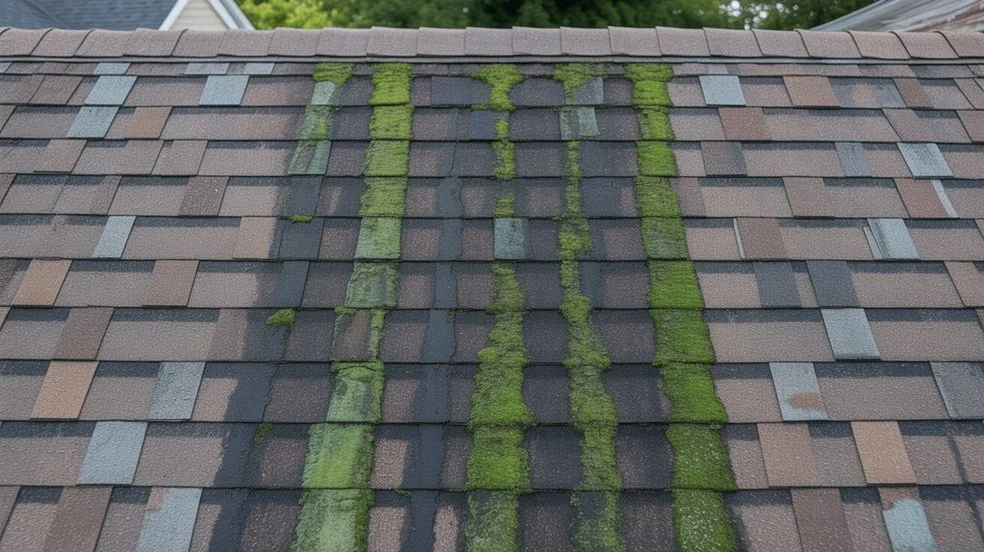
There are several possible reasons for black stains on roof surfaces.
The most common explanation for dark streaking on asphalt shingles is algae. Algae can spread across areas of the roof that stay damp for longer periods, particularly where there is limited sunlight.
Other possible causes include:
- Dirt and airborne particles
- Accumulated organic debris
- Moss or other plant growth
- Moisture-related buildup
- Staining from surrounding trees
- Material aging or weathering
The appearance can provide clues, but homeowners should avoid assuming that every black mark is automatically algae.
If the discoloration is accompanied by thicker vegetation, raised patches, or persistent moisture, the roof may have a different problem that requires closer inspection.
Is the Black Stuff on My Roof Algae?
Often, yes.
If you see long dark streaks running down asphalt shingles, algae is a common possibility. These streaks can become more noticeable as the growth spreads across the roof.
Algae is particularly common on roof areas that receive less direct sunlight and stay damp for longer periods.
However, visual appearance alone is not always enough to identify the exact cause. If you are unsure whether the material is algae, moss, dirt, or another substance, it is better to have the roof evaluated before choosing a cleaning method.
What Does Black Algae Look Like?
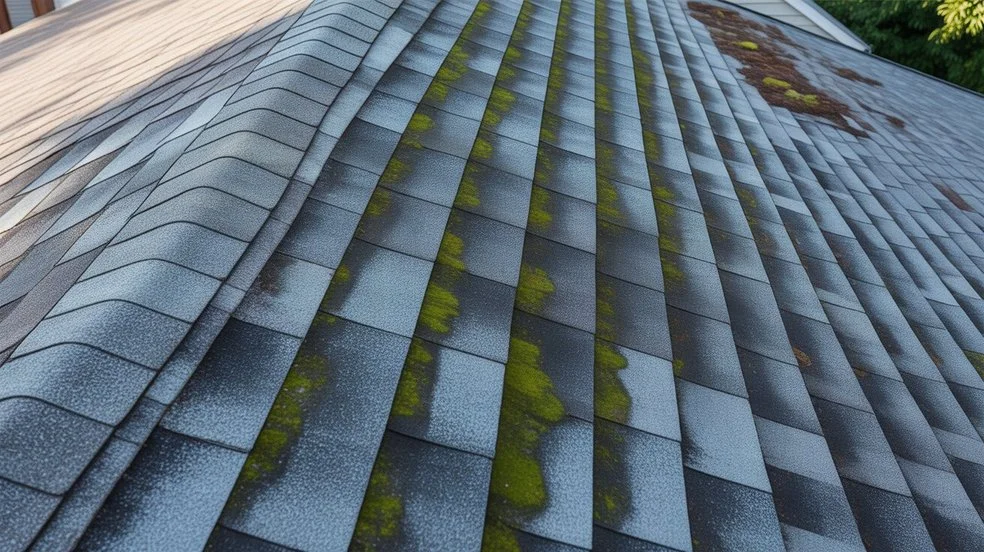
Black algae on roof surfaces commonly appears as dark streaks or patches.
The discoloration may begin in small areas and gradually become more noticeable. Over time, an affected roof can develop a patchy or streaked appearance, especially on shingles exposed to repeated moisture.
One useful clue is the texture.
Thin, flat discoloration is different from thick, raised growth. Moss generally has a more substantial, plant-like appearance, while algae may appear primarily as staining or discoloration.
Knowing the difference matters because the cleaning approach should be selected according to what is actually present.
Why Does Algae Grow on Roofs?
Moisture and environmental conditions play an important role.
Roofs located beneath trees or in areas with limited sunlight may stay damp longer after rain. Leaves and other organic debris can also collect on the surface, creating conditions that support biological growth.
The direction a roof faces can also affect how quickly areas dry.
This means two sections of the same roof can look very different. One side may remain relatively clean while another develops noticeable dark streaks because it receives less sunlight or stays damp for longer.
Can Black Algae Damage Roof Shingles?
Black algae is often considered primarily a cosmetic problem, particularly when it appears as surface staining.
However, a roof with persistent organic growth should not simply be ignored. Moisture, debris, moss, and other growth can create conditions that contribute to deterioration.
Moss deserves particular attention because it can grow around and beneath portions of shingles. As it develops, it can interfere with proper water shedding and contribute to problems with the roofing material.
The important point is that not every black stain means your roof needs to be replaced.
If the shingles are otherwise in good condition, cleaning may improve the appearance without replacing the roofing system. If there are cracked, curling, missing, or badly deteriorated shingles, however, cleaning alone will not solve the underlying problem.
What Are Black Stains on Roof Shingles?
Black stains on roof shingles are commonly associated with algae-related discoloration, particularly on asphalt-shingle roofs.
These stains can make a relatively new roof appear old or poorly maintained.
Because the discoloration often spreads gradually, homeowners may not notice how much the appearance has changed until they compare the roof with an older photograph.
Before cleaning, inspect the shingles for signs of physical deterioration. If the shingles are brittle, damaged, loose, or missing granules, aggressive cleaning can make the condition worse.
How to Remove Black Stains From Roof Shingles
The safest approach depends on the roof material and its condition.
For asphalt shingles with algae-related staining, roof-cleaning methods commonly rely on an appropriate cleaning solution rather than aggressive mechanical pressure.
The basic process should focus on:
- Inspecting the roof and identifying the type of buildup.
- Checking the condition of the shingles.
- Selecting a cleaning solution appropriate for the roofing material.
- Applying the solution carefully.
- Allowing the treatment to work according to the product instructions.
- Rinsing or allowing the treated growth to break down as appropriate for the chosen method.
- Protecting landscaping and surrounding surfaces throughout the process.
The exact procedure can vary by product and roofing material, so homeowners should follow the manufacturer’s recommendations.
Why You Should Not Pressure Wash Your Roof Like a Driveway
A common mistake is assuming that because pressure washing works well on concrete, it should also be used on roof shingles.
That is not a safe assumption.
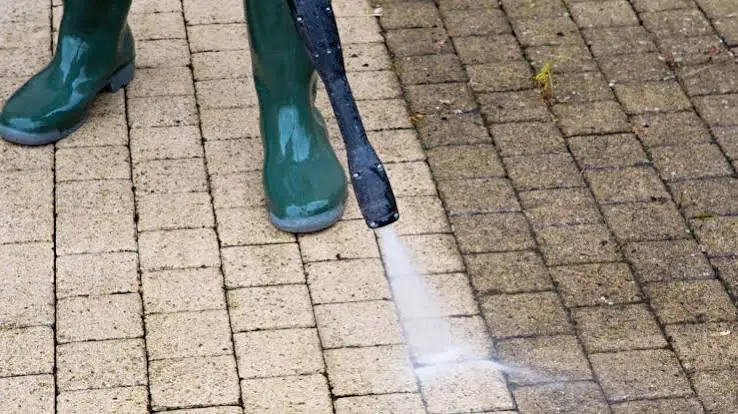
Roof shingles can be damaged by excessive pressure. A powerful spray can loosen or remove protective granules and may damage the shingle surface.
Roof cleaning generally requires a gentler approach than cleaning a concrete driveway.
If you are considering using a pressure washer on your roof, check the roofing manufacturer’s recommendations first. When in doubt, professional roof cleaning is a safer option than experimenting with high pressure.
Should You Clean a Roof With Black Algae?
If black algae is mainly affecting the roof’s appearance and the shingles are otherwise in good condition, cleaning may be worthwhile.
Cleaning can improve the roof’s appearance and remove visible biological buildup.
However, cleaning should not be viewed as a substitute for roof repairs. If the roof has leaks, damaged shingles, exposed underlayment, or significant deterioration, those problems need to be addressed separately.
A roof inspection before cleaning can help determine whether cleaning is appropriate.
How to Prevent Black Roof Stains
You cannot completely control the environmental conditions around your home, but several maintenance habits can help reduce buildup.
Keep nearby trees properly maintained so branches and excessive debris do not constantly accumulate over the roof.
Clean gutters regularly so water can drain properly. Also keep an eye on areas where leaves collect on the roof.
If one roof section consistently remains shaded and damp, it may be more likely to develop algae or other organic growth.
Regular visual inspections can help you notice dark streaks before they become widespread.
Does Rain Wash Black Algae Away?
Rain can wash loose dirt and some surface debris away, but it generally should not be considered a complete roof-cleaning solution.
If algae has attached to the shingles, normal rainfall is unlikely to remove all of the discoloration.
Rain can also create the moisture conditions that allow organic growth to persist, particularly on shaded sections of the roof.
Therefore, a roof that looks streaked or stained after repeated rainfall may still require a proper cleaning approach.
When Should You Hire a Professional Roof Cleaner?
Professional roof cleaning can make sense when the roof is difficult to access, the buildup is extensive, or you are unsure which cleaning method is safe.
Consider professional help if:
- The roof has significant black streaking.
- There is visible moss or heavy organic growth.
- The roof is steep or difficult to access.
- You do not have appropriate safety equipment.
- The shingles appear old or fragile.
- You are unsure which cleaning solution to use.
- You want to avoid damaging the roofing material.
Working on a roof also creates fall risks that are not present when cleaning ground-level surfaces.
For homeowners in Tracy, VJ Pressure Washing offers a local option to explore when professional roof cleaning is needed. You can learn more about Roof Cleaning in Tracy, CA if your roof has persistent dark streaks, algae, or other exterior buildup.
Final Thoughts
If you are asking What Is the Black Stuff on My Roof, algae-related staining is one of the most common explanations for dark streaks on asphalt shingles. But it is important to look at the roof’s overall condition before deciding how to clean it.
Avoid treating roof shingles like concrete or other hard surfaces. Excessive pressure can damage roofing materials, while an appropriate roof-cleaning method can address algae and other buildup more carefully.
Regular roof inspections, debris removal, and attention to shaded or damp areas can also help you catch problems early. When the roof is steep, heavily stained, difficult to access, or in questionable condition, professional cleaning can be a safer choice.
Frequently Asked Questions
What is the black stuff on my roof?
The black stuff is often algae-related staining, particularly when it appears as dark streaks on asphalt shingles. However, dirt, debris, moss, and other buildup can also cause dark discoloration.
Are black stains on a roof always algae?
No. Black staining can have multiple causes. The appearance and texture can provide clues, but a visual inspection may be needed to determine the actual cause.
Is black algae on a roof dangerous?
Algae-related staining is often mainly a cosmetic concern, but persistent organic growth and moisture should not be ignored. Moss and other growth can create more significant roofing concerns.
Can I pressure wash black stains off my roof?
Using high pressure on roof shingles is generally not recommended because it can damage the surface and remove protective granules. A roof-appropriate cleaning method is preferable.
Will bleach remove black stains from roof shingles?
Bleach-based cleaning solutions may be used in some professional roof-cleaning approaches, but the product, concentration, application method, and roofing material all matter. Never mix cleaning chemicals without confirming that they are compatible.
How do I know whether my roof needs cleaning or replacement?
If the roof has mostly surface staining but the shingles are otherwise in good condition, cleaning may be appropriate. Missing, cracked, curling, severely worn, or otherwise damaged shingles may indicate a separate repair or replacement issue.
Why are some parts of my roof black while others are clean?
Different roof sections receive different amounts of sunlight, shade, moisture, and debris. Areas that remain damp or shaded longer may develop algae and other organic buildup more readily.