
Dirty concrete is more than an eyesore. Oil stains, algae, and grime break down the surface over time and make it slippery. The good news? You don’t always need harsh chemicals to get it clean.
- Why Concrete Needs Regular Cleaning
- Can Water Alone Clean Concrete?
- Tools Needed to Clean Concrete With Water
- Step-by-Step Guide to Cleaning Concrete With Water
- Step 1: Clear the Area
- Step 2: Pre-Treat Stains
- Step 3: Wet the Entire Surface
- Step 4: Set Up Your Pressure Washer
- Step 5: Wash in Overlapping Passes
- Step 6: Rinse Thoroughly
- Step 7: Let It Dry Completely
- Best Practices for Cleaning Concrete With Water
- Common Mistakes to Avoid
- How Often Should You Clean Concrete?
- When to Consider Professional Concrete Cleaning
- Conclusion
- FAQs
So, how do you clean concrete with water? You use water pressure, the right tools, and a smart technique. A standard garden hose handles light dirt. A pressure washer handles the tough stuff. This guide walks you through everything, step by step.
Why Concrete Needs Regular Cleaning
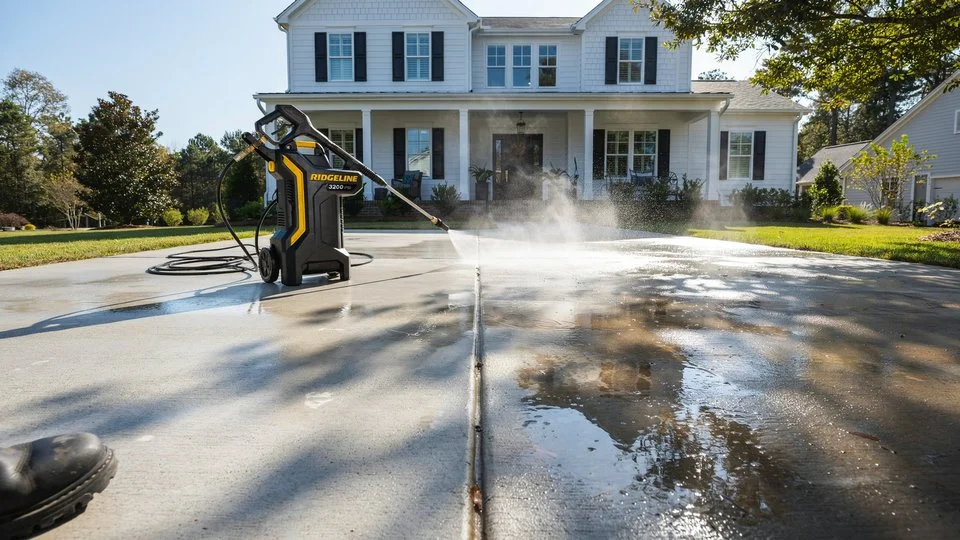
Concrete looks tough, but it’s actually porous. That means it absorbs everything: oil, grease, mold spores, and mineral deposits.
Here’s what happens when you skip cleaning:
- Stains set permanently. The longer oil or rust sits, the deeper it bonds.
- Mold and algae grow. They break down the surface and create slip hazards.
- Cracks form faster. Trapped debris holds moisture that freezes and expands.
- Curb appeal drops. A stained driveway lowers the first impression of your home.
Regular cleaning protects your investment. It also keeps your surfaces safe for kids, pets, and guests.
Can Water Alone Clean Concrete?
Yes, water alone can clean concrete, but only for light surface dirt.
Here’s the honest answer: plain water from a garden hose won’t remove oil stains, rust, or deep grime. You need pressure behind the water to lift embedded dirt from the pores.
| Cleaning Need | Water Only? |
| Light dust and debris | Yes |
| Mud and tracked-in dirt | Yes, with pressure |
| Oil and grease stains | No, need degreaser |
| Mold and mildew | No, need cleaner + pressure |
| Old rust stains | No |
For most jobs, water-based concrete cleaning methods work best when you combine water with the right PSI (pounds per square inch) of pressure.
Tools Needed to Clean Concrete With Water
Before you start, gather the right tools. Using the wrong equipment wastes time and can damage the surface.
Basic tools for light cleaning:
- Garden hose with a high-pressure nozzle
- Stiff-bristle push broom
- Bucket
Tools for deep cleaning:
- Pressure washer (1,500–3,000 PSI for most residential concrete)
- Rotating surface cleaner attachment (great for driveways)
- Safety glasses and closed-toe shoes
- Concrete-safe degreaser (for oil stains only)
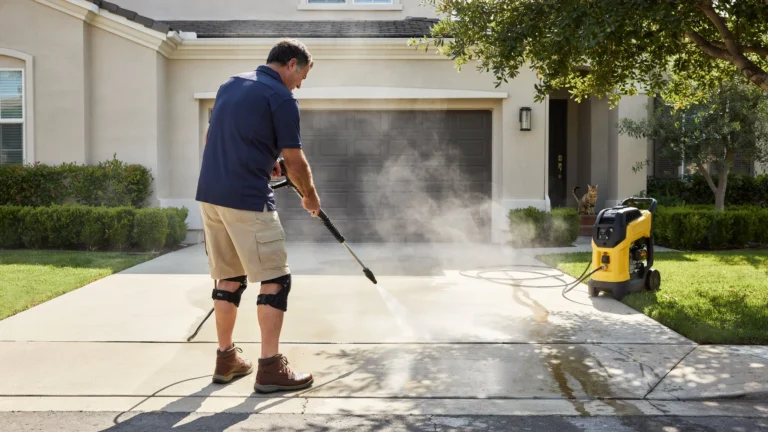
A quick note on pressure washers: Concrete cleaning with a pressure washer gives you the best results. A 25-degree nozzle tip is ideal for general cleaning. A 0-degree tip concentrates pressure into a pinpoint stream and can etch or chip concrete if you’re not careful.
Step-by-Step Guide to Cleaning Concrete With Water
This is how you clean concrete properly. Follow each step and you’ll get a noticeably cleaner surface without causing damage.
Step 1: Clear the Area
Remove furniture, potted plants, cars, and anything else sitting on the concrete. You want a clean, open surface to work on.
Sweep away loose debris first. Leaves, dirt, and pebbles will just clog your drain or turn into mud when wet.
Step 2: Pre-Treat Stains
If you have oil or grease spots, apply a concrete degreaser before washing. Let it sit for 5 to 10 minutes. For mold or mildew, a diluted mix of white vinegar and water works well on light growth.
Pre-treating makes the water-based concrete cleaning method far more effective.
Step 3: Wet the Entire Surface
Use your garden hose to rinse the full concrete area. This loosens surface dirt and prevents it from spreading when you apply pressure.
Work from the highest point toward the drain or edge. Water should flow away from your home’s foundation.
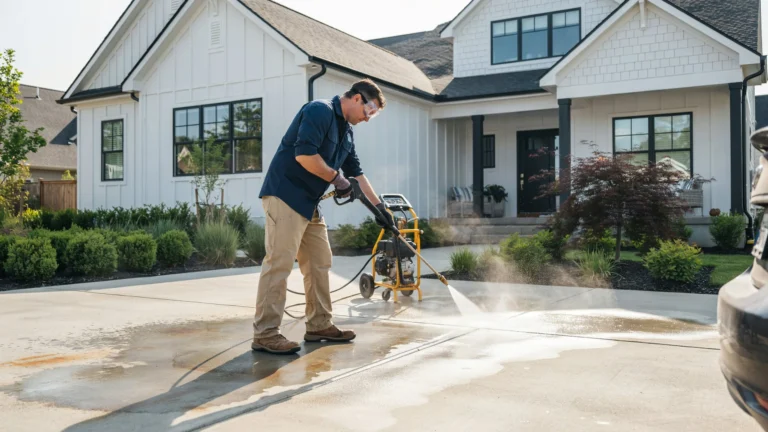
Step 4: Set Up Your Pressure Washer
Fill the pressure washer with water. Attach the 25-degree nozzle for broad surface cleaning.
For a concrete driveway, use a surface cleaner attachment if you have one. It prevents the streaking that a single wand can leave behind.
Start the pressure washer and test it on a small corner. Keep the nozzle 6 to 12 inches from the surface.
Step 5: Wash in Overlapping Passes
This is the key to knowing how to wash concrete surfaces without leaving streaks.
Move the wand in slow, overlapping strokes. Think of it like mowing a lawn. Each pass should overlap the last by about 2 inches.
Work in sections. Don’t jump around. Methodical cleaning gets the best results.
Step 6: Rinse Thoroughly
After washing each section, rinse with clean water. Push the dirty water away from the surface toward a drain.
This step removes the loosened grime and any cleaning solution you applied earlier.
Step 7: Let It Dry Completely
Give the concrete at least 24 to 48 hours to dry before walking on it or parking a vehicle on it. Wet concrete stays slippery and can attract new dirt quickly.
If you’re planning to seal the concrete, wait at least 72 hours.
Best Practices for Cleaning Concrete With Water
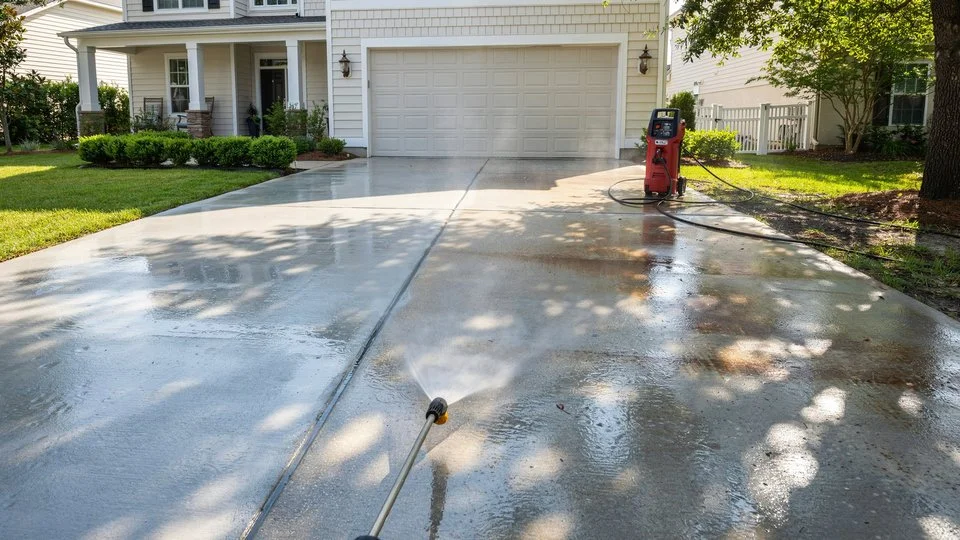
These habits separate a decent clean from a great one.
Always work with the slope. Water should drain away from structures, not toward them.
Don’t use too much pressure. High PSI can etch concrete, especially if it’s older or already cracked. For most driveways, 2,000 to 2,500 PSI is plenty.
Use a surface cleaner for large areas. It’s faster and gives an even clean without the zebra-stripe marks a wand leaves.
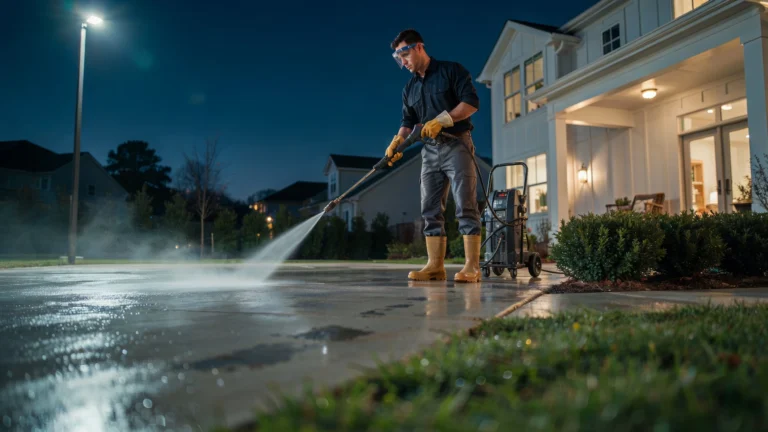
Wear protective gear. Safety glasses protect your eyes from debris. The water spray coming off concrete carries dirt, bacteria, and mold spores.
Test before full application. If you’re using any cleaning product, test it on a hidden corner first.
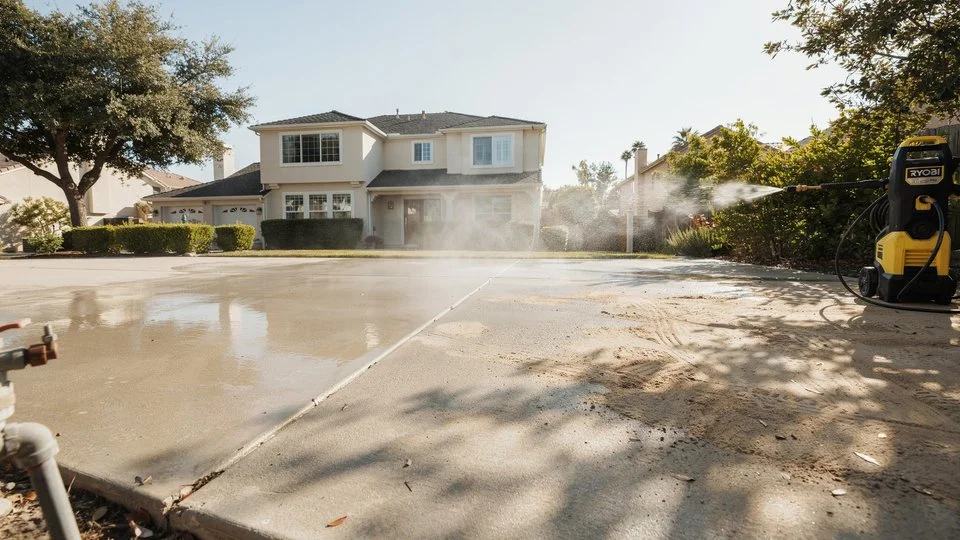
The best way to clean a concrete driveway combines the right PSI, a surface cleaner attachment, and a pre-treatment for any stains. It takes about 30 to 60 minutes for a standard two-car driveway.
Common Mistakes to Avoid
Even experienced homeowners make these errors. Avoid them and you’ll get better results every time.
Using too high of a PSI. More pressure isn’t always better. It can damage the concrete surface, especially around cracks or older slabs.
Skipping the pre-sweep. Wet leaves and debris turn into a paste that clogs drains and makes cleaning harder.
Holding the nozzle too close. Staying at least 6 inches away keeps you from etching lines into the concrete.
Not pre-treating stains. Water alone won’t remove oil. You need a degreaser before washing.
Letting water near your foundation. Always direct the water flow away from your home.
Washing in direct sunlight on a hot day. The water evaporates too fast and can leave mineral deposits or streaks on the surface.
How Often Should You Clean Concrete?
For most homeowners, cleaning concrete once or twice a year is enough. But it depends on your situation.
High-traffic areas like driveways and garage floors may need cleaning every 3 to 4 months. Patios and walkways typically need one thorough clean each spring and a quick rinse in fall.
If you live in a wet or humid climate, mold and algae grow faster. You may need to clean more often.
A good rule of thumb: clean it when you see visible staining, slippery spots, or a buildup of dirt. Don’t wait for it to get bad.
If you’re in the Tracy, CA area and your driveway has gotten past the DIY stage, VJ Pressure Washing offers professional driveway power washing services in Tracy, CA that handle even the toughest buildup. A professional wash every 12 to 18 months alongside your regular DIY maintenance is a great long-term routine.
When to Consider Professional Concrete Cleaning
Sometimes a garden hose and a pressure washer aren’t enough. Here’s when to call in a professional:
- Deep oil or fuel stains that have soaked in over years
- Black mold growth across large sections
- Concrete that hasn’t been cleaned in 5+ years
- Commercial properties with heavy vehicle traffic
- Pre-sealing preparation where a professional-grade clean ensures the sealer bonds correctly
Professional services use hot water pressure washers, commercial-grade degreasers, and surface cleaners that cover large areas faster and more evenly. The result is noticeably cleaner concrete with less risk of damage.
VJ Pressure Washing uses professional equipment and tested technique to restore driveways, patios, and commercial concrete surfaces. The difference in results compared to consumer-grade tools is significant.
Conclusion
Cleaning concrete with water is straightforward when you follow the right steps. Sweep first, pre-treat stains, use a pressure washer at the correct PSI, and work in overlapping passes. Rinse thoroughly and let it dry.
How do you clean concrete with water and actually get great results? You combine the right tools, the right technique, and consistency. A clean driveway or patio doesn’t just look better. It lasts longer and stays safer.
You can replace your closing sentence with:
For deeper stains or large surfaces, don’t hesitate to bring in a professional. It’s worth it. Contact us today at VJ Pressure Washing to schedule your concrete cleaning service and restore your property’s appearance with safe, effective results.
FAQs
Can I clean concrete with just a garden hose?
Yes, for light surface dirt. A garden hose with a high-pressure nozzle attachment can remove loose dust and mud. For stains, oil, or mold, you’ll need a pressure washer.
What PSI should I use to clean concrete?
For residential concrete, 1,500 to 2,500 PSI is the sweet spot. Older or cracked concrete should stay on the lower end to avoid damage.
Do I need soap or chemicals to clean concrete with water?
Not always. For regular maintenance cleaning, water alone (with pressure) is fine. For oil stains or mold, a degreaser or concrete cleaner used before washing gives much better results.
How long does it take for concrete to dry after pressure washing?
Allow 24 to 48 hours for the surface to dry fully. In humid weather, it may take longer. Don’t seal or coat it until completely dry.
Is concrete cleaning with a pressure washer safe for all concrete?
It’s safe for most concrete, but uses lower pressure on older slabs and keeps the nozzle at the right distance. Avoid using a 0-degree nozzle tip directly on the surface.
How do you clean concrete with water without leaving streaks?
Use a surface cleaner attachment and work in slow, overlapping passes. Streaks usually happen when you move too fast or use an inconsistent distance from the nozzle to the surface.