Pressure washing uses water to remove dirt, stains, mold, and grime from outdoor surfaces. Like any water-based cleaning method, it can add to your monthly water bill. However, the extra cost is often smaller than homeowners expect. The amount depends on your machine, cleaning time, water flow, and local water rates.
So, does pressure washing increase water bill? Yes, it can, but the increase depends on how much water you use. A pressure washer may use less water than a regular garden hose while cleaning the same area. Understanding water usage helps you plan your cleaning job and control costs.
- Does Pressure Washing Increase Your Water Bill?
- How Much Water Does a Pressure Washer Use?
- How Much Does Pressure Washing Add to Your Water Bill?
- Does Pressure Washing Use More Water Than a Garden Hose?
- What Factors Affect Pressure Washing Water Usage?
- 1. Pressure Washer GPM
- 2. Size of the Cleaning Area
- 3. Type of Surface
- 4. Dirt and Stain Levels
- 5. Cleaning Time
- 6. Nozzle and Spray Pattern
- How to Reduce Water Usage When Pressure Washing
- Does Pressure Wash Waste Water?
- Is Pressure Washing More Water-Efficient Than Manual Cleaning?
- Conclusion
- Frequently Asked Questions
Does Pressure Washing Increase Your Water Bill?
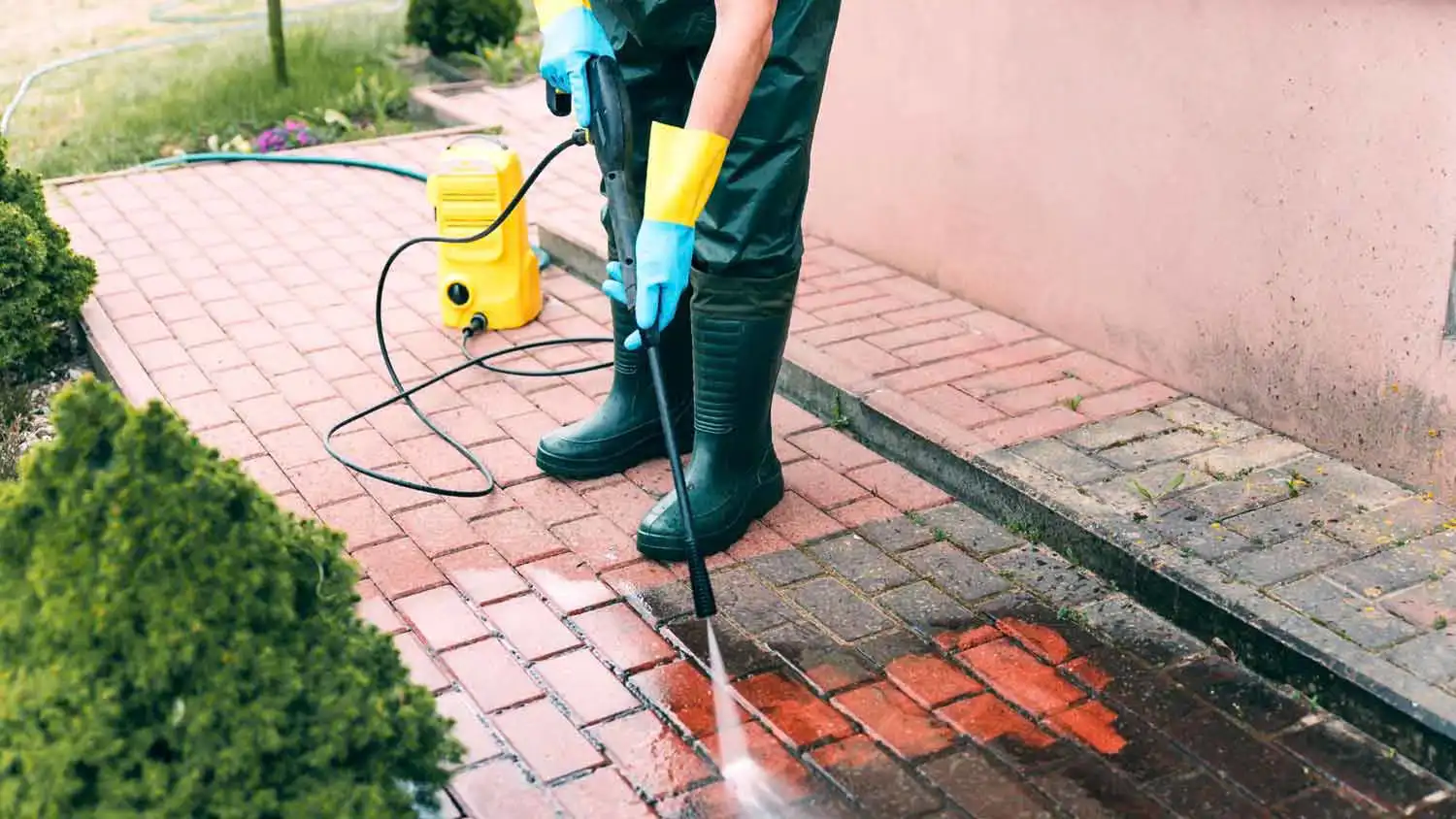
Yes, pressure washing can increase your water bill because the machine uses water during cleaning. However, the increase is usually easy to control with proper planning.
Most residential pressure washers use around 1.5 to 2.5 gallons per minute (GPM). Some larger machines use more water, depending on their size and design.
For example, a pressure washer that uses 2 gallons per minute will consume 60 gallons during a 30-minute cleaning session.
Your actual cost depends on your local water rate. If your water provider charges $5 for every 1,000 gallons, using 60 gallons costs about $0.30.
This is only an example. Your water rate may be higher or lower, and some providers charge extra fees.
The amount of water also depends on the surface you clean. Washing a small patio takes less time than cleaning an entire driveway or house exterior.
Other factors include:
- The pressure washer’s gallons-per-minute rating.
- How long you keep the machine running.
- The size and condition of the surface.
- The cleaning method and nozzle you choose.
- Whether you use extra water for rinsing.
Pressure washing does not always mean a large increase in your water bill. A suitable machine and shorter cleaning time can help keep water costs low.
How Much Water Does a Pressure Washer Use?
Pressure washer water usage depends mainly on the machine’s flow rate. This rate is measured in gallons per minute, also called GPM.
A machine with a 1.5 GPM rating uses 1.5 gallons every minute while spraying. A machine rated at 2.5 GPM uses 2.5 gallons during the same period.
Here is an example of how much water different machines use:
| Pressure Washer Flow | 15 Minutes | 30 Minutes | 60 Minutes |
| 1.5 GPM | 22.5 gallons | 45 gallons | 90 gallons |
| 2.0 GPM | 30 gallons | 60 gallons | 120 gallons |
| 2.5 GPM | 37.5 gallons | 75 gallons | 150 gallons |
| 3.0 GPM | 45 gallons | 90 gallons | 180 gallons |
| 4.0 GPM | 60 gallons | 120 gallons | 240 gallons |
These figures show water use during active spraying. They do not include water used for soaking, rinsing, or other cleaning steps.
For example, imagine cleaning a driveway with a 2 GPM pressure washer. If you spray for 25 minutes, you use about 50 gallons of water.
If you spend another five minutes rinsing the surface, your total becomes 60 gallons.
The machine does not need to run continuously throughout the entire cleaning job. Turning it off during setup and breaks can prevent unnecessary water use.
Always check your machine’s manual to find its actual GPM rating.
How Much Does Pressure Washing Add to Your Water Bill?
The extra cost of pressure washing depends on your machine’s water use and local water rates.
You can estimate the cost with a simple formula:
Water used = GPM × Cleaning time in minutes
Water cost = Gallons used ÷ 1,000 × Water rate per 1,000 gallons
For example, assume your pressure washer uses 2 gallons per minute. You clean your driveway for 30 minutes and pay $5 per 1,000 gallons.
Your calculation looks like this:
- Water flow: 2 GPM
- Cleaning time: 30 minutes
- Total water use: 60 gallons
- Water rate: $5 per 1,000 gallons
- Estimated water cost: $0.30
This means one 30-minute cleaning session adds about 30 cents to your water usage at that sample rate.
Here are more examples using the same $5 rate:
| Cleaning Tim | Waters Used at 2 GPM | Estimated Cost |
| 15 minutes | 30 gallons | $0.15 |
| 30 minutes | 60 gallons | $0.30 |
| 45 minutes | 90 gallons | $0.45 |
| 60 minutes | 120 gallons | $0.60 |
| 90 minutes | 180 gallons | $0.90 |
These estimates cover water charges only. They do not include electricity, fuel, cleaning products, or equipment costs.
Some water providers also use tiered rates. This means the price per gallon can increase when your household passes a certain usage level.
Check your latest water bill for the rate that applies to your home. This gives you a more accurate estimate before starting a large cleaning project.
Does Pressure Washing Use More Water Than a Garden Hose?
Not always. A pressure washer can use less water than a regular garden hose, depending on the flow rate and cleaning time.
Most standard garden hoses deliver around 5 to 10 gallons per minute. The exact amount depends on water pressure, hose size, and other factors.
Many home pressure washers use around 1.5 to 2.5 gallons per minute. This means they can use much less water while removing stubborn dirt.
For example, consider a 30-minute cleaning session:
- A garden hose using 6 GPM consumes 180 gallons.
- A pressure washer using 2 GPM consumes 60 gallons.
In this example, the pressure washer uses 120 fewer gallons.
The main reason is the force behind the water stream. A pressure washer uses a pump to create a strong spray. This helps remove dirt without needing the same high water flow as an open hose.
However, the result depends on how you use each tool. Leaving a pressure washer running for too long can increase water consumption.
A garden hose may also use less water for quick jobs, such as rinsing a small outdoor item.
Choose the tool based on the cleaning task instead of assuming one method always uses less water.
What Factors Affect Pressure Washing Water Usage?
Several things affect how much water your pressure washer uses. Understanding them helps you control cleaning time and avoid waste.
1. Pressure Washer GPM
GPM is one of the biggest factors affecting water use. A machine with a higher GPM rating moves more water every minute.
For example, a 3 GPM machine uses 90 gallons in 30 minutes. A 1.5 GPM machine uses only 45 gallons during the same period.
Choose a machine with enough flow for your cleaning needs. A larger machine is not always necessary for small home projects.
2. Size of the Cleaning Area
A small patio needs less water than a large driveway. Larger surfaces take more time to wash and rinse.
For example, cleaning a 100-square-foot walkway may take only a few minutes. Washing a 1,000-square-foot driveway can take much longer.
Measure the area before starting. This helps you estimate the time and water needed.
3. Type of Surface
Different surfaces need different cleaning methods.
Concrete can hold dirt inside its small pores. It may need more time and water than a smooth surface.
Wood decks, vinyl siding, and painted walls need gentler cleaning. They may require lower pressure and careful rinsing.
Always use settings that match the surface.
4. Dirt and Stain Levels
Light dust is easier to remove than old grease, oil, mold, or thick mud.
Heavy stains may need a suitable cleaning solution before pressure washing. This can reduce the time spent spraying water.
Using the right cleaner can help remove dirt without repeated washing.
5. Cleaning Time
The longer you spray, the more water you use. Keeping the machine running while moving furniture or preparing supplies wastes water.
Turn off the spray when you are not cleaning. Plan your work before starting the machine.
6. Nozzle and Spray Pattern
Different nozzles create different spray patterns. A suitable nozzle can help you clean an area more efficiently.
A narrow spray may remove tough dirt, but it can damage some surfaces. A wider spray covers more area and may reduce repeated passes.
Use the nozzle recommended for your surface and machine.
How to Reduce Water Usage When Pressure Washing
You can clean outdoor surfaces without using excessive water. A few simple changes can help lower your pressure washing water consumption.
Choose the Right Machine: Use a pressure washer with a suitable GPM rating. A small residential machine is often enough for basic home cleaning.
Prepare the Surface First: Remove loose leaves, dirt, and other debris with a broom. This reduces the amount of water needed during washing.
Use the Right Cleaning Solution: Apply a suitable cleaner to stubborn stains. Let it work for the time stated on its label before rinsing.
Clean in Small Sections: Divide large areas into smaller sections. This helps you avoid repeating the same work.
Turn Off the Machine During Breaks: Do not leave the trigger running when you are not spraying. Shut down the machine according to its manual during longer breaks.
Check for Leaks: Inspect the hose, fittings, and connections before starting. Even a small leak can waste water over time.
Use the Correct Nozzle: Choose a nozzle that matches the surface and cleaning task. This helps remove dirt with fewer passes.
Avoid Excessive Rinsing: Rinse each section until the cleaning solution and dirt are removed. Do not keep spraying an already clean surface.
These simple steps support water-efficient pressure washing. They also help you finish cleaning without unnecessary water use.
Does Pressure Wash Waste Water?
Pressure washing does not automatically waste water. It depends on how the machine is used and whether you follow a sensible cleaning plan.
Water waste happens when people leave the machine running without cleaning. It can also happen when they repeatedly rinse the same area or use too much water on light dirt.
For example, spraying a driveway for 20 extra minutes after removing all visible dirt serves little purpose.
You can reduce waste by preparing the area first and using the correct cleaning method. A suitable cleaning product may also help loosen tough stains before rinsing.
Where allowed, collect runoff when practical, especially if cleaning chemicals or oily stains are involved. Follow local rules for wastewater disposal. Never direct dirty water into storm drains when it could carry harmful chemicals into waterways.
A pressure washer can be an efficient cleaning tool when used with care. The goal is to use enough water to clean the surface without letting it run unnecessarily.
Is Pressure Washing More Water-Efficient Than Manual Cleaning?
Pressure washing can be more water-efficient than some manual cleaning methods. However, the result depends on the tools and techniques you use.
For example, cleaning a large concrete driveway with an open garden hose may use a lot of water. A pressure washer can remove the same dirt with a lower flow rate.
Manual cleaning with a bucket and brush may use even less water for a small area. But it takes more time and physical effort.
Here is a simple comparison:
| Cleaning Method | Water Use | Best For |
| Pressure washer | Around 1.5 to 2.5 GPM for many home models | Driveways, patios, and large surfaces |
| Garden hose | Around 5 to 10 GPM for many standard hoses | Quick rinsing and light dirt |
| Bucket and brush | Depends on bucket size and refills | Small areas and spot cleaning |
| Spray bottle and cloth | Very low water use | Small items and light stains |
These figures are general examples. Actual water use depends on equipment, water pressure, and cleaning time.
Pressure washing is often a good choice for large, dirty surfaces. Manual cleaning may be better for small areas that need only light cleaning.
Think about the size of the job, the type of dirt, and the time available. The best method is the one that cleans the surface without using more water than needed.
Conclusion
Pressure washing can increase your water bill, but the extra cost is often small for a normal home cleaning job. Your total expense depends on the machine’s GPM, cleaning time, surface size, and local water rates.
A pressure washer may also use less water than a regular garden hose. Choose the right machine, prepare the surface, and avoid spraying longer than necessary.
VJ Pressure Washing understands the value of proper cleaning methods and careful water use. Whether you clean a driveway, patio, or house exterior, smart planning helps reduce waste and achieve better results.
Frequently Asked Questions
Does Pressure Washing Use a Lot of Water?
No, most residential pressure washers use around 1.5 to 2.5 gallons per minute. Total water use depends on cleaning time and the machine’s flow rate.
How Much Water Does a Pressure Washer Use in 30 Minutes?
A 2 GPM pressure washer uses about 60 gallons in 30 minutes. A machine with a higher or lower GPM rating will use a different amount.
Will Pressure Washing Make My Water Bill Go Up?
Yes, pressure washing adds water usage to your household bill. However, one short cleaning session may add only a small amount to your total cost.
Is It Cheaper to Pressure Wash or Use a Garden Hose?
Pressure washing may cost less in water charges because many machines use fewer gallons per minute than garden hoses. The final cost depends on cleaning time and water rates.
How Much Does It Cost to Pressure Wash a Driveway in Water?
The water cost depends on the driveway size, machine flow rate, and cleaning time. For example, a 2 GPM machine running for 30 minutes uses 60 gallons.
Does a Higher PSI Pressure Washer Use More Water?
Not always. PSI measures water pressure, while GPM measures water flow. A machine can have high PSI without using more gallons per minute.
Can I Use a Pressure Washer During a Water Restriction?
Check your local water provider’s rules before pressure washing. Some areas restrict outdoor water use during droughts, even when using water-efficient equipment.
How Can I Calculate Pressure Washing Water Usage?
Multiply your pressure washer’s GPM rating by the number of minutes you spray. For example, 2 GPM multiplied by 30 minutes equals 60 gallons.
Does Pressure Washing Waste Water Compared to Manual Cleaning?
Not always. Pressure washing can use less water than a garden hose for large surfaces. However, a bucket and brush may use less water for small cleaning jobs.
Can Professional Pressure Washing Save Water?
A professional cleaner can choose suitable equipment and methods for each surface. Proper planning and fewer repeated passes can help reduce unnecessary water use.