
A stained driveway can quickly make the outside of your home look neglected. Algae, mildew, green growth, and dark organic stains are common causes. Bleach can help with these stains, but using it the wrong way can damage nearby plants or affect the driveway surface. The type of driveway also matters, since concrete and asphalt do not respond to cleaners in the same way.
Can I Clean My Driveway With Bleach? Yes, you can, especially when dealing with algae, mildew, and other organic growth. Use a proper dilution, test a small area first, protect nearby plants, and rinse the driveway thoroughly after cleaning.
- Is Bleach Safe for a Concrete Driveway?
- What Does Bleach Remove From a Driveway?
- How to Clean a Driveway With Bleach
- 1. Remove loose dirt first
- 2. Protect nearby areas
- 3. Dilute the bleach
- 4. Apply the solution evenly
- 5. Let it work without letting it dry
- 6. Scrub when needed
- 7. Rinse very well
- 8. Inspect the surface
- How Much Bleach Should You Use to Clean a Driveway?
- Can You Pressure Wash a Driveway After Using Bleach?
- What Should You NOT Mix With Bleach?
- Bleach vs. Other Driveway Cleaning Methods
- Bleach vs. Pressure Washing
- Bleach vs. Concrete Cleaner
- Will Bleach Damage Concrete or Driveway Sealer?
- How to Protect Plants When Cleaning With Bleach
- When Should You Hire a Professional?
- Conclusion
- Frequently Asked Questions
Is Bleach Safe for a Concrete Driveway?
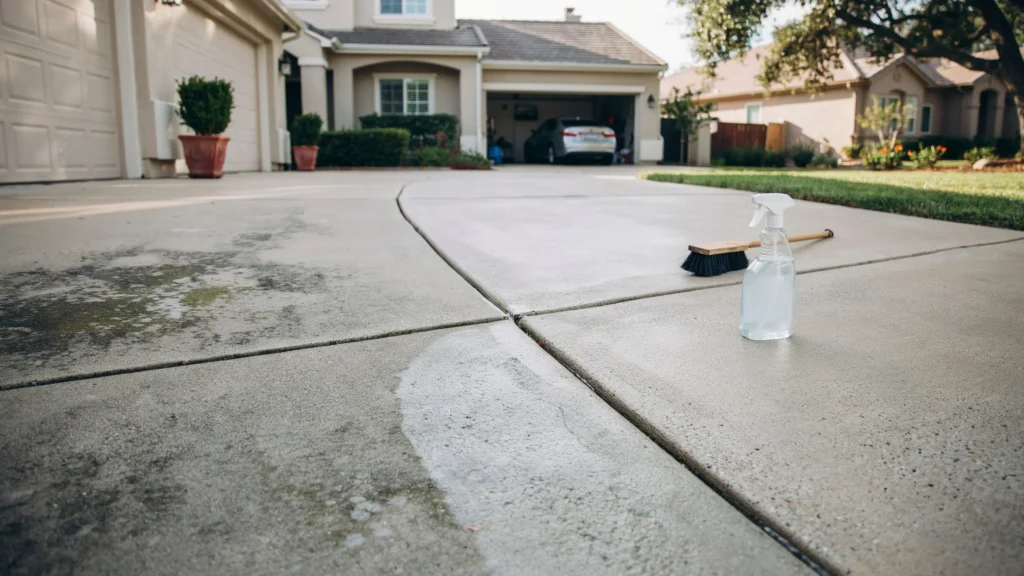
Bleach can be used on many concrete driveways when it is properly diluted and rinsed away. Household bleach contains sodium hypochlorite, which can kill or remove organic growth. It can also lighten some dark stains.
The main concern is not simply whether bleach touches concrete. The bigger issue is using a solution that is too strong or leaving it on the surface too long.
Concrete is porous. It can hold dirt, oil, algae, and other material below the surface. Bleach can help with organic stains, but it will not solve every driveway cleaning problem.
For example, bleach is useful for green algae or black organic spotting. It is much less useful for deep oil stains. Oil usually needs a cleaner designed to break down grease.
Before cleaning the entire driveway, test the diluted solution on a small hidden area. Check the concrete after rinsing and drying. This helps you spot unwanted color changes before treating the full surface.
If your driveway has a decorative coating, old sealer, painted areas, or special finishes, check the manufacturer’s cleaning instructions first.
What Does Bleach Remove From a Driveway?
Bleach is most useful against stains linked to organic growth. These can include:
- Algae
- Mildew
- Moss
- Some mold growth
- Organic discoloration
- Green or dark surface growth
Bleach does not work equally well on every stain.
Oil, grease, rust, tire marks, and mineral deposits often need different cleaning methods. Trying to solve every driveway stain with bleach can waste time and damage nearby materials.
For example, an oil spot may need an oil-cutting cleaner and agitation. Rust may require a rust remover made for concrete. Dirt and loose debris may only need water and surface cleaning.
This distinction is important because a driveway can look dirty for several different reasons. Identifying the stain first helps you choose a safer treatment.
How to Clean a Driveway With Bleach
If the driveway is suitable for bleach cleaning, use a careful process rather than pouring bleach directly onto the concrete.
1. Remove loose dirt first
Sweep away leaves, dust, soil, and loose debris. Removing this layer lets the cleaning solution reach the actual stain.
2. Protect nearby areas
Move outdoor items away from the driveway. Cover or wet nearby plants before cleaning. Keep pets and children away from the work area.
3. Dilute the bleach
Never assume that stronger means better. Read the bleach container and follow its directions for outdoor hard-surface use.
Bleach products have different concentrations. A dilution that is suitable for one product may be too strong for another.
Use only a labeled dilution. If the product does not give directions for the surface, choose a cleaner designed for driveways instead.
4. Apply the solution evenly
Apply the diluted solution across the affected area. Avoid creating large puddles or allowing runoff to reach plants.
Work in manageable sections. This gives you better control over contact time and rinsing.
5. Let it work without letting it dry
Follow the product’s stated contact time. Do not allow the solution to dry on the driveway.
Drying can increase the risk of unwanted discoloration and makes rinsing harder.
6. Scrub when needed
A stiff outdoor brush can help loosen stubborn organic growth. Scrubbing is useful when the growth has built up inside the concrete’s surface texture.
7. Rinse very well
Use plenty of clean water to remove the cleaning solution. Pay attention to cracks, edges, and low spots where liquid can collect.
Do not let dirty bleach water flow into garden beds, storm drains, ponds, or other sensitive areas.
8. Inspect the surface
Let the driveway dry before judging the result. Some stains become less visible only after the surface has fully dried.
If the stain remains, identify it before applying another chemical treatment.
How Much Bleach Should You Use to Clean a Driveway?
There is no single bleach-to-water ratio that works for every driveway.
The correct amount depends on the bleach concentration, surface type, stain, and product instructions. Household bleach products can contain different amounts of sodium hypochlorite. The CDC notes that common household bleach products may contain about 5.25% to 6.15% sodium hypochlorite.
That is why copying a fixed recipe from another website can be risky.
For driveway cleaning, use the weakest dilution that the product label allows for the intended surface and stain. Never use concentrated bleach just because a stain looks severe.
A stronger solution can increase the chance of discoloration, plant damage, and harm to nearby materials. It also creates more hazardous runoff.
If the label does not provide outdoor concrete instructions, use a driveway cleaner made for that job instead.
Can You Pressure Wash a Driveway After Using Bleach?
Yes, pressure washing can be used after a suitable bleach treatment, but the bleach should be rinsed properly first.
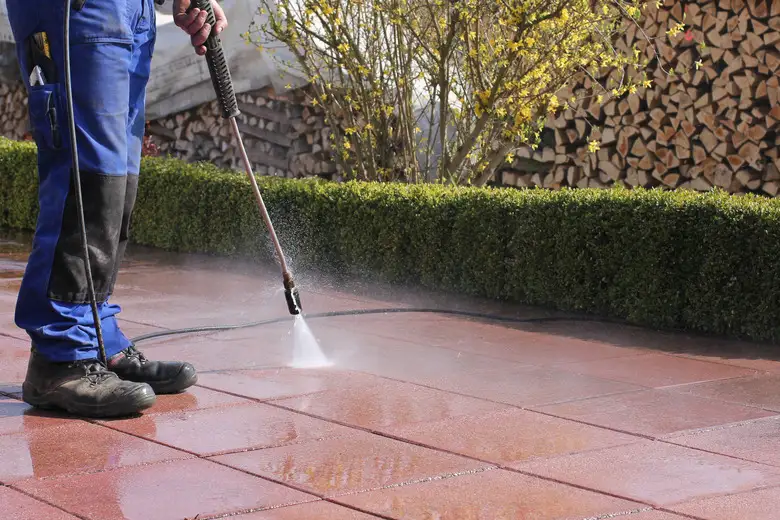
Pressure washing helps remove loosened dirt, dead organic growth, and residue. It can also improve the final appearance of concrete.
Use the correct pressure and nozzle for the driveway. Holding the wand too close can etch concrete or leave visible cleaning lines.
Avoid spraying directly into cracks, damaged joints, electrical fixtures, or areas where water can enter the building.
If you plan to pressure wash after applying bleach, control the runoff from the start. Do not wait until dirty water is already moving toward plants or storm drains.
A pressure washer also does not replace chemical judgment. More pressure does not always mean better cleaning.
What Should You NOT Mix With Bleach?
Never mix bleach with other cleaners unless the product manufacturer clearly says the combination is safe.
Bleach can react with acids and ammonia-based products. These reactions can release dangerous gases.
The CDC warns against mixing bleach with ammonia or other cleaners. Its guidance also recommends protective gloves and eye protection when using bleach.
Do not mix bleach with:
- Ammonia
- Vinegar
- Acid-based cleaners
- Toilet bowl cleaners
- Rust removers
- Other chlorine products
- Unknown cleaning chemicals
This includes products that may have been used on the driveway earlier.
If you recently used another chemical, rinse the surface thoroughly and follow the product’s safety instructions before using anything else.
Never rely on smell to judge whether chemicals are safe. If cleaners are accidentally mixed and strong fumes develop, move away from the area and get fresh air.
Bleach vs. Other Driveway Cleaning Methods
Bleach is only one option for driveway cleaning.
For algae and mildew, a properly diluted bleach solution can be effective. For general dirt, plain water and pressure washing may be enough.
For oil, a degreaser made for concrete is usually more suitable. Rust stains need a product made for rust removal. Heavy buildup may need controlled pressure washing with the right surface cleaner.
A good cleaning method matches the stain to the treatment.
This approach also reduces unnecessary chemical use. You do not need bleach simply because the driveway looks dirty.
Bleach vs. Pressure Washing
Bleach targets organic growth. Pressure washing removes dirt and buildup through water pressure.
They can work together when the driveway has organic growth and surface grime.
Bleach vs. Concrete Cleaner
Concrete cleaners are available for different problems. Some are designed for grease, oil, or general dirt.
Choose a product based on the stain rather than using bleach as a universal cleaner.
Will Bleach Damage Concrete or Driveway Sealer?
People often ask, can bleach damage concrete? The answer depends on how it is used.
A properly diluted product used according to its label is less likely to cause problems than concentrated bleach or repeated heavy applications.
Problems become more likely when bleach is too strong, left on the surface too long, or poorly rinsed.
Sealed concrete needs extra care. Some sealers have specific cleaning requirements. A harsh chemical may affect the appearance or performance of a coating.
If you are asking, will bleach damage concrete driveway surfaces, check the age and condition of the concrete first. Older, worn, cracked, or previously treated surfaces deserve more caution.
The same concern applies to asphalt. Will bleach damage asphalt driveway surfaces? A bleach solution may affect certain asphalt surfaces, coatings, or nearby materials, especially when used too strongly or too often.
If you are considering bleach on asphalt driveway surfaces, read the product instructions first. Asphalt is different from concrete and should not be treated as though both materials react the same way.
When the surface is unknown, a small test area is safer than treating the entire driveway.
How to Protect Plants When Cleaning With Bleach
Plants are one of the biggest concerns when using bleach outdoors.
Bleach runoff can harm leaves and vegetation. Wind can also carry spray onto plants that are several feet away.
Start by wetting nearby plants with clean water. This reduces the amount of cleaning solution that can remain on their surfaces.
Keep the bleach solution on the driveway. Avoid spraying toward flower beds, grass, shrubs, and trees.
After cleaning, rinse nearby vegetation with plenty of clean water if any solution reaches it.
Also watch where the runoff travels. A driveway may slope toward a lawn, garden, street, or storm drain.
Good chemical control means thinking about the entire area, not just the stain.
When Should You Hire a Professional?
DIY cleaning makes sense for small areas with simple surface growth. A professional may be a better option when the driveway has heavy staining, large organic growth, oil contamination, delicate surfaces, or an old sealer.
Professionals can also adjust pressure based on the surface condition. This helps reduce the risk of surface damage from excessive pressure.
A professional cleaning can be useful when you are unsure what caused the stain. Applying the wrong chemical can make some problems harder to correct.
Before hiring someone, ask what cleaning method they plan to use. A good contractor should be able to explain why that method fits your driveway.
VJ Pressure Washing uses driveway cleaning methods based on the surface and cleaning problem rather than treating every driveway the same way.
Conclusion
Bleach can be a useful option for cleaning algae, mildew, and other organic growth from a driveway. It is not the right cleaner for every stain, though. Oil, rust, tire marks, and heavy dirt often need different cleaning products or methods.
If you decide to use bleach, always follow the product label and dilute it as directed. Protect nearby plants, avoid mixing bleach with other cleaners, and never let the solution dry on the driveway. A small test area can also help you check how the surface reacts before cleaning the entire driveway.
For homeowners who need driveway pressure washing in Tracy, CA, the team at VJ Pressure Washing can help choose a cleaning method based on the driveway’s surface, condition, and type of buildup. The goal is not just to make the driveway look cleaner, but to clean it without causing avoidable surface or property damage.
Frequently Asked Questions
Can I clean my driveway with regular household bleach?
You can use household bleach for some outdoor organic stains if the product label allows it. Dilute it according to the label and rinse the driveway well.
Can bleach remove black stains from concrete?
Bleach can help with black stains caused by algae, mildew, or other organic growth. It may not remove black stains caused by oil, rubber, or mineral deposits.
Can bleach damage concrete?
Strong or improperly used bleach can cause problems. Use a labeled dilution, avoid long contact times, and rinse the surface thoroughly.
Will bleach damage asphalt driveway surfaces?
It can create problems when used incorrectly, especially on sensitive or coated asphalt. Check the product directions and test a small area before wider use.
Can I pressure wash after using bleach?
Yes. Pressure washing can remove loosened growth and residue after the appropriate treatment. Use suitable pressure and control the runoff.
What happens if bleach touches grass?
Bleach can damage grass and other plants. Wet nearby plants before cleaning and rinse them with clean water if the cleaning solution reaches them.