
Can a brick house be power- washed? Yes, however, there are a few things to keep in mind when power washing bricks. Brick may be the toughest substance to use for a home’s exterior, but cleaning it safely can be a challenging task. Bricks are porous like concrete, so the bricks can hold water. Thankfully, the face is vertical and isn’t really bathed in the weather like a driveway or patio. This post will hopefully convey the dos and don’ts of pressure washing a brick home.
Understanding Brick Surfaces Before Pressure Washing
- Understanding Brick Surfaces Before Pressure Washing
- Benefits of Brick Pressure Washing
- 1: Rids Dirt and Grime
- 2: Gets Rid of Mold and Algae
- 3: Enhances Curb Appeal
- 4: Promotes longevity
- Best Pressure Settings for Brick Cleaning
- Choosing the Right Equipment
- pressure washing a brick house
- Step 1: Check the surface
- Step 2: Pre-Soak the Brick
- Step 4 :Use low pressure.
- Step 5: clean from top to bottom.
- Step 6: Rinse Well.
- Soft Washing vs Pressure Washing Brick
- What Is the Best Brick Cleaning Solution?
- Professional Brick Pressure Washing
- Common Mistakes to Avoid
- Conclusion
- FAQs
Brick is a durable material, but it has the following:
- It has huge pores, and so it soaks up water.
- It depends on the mortar joints that are softer than the bricks.
- It can be a magnet for dirt, mould, algae, and pollution stains.
Because of these qualities, pressure washing bricks should be done gently and carefully. Too much pressure can damage not only the brick surface but also the mortar between them. At VJ Pressure Washing, we use controlled pressure and the right cleaning solutions to protect your brick while still delivering a deep, effective clean.
Professionals say that you can clean brick with a pressure washer. It just takes a little caution and the right technique.
Benefits of Brick Pressure Washing
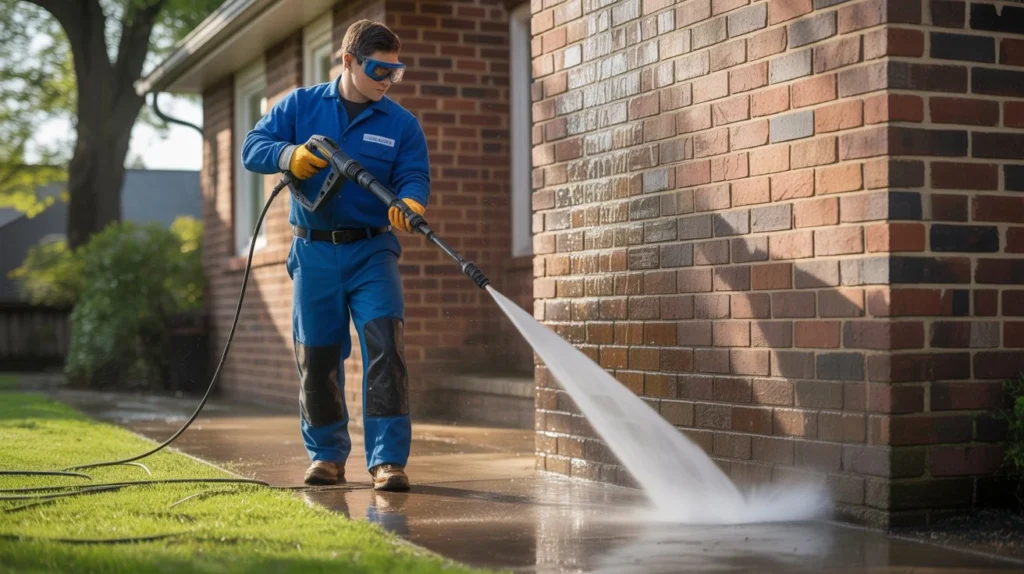
If performed properly, brick pressure washing has the following benefits :
1: Rids Dirt and Grime
Dust, mud, and contaminants build up on brick surfaces over time. Their natural color is brought back with pressure washing.
2: Gets Rid of Mold and Algae
Green or black stains are commonly caused by moist conditions.
3: Enhances Curb Appeal
A washed brick home looks newer and more appealing.
4: Promotes longevity
Maintaining chronic degeneration at bay.
Best Pressure Settings for Brick Cleaning
Selecting the correct pressure is the most important aspect when pressure washing brick house surfaces. Recommended PSI Levels
- 500-1000 PSI: Suitable for most bricks.
- Up to 1500 PSI: Ceiling for more recent, tougher bricks.
Always start at the lowest pressure, increasing gradually.
Choosing the Right Equipment
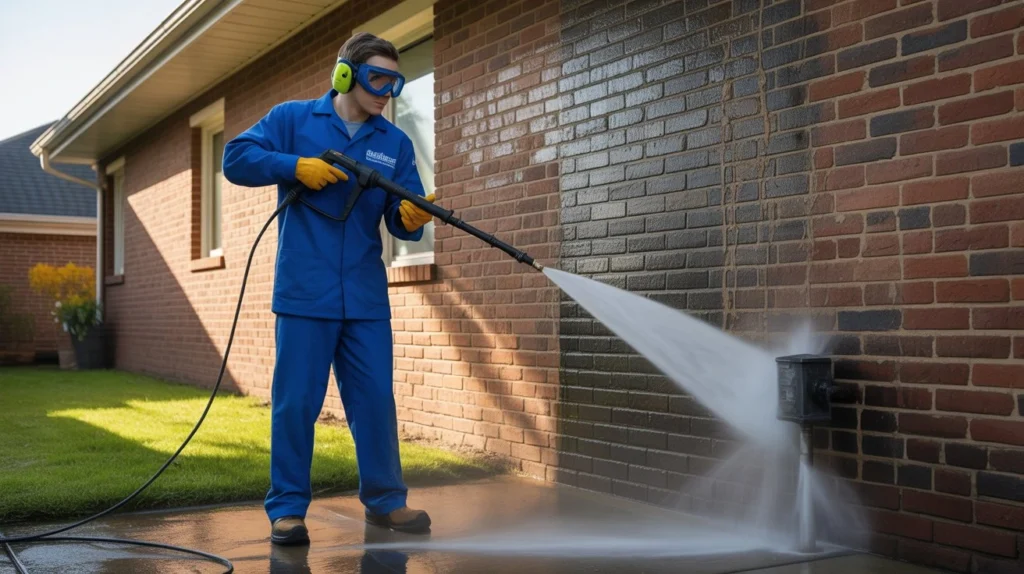
For a successful brick pressure washing, you will need:
- Pressure washer with variable PSI
- Fan spray nozzle (25° or 40°)
- Use gloves and goggles as safety equipment
- Ladder for elevated areas
Avoid the needle or turbo nozzles as they concentrate the pressure and can damage bricks.
pressure washing a brick house
Step 1: Check the surface
repair cracks or damaged bricks before cleaning
Step 2: Pre-Soak the Brick
Spray the solution on the surface and water mist it so it does not soak into the substrate.
Step 3: Purchase a Brick Cleaning Solution
- Mild brick cleaners to”:
- Water + Dish Soap
- Vinegar + water solution
- Special brick cleaners
Test the solution on a small area before use.
Step 4 :Use low pressure.
Start at low pressure and hold the distance no more than 12 to 18 inches.
Step 5: clean from top to bottom.
This helps to avoid streaking and clean evenly.
Step 6: Rinse Well.
Evacuate cleaning agent residues to avoid staining.
Soft Washing vs Pressure Washing Brick
Experts advise soft washing as opposed to harsh power washing.
Soft Washing
- Uses low pressure
- Is dependent on cleaning solutions
OLDER BRICKS OR DELICATE BRICKS: Soft wash is recommended.
Pressure Washing
- With more pressure
- Faster cleaning
- Call, more caution is needed.
In most cases, a mix of utilizing both techniques will yield the best results.
What Is the Best Brick Cleaning Solution?
Pressure and choice of brick cleaning solution are equally important.
- Safe Options
- Mild detergent
- Vinegar solution
- Commercial brick cleaners
Do not use strong acids or bleach.
For homeowners searching for a reliable house pressure washing service fremont ca, using the right cleaning method matters just as much as the equipment. Water-soluble surface active agents are often the best choice because they break down dirt, mold, and grime without damaging surfaces. In most cases, low-pressure washing combined with a mild cleaning solution delivers better and safer results than high-pressure washing alone. This approach protects your paint, siding, and brick while still giving your home a fresh, clean look.
Professional Brick Pressure Washing
You should think about bringing in the professionals when:
- Is there such a thing as a multilevel bakery?
- The bricks are old or fragile.
- You don’t have the right tools.
Commercial Technicians Adhere to a Scheduled Maintenance Approach. Similar to a Service Schedule for your HVAC Engine, Profession Commercial Technicians Follow a Scheduled Maintenance Approach, like Maintenance on Your Air Conditioning system or Furnace Outside Cleaning. They take Commercial House Cleaning Service Scheduling for their Exterior Maintenance Services Seriously Consistency Safety They also use advanced techniques like:
- Soft washing
- Green solutions
- Controlled pressure systems.
Common Mistakes to Avoid
When you are brick pressure washing, avoid making the following mistakes:
- Applying too much pressure
- Positioning the spray nozzle too close
- Neglecting to check the surface
- Using strong chemicals
- Not adhering to safety measures.
Maintenance is but one slip-up away from costing repairs.
Tips for Best Results:
- Before doing anything else, test it out in a small area.
- Apply with wide spray nozzles.
- Maintain the same distance. Don’t vary the distance between you and the nozzle as you work.
- Work in segments
Conclusion
Is It Safe to Powerwash a Brick House? This question is perfect for answering with a “pros and cons” list!
When you are pressure washing brick, take note of the following:
- Apply the pressure between 500-1,500 psi (pounds per square inch)
- The Correct Nozzle to Use
- Apply a mild cleaning solution suitable for bricks.
- Keep the Distance
Soft wash is the Better Choice for more delicate surfaces. Soft wash is the Best Method for Cleaning Risky and finely detailed surfaces, such as Stucco and Wood. How long should I pressure wash a brick house? After that, the popping pressure washer on your brick house will be a complete success, and you will not be scared that you are deteriorating the integrity of your home.
Or you can do it yourself (or hire the professionals). In either case, you can enjoy the results of a well-done brick pressure washing job that can last for some years. For expert help and reliable service, contact us today.
FAQs
Is it safe to pressure wash a brick house without causing damage?
Yes, pressure washing a brick house can be safe if done correctly. Brick is durable, but too much pressure can damage the surface or mortar joints. Using the right pressure level and technique is essential to avoid cracks, erosion, or water intrusion.
What PSI is recommended for cleaning brick surfaces safely?
A pressure range of 500 to 1,500 PSI is generally recommended for brick. Lower pressure is safer, especially for older or weathered brick. Always start with the lowest setting and increase gradually if needed.
Do you need to use detergent when pressure washing bricks?
Yes, using a mild detergent or brick-safe cleaner helps break down dirt, mold, mildew, and stains more effectively. It also reduces the need for high pressure, making the cleaning process safer for the brick.
How often should a brick house be pressure washed?
Most brick homes should be cleaned once every 1–2 years. However, homes in humid or dusty environments may require more frequent cleaning due to mold, algae, or dirt buildup.
What is the difference between pressure washing and soft washing for brick?
Pressure washing uses high-pressure water to remove dirt, while soft washing uses low pressure combined with cleaning solutions. Soft washing is often safer for older or delicate brick because it minimizes the risk of damage.