
Granite is one of the toughest and most beautiful natural stones on the market that can be used for residential and commercial needs. It is also used for countertops, patios, walkways, outdoor kitchens, pool decks, monuments, and landscaping products. Because of its strength and durability, a lot of homeowners who own granite countertops are compelled to ask, Can You Pressure Wash Granite?
“Can you pressure wash granite?” The short answer is yes, but granite cannot just be pressure washed. But you need to do it right, or you’re going to be harming the stone, the grout lines, the sealants, maybe even the surfaces around it. Although granite is far tougher than many other stones found in nature, you are going to have problems sooner or later if you clean it improperly.
Can You Pressure Wash Granite Safely?
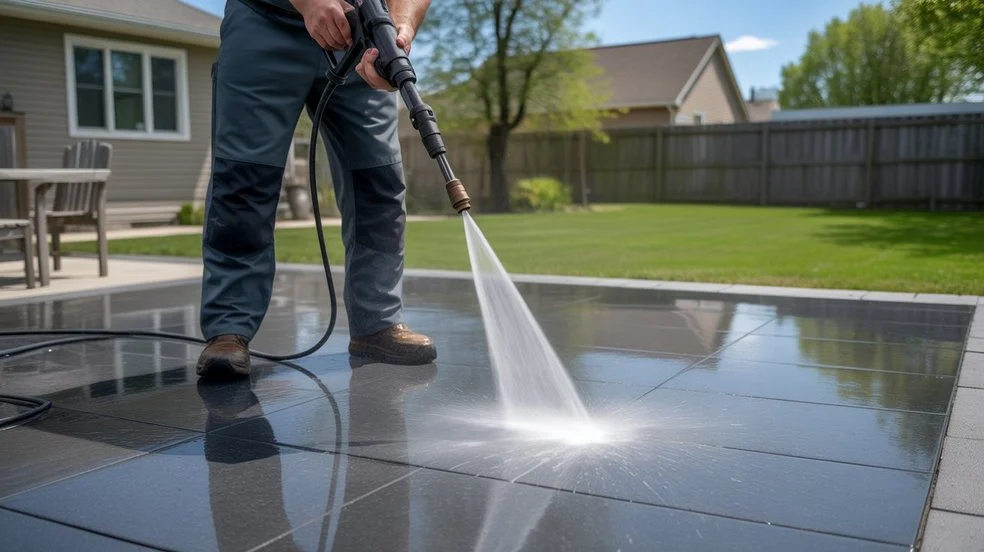
A lot of homeowners ask, “Is it safe to pressure wash granite?”
A general answer is yes.
Pressure washing is not simply holding a spray gun that shoots water under high pressure. The goal is to clean the stone, and only the stone, on the stone and on any perimeter materials. For professional results, consider our house pressure washing service tracy ca.
Factors That Affect Safety
- Condition of Surface Good quality granite generally withstands pressure washing better than broken or worn surfaces.
- Sealed vs. Unsealed Granite A sealed granite surface has an extra layer of protection from water and stains. Unsealed granite may absorb moisture, resulting in discoloration.
- Integrity of Joints and Grout Exterior granite installations typically involve joints or grout lines which may be forced apart by too much pressure.
- Equipment Settings Appropriate PSI levels minimize the cleaning hazards.
Awareness of these variables does allow us, to a certain extent, to answer the question: Can you pressure wash granite safely? And in most cases, yes – you can, when using proper methods.
Granite Cleaning Pressure Washer Tips
Adhering to the correct granite cleaning pressure washer guidelines enables users to have a greater cleaning effect while maintaining the safety of the stone.
- Test a very small area first. Always start by testing on an inconspicuous area. This lets you assess: pressure effectiveness, surface response, and potential discoloration.
- Use a Wide-Angle Nozzle A wide-angle spray applies pressure more uniformly. Typical options are: 25-degree nozzle and 40-degree nozzle. The risk of focused damage is minimized with these options.
- Keep a Proper Distance: The nozzle is too close which the pressure impact is too strong. A distance of approximately 12 to 24 inches often gives safe cleaning performance.
- Use a consistent motion: Don’t drain the water in one spot. Keep the spray moving uniformly on the surface.
- Clean from Top to Bottom: For vertical granite walls: Start at the top. Work downward. This stops muddy water from running down and across windows you’ve already cleaned.
- Stay away from the damaged areas: Fissured granite can permit water penetration. Examine surfaces before starting cleaning.
- Use appropriate cleaning supplies: For stubborn stains, granite-safe cleaners may help you achieve better results without the need to press harder.
Following these suggestions to clean granite with a pressure washer, you will be able to take care of your granite safely and effectively.
Best PSI for Cleaning Granite Surfaces
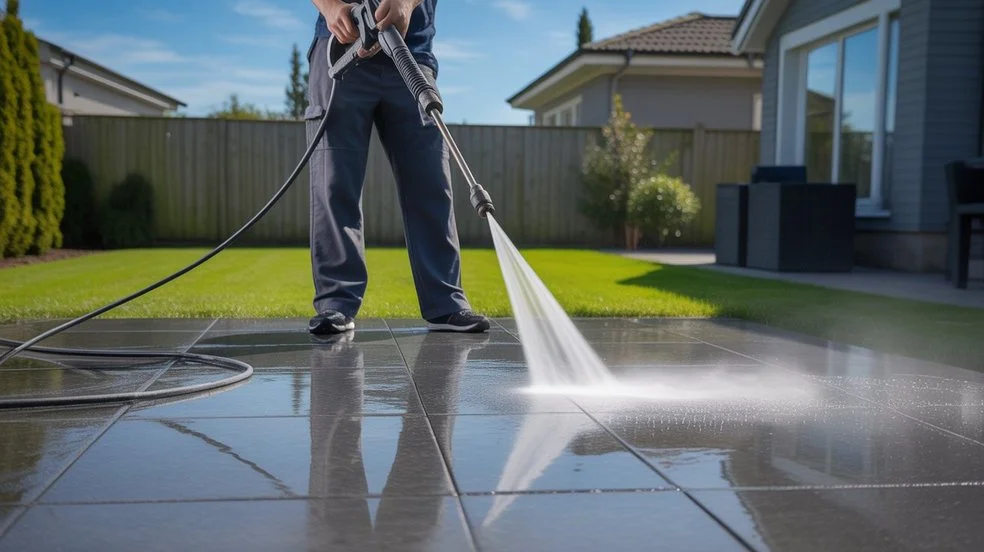
Everything about the care for granite is related to deciding what the best PSI is for cleaning granite. PSI is an acronym for pounds per square inch, and it is a measure of water pressure. The right PSI level lets you clean effectively without the risk of damage.
Suggested PSI Range
For the majority of outdoor granite: 1,200–2,000 PSI is the minimum for most jobs. This level is risky, but so is lower.
Light Cleaning (Soft Wash)
For regular maintenance cleaning: 1,200–1,500 PSI The pressure removes dirt and light stains without causing damage.
Moderate Cleaning
For algae, mildew, and heavier deposits: 1,500–2,000 PSI It is not uncommon to see power levels that provide better cleaning results without too much power.
Avoid Too Much Pressure
Extreme PSI levels can: hurt the grout, strip sealant, push water into cracks, and speed up the wear.
So, you should know what the best pressure to clean granite (PSI) is for safe results.
How to Clean Granite Without Damage
There are several things homeowners should know about how to clean granite without damage. Pressure washing is just one of the things that needs to be done to take proper care of granite. At VJ Pressure Washing, we help you do it right..
- Use Gentle Cleaners Strong chemicals may impact: sealants, surface finishes, and uniformity of color. Granite cleaners are usually the safest option.
- Avoid acidic products Do not use: vinegar, lemon cleansers, or strong solutions of acids. Acids can etch the finish of the stone.
- Rinse well. Residual film may streak and catch dirt. Fermentables and cleaners should be rinsed well, always.
- Re-apply sealant as necessary / when advised Outdoor granite is often treated to periodic sealing. Sealing serves to: inhibit moisture absorption, resist staining, and prolong the life of the surface.
- Cut Down on Debris Regularly A little maintenance can go a long way in lessening the demands for heavy cleanings. Take out regularly: leaf litter, dirt, and organic matter. This is important when you’re learning how to clean granite without breaking it.
Conclusion
So, is it possible to pressure wash granite? Can you pressure wash granite? In most cases, yes. Since granite is a very hard natural stone, it will generally take some pressure. Appropriate technique, though, is necessary.
Can you pressure wash granite? When used with the appropriate PSI levels, nozzles, and cleaning procedures, the response is used for many types of stones, including offers clean answer to the question: Can you safely pressure wash granite? If You Know The Proper PSI to Clean Granites Surfaces, It Will Well Protect Your Granites from You’re Over Cleaning While Still Doing Great Job in Cleaning!
Adhering to the tried and tested granite cleaning pressure washer advice of working in small sections, using wide-angle tips, keeping the right distance, and using the right cleaners can help minimize the risk. You’ll also understand how to clean granite without harm so you can keep the stone beautiful, strong, and valuable for many years.
When it’s time to clean your patio, walkway, pool deck, monument, or outdoor kitchen, gentle care and mindful pressure washing can maintain granite surfaces at their best while preserving your investment for years to come. Contact Us today to get started.
FAQs
Can you pressure wash granite countertops?
Yes, but with caution. Use low PSI settings (1,200–1,500 PSI), a wide-angle nozzle, and keep a safe distance of 12 to 24 inches. Avoid using high pressure directly on sealed surfaces or grout lines to prevent stripping the sealant.
What is the best PSI for cleaning granite surfaces?
The best PSI for cleaning granite surfaces is between 1,200 and 2,000 PSI. For light maintenance cleaning, 1,200–1,500 PSI is recommended. For heavier deposits like algae or mildew, 1,500–2,000 PSI can be used safely.
Will pressure washing damage granite?
Pressure washing will not damage granite if done correctly. Using excessive PSI, the wrong nozzle, or holding the nozzle too close can hurt grout lines, strip sealant, push water into cracks, and speed up wear. Following proper technique keeps granite safe.
Should granite be sealed before pressure washing?
Yes. A sealed granite surface has an extra layer of protection from water and stains. Unsealed granite may absorb moisture during pressure washing, resulting in discoloration. It is advisable to inspect the sealant condition and re-apply it periodically after cleaning.
What cleaning products are safe to use on granite?
Granite-safe cleaners are the recommended option. Avoid vinegar, lemon cleansers, and strong acid solutions as acids can etch the finish of the stone. Always rinse well after cleaning to prevent residual film from streaking or attracting dirt.
What nozzle should I use to pressure wash granite?
Use a wide-angle nozzle such as a 25-degree or 40-degree nozzle. These apply pressure more uniformly and minimize the risk of focused damage to the granite surface or grout lines.
Can you pressure wash granite outdoor patios and pool decks?
Yes. Granite patios, walkways, pool decks, outdoor kitchens, and monuments can all be pressure washed safely. Gentle care and mindful pressure washing can maintain these granite surfaces at their best while preserving your investment for years to come.