Most residential solar panels should be cleaned once or twice a year, but there is no schedule that fits every home. Dust, pollen, bird droppings, tree sap, rain, roof angle, and nearby construction can all change how quickly panels get dirty.
If your panels sit near trees, roads, farms, or construction, they may need more frequent cleaning. So, how often should solar panels be cleaned depends on how much dirt reaches the panels and whether that buildup affects sunlight or energy production.
- How Often Should Solar Panels Be Cleaned?
- A simple starting schedule
- Do Solar Panels Need Cleaning?
- What Factors Affect How Often Solar Panels Need Cleaning?
- 1. Local weather
- 2. Dust and air quality
- 3. Trees and plants
- 4. Birds
- 5. Panel angle
- 6. Nearby construction
- 7. Water quality
- How Often Should Solar Panels Be Cleaned in Different Environments?
- Dry and dusty areas
- Areas with heavy pollen
- Homes near trees
- Homes near construction
- Rainy climates
- Coastal areas
- Agricultural areas
- How Do You Know When Your Solar Panels Need Cleaning?
- Does Rain Clean Solar Panels?
- Does Dust and Dirt Reduce Solar Panel Efficiency?
- What Is the Best Time to Clean Solar Panels?
- How to Clean Solar Panels Safely
- Step 1: Check the manufacturer’s instructions
- Step 2: Inspect the panels
- Step 3: Remove loose debris
- Step 4: Rinse with suitable water
- Step 5: Use a soft cleaning tool if needed
- Step 6: Rinse again
- Step 7: Check the surface
- What Should You Avoid When Cleaning Solar Panels?
- Should You Clean Solar Panels Yourself or Hire a Professional?
- How Often Should Solar Panels Be Inspected?
- When Should You Clean Solar Panels After a Storm?
- Conclusion
- Frequently Asked Questions
How Often Should Solar Panels Be Cleaned?
For many homes, cleaning solar panels once or twice a year is a practical starting point. However, you should not clean them simply because six months have passed.
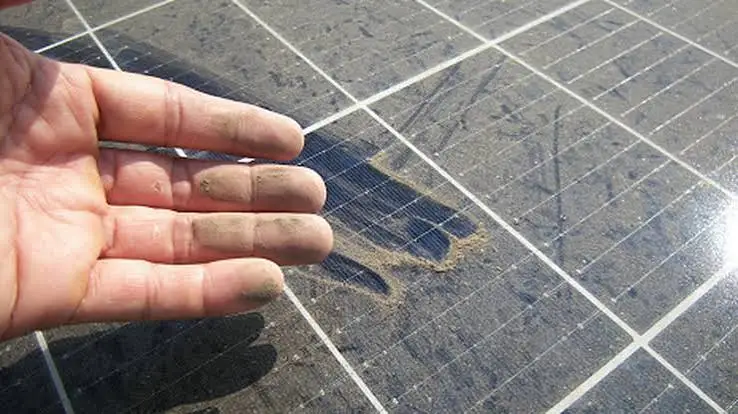
Look at the condition of the panels and your system’s production data. If the glass has a heavy layer of dust, pollen, bird droppings, or other debris, cleaning may be useful sooner.
For example, a home surrounded by mature trees may collect pollen and leaves during spring. A home near an active construction site may collect fine dust for several months. Both homes can need more cleaning than a house in a cleaner, open area.
Panel angle also matters. Rain can move loose dirt more easily on panels with a steeper angle. Dirt may remain longer on flatter panels because water and debris do not run off as easily.
A good approach is to inspect the panels every few months. You can then decide whether they actually need cleaning.
The goal is not to wash solar panels as often as possible. The goal is to keep buildup from blocking useful sunlight or creating other maintenance problems.
A simple starting schedule
| Situation | Suggested approach |
| Low-dust residential area | Check every 3 to 6 months |
| Normal residential conditions | Clean around 1 to 2 times yearly |
| Heavy dust or pollen | Check every 1 to 3 months |
| Near construction | Inspect after major dusty work |
| Many nearby trees | Check during heavy pollen and leaf seasons |
| Frequent bird activity | Inspect more often |
| Heavy visible buildup | Clean when needed rather than waiting |
These are starting points, not strict rules. Your local conditions should determine the final schedule.
Do Solar Panels Need Cleaning?
Yes, solar panels can need cleaning, but not every system needs frequent washing.
Solar panels are designed to remain outdoors through changing weather. Rain removes some loose dust and debris. Wind can also move lighter material away from the surface.
The problem starts when material sticks to the glass.
Common examples include:
- Fine dust
- Pollen
- Bird droppings
- Tree sap
- Mud
- Leaves
- Airborne pollution
- Mineral deposits from water
- Salt residue in coastal areas
A small amount of loose dust may not justify an immediate cleaning. A thick layer of dirt or a large bird dropping covering part of a panel is different.
The answer also depends on your system’s location. A clean-looking panel in a rainy area may need less attention than a panel in a dry, dusty area.
Solar panel cleaning is therefore a maintenance decision, not simply a calendar task.
What Factors Affect How Often Solar Panels Need Cleaning?
Several factors determine how quickly dirt builds up.
1. Local weather
Dry weather can leave dust on the glass for long periods. Extended dry spells can make panels visibly dirty even when there has been no major storm.
Regular rain can help remove loose dirt, but rain does not remove every type of buildup.
2. Dust and air quality
Homes near busy roads, dirt roads, farms, industrial areas, or construction sites may receive more airborne particles.
Fine dust can create a thin film across the glass. Over time, that film can reduce the amount of sunlight reaching the solar cells.
3. Trees and plants
Trees can create several cleaning problems at once.
Leaves can land on the panels. Pollen can cover the glass. Tree sap can create sticky spots. Branches can also increase shade during certain parts of the day.
If your roof is surrounded by mature trees, inspect the panels more often during pollen and leaf seasons.
4. Birds
Bird droppings can be harder to remove than loose dust.
A small amount may not matter much. Large or repeated deposits can cover part of a panel and create localized dirty areas.
Bird activity is especially important when panels provide a convenient perch.
5. Panel angle
Panel slope affects how easily water and debris move across the surface.
Steeper panels generally allow water to run off more easily. Flatter panels may hold dust, leaves, and water spots for longer.
This does not mean every flat panel needs frequent cleaning. It simply means panel angle is one factor to consider.
6. Nearby construction
Construction can produce large amounts of fine dust.
If work is happening close to your home, inspect the panels after dusty stages of construction. Waiting for your normal yearly cleaning may allow a thick layer of material to remain on the glass.
7. Water quality
Water itself can leave deposits.
Hard water contains minerals that may remain on glass after evaporation. Repeated use of mineral-heavy water can create visible spots or residue.
For this reason, the type and quality of water matter when choosing a cleaning method.
How Often Should Solar Panels Be Cleaned in Different Environments?
The right frequency changes from one environment to another.
Dry and dusty areas
Check panels every few months. If dust builds up quickly, cleaning may be needed several times a year.
Areas with heavy pollen
Pollen can create a fine coating that remains even after rain. Check panels during the strongest pollen periods.
Homes near trees
Inspect panels during spring and after periods when trees shed large amounts of leaves or other debris.
Homes near construction
Check panels after nearby construction creates visible dust. A cleaning may be worthwhile before the normal schedule.
Rainy climates
Panels may stay cleaner for longer, but still inspect them. Rain does not remove every type of dirt.
Coastal areas
Salt and airborne particles can settle on exposed surfaces. Regular visual checks can help identify residue before it becomes heavy.
Agricultural areas
Farming activity can create airborne soil, plant material, and other dust. Panels may require more frequent attention during active periods.
How Do You Know When Your Solar Panels Need Cleaning?
You do not need to climb onto the roof to check whether panels look dirty.
From a safe location, look for:
- A visible layer of dust
- White or cloudy residue
- Bird droppings
- Pollen
- Leaves
- Mud
- Tree sap
- Heavy water spots
- Other material covering the glass
You should also pay attention to your solar monitoring system.
If energy production drops, do not immediately assume dirty panels are responsible. Production can change because of clouds, seasonal sunlight, shade, equipment faults, inverter problems, or other issues.
Compare production across similar weather conditions. A single low-production day does not prove that cleaning is needed.
If the panels look heavily soiled and production is lower than expected, cleaning becomes more reasonable.
Does Rain Clean Solar Panels?
Rain helps, but it should not be considered a complete cleaning solution.
Rain can wash away loose dust and some surface debris. It may leave behind material that sticks to the glass.
For example, bird droppings can remain after several rainy days. Pollen can also stick to the surface. Water may evaporate and leave mineral spots behind.
The type of rain matters too. Light rain may wet the panels without providing enough water to wash away heavier dirt. A strong rainfall may remove more loose material.
This is why a homeowner can still have dirty panels after a rainy season.
If you can see residue after rainfall, inspect the panels rather than assuming the rain cleaned them.
Does Dust and Dirt Reduce Solar Panel Efficiency?
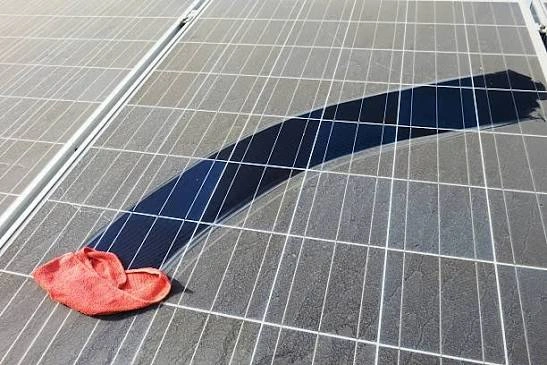
Yes, soiling can reduce solar panel performance because dirt can block some sunlight from reaching the photovoltaic cells.
The amount of lost production depends on several factors. These include the thickness of the dirt, the type of material, weather conditions, panel design, and local environment.
A thin layer of dust may have a smaller effect than heavy bird droppings or thick pollen.
The effect can also vary across the same solar system. One panel may be covered by a nearby tree branch or bird droppings while another remains relatively clean.
Research from the National Renewable Energy Laboratory has found that soiling can reduce photovoltaic energy production, with the impact varying by location and the type of material collecting on the panels.
That means cleaning should focus on actual buildup and performance rather than chasing a fixed cleaning number.
What Is the Best Time to Clean Solar Panels?
Early morning or late afternoon is often a practical time to clean solar panels because the surface is usually cooler.
Cleaning a very hot panel can cause water to dry quickly. This can leave spots behind and make the cleaning process harder.
Avoid working on a roof during unsafe weather. Wet roofs, strong wind, and extreme heat can increase the risk of falls and other injuries.
If your panels are difficult to reach, do not climb onto the roof just to clean them. Professional equipment can reduce the need for unsafe access.
Before cleaning, check the manufacturer’s instructions. Some manufacturers provide specific recommendations for water, brushes, cleaners, and other equipment.
How to Clean Solar Panels Safely
The safest method depends on the panel location and the manufacturer’s instructions.
For panels that can be reached safely from the ground, basic cleaning may involve clean water and a soft, non-abrasive tool.
A careful process can look like this:
Step 1: Check the manufacturer’s instructions
Your panel manufacturer may have specific care requirements. Follow those instructions before using cleaning products or tools.
Step 2: Inspect the panels
Look for cracks, broken glass, damaged components, loose wiring, or other visible problems.
Do not try to repair electrical or damaged solar equipment while cleaning.
Step 3: Remove loose debris
Leaves and loose material should be removed gently. Do not scrape the glass with hard or sharp tools.
Step 4: Rinse with suitable water
A gentle rinse can remove loose dust and surface dirt. Avoid using excessive pressure.
Step 5: Use a soft cleaning tool if needed
If dirt remains, use a soft, non-abrasive brush or tool that is suitable for solar panels.
Step 6: Rinse again
Remove remaining dirt and cleaning residue.
Step 7: Check the surface
Look for missed areas, streaks, spots, or residue after cleaning.
If the panels are high, steep, or difficult to reach, professional cleaning is the safer option.
What Should You Avoid When Cleaning Solar Panels?
Some cleaning methods can cause unnecessary damage.
Avoid:
- Abrasive brushes
- Rough cleaning pads
- Metal scrapers
- Harsh chemicals
- Strong household cleaners
- Excessive pressure
- Walking on panels
- Scraping dried bird droppings with hard tools
- Cleaning damaged panels yourself
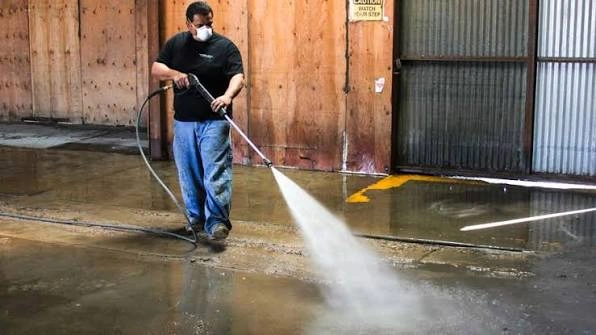
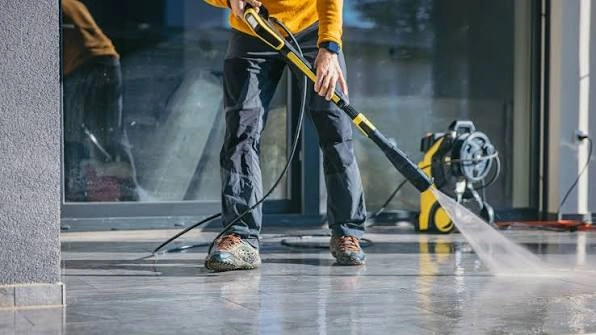
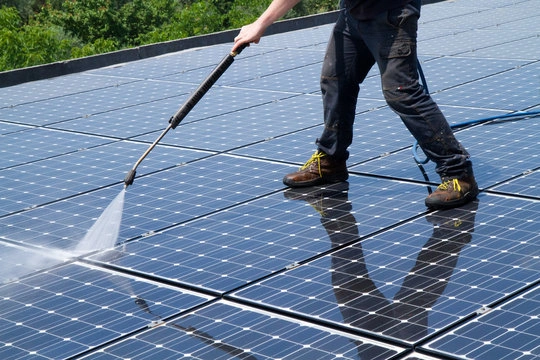
Do not assume that a pressure washer is safe simply because the panels are made for outdoor use.
Solar panels contain more than a glass surface. They also have electrical connections, seals, frames, and other components.
If you use water, keep the pressure appropriate for the manufacturer’s instructions and cleaning equipment.
Hard water can also leave mineral deposits. If your local water supply contains high mineral levels, consider the final rinse method carefully.
Should You Clean Solar Panels Yourself or Hire a Professional?
DIY cleaning can work when panels are easy to reach and lightly soiled.
For example, a ground-mounted system may be easier to clean safely than panels installed on a steep second-story roof.
Professional cleaning is worth considering when:
- Panels are on a steep roof
- Access is difficult
- Heavy dirt has built up
- Bird droppings are widespread
- Panels have stubborn residue
- You are not comfortable working at height
- You cannot safely reach the entire system
Safety should come before saving the cost of a cleaning service.
A professional may also notice visible problems while cleaning. However, solar electrical repairs should be handled by a qualified solar technician rather than treated as part of ordinary pressure washing.
How Often Should Solar Panels Be Inspected?
Solar panels should be visually checked several times a year, even if they only need cleaning once or twice annually.
Inspection and cleaning are different tasks.
Cleaning removes dirt. Inspection looks for conditions that may affect the system.
During a safe visual check, look for:
- Cracked glass
- Loose or damaged visible wiring
- Heavy debris
- New shading
- Bird nests
- Leaves
- Pollen
- Water stains
- Changes in panel appearance
You should also review your solar monitoring data.
If production changes without an obvious weather-related reason, the issue may not be dirt. A qualified solar professional can check the system when performance problems continue.
When Should You Clean Solar Panels After a Storm?
Storms can leave more than rainwater behind.
Strong wind may move leaves, branches, dust, and other debris onto the roof. Stormwater can also leave mud or residue after it dries.
After a major storm, inspect the panels from a safe location.
Do not climb onto the roof if there is visible damage. Broken glass, damaged wiring, or fallen branches require professional attention.
A storm can also create a different issue: shading. A branch that falls or moves into a new position can block sunlight even when the panel itself is clean.
Conclusion
So, how often should solar panels be cleaned? For most residential systems, once or twice a year is a reasonable starting point. Homes exposed to heavy dust, pollen, birds, construction, trees, or other debris may need more frequent cleaning.
Rain can remove loose dirt, but it cannot guarantee that panels are clean. Visible buildup, local conditions, and solar production data give you better clues.
Always put safety first when cleaning roof-mounted panels. If the panels are difficult to reach, hiring a professional can be safer than attempting the job yourself.
For homeowners who need Solar Panel Cleaning in Tracy CA, professional exterior cleaning can help remove accumulated dirt without taking unnecessary roof-access risks. VJ Pressure Washing can help with exterior cleaning needs while keeping the focus on safe and suitable cleaning methods.
The best cleaning schedule is not based on a single number. It is based on your environment, the condition of your panels, and how much buildup develops between cleanings.
Frequently Asked Questions
How often do you clean solar panels?
Many residential systems only need cleaning once or twice a year. Panels in dusty or pollen-heavy areas may need more frequent cleaning. A visual check every few months helps determine whether cleaning is actually necessary.
Can rain replace professional solar panel cleaning?
No. Rain can remove loose dust, but it may not remove bird droppings, pollen, tree sap, mineral deposits, or other stuck-on material. Panels should still be checked after rainy periods.
What happens if solar panels get too dirty?
Heavy soiling can reduce the amount of sunlight reaching the solar cells. This can lower energy production. The effect varies based on the type and amount of buildup.
Can I use dish soap to clean solar panels?
Do not assume household dish soap is safe for every solar panel. Cleaning products can leave residue or conflict with manufacturer instructions. Check the panel manufacturer’s guidance before using soap.
Can pressure washing damage solar panels?
High-pressure water can create unnecessary risk around panel seals, frames, wiring, and other components. Follow the manufacturer’s cleaning instructions and avoid using excessive pressure.
Should I clean solar panels if they look only slightly dusty?
Not always. A light layer of dust does not automatically mean immediate cleaning is necessary. Consider how quickly the dust returns, your local conditions, and whether there is any meaningful change in system performance.
Is morning a good time to clean solar panels?
Early morning is often practical because panels are usually cooler. Cleaning during extreme heat can cause water to dry quickly and leave spots. Always prioritize safe roof conditions.
Do solar panels need more cleaning near trees?
They can. Trees can increase exposure to pollen, leaves, sap, and bird activity. If your panels are surrounded by trees, inspect them more often during pollen and leaf seasons.
How can I tell if dirt is reducing solar production?
Compare your system’s production with similar weather and sunlight conditions. A single low-production day does not prove the panels are dirty. If output remains lower and the panels have visible buildup, cleaning may help.
Should solar panels be inspected even when they are clean?
Yes. Inspection and cleaning serve different purposes. A visual inspection can reveal debris, cracks, shading, damaged components, or other problems that cleaning alone will not fix.