
Cleaning gutters is an important part of home maintenance, but climbing a ladder to remove leaves and debris can be risky. Fortunately, several tools allow homeowners to clean many gutters while standing safely on the ground. Telescopic cleaning poles, gutter vacuums, and suitable hose attachments can help remove loose debris without requiring access to the roof. If you are wondering how to clean gutters from the ground, the best method depends on your home’s height, the type of debris in the gutters, and whether the downspouts are draining correctly.
Some blockages are easy to remove with an extension tool, while compacted debris and hidden drain problems may require professional attention. This guide explains how to choose the right equipment, clean rain gutters from ground level, identify drainage problems, and determine when DIY cleaning is no longer enough.
- Can You Clean Gutters From the Ground?
- Tools Needed for Cleaning Gutters From the Ground
- 1. Telescopic Gutter Cleaning Pole
- 2. Gutter Vacuum With Extension Tubes
- 3. Garden Hose With a Gutter Attachment
- 4. Protective Equipment
- How to Clean Gutters From the Ground Step by Step
- Step 1: Inspect the Gutters From the Ground
- Step 2: Choose the Right Cleaning Method
- Step 3: Remove Loose Leaves and Debris
- Step 4: Check the Downspout Opening
- Step 5: Rinse Only When Appropriate
- Step 6: Check the Results
- Cleaning Rain Gutters From the Ground: Which Method Is Best?
- What About Underground Gutter Cleaning?
- How to Identify an Underground Drainage Blockage
- When Is Underground Gutter Drain Cleaning Needed?
- Common Mistakes to Avoid
- When Should You Hire a Professional?
- Frequently Asked Questions
Can You Clean Gutters From the Ground?

Yes, you can clean many residential gutters from the ground using specialized extension tools. These tools allow you to reach the gutter channel from below without climbing onto a ladder or walking on the roof.
However, ground-level cleaning has limitations. A telescopic pole may remove loose leaves from an accessible gutter, but it might not reach compacted debris in a deep channel or clear a blockage inside a downspout.
The height and design of the house also matter. Single-story homes are often easier to clean from the ground than taller properties. If the gutters are unusually high, difficult to reach, or heavily blocked, a professional assessment may be the better option.
The goal is not simply to remove visible leaves. It is to make sure the gutters can collect rainwater and direct it toward the appropriate drainage system.
Tools Needed for Cleaning Gutters From the Ground
Before starting, choose a tool designed for the type of gutter and debris you need to remove. Using unsuitable equipment can make the job harder or damage the gutter system.
1. Telescopic Gutter Cleaning Pole
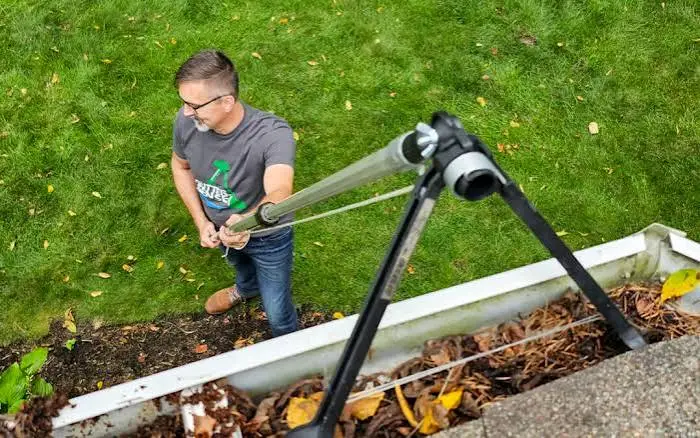
A telescopic pole extends upward and holds a compatible brush, scoop, or curved gutter-cleaning attachment. Some designs allow you to reach into the gutter and pull loose leaves toward an accessible edge.
This option can work well when the gutters contain dry leaves, small twigs, and other loose debris. It also gives you some control over where the material falls.
Choose a pole long enough to reach the gutter comfortably from the ground. A pole that is too short may encourage you to stand on steps or lean into an unstable position, defeating the purpose of ground-level cleaning.
2. Gutter Vacuum With Extension Tubes
A gutter vacuum uses suction to remove leaves and other debris through a long extension system. Depending on the equipment, it may be suitable for gutters that are difficult to access with a brush.
Some systems are designed specifically for gutter cleaning and include curved attachments to reach into the channel.
Check the equipment’s instructions before using it on wet leaves or compacted debris. Not every vacuum can safely handle heavy, damp material, and attempting to remove unsuitable debris may clog or damage the equipment.
3. Garden Hose With a Gutter Attachment
Some gutter-cleaning attachments connect to a garden hose and direct water into the gutter from the ground. They can help move loose dirt and rinse certain types of residue toward an accessible outlet.
However, water alone may not remove compacted leaves, thick mud, or established blockages. Before using a hose attachment, make sure the gutter and downspout can handle the water flow.
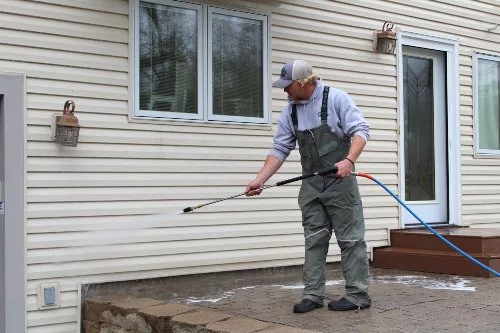
Avoid high-pressure attachments unless the gutter manufacturer and equipment instructions specifically permit their use. Excessive pressure can damage joints, dislodge components, or force water into areas where it should not enter.
4. Protective Equipment
Wear eye protection, sturdy footwear, and clothing suitable for the job. Leaves, grit, insects, and dirty water can fall toward you while cleaning.
Keep children and pets away from the work area. Before extending a pole or hose, check for overhead electrical lines, unstable ground, nearby windows, and other obstacles.
How to Clean Gutters From the Ground Step by Step
A methodical approach helps you remove debris while reducing the need for repeated passes.
Step 1: Inspect the Gutters From the Ground
Walk around the property and look at the gutters from a safe position. Identify areas where leaves have accumulated, where plants appear to be growing, or where the gutter looks unusually heavy or distorted.
Check the ground below the gutters for fallen debris and signs of overflowing water, such as staining or erosion. These observations can help you identify sections that need attention.
You may also use binoculars or a camera with a zoom function to inspect difficult-to-see areas. Do not assume a gutter is clear simply because you cannot see debris from below.
If a gutter appears detached, badly bent, or unstable, do not attempt to push or pull it with an extension pole.
Step 2: Choose the Right Cleaning Method
Select your tool according to the debris you have identified.
For loose, dry leaves, a telescopic pole or suitable gutter vacuum may be sufficient. For light dirt that can safely be rinsed away, a compatible hose attachment may help.
If you suspect that the gutter contains thick mud, wet compacted leaves, or a blockage near the downspout opening, be more cautious. These conditions may be difficult to resolve from the ground.
Read the tool instructions and confirm that the attachment is appropriate for your gutter material. Vinyl, aluminum, and other gutter systems may respond differently to force or pressure.
Step 3: Remove Loose Leaves and Debris
Position yourself on stable, level ground. Extend the tool gradually until its attachment reaches the gutter channel.
If you are using a pole, work gently and pull loose leaves toward a suitable collection area. Avoid forcing the attachment against the gutter’s edges, hangers, seams, or brackets.
If you are using a gutter vacuum, move the nozzle according to the manufacturer’s instructions and avoid forcing large clumps into a narrow opening.
Work along manageable sections instead of trying to clean the entire gutter in one movement. If the tool becomes stuck or you encounter strong resistance, stop and reposition it rather than pulling forcefully.
Collect fallen debris afterward so that it does not wash into nearby drains or create a mess around the house.
Step 4: Check the Downspout Opening
Gutters can appear relatively clean while the downspout opening remains blocked. Leaves and small twigs often collect where the horizontal gutter channel meets the vertical pipe.
From the ground, inspect the visible opening if it is accessible. A compatible extension tool may remove loose debris near the entrance, but do not force material deeper into the pipe.
If the opening cannot be reached safely or the blockage is firmly packed, professional cleaning may be needed. A blockage farther down the pipe will not necessarily be resolved by cleaning the gutter channel itself.
Step 5: Rinse Only When Appropriate
If the gutter is designed to handle the water flow and the drainage route appears open, a controlled rinse may help move remaining loose dirt toward the downspout.
Start with a gentle flow using a suitable attachment. Watch the water as it moves through the gutter and check whether it reaches the intended outlet.
Stop if water backs up, spills over the gutter edge, or appears to be entering the building or collecting in an unexpected location. These signs may indicate a blockage, poor drainage, or a gutter problem.
Do not continue adding water to a system that is already overflowing. More water will not necessarily solve the underlying issue.
Step 6: Check the Results
After cleaning, look along the gutter line for visible debris and check the ground for signs of water escaping from joints or overflowing at specific points.
If it is safe and practical, observe the drainage during ordinary rainfall or use a gentle test flow as directed by the gutter manufacturer’s guidance. Avoid running water if you suspect a blockage that could cause overflow.
You should not need to climb onto the roof just to verify the results. If you cannot confidently determine whether the gutter is clear, arrange an inspection rather than taking an unnecessary risk.
Cleaning Rain Gutters From the Ground: Which Method Is Best?
The best method depends on your property’s layout and the condition of the gutters.
A telescopic pole is useful for accessible gutters containing loose debris. It gives you direct control over leaves and twigs, although visibility can be limited when you are looking up from below.
A gutter vacuum may be more convenient when debris needs to be collected rather than pushed out. However, the equipment must be suitable for the material being removed and the height of the gutter.
A hose attachment can help with light rinsing, but it is not a reliable solution for every blockage. If a downspout is clogged, sending additional water into the gutter can cause an overflow.
For a one-story house with occasional leaf buildup, ground-level tools may be enough for routine maintenance. For a taller home with heavy debris, damaged gutters, or repeated drainage problems, professional service may provide a more complete solution.
What About Underground Gutter Cleaning?
The term underground gutter cleaning can be confusing because roof gutters and underground drains are different parts of a property’s drainage system.
Roof gutters collect rainwater from the roof and direct it into downspouts. Underground drainage pipes or buried downspout extensions carry that water away from the building toward an appropriate discharge point.
Cleaning gutters from the ground usually means removing debris from the roof-edge gutter while remaining at ground level. It does not automatically clear a buried drainage pipe.
How to Identify an Underground Drainage Blockage
If the roof gutters appear clear but water still backs up near the bottom of a downspout, the problem may be farther along the drainage route.
Possible causes include debris at the downspout outlet, a blockage in a buried extension, sediment buildup, or a damaged drainage pipe.
Signs worth investigating include water pooling near the outlet, repeated backups during rainfall, or water collecting close to the foundation.
When Is Underground Gutter Drain Cleaning Needed?
Underground gutter drain cleaning may be necessary when a buried downspout extension or connected stormwater drain becomes blocked.
The appropriate method depends on the drain’s design and the location of the blockage. A suitable drain-cleaning tool, inspection camera, or professional drain service may be needed.
Do not assume that a roof-gutter vacuum or garden hose attachment can clear a buried pipe. These tools are designed for different purposes, and using the wrong equipment can push debris farther into the drainage system.
If you suspect an underground blockage, identify where the water stops flowing before choosing a cleaning method.
Common Mistakes to Avoid
One mistake is assuming that every gutter can be cleaned from the ground. Extension tools have limits, especially on tall houses or gutters with restricted access.
Another is using too much force. Pulling aggressively with a pole can damage gutter joints, brackets, and edges. Gentle movements are safer and often more effective for loose debris.
Using excessive water pressure is another risk. It can dislodge gutter components or force water into unwanted areas. Use only equipment and pressure suitable for your system.
Avoid working during storms, strong winds, or slippery conditions. Wet leaves and muddy ground can make the work area hazardous, even when you remain on the ground.
Finally, do not confuse a clean gutter with a fully functional drainage system. Water can still back up because of a blocked downspout, a clogged underground pipe, or an incorrectly positioned gutter.
When Should You Hire a Professional?
Ground-level cleaning can be useful for routine maintenance, but it is not suitable for every situation.
Consider professional gutter cleaning if:
- Your gutters are too high to reach comfortably with appropriate extension tools.
- Wet leaves or compacted debris cannot be removed without excessive force.
- Water continues to overflow after cleaning.
- A downspout or underground drain appears to be blocked.
- Gutters are sagging, detached, leaking, or visibly damaged.
- You cannot inspect or clean the system without putting yourself at risk.
For homeowners looking for Gutter Cleaning in Tracy CA, the team at VJ Pressure Washing is a relevant option to explore. Professional assistance can be particularly useful when ground-level tools cannot reach the blockage or when the drainage system needs a more thorough inspection.
Before arranging a service, explain whether the problem involves leaves in the roof gutters, a blocked downspout, or water backing up from an underground drain. This helps identify the appropriate type of work.
Frequently Asked Questions
Can I clean gutters from the ground without a ladder?
Yes. Telescopic gutter-cleaning poles, suitable gutter vacuums, and compatible hose attachments can help remove certain types of debris while you remain on the ground. The result depends on the gutter’s height, design, and condition.
What is the easiest way to clean gutters from the ground?
For loose leaves and dry debris, a suitable telescopic pole or gutter vacuum may be convenient. Choose equipment that reaches the gutter safely and is designed for the debris you need to remove.
Can I use a pressure washer to clean gutters from the ground?
A pressure washer is not automatically suitable for gutter cleaning. Excessive pressure can damage gutters, joints, and surrounding surfaces. Use only a method approved for your gutter system and the equipment involved.
How often should gutters be cleaned?
Cleaning frequency depends on nearby trees, seasonal leaf fall, local weather, and the amount of debris reaching the roof. Inspect gutters periodically and clean them when buildup begins to interfere with drainage.
Can ground-level cleaning remove a downspout blockage?
Sometimes, if the blockage is loose and near the downspout opening. A deeper or compacted blockage may require specialized equipment or professional assistance.
Is underground gutter drain cleaning the same as gutter cleaning?
No. Gutter cleaning removes debris from the roof-edge channel. Underground gutter drain cleaning addresses blockages in buried pipes or drainage extensions that carry water away from the property.