Dirty solar panels lose power. Dust, bird droppings, and pollen block sunlight from reaching the cells. That alone can cut your system’s output by 15% to 25%. You paid good money for solar, so keeping those panels clean is one of the easiest ways to protect your investment.
Learning how to clean solar panels doesn’t take much. You need the right tools, the right time of day, and a safe method. This guide covers everything, from basic DIY cleaning to knowing when it’s time to call a pro.
- Why Cleaning Solar Panels Is Important
- How Often Should You Clean Solar Panels?
- Signs Your Solar Panels Need Cleaning
- Tools and Supplies Needed to Clean Solar Panels
- What Not to Use on Solar Panels
- Step-by-Step Guide to Cleaning Solar Panels
- Step 1: Pick the Right Time
- Step 2: Turn Off Your Solar System
- Step 3: Remove Loose Debris First
- Step 4: Rinse With Water
- Step 5: Gently Scrub Stubborn Spots
- Step 6: Rinse Again
- Step 7: Dry the Edges
- Can You Clean Solar Panels Without Getting on the Roof?
- Is Rain Enough to Clean Solar Panels?
- DIY Solar Panel Cleaning vs Professional Cleaning
- DIY Cleaning
- Professional Cleaning
- Safety Tips for Cleaning Solar Panels
- Common Solar Panel Cleaning Mistakes to Avoid
- Conclusion
- FAQs
Why Cleaning Solar Panels Is Important
Solar panels work by turning sunlight into electricity. When a layer of dirt sits on top of the glass, less light gets through. Less light means less power.
Here is what buildup does to your system over time:
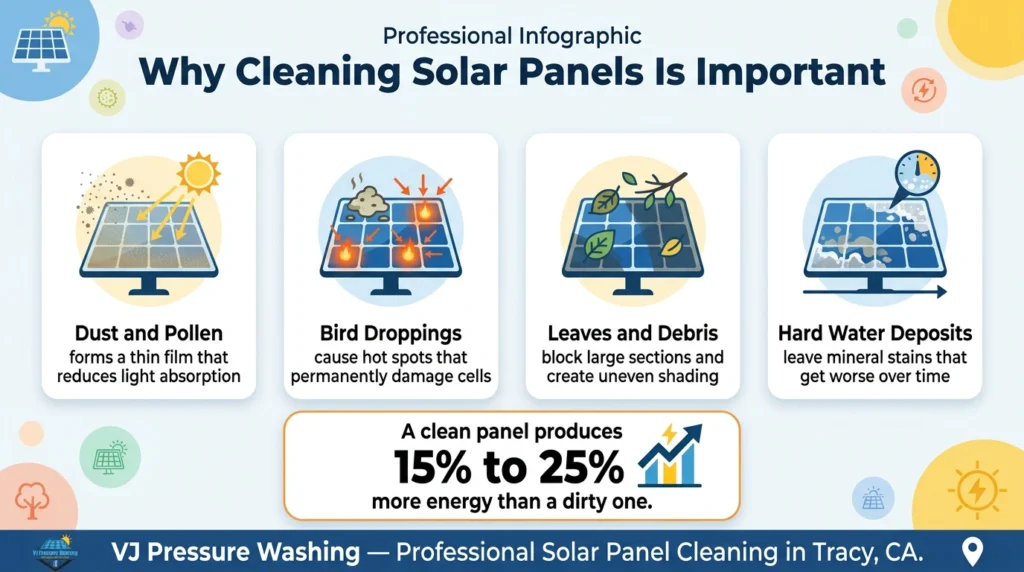
- Dust and pollen form a thin film that reduces light absorption.
- Bird droppings cause “hot spots,” which can permanently damage cells.
- Leaves and debris block large sections and create uneven shading.
- Hard water deposits leave mineral stains that get worse if ignored.
A clean panel can produce 15% to 25% more energy than a dirty one. In a year, that adds up to real money. Good solar panel maintenance pays for itself.
How Often Should You Clean Solar Panels?
There’s no single answer. It depends on where you live and what’s around you.
General rule: Clean your panels 2 to 4 times a year.
But adjust based on your situation:
- Dusty or dry climates: Every 1 to 2 months. Places like California deserts or areas near farms get heavy dust buildup.
- Urban areas: Every 2 to 3 months. City pollution and soot coat panels faster than you’d think.
- Rainy climates: 2 times a year may be enough. Rain handles light dust well.
- Near trees or birds: Clean more often. Sap and droppings are stubborn.
Most solar manufacturers recommend a professional inspection once a year along with regular cleaning. That keeps your warranty intact and your system running well.
Signs Your Solar Panels Need Cleaning
Your panels often tell you when they’re dirty. You just have to know what to look for.
Watch for these signs:
- Your energy bill goes up but your usage doesn’t change.
- Your solar monitoring app shows a drop in production.
- You can visibly see dust, streaks, or bird droppings from the ground.
- Dark patches or shadows appear on the panels.
- It hasn’t rained in several weeks.
If you notice a sudden drop in power output and live in an area with heavy bird activity or pollen, that’s usually the first clue. Don’t wait for it to get worse.
If you’re unsure whether your panels need a basic rinse or a deep clean, a local specialist can assess them quickly. VJ Pressure Washing offers professional solar panel cleaning in Tracy, CA, and can spot damage, buildup, and shading issues most homeowners miss. Getting a professional set of eyes on your system once a year is smart solar panel maintenance.
Tools and Supplies Needed to Clean Solar Panels
You don’t need anything fancy. Most of what you need is probably already at home.
Basic DIY solar panel cleaning kit:
- Soft-bristle brush or a solar panel cleaning brush (long handle preferred)
- A garden hose with a gentle spray nozzle
- A squeegee with a soft rubber edge
- A bucket of warm water
- A few drops of mild dish soap (optional, for stubborn grime)
- Microfiber cloths for drying edges
Optional but helpful:
- Extendable pole so you can reach panels from the ground
- Deionized water system (removes mineral deposits better than tap water)
- Safety harness if you must go on the roof
Keep everything soft. Solar panel glass is strong but can scratch if you use anything abrasive.
What Not to Use on Solar Panels
Some cleaning products and tools cause more harm than good.
Avoid these:
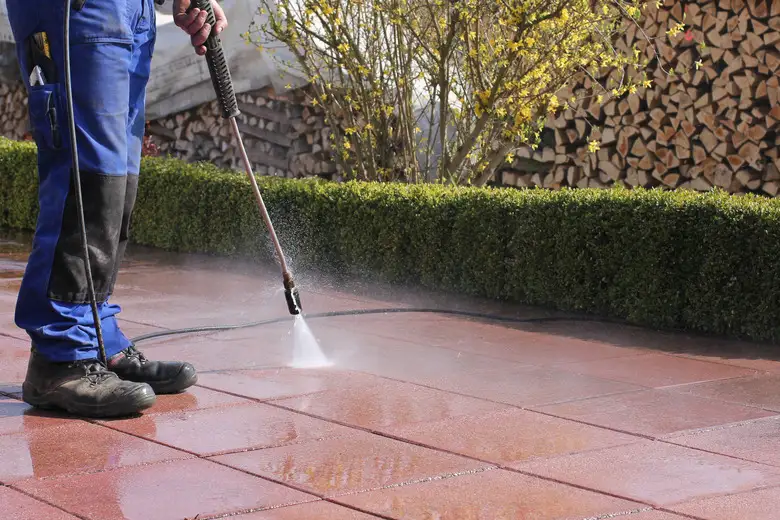
- Pressure washers: High-pressure water can crack seals, loosen frames, and void your warranty. This is one of the most common mistakes in DIY solar panel cleaning.
- Abrasive scrubbers or steel wool: These scratch the anti-reflective coating on the glass.
- Harsh chemicals or bleach: They degrade the surface over time and leave residue.
- Tap water in hard water areas: Minerals in tap water leave white spots after drying. Use filtered or deionized water if possible.
- Detergents with strong fragrances or degreasers: These are too aggressive for panel surfaces.
Stick to soft materials and plain water whenever you can. Less is more when it comes to solar panel maintenance.
Step-by-Step Guide to Cleaning Solar Panels
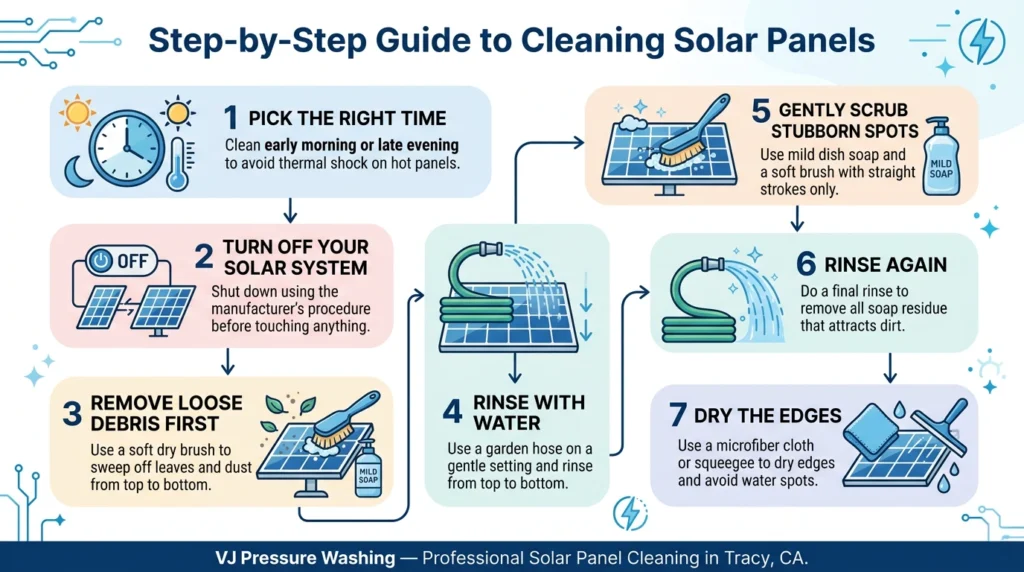
This is the safest and most effective way to clean your panels without damaging them. At VJ Pressure Washing, we follow this exact process on every job to make sure your panels stay protected and performing at their best.
Step 1: Pick the Right Time
Clean early in the morning or late in the evening. Panels get very hot during the day. Cold water on a hot panel can cause thermal shock and micro-cracks. Morning is best because dew softens dirt overnight.
Step 2: Turn Off Your Solar System
Before touching anything, shut down the system using the manufacturer’s shutdown procedure. Check your inverter manual or app for instructions. Safety first.
Step 3: Remove Loose Debris First
Use a soft dry brush or cloth to sweep off leaves, dust, and loose dirt. Start from the top and work down. Don’t press hard.
Step 4: Rinse With Water
Use a garden hose in a gentle setting. Rinse from top to bottom. This removes most surface dust without any scrubbing.
Step 5: Gently Scrub Stubborn Spots
Mix a few drops of mild dish soap in a bucket of warm water. Dip your soft brush and gently scrub any bird droppings or stuck-on grime. Don’t scrub in circles. Use straight strokes.
Step 6: Rinse Again
Do a final rinse to remove all soap. Soap residue attracts more dirt, so make sure it’s all gone.
Step 7: Dry the Edges
Use a clean microfiber cloth or squeegee to dry the edges and frame. Avoid leaving standing water on the panels. Water spots can form if you let it air dry in hard water areas.
That’s it. This is the best way to clean solar panels without risking damage. Most residential systems can be cleaned in under an hour using this method.
Can You Clean Solar Panels Without Getting on the Roof?
Yes, and it’s actually the safer option.
Many homeowners clean their panels from the ground using an extendable soft-bristle brush and a garden hose. You get decent results for routine maintenance without the risk of a fall.
Ground-level cleaning works well for:
- Light dust and pollen
- General surface dirt
- Regular seasonal cleaning
You may need roof access for:
- Stubborn bird droppings
- Hard water stains
- Panels that are heavily soiled
If your panels are steep or hard to reach, don’t risk it. Hiring a professional is far cheaper than a hospital visit or damaged panels.
Is Rain Enough to Clean Solar Panels?
Partially, yes. But not completely.
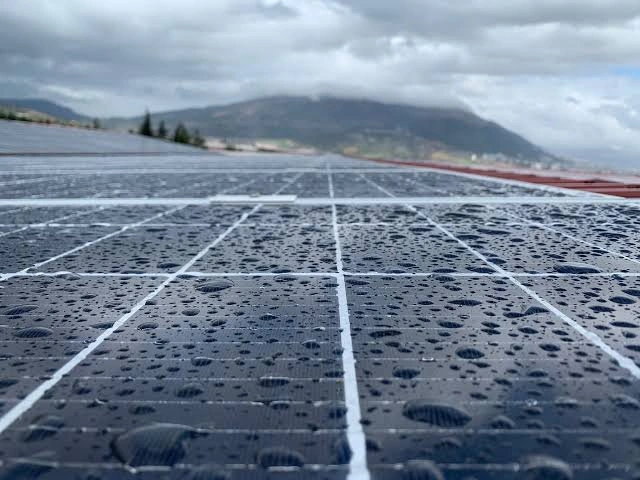
Rain washes off loose dust and pollen. After a good downpour, you’ll often see a small boost in output. But rain has limits.
Rain does NOT remove:
- Bird droppings (they’re too sticky)
- Oily residue from pollution
- Hard water deposits
- Thick layers of caked-on dust
In areas with light rainfall, rainwater can actually make things worse. Dry dust mixes with a little water and dries into a muddy crust. That’s worse than plain dust.
Don’t rely on rain as your main solar panel maintenance strategy. It helps between cleanings, but it’s not a substitute.
DIY Solar Panel Cleaning vs Professional Cleaning
Both options have a place. It depends on your comfort level, roof type, and how dirty your panels are.
DIY Cleaning
Pros:
- Low cost (mainly your time)
- Can be done anytime
- Works well for routine, light cleaning
Cons:
- Risk of injury on rooftop
- Easy to use the wrong tools or products
- May miss damage or hotspots
Best for: Ground-floor installations, flat or easy-to-access roofs, regular light maintenance.
Professional Cleaning
Pros:
- Safer (trained techs with proper equipment)
- Uses deionized water for spot-free results
- Techs can identify damage, shading, or wiring issues
- May be required to keep your warranty valid
Cons:
- Costs money (typically $100 to $300 per visit depending on system size)
- Requires scheduling
Best for: Multi-story roofs, heavily soiled panels, annual deep cleaning, or any time you’re unsure.
For most homeowners, doing basic DIY solar panel cleaning 2 to 3 times a year and scheduling one professional visit annually is the smart balance.
Safety Tips for Cleaning Solar Panels
Roof work is one of the leading causes of home injury. Take this seriously.
- Never clean panels in wet or windy conditions. Wet roofs are slippery.
- Wear rubber-soled shoes if you go on the roof.
- Use a safety harness if your roof pitch is steep.
- Work with a buddy. Never go on a roof alone.
- Shut down the system before touching anything.
- Avoid metal tools. They can scratch panels or create electrical hazards.
- Don’t lean ladders on the panel frames. It can crack or bend them.
- Stay off the roof in extreme heat. Panels can burn you.
If you have any doubts about safely reaching your panels, hire a professional. The cost is worth it.
Common Solar Panel Cleaning Mistakes to Avoid
Even well-meaning homeowners make these errors. Here’s what to watch out for.
- Cleaning at midday Hot panels and cold water are a bad combination. Always clean early morning or evening.
- Using a pressure washer This one gets panels damaged more than anything else. Never use high-pressure water on residential panels.
- Using abrasive materials Scratches on the anti-reflective coating are permanent and reduce output over time.
- Ignoring the frame and edges Dirt builds up along the frame and can cause moisture issues. Clean the edges too.
- Not monitoring output after cleaning Always check your monitoring app after cleaning. If production doesn’t improve, there may be a deeper issue (panel damage, shading, or inverter problems).
- Skipping the rinse Soap residue left on panels attracts more dust and can reduce efficiency. Always do a final rinse.
- Waiting too long between cleanings Heavy buildup is harder to remove and may require professional help. Stick to a regular schedule.
Conclusion
Keeping your solar system clean is one of the simplest ways to get the most from your investment. A little water and a soft brush done consistently can add thousands of kilowatt-hours to your system’s lifetime output.
Knowing how to clean solar panels the right way protects the glass, maintains efficiency, and extends the life of your system. Whether you do it yourself or hire a pro, regular solar panel maintenance is non-negotiable.
If you’re in the Tracy, CA area and want a professional to handle it safely and thoroughly, contact us at VJ Pressure Washing today and we’ll get your solar panels performing at their best.
FAQs
How often should you clean solar panels?
Most systems benefit from cleaning 2 to 4 times per year. If you live in a dusty area or near trees, clean more often.
What is the best way to clean solar panels?
Use a soft-bristle brush, warm water, and mild soap. Rinse thoroughly. Clean early morning when panels are cool.
Can I use a pressure washer on solar panels?
No. Pressure washers can crack seals, damage frames, and void your warranty. Always use gentle water pressure.
Does rain clean solar panels?
Rain removes light dust but can’t handle bird droppings, oil, or hard water buildup. Don’t rely on it as your only cleaning method.
Is professional solar panel cleaning worth it?
Yes, especially for annual deep cleaning or hard-to-reach rooftops. Pros use deionized water and can spot damage you’d miss.
How do I know if my solar panels need cleaning?
Watch for a drop in power output, visible dirt or droppings, or no rain for several weeks. Your monitoring app is the easiest way to track performance.
Can I clean solar panels myself?
Yes, for ground-level or easy-to-reach panels. Use the right tools, avoid harsh chemicals, and always shut down the system first.