A pressure washer can make exterior house cleaning much faster, but using too much pressure or the wrong technique can create problems that are harder to fix than the dirt you started with. If you are learning How to Pressure Wash a House, the goal should not be to use the strongest machine or the highest pressure available. The goal is to remove dirt, mildew, algae, and other buildup while preserving the surface underneath. The same approach does not work for every home.
Vinyl siding, painted wood, stucco, brick, and other materials have different cleaning requirements. Even two houses with the same siding can require different techniques if one has damaged areas or deteriorated caulking.This guide explains how to approach pressure washing your house step by step, including preparation, equipment, cleaning technique, safety, and situations where professional house washing may be the better option.
- Quick Answer
- Why Does Pressure Washing a House Require the Right Technique?
- What Do You Need to Pressure Wash a House?
- Basic equipment
- Step 1: Inspect the House Before Washing
- Step 2: Protect the Property
- Step 3: Choose the Right Pressure and Spray Pattern
- Step 4: Apply a Suitable Cleaning Solution
- Step 5: Start Washing in Controlled Sections
- Step 6: Clean According to the Exterior Material
- Vinyl siding
- Painted wood
- Stucco
- Brick and masonry
- Step 7: Be Careful Around Windows and Doors
- Step 8: Rinse the House Thoroughly
- Step 9: Let the Exterior Dry and Inspect It
- Common Mistakes When Pressure Cleaning a House
- Using maximum pressure everywhere
- Spraying too close
- Holding the wand in one spot
- Spraying upward underneath siding
- Using a ladder
- Ignoring damaged surfaces
- Assuming every cleaner works on every surface
- When Should You Not Pressure Wash a House Yourself?
- DIY Pressure Washing vs. Professional House Washing
- Key Takeaways
- Conclusion
- Frequently Asked Questions
Quick Answer
To pressure wash a house safely, inspect the exterior first, protect windows and plants, choose a pressure and spray pattern appropriate for the surface, apply a suitable cleaner when needed, and work in controlled sections. Keep the spray moving, avoid forcing water behind siding, never pressure wash from a ladder, and test a small area before cleaning the entire exterior.
Why Does Pressure Washing a House Require the Right Technique?
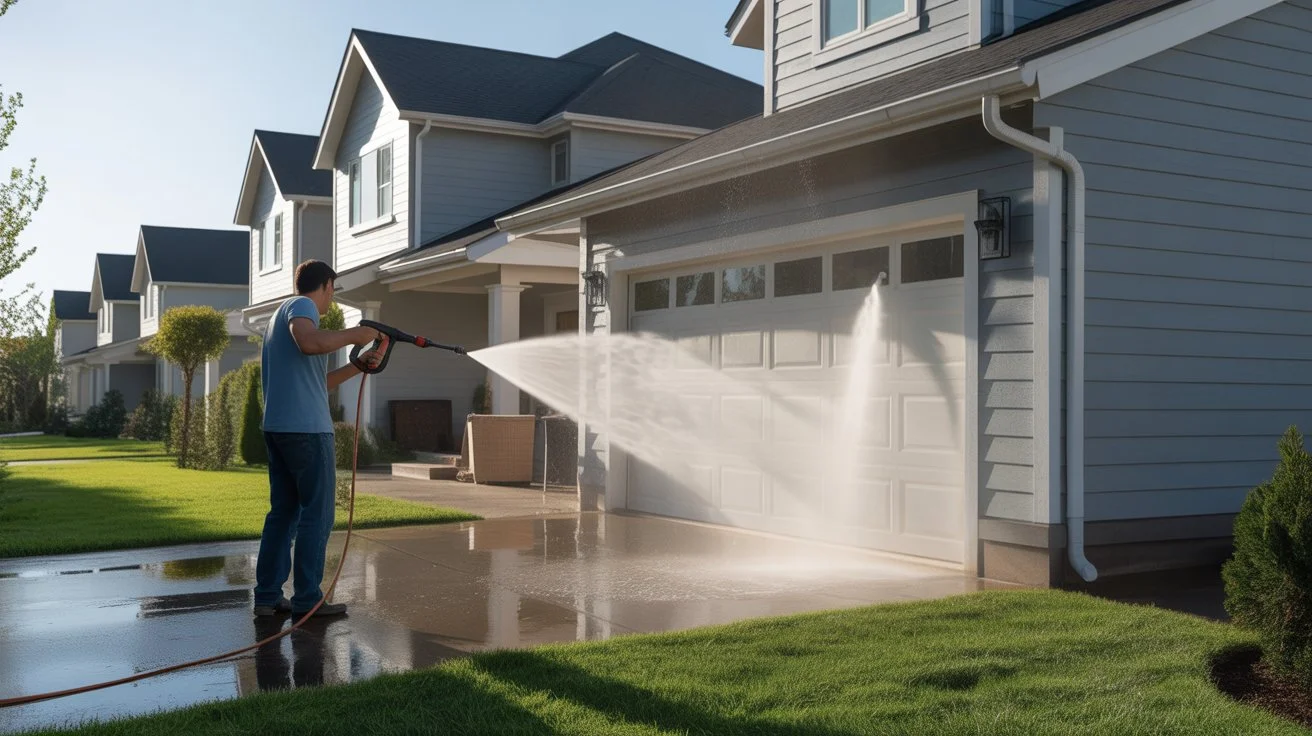
Pressure washing combines water pressure, water volume, spray pattern, distance, and movement. Changing any of these can affect how aggressively the surface is cleaned.
A narrow spray concentrated on one area can be much more aggressive than a wider spray used from a greater distance. That is why simply choosing the machine with the highest PSI is not necessarily the best approach.
For house exteriors, start with the lowest effective pressure and a wider spray pattern. Always check the pressure washer manufacturer’s instructions and the siding or exterior material manufacturer’s cleaning recommendations before beginning.
For example, Lowe’s recommends using the lowest PSI and widest spray pattern that effectively cleans the surface. Its guidance also notes that vinyl siding may be pressure washed within a specified range, but homeowners should check the siding manufacturer’s information first because some products may not be suitable for pressure washing.
What Do You Need to Pressure Wash a House?
Before starting, gather the equipment and supplies you actually need.
Basic equipment
- Pressure washer
- Appropriate spray tips
- Garden hose
- Pressure washer hose
- Exterior cleaning detergent suitable for the surface
- Soft-bristle brush for areas that need gentle scrubbing
- Safety glasses or other recommended eye protection
- Hearing protection when appropriate
- Gloves
- Plastic sheeting or covers for sensitive items
- Extension wand or suitable accessories for high areas
Read the pressure washer manual before connecting or operating the machine. The correct setup can vary between models.
Step 1: Inspect the House Before Washing
Do not immediately start spraying.
Walk around the house and look for:
- Cracked or loose siding
- Missing or damaged caulk
- Peeling paint
- Cracked mortar
- Damaged stucco
- Loose trim
- Broken screens
- Open vents
- Loose outdoor fixtures
- Damaged windows or seals
This inspection matters because pressure washing can expose existing weaknesses.
If siding is already loose, spraying directly at the damaged area may make the problem worse. Likewise, water should not be intentionally forced into gaps, cracks, joints, vents, or openings.
Mark areas that need repair so you can avoid them during cleaning.
Step 2: Protect the Property
Before turning on the pressure washer, prepare the work area.
Close windows and doors securely. Move outdoor furniture and other loose objects away from the walls.
Protect plants around the house by trimming back branches or vegetation that touches the exterior. Wetting and covering nearby plants can also help protect them from cleaning solutions.
Pay special attention to exterior electrical fixtures and outlets. Keep water away from electrical connections and follow the safety instructions provided with your equipment.
Also check the ground for hoses, toys, tools, and other objects that could create a tripping hazard.
Preparation may take a little extra time, but it is one of the easiest ways to reduce preventable problems.
Step 3: Choose the Right Pressure and Spray Pattern
One of the biggest mistakes in power washing house projects is assuming more pressure automatically means better cleaning.
It does not.
The appropriate pressure depends on the material, its condition, the type of buildup, the spray tip, and your distance from the surface.
A wider spray pattern generally spreads the force over a larger area. A concentrated spray delivers more force to a smaller area.
Before cleaning the main wall, test your selected setting on a small, inconspicuous section.
Watch the surface carefully.
If you see paint lifting, marks appearing, siding flexing excessively, water getting behind the material, or another sign of damage, stop and reassess the pressure and technique.
Step 4: Apply a Suitable Cleaning Solution
Water can remove loose dirt, but some exterior buildup may require a compatible cleaning solution.
Use only a product that is appropriate for the surface you are cleaning and follow its label instructions. Do not assume that a stronger concentration will produce a better result.
The purpose of a cleaning solution is to help loosen buildup so you do not have to rely entirely on high-pressure water.
Depending on the surface and product instructions, you may apply the cleaner using the pressure washer’s detergent system, a pump sprayer, or another suitable method.
Keep the solution away from areas it could damage, and protect surrounding plants and sensitive materials.
Step 5: Start Washing in Controlled Sections
Once everything is prepared, begin cleaning one manageable section at a time.
Do not randomly spray across the entire house.
A controlled approach makes it easier to see where you have already cleaned and helps prevent uneven results.
Keep the wand moving rather than holding the spray in one location. Maintain a consistent distance from the surface and adjust your position instead of constantly changing pressure.
For power washing house siding, pay particular attention to the direction of the spray.
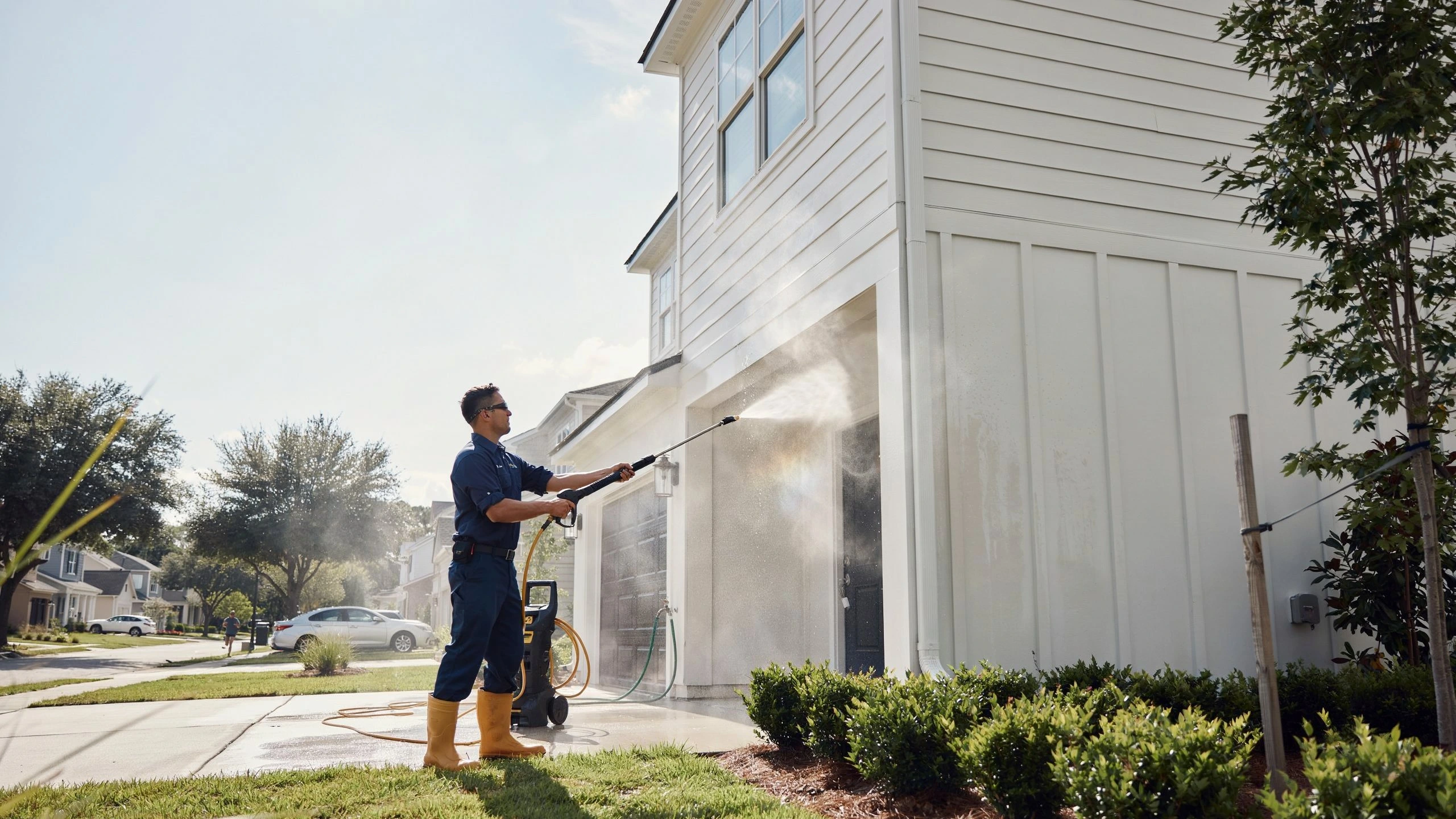
Avoid directing water upward into seams, joints, or underneath overlapping siding. Water forced behind siding can create problems that are not visible immediately.
Lowe’s specifically cautions against pointing the spray up into siding seams because water can get underneath the siding.
Step 6: Clean According to the Exterior Material
Vinyl siding
Vinyl siding can often be cleaned with water and appropriate cleaning methods, but pressure should still be controlled.
Use a suitable spray pattern and test the surface first. Keep the spray directed in a way that does not force water behind the panels.
The Vinyl Siding Institute also recommends avoiding abrasive cleaners and stiff brushes that could alter the appearance of the siding.
Painted wood
Painted wood requires extra care. Excessive pressure can remove paint or damage the wood underneath.
If the paint is already peeling or the wood is deteriorated, pressure washing may not be the correct first step. Repairing the surface may need to come before cleaning.
Stucco
Stucco can be more vulnerable to aggressive water pressure, particularly when cracks or damaged areas are present.
Inspect it carefully and use a conservative approach. If the manufacturer’s cleaning instructions specify a particular method, follow them rather than relying on a generic pressure-washing setting.
Brick and masonry
Brick walls and mortar joints should be inspected before cleaning. Damaged mortar, cracks, and deteriorated areas deserve special attention.
Do not use pressure simply to force stubborn staining away. If the surface is already deteriorating, aggressive cleaning can cause additional damage.
Step 7: Be Careful Around Windows and Doors
Windows and doors deserve more attention than an ordinary wall.
Avoid directing high-pressure water into:
- Window seals
- Door gaps
- Screens
- Weatherstripping
- Vents
- Openings around frames
The objective is to clean the exterior surface, not force water into the building envelope.
If a window or door has a damaged seal, treat it as a repair issue rather than trying to compensate with pressure washing.
Step 8: Rinse the House Thoroughly
After cleaning, rinse the exterior according to the cleaning product’s instructions.
Work systematically so you do not leave detergent or loosened grime behind.
Pay attention to corners, trim, areas beneath windows, and other locations where dirty water may collect.
A thorough rinse is especially important when a cleaning solution has been used.
Step 9: Let the Exterior Dry and Inspect It
Once the house has been rinsed, allow the exterior to dry and inspect your work.
Look for:
- Remaining dirt
- Missed areas
- Streaks
- Areas with persistent organic growth
- Paint damage
- Loose siding
- Water intrusion concerns
If a stain remains, do not immediately respond by increasing pressure dramatically.
The remaining problem may require a different cleaning method rather than more force.
Common Mistakes When Pressure Cleaning a House
Using maximum pressure everywhere
High pressure can increase the risk of surface damage. Use only enough force to accomplish the cleaning task.
Spraying too close
Moving the nozzle closer increases the force reaching the surface. Start farther away and adjust gradually during testing.
Holding the wand in one spot
Stationary spraying can create visible marks or damage delicate surfaces.
Spraying upward underneath siding
This can push water behind siding panels.
Using a ladder
A pressure washer produces reactive force, and working from a ladder reduces your ability to maintain stable footing.
Do not use a pressure washer while standing on a ladder. Major retailers specifically advise against this, and OSHA accident records document serious injuries associated with pressure washing from ladders.
For higher areas, use equipment and accessories designed to reach them from a stable position, or consider professional service.
Ignoring damaged surfaces
Pressure washing does not repair loose siding, cracked mortar, failed caulking, or deteriorated paint.
Assuming every cleaner works on every surface
Cleaning products are not universal. Check the label and surface compatibility before use.
When Should You Not Pressure Wash a House Yourself?
DIY cleaning may not be the right choice when:
- The house has extensive exterior damage
- You cannot safely reach the upper areas
- The siding manufacturer’s instructions prohibit pressure washing
- Paint is severely peeling
- Stucco or masonry is significantly damaged
- You are unsure which cleaning method the surface requires
- Electrical hazards are present
- The project requires specialized equipment
A two-story home is a good example. Instead of balancing on a ladder with a pressure washer, use ground-based accessories designed for high areas or have the work performed by professionals.
Safety should take priority over finishing the project yourself.
DIY Pressure Washing vs. Professional House Washing
DIY pressure washing your house can make sense when the exterior is in good condition, the home is accessible, and you understand the equipment and surface requirements.
Professional service can make more sense when the house is large, difficult to access, heavily soiled, or made from materials that require specialized cleaning techniques.
The decision should not be based only on whether you own a pressure washer. Consider the condition of the exterior, the height of the house, the equipment required, and your ability to clean without damaging the property.
If you would rather have the exterior handled by an experienced local service, House Washing Services in Tracy CA can be an option to consider.
VJ Pressure Washing can help homeowners who prefer professional exterior cleaning instead of taking on the equipment, preparation, and safety concerns themselves.
Key Takeaways
- Inspect the house before pressure washing.
- Identify the exterior material and its condition.
- Check manufacturer cleaning recommendations.
- Use the lowest effective pressure rather than automatically choosing maximum PSI.
- Start with a wider spray pattern and test an inconspicuous area.
- Protect windows, doors, plants, fixtures, and electrical components.
- Keep the spray moving.
- Never force water underneath siding.
- Never use a ladder while operating a pressure washer.
- Do not rely on pressure alone to remove every type of stain.
- If the surface is damaged or difficult to access, professional cleaning may be safer.
Conclusion
Learning How to Pressure Wash a House is less about using maximum power and more about using the right technique for the surface.
Start with inspection and preparation. Protect the areas around the house, choose a suitable pressure and spray pattern, test before committing to a large section, and keep the spray controlled while you work.
Most importantly, remember that different exterior materials have different limitations. Vinyl siding, painted wood, stucco, brick, and other surfaces should not automatically be treated the same way.
If your home is difficult to access, has significant exterior buildup, or you are unsure about the safest cleaning method, professional help may be worth considering.
Frequently Asked Questions
Can I pressure wash my house myself?
Yes, many homeowners can handle suitable exterior cleaning projects themselves if the surface is compatible with pressure washing and they follow the equipment and material manufacturer’s instructions. The key is controlling pressure, distance, spray pattern, and water direction.
What PSI should I use to pressure wash a house?
There is no single PSI that is correct for every house. The appropriate setting depends on the exterior material and its condition. Start with the lowest effective pressure and test a small area before continuing.
Is pressure washing house siding safe?
It can be, but the technique matters. Check the siding manufacturer’s recommendations, use an appropriate spray pattern, avoid spraying upward into seams, and test a small area first.
Can I pressure wash a two-story house?
You should not operate a pressure washer while standing on a ladder. For upper levels, use suitable extension equipment from stable ground or hire a professional.
Should I use soap when pressure washing a house?
A suitable cleaning solution can help loosen certain types of dirt and organic buildup, but it is not always necessary. If you use a cleaner, make sure it is compatible with the surface and follow the product instructions.
How do I avoid damaging siding while pressure washing?
Use the lowest effective pressure, maintain an appropriate distance, select a suitable spray pattern, keep the wand moving, and avoid directing water underneath or behind siding.
What if pressure washing does not remove a stain?
Do not automatically increase the pressure. The stain may require a compatible cleaning solution, soft brushing, or another treatment method. Increasing pressure can create damage without solving the underlying cleaning problem.