
Dirty siding can make an otherwise well-maintained home look neglected. Dust, pollen, cobwebs, mud, algae, mildew, and other outdoor buildup can collect on siding over time, especially on shaded or damp areas of the house The best way to wash house siding depends on the siding material and the type of buildup you are trying to remove. For ordinary dirt, a garden hose and appropriate cleaning solution may be enough.
For heavier buildup, a pressure washer or professional soft-washing method may be more effective, but using excessive pressure can damage some siding materials. If you are wondering how to wash house siding, the goal should not simply be to use the strongest spray possible. Good results come from choosing the right cleaning method, applying it carefully, and rinsing the surface thoroughly.
- Identify Your Siding Before Cleaning
- What Do You Need to Wash House Siding?
- How to Wash House Siding Step by Step
- 1. Inspect the Siding
- 2. Remove Loose Dirt and Debris
- 3. Apply an Appropriate Cleaning Solution
- 4. Allow the Cleaner to Work
- 5. Gently Agitate Stubborn Areas
- 6. Rinse Thoroughly
- Can You Clean Siding With a Power Washer?
- How to Pressure Wash Siding Safely
- What About Power Washing Siding?
- How to Remove Algae and Mildew From Siding
- Common Mistakes When Washing House Siding
- Using Too Much Pressure
- Spraying Directly Into Seams
- Ignoring Existing Damage
- Letting Cleaner Dry
- Using the Wrong Cleaner
- Neglecting Windows and Fixtures
- When Should You Hire a Professional?
- How Often Should House Siding Be Washed?
- Final Thoughts
- Frequently Asked Questions
Identify Your Siding Before Cleaning
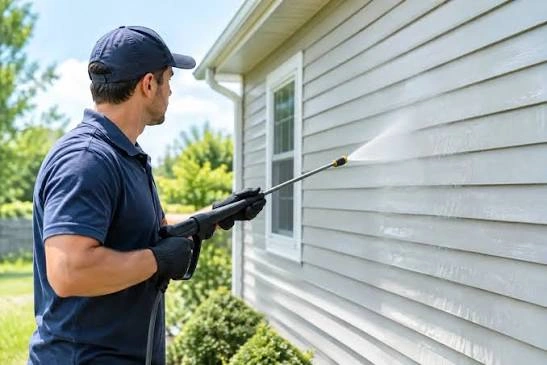
Before reaching for a pressure washer, determine what type of siding your home has.
Common siding materials include vinyl, aluminum, wood, and fiber cement. Each material can have different cleaning requirements and different levels of resistance to water pressure.
Vinyl siding, for example, is commonly washed with water and an appropriate exterior cleaning solution. However, forcing water behind the panels can cause problems, so the direction and pressure of the spray matter.
Wood siding requires additional care because excessive moisture or pressure can damage the surface or finish. Painted or older siding may also need a gentler approach.
If you are unsure about your siding material or its cleaning requirements, check the manufacturer’s care instructions before starting.
What Do You Need to Wash House Siding?
The equipment you need depends on how dirty the siding is and which cleaning method you choose.
For a basic DIY cleaning, you may need:
- Garden hose
- Bucket
- Soft-bristle brush
- Appropriate exterior cleaning solution
- Extension pole for hard-to-reach areas
- Safety glasses
- Gloves
- Protective coverings for sensitive plants or nearby items
A pressure washer can be useful for some siding-cleaning jobs, but it is not automatically necessary.
The important thing is to use equipment that matches the surface. A powerful machine used incorrectly can create more problems than it solves.
How to Wash House Siding Step by Step
1. Inspect the Siding
Walk around the house and look for areas that need special attention.
Check for loose panels, cracked sections, damaged caulking, peeling paint, exposed wood, or other existing problems. Cleaning can force water into damaged areas, so it is better to identify them beforehand.
Also look for electrical fixtures, outdoor outlets, light fixtures, doors, windows, and other areas that should not receive direct high-pressure spray.
2. Remove Loose Dirt and Debris
Start with a gentle rinse using a garden hose.
Work from the top of the siding downward so loosened dirt moves toward the ground instead of running over areas you have already cleaned.
A preliminary rinse can remove loose dust, cobwebs, pollen, and other surface debris before you apply a cleaning solution.
3. Apply an Appropriate Cleaning Solution
For ordinary dirt, an exterior siding cleaner may help loosen buildup.
Apply the solution according to its label directions. Do not assume that a stronger concentration will produce better results. Using too much cleaning product can create unnecessary residue and may harm nearby vegetation or surfaces.
If the siding has visible algae, mildew, or other biological growth, choose a cleaner specifically appropriate for that type of buildup and the siding material.
4. Allow the Cleaner to Work
Give the cleaning solution enough time to loosen the dirt before rinsing.
The exact dwell time depends on the product being used, weather conditions, and the type of buildup.
Avoid allowing the cleaner to dry completely on the siding. Working in manageable sections can make it easier to keep the surface wet and maintain control over the cleaning process.
5. Gently Agitate Stubborn Areas
If dirt remains after applying the cleaner, use a soft-bristle brush to gently agitate the affected area.
You do not need to aggressively scrub every section of siding. Focus your effort on areas with heavier buildup.
Be especially careful with painted, weathered, or delicate surfaces.
6. Rinse Thoroughly
Rinse the siding from top to bottom with clean water.
Make sure cleaning residue is removed from the surface. Pay attention to corners, seams, trim, and areas around windows and doors.
A thorough rinse is particularly important when using a cleaning solution because leftover residue can leave the siding looking dull or attract additional dirt.
Can You Clean Siding With a Power Washer?
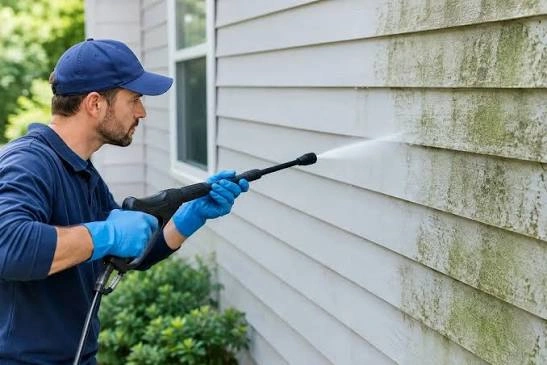
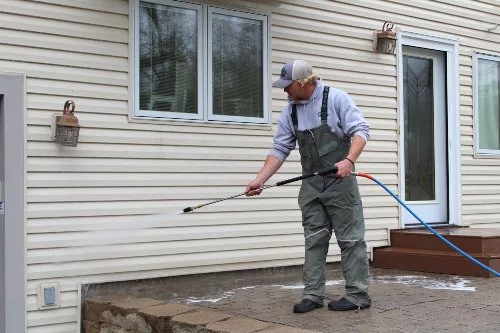
Yes, clean siding with power washer equipment can be possible, but the machine must be used appropriately for the siding material and condition.
Pressure washing siding is not simply a matter of pointing the nozzle at the wall and pulling the trigger.
Too much pressure or holding the nozzle too close can damage siding, remove finishes, break fragile sections, or force water behind siding panels.
If you use a pressure washer, start with a lower-pressure setting and test an inconspicuous area first.
Maintain a reasonable distance from the surface and use a spray pattern that covers the area without concentrating excessive force in one spot.
How to Pressure Wash Siding Safely
If your siding is suitable for pressure washing, technique matters.
Keep the spray directed in a way that avoids forcing water behind siding panels. Do not concentrate the spray around seams, joints, vents, electrical components, windows, or damaged areas.
Move the wand consistently rather than holding it in one location.
You should also protect nearby plants and outdoor items before beginning. Cleaning solutions and dirty runoff can affect landscaping, so cover or rinse sensitive vegetation as appropriate for the products being used.
For homeowners unfamiliar with pressure-washing equipment, professional cleaning may be safer than experimenting with high pressure on an expensive exterior.
What About Power Washing Siding?
The terms power washing siding, pressure wash siding, and siding power wash are often used to describe exterior cleaning with pressurized water.
However, the important issue is not what the service is called. The important issue is whether the cleaning method is appropriate for the particular siding.
A professional may choose a lower-pressure cleaning approach combined with a cleaning solution instead of relying on high pressure alone.
This is especially relevant when the main problem is algae, mildew, or organic buildup. The goal is to clean the surface effectively without unnecessarily stressing the siding.
How to Remove Algae and Mildew From Siding
Green, gray, or dark discoloration may be caused by algae, mildew, or other environmental buildup.
Simply blasting these areas with high pressure may not be the best approach. A suitable cleaning solution can help break down organic buildup so it can be rinsed away with less mechanical force.
If the growth is extensive, the siding is delicate, or you are unsure what caused the discoloration, consider having the surface evaluated before cleaning it.
Do not mix different cleaning chemicals together unless the product instructions specifically say they are compatible. Some combinations can produce dangerous fumes or unwanted chemical reactions.
Common Mistakes When Washing House Siding
Using Too Much Pressure
More pressure is not always better. Excessive pressure can damage siding or force water into places where it does not belong.
Spraying Directly Into Seams
Siding systems are designed to shed water, not necessarily to withstand concentrated water being forced underneath their components.
Ignoring Existing Damage
Loose panels, cracks, damaged caulking, and peeling finishes should be identified before cleaning.
Letting Cleaner Dry
Allowing cleaning products to dry on the siding can make rinsing more difficult and may leave residue.
Using the Wrong Cleaner
A cleaner that works on one surface may not be suitable for another. Always check the product label and siding manufacturer’s recommendations.
Neglecting Windows and Fixtures
Protect windows, doors, electrical components, light fixtures, and other sensitive areas from inappropriate pressure or cleaning chemicals.
When Should You Hire a Professional?
DIY siding cleaning can make sense when the home is relatively small, the siding is in good condition, and the homeowner has the appropriate equipment and understands the cleaning requirements.
Professional help may be a better choice when:
- The house has multiple stories.
- Siding has extensive algae or mildew.
- The surface is old or delicate.
- You do not have suitable pressure-washing equipment.
- You are unsure which cleaning solution to use.
- The exterior has difficult-to-reach areas.
- You want to avoid the risk of damaging the siding.
Professional exterior cleaners can select an appropriate cleaning method based on the siding material and condition rather than using the same pressure level for every home.
For homeowners in Tracy, VJ Pressure Washing provides a local option to explore when professional exterior cleaning is needed. You can learn more about House Washing Services in Tracy CA when DIY cleaning is not the right fit for your property.
How Often Should House Siding Be Washed?
There is no universal schedule that works for every house.
A home surrounded by trees, exposed to dust, or located in a damp or shaded environment may develop visible buildup faster than a home with more sunlight and less surrounding vegetation.
Instead of waiting for the siding to become heavily stained, inspect the exterior periodically.
If you notice increasing dirt, green growth, dark staining, or a generally dull appearance, it may be time to clean the siding.
Regular inspection also gives you an opportunity to identify damaged panels or other exterior problems before they become more serious.
Final Thoughts
Knowing how to wash house siding is less about using the most powerful equipment and more about using the right cleaning method for the surface.
Start by identifying the siding material, inspect for existing damage, remove loose debris, apply an appropriate cleaner, allow it to work without drying, and rinse thoroughly. If you use a pressure washer, keep the pressure controlled and avoid directing concentrated spray into seams, openings, or damaged areas.
For homeowners who are uncomfortable working with pressure-washing equipment or dealing with difficult exterior buildup, professional house washing can provide a safer alternative.
Frequently Asked Questions
What is the best way to wash house siding?
The best method depends on the siding material and the type of dirt or buildup present. A garden hose and appropriate cleaner may be enough for light dirt, while heavier buildup may require pressure washing or a lower-pressure professional cleaning method.
Can you pressure wash vinyl siding?
Vinyl siding can often be cleaned with pressurized water, but excessive pressure or improper spray direction can cause damage or force water behind the panels. Follow the siding manufacturer’s recommendations and use appropriate technique.
Is power washing safe for all siding?
No. Different siding materials and conditions require different cleaning approaches. Old, damaged, painted, or delicate siding may need a gentler method.
Should I use a pressure washer to remove mildew?
Pressure alone may not be the best solution for mildew or other organic growth. An appropriate cleaning solution can help break down the growth before rinsing.
Can I wash siding with a garden hose?
Yes. A garden hose can be an effective option for light dirt and routine cleaning, particularly when you want to avoid the risks associated with high-pressure equipment.
How do I avoid damaging siding while cleaning?
Identify the siding material first, inspect for damage, use an appropriate cleaner, avoid excessive pressure, maintain a safe spray distance, and prevent water from being forced behind panels or into sensitive areas.