You walk outside one morning and notice dark stains creeping across your shingles. It looks dirty, maybe even a little alarming. You might think it is mold, mildew, or just built-up grime from years of rain.
So what is the black stuff on my roof? In most cases, it is a living organism called Gloeocapsa Magma, a type of blue-green algae that feeds on your roofing materials. It spreads fast, looks bad, and can cause real damage if left alone.
- What Is the Black Stuff on a Roof?
- What Causes Black Streaks on Roofs?
- 1. Humidity and Moisture
- 2. Tree Shade
- 3. Limestone Filler in Shingles
- 4. Poor Roof Ventilation
- 5. Nearby Vegetation
- 6. North-Facing Slopes
- 7. Existing Algae Spores in the Neighborhood
- Is the Black Stuff on My Roof Harmful?
- To Your Roof
- To Your Home
- To Your Wallet
- To Your Home’s Value
- How to Identify Roof Algae vs. Other Roof Problems
- Algae (Gloeocapsa Magma)
- Moss
- Lichen
- Mold or Mildew
- Aging Shingles
- Why DIY Roof Cleaning Can Be Risky
- High-Pressure Water Strips Shingle Granules
- Ladders and Steep Roofs Are Dangerous
- Wrong Chemicals Cause More Damage
- DIY Methods Can Void Your Roof Warranty
- The Best Way to Remove Black Roof Stains
- Step-by-Step Professional Soft Wash Process
- How to Prevent Black Streaks from Returning
- Install Zinc or Copper Strips Near the Ridge
- Trim Overhanging Trees
- Keep Gutters Clean
- Improve Roof Ventilation
- Choose Algae-Resistant Shingles When Replacing
- Schedule Routine Cleaning
- How Often Should a Roof Be Cleaned?
- Every 1 to 2 Years
- Every 2 to 3 Years
- Every 3 to 5 Years
- When to Call a Professional Roof Cleaner
- Why Homeowners Trust VJ Pressure Washing for Roof Cleaning
- What Sets VJ Pressure Washing Apart
- Conclusion
- FAQs
What Is the Black Stuff on a Roof?
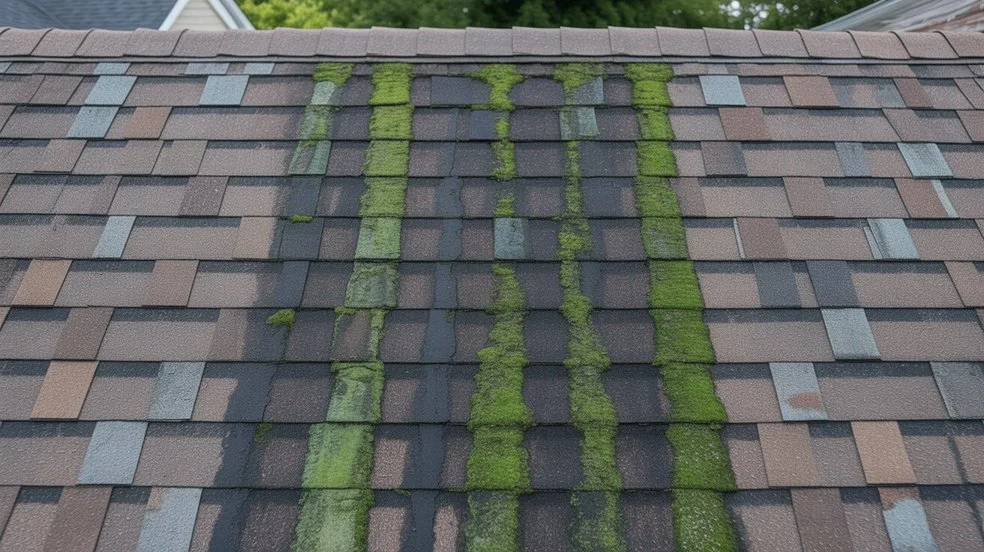
Those dark streaks are not just cosmetic. They are alive.
Gloeocapsa Magma is a cyanobacteria, meaning it is part algae and part bacteria. It forms a dark, protective coating around its cells, and that coating is exactly what you see on your shingles.
It typically shows up as:
- Dark gray or black streaks running down the slope of your roof
- Patches of discoloration that spread over time
- A dirty appearance that looks like the roof needs replacing
But it is not always algae. Here is a quick breakdown of what else can cause that dark look:
| What You See | What It Likely Is |
| Long dark streaks | Gloeocapsa Magma (algae) |
| Fuzzy black or green patches | Moss or lichen |
| Uniform dark coating | Mold or mildew |
| Granule loss with dark areas | Aging shingles |
| Soot-like stains near edges | Air pollution or debris |
Understanding what you are dealing with is step one. Treating the wrong problem can waste money and even damage your roof more.
What Causes Black Streaks on Roofs?
Roof discoloration does not happen randomly. Several factors speed it up.
1. Humidity and Moisture
Algae loves moisture. If your area gets regular rainfall or morning dew, your roof stays damp long enough for algae to thrive.
2. Tree Shade
Trees block sunlight. Sunlight dries out moisture. Less sun means a wetter, darker roof environment where black streaks on roof surfaces grow faster.
3. Limestone Filler in Shingles
Modern asphalt shingles contain crushed limestone. It adds weight and durability, but Gloeocapsa Magma feeds on it like food. This is why newer roofs are not immune.
4. Poor Roof Ventilation
When air does not circulate well under your roof, heat and moisture build up. That trapped moisture encourages algae and mold growth from the inside out.
5. Nearby Vegetation
Leaves, branches, and organic debris land on your roof and decompose. That organic matter feeds algae and accelerates staining.
6. North-Facing Slopes
The north side of a roof gets the least sunlight. It stays damp longer. That is why most homeowners notice roof discoloration causes are worse on one side than the other.
7. Existing Algae Spores in the Neighborhood
Algae spores travel by wind. If your neighbor has it, chances are your roof will develop it too, especially if you share similar tree cover or shade patterns.
Is the Black Stuff on My Roof Harmful?
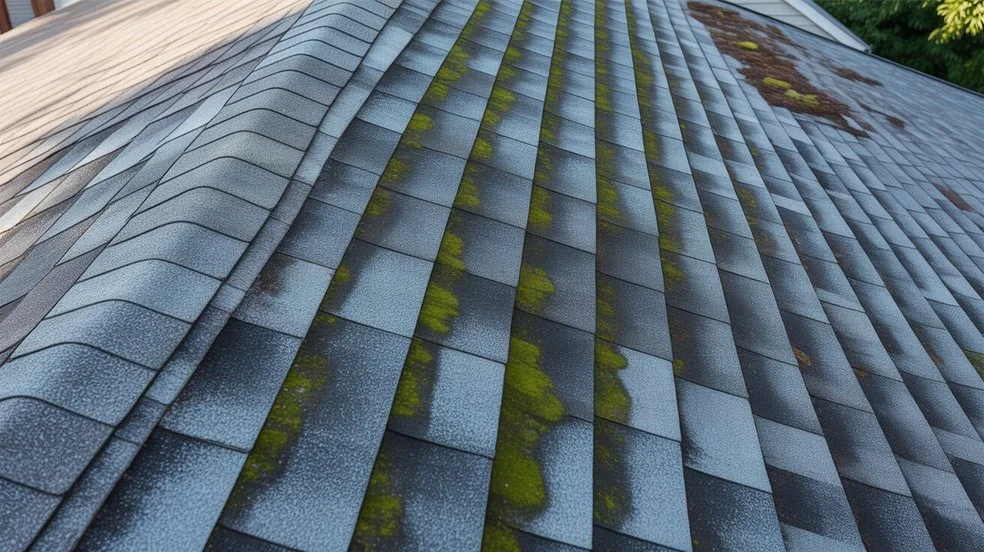
Yes, and in more ways than one.
To Your Roof
Gloeocapsa Magma eats into the limestone granules on your asphalt shingles. Over time, this degrades the shingle’s surface, reduces its UV protection, and shortens its lifespan. What looks like a cosmetic issue can become a structural one.
Moss and lichen are even more aggressive. They grow roots that physically lift and crack shingles, letting water get underneath.
To Your Home
Damaged shingles mean less protection against rain and leaks. A roof that looks stained today could be leaking in a few years if the algae is left untreated.
To Your Wallet
Roof algae removal done early is far cheaper than replacing shingles or fixing water damage inside your home. Average roof replacement costs thousands. A cleaning costs a fraction of that.
To Your Home’s Value
Buyers notice roof stains. Real estate agents report that visible roof discoloration can reduce a home’s perceived value and make it harder to sell.
How to Identify Roof Algae vs. Other Roof Problems
Not every dark spot is algae. Here is how to tell the difference:
Algae (Gloeocapsa Magma)
- Appears as long, dark streaks
- Usually starts near the top and runs down
- Color is black, dark gray, or dark green
- No texture when viewed up close
- Spreads slowly over months or years
Moss
- Looks green and fuzzy
- Clumps in shaded areas
- Has visible plant-like structure
- Holds water against the shingle surface
Lichen
- Flat, crusty patches
- Often gray-green or orange
- Harder to remove because it bonds to the shingle
- A mix of algae and fungus
Mold or Mildew
- Often appears in low-ventilation zones
- Can spread under shingles
- May smell musty if you are in the attic
- Typically requires professional treatment
Aging Shingles
- Granule loss creates uneven dark patches
- No streaking pattern
- Often paired with curling or cracking shingles
If you are unsure, get a professional to take a look. Misidentifying the problem leads to the wrong treatment, which wastes time and money.
Why DIY Roof Cleaning Can Be Risky
Many homeowners see the black streaks and grab a pressure washer. That is one of the worst things you can do.
High-Pressure Water Strips Shingle Granules
Those granules protect your shingles from UV rays and rain. Blast them off and you shorten your roof’s life significantly.
Ladders and Steep Roofs Are Dangerous
Falls from roofs are among the leading causes of home accident injuries. Wet surfaces make it worse.
Wrong Chemicals Cause More Damage
Bleach-based products used at wrong concentrations can kill nearby plants, corrode metal flashing, and stain siding. Using too little means the algae comes back fast.
DIY Methods Can Void Your Roof Warranty
Many manufacturers have specific cleaning guidelines. DIY methods that go outside those guidelines can void your warranty.
The smarter move is to understand what you are dealing with, then decide if it is something you can safely handle or if a professional is the right call.
The Best Way to Remove Black Roof Stains
The industry-recommended method is soft washing.
Soft washing uses low-pressure water combined with a biodegradable cleaning solution. The solution does the heavy lifting, breaking down and killing algae, mold, and mildew without damaging the shingles.
Step-by-Step Professional Soft Wash Process
- Inspect the roof to confirm the type of growth
- Wet down nearby plants and landscape to protect them
- Apply a specially formulated roof cleaning solution
- Allow dwell time so the solution kills the organism at the root
- Rinse with low-pressure water
- Apply a post-treatment preventative if needed
For homeowners who want to try a mild treatment themselves, the ARMA (Asphalt Roofing Manufacturers Association) recommends a mixture of equal parts water and sodium hypochlorite (household bleach), applied gently and rinsed thoroughly. However, this only works for mild cases and requires real care around landscaping and gutters.
For full roof algae removal on larger or more severe cases, a professional service is always the safer and more effective choice.
How to Prevent Black Streaks from Returning
Cleaning your roof is only half the job. Prevention keeps it looking clean longer.
Install Zinc or Copper Strips Near the Ridge
Rain washes zinc or copper ions down the roof surface. These ions naturally inhibit algae and moss growth. It is one of the most passive and effective long-term solutions available.
Trim Overhanging Trees
Less shade means faster drying after rain. That alone reduces the conditions algae needs to survive.
Keep Gutters Clean
Clogged gutters cause water to back up onto the lower shingles. Standing water at the roof edge is a starting point for algae and moss growth.
Improve Roof Ventilation
Talk to a roofing professional about attic ventilation. A properly ventilated roof stays cooler and drier, making it less hospitable to roof discoloration causes.
Choose Algae-Resistant Shingles When Replacing
Many manufacturers now make shingles with copper granules built in. If you are due for a replacement, ask about algae-resistant options. They carry a warranty against black streaks on roof surfaces for up to 10 or 15 years.
Schedule Routine Cleaning
Prevention is cheaper than cure. A maintenance cleaning every 2 to 3 years removes early growth before it becomes a major problem.
How Often Should a Roof Be Cleaned?
There is no single answer, but here are general guidelines:
Every 1 to 2 Years
If you live in a humid climate, have heavy tree cover, or have had algae issues before.
Every 2 to 3 Years
For average climates with moderate tree cover and no prior significant staining.
Every 3 to 5 Years
For dry climates with minimal shade and no history of algae problems.
Watch for early warning signs between cleanings:
- Small dark patches beginning to form
- Green tinge appearing in shaded areas
- Granules accumulating in gutters (a sign of shingle wear)
Catching it early makes roof algae removal faster, cheaper, and less abrasive to your shingles.
When to Call a Professional Roof Cleaner
Some jobs are too big or too risky to handle alone. Call a professional when:
- The staining covers a large portion of the roof
- You see moss or lichen with visible physical growth
- You have a steep or multi-story roof
- Your roof is older or showing signs of wear
- You are not comfortable working at heights
- You want the job done right the first time
If you are in the Tracy, CA area, searching for a trusted roof cleaning service Tracy CA is a smart first step. A licensed and insured local company will know the specific algae and moss patterns common in your region and use the right solutions for your shingle type.
A reputable company will also offer a post-clean treatment to slow regrowth, and some offer a warranty on their work.
Why Homeowners Trust VJ Pressure Washing for Roof Cleaning
VJ Pressure Washing specializes in soft wash roof cleaning for homeowners who want results without the risk of damage.
The team uses biodegradable, roof-safe cleaning solutions that kill Gloeocapsa Magma, moss, and mildew at the root. No high pressure. No shingle damage. No guesswork.
What Sets VJ Pressure Washing Apart
- Years of experience treating roofs in Northern California
- Soft wash method that protects shingle integrity
- Full property protection during every job
- Transparent pricing with no hidden fees
- Satisfaction backed by real results
Whether your roof has mild streaking or years of algae buildup, VJ Pressure Washing brings it back to clean without cutting corners.
Conclusion
So, what is the black stuff on my roof? In most cases, it is Gloeocapsa Magma, a tough algae that feeds on your shingles and leaves those unmistakable dark streaks behind. Left alone, it does real damage to your roof and your home’s value.
The good news is that it is treatable and preventable. Soft washing removes it safely. Zinc strips and regular maintenance keep it from coming back. And knowing the difference between algae, moss, lichen, and aging shingles helps you take the right action at the right time.
Do not wait until a small stain becomes a costly repair. If you are seeing roof discoloration and want a clean, professional result, contact us today at VJ Pressure Washing. Our team provides safe, effective roof cleaning solutions that restore your roof’s appearance and help protect it from long-term damage.
FAQs
What is the black stuff on my roof made of?
It is most commonly Gloeocapsa Magma, a type of cyanobacteria that forms a dark protective shell. It appears as black or dark gray streaks running down your shingles.
Is roof algae dangerous to my family?
The algae itself is not toxic to humans, but it degrades your roof over time, which can eventually lead to leaks and water damage inside your home.
Can I use bleach to clean black streaks on my roof?
A diluted bleach solution is sometimes used for mild cases, but it must be applied carefully to avoid damaging plants, metal, and shingles. For significant staining, professional soft washing is safer and more effective.
How long does roof algae removal take?
A professional soft wash typically takes two to four hours for an average-size home. Severe cases with moss or lichen buildup may take longer.
Will the black streaks come back after cleaning?
They can if no preventative measures are taken. Installing zinc or copper strips and scheduling regular cleanings significantly slows regrowth.
Does homeowner’s insurance cover roof algae damage?
In most cases, no. Insurance companies consider algae and moss damage a maintenance issue. Routine cleaning is the best way to avoid costly out-of-pocket repairs.
What is Gloeocapsa Magma and why does it grow on roofs?
Gloeocapsa Magma is a cyanobacteria that thrives in humid conditions. It feeds on the limestone filler in asphalt shingles, which is why modern roofs are especially prone to it. It spreads through airborne spores and grows fastest in shaded, damp areas.