
A clean driveway instantly improves your home’s curb appeal and prevents damage from dirt, oil, and moss. Over time, neglecting your driveway can lead to stains, cracks, and slippery surfaces, affecting safety and home value.
- Why Driveway Cleaning Matters
- Common Driveway Contaminants
- Tools and Materials You’ll Need
- Step-by-Step Driveway Washing Process
- Step 1 – Preparation
- Step 2 – Apply Cleaning Solution
- Step 3 – Scrubbing
- Step 4 – Pressure Washing
- Step 5 – Rinsing and Finishing Touches
- DIY vs Professional Driveway Washing
- Maintenance Tips to Keep Your Driveway Clean
- Safety Tips for Driveway Cleaning
- Cost of Driveway Washing
- Conclusion
- FAQs
A Step-by-Step Guide to Driveway Washing shows you how to restore your driveway efficiently. By following the right process, you can remove stubborn stains, protect your driveway material, and maintain a fresh, safe surface for years. This guide is practical, easy to follow, and uses safe, proven methods.
Why Driveway Cleaning Matters
Driveway cleaning is more than just appearance. Dirt, algae, and moss retain moisture, which can damage concrete, asphalt, or pavers. Oil spills and grime also degrade the surface over time. A clean driveway prevents slips, reduces long-term repairs, and keeps your property looking well-maintained.
For reliable results, homeowners often hire tracy ca pressure washing professionals like VJ Pressure Washing. Experts provide proper techniques that ensure thorough cleaning without damaging the surface, saving time and effort while maintaining your driveway’s integrity.
Common Driveway Contaminants
Understanding what causes stains helps you choose the right cleaning method. Common driveway contaminants include:
- Oil and Grease Stains: Vehicle leaks leave dark, stubborn spots.
- Dirt and Mud: Regular traffic tracks soil and dust onto the surface.
- Algae, Moss, and Mold: Moist or shaded areas promote biological growth.
- Rust and Mineral Stains: Metal tools, outdoor furniture, or water can leave orange or white marks.
Each contaminant requires specific attention for effective removal. Using the wrong method can damage the surface or leave stains behind.
Tools and Materials You’ll Need
To clean your driveway efficiently, gather the right tools:
- Pressure washer or hose with nozzle (choose correct PSI for material)
- Cleaning solutions such as degreasers or mild detergents
- Stiff brushes or brooms for scrubbing tough stains
- Safety gear: gloves, goggles, and boots
Having the right tools ensures you can perform the cleaning safely while achieving the best results.
Step-by-Step Driveway Washing Process
Follow these steps to clean your driveway properly.
Step 1 – Preparation
Remove vehicles, furniture, and debris. Protect nearby plants and surfaces to avoid accidental damage from cleaning solutions or high-pressure water.
Step 2 – Apply Cleaning Solution
Select a solution appropriate for your stains. Oil and grease require degreasers, while algae and moss can be treated with eco-friendly cleaners. Allow the solution to sit for the recommended time to break down contaminants.
Step 3 – Scrubbing
Use a stiff brush or broom on stubborn spots. Focus on stains and moss patches. Scrubbing helps lift grime that water alone cannot remove.
Step 4 – Pressure Washing
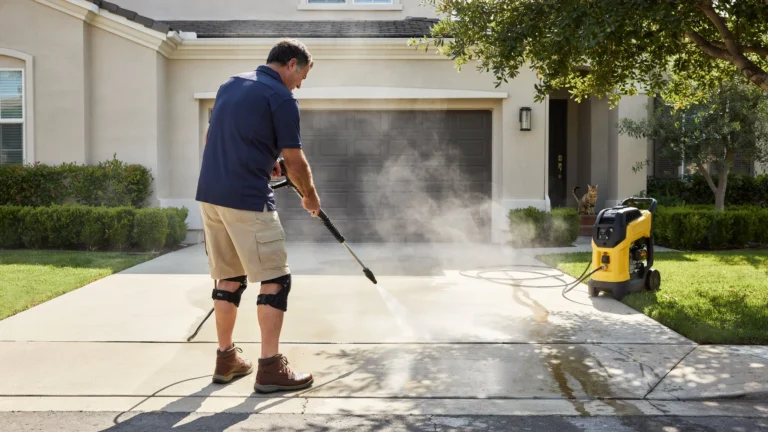
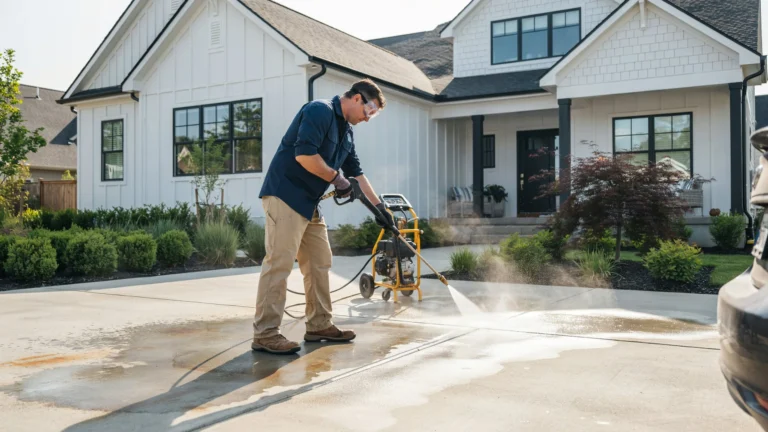
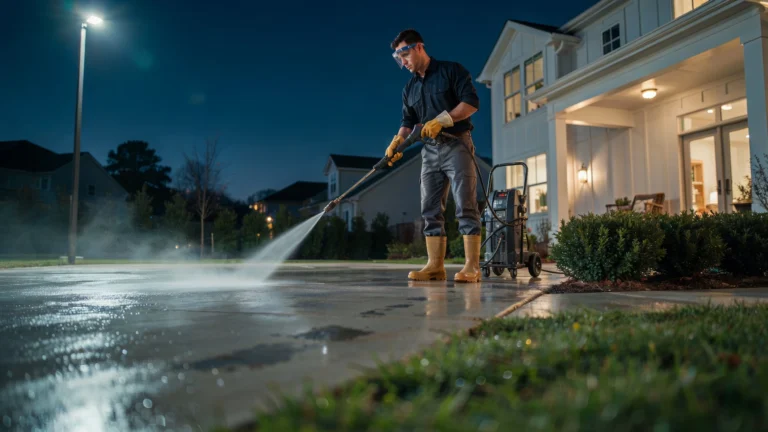
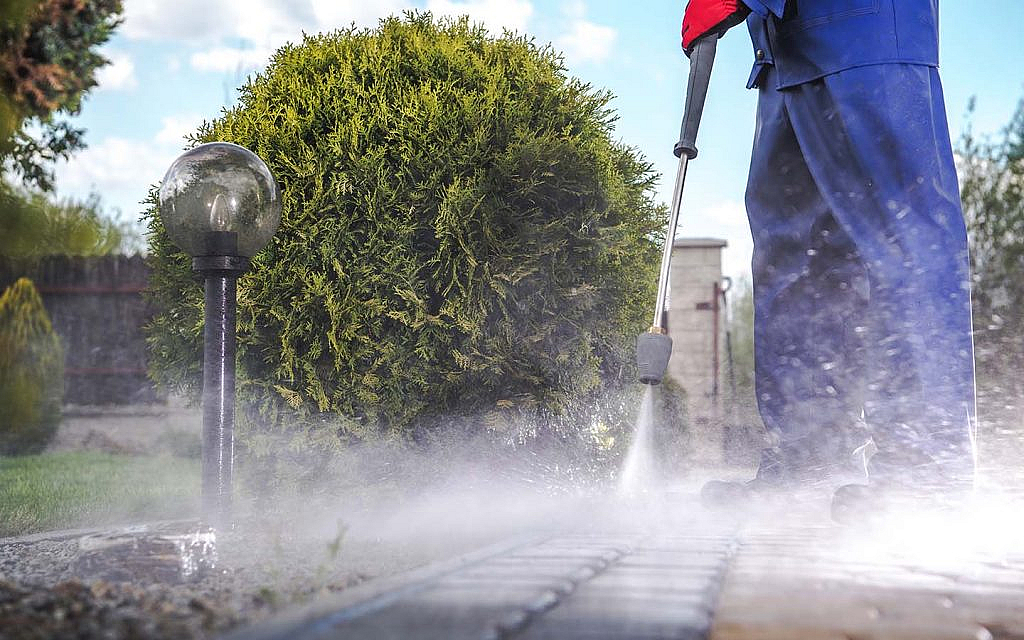
Set your pressure washer to a safe level for your surface. Concrete can withstand higher PSI, while asphalt needs gentler pressure. Work in sections, maintaining consistent movement to avoid uneven cleaning. This is the best way to pressure wash driveway surfaces safely.
Step 5 – Rinsing and Finishing Touches
Rinse thoroughly to remove cleaning solution and loosened debris. Inspect for any remaining stains and repeat scrubbing or washing if needed. Allow the driveway to dry completely before use.
DIY vs Professional Driveway Washing
DIY cleaning saves money, but it carries risks. Incorrect pressure, harsh chemicals, or improper technique can damage the driveway or cause injury. DIY methods are best for small areas or light stains.
Hiring professional driveway cleaning services like VJ Pressure Washing ensures safe, efficient results. Experts use specialized tools, proper cleaning solutions, and proven methods to remove tough stains without damaging your driveway. For large driveways or stubborn stains, professional service is usually the smarter choice.
Maintenance Tips to Keep Your Driveway Clean
Regular maintenance prolongs your driveway’s life and reduces cleaning frequency. Sweep debris weekly and remove stains promptly. Seal concrete or asphalt surfaces annually to prevent water and oil penetration. Trim overhanging branches to limit leaves and moss buildup. Monitoring your driveway periodically allows early action, preventing major cleaning efforts later.
Safety Tips for Driveway Cleaning
Driveway washing involves risks that should not be ignored. Wear gloves, goggles, and non-slip shoes. Keep children and pets away from the area. Follow cleaning product instructions carefully and avoid excessive pressure that can damage the surface. Proper safety ensures a clean driveway without accidents.
Cost of Driveway Washing
Costs vary based on size, material, and the level of staining. DIY cleaning mainly costs for tools and cleaning solutions. Professional service rates depend on driveway area, difficulty, and required chemicals. While hiring experts is costlier upfront, it saves time, ensures thorough cleaning, and reduces the risk of damage, making it a smart long-term investment.
Conclusion
A Step-by-Step Guide to Driveway Washing helps homeowners restore and maintain their driveways effectively. Whether you opt for DIY cleaning or hire VJ Pressure Washing for professional service, the key is proper technique, the right tools, and regular upkeep. A clean driveway not only boosts curb appeal but also extends the lifespan of your surface, prevents damage, and enhances safety.
For reliable results, contact us today to schedule your driveway washing service and experience a cleaner, safer driveway.
FAQs
How often should I wash my driveway?
Most driveways benefit from cleaning once or twice a year, or when stains appear.
Can I use household cleaners for washing the driveway?
Mild detergents work for light dirt, but tough stains need degreasers or professional solutions.
What is the best way to pressure wash the driveway?
Use a pressure washer with the right PSI for your surface, move in sections, and maintain a safe distance.
Is professional driveway washing worth it?
Yes. Professionals remove stubborn stains safely and ensure your driveway lasts longer.
Can I prevent algae or moss growth?
Trim trees, sweep regularly, and consider eco-friendly solutions to reduce growth over time.