
Dark spots can make a clean sidewalk look old and poorly cared for. They often appear where moisture, shade, dirt, and organic growth stay on concrete. Some spots come from algae, mold, lichen, or other buildup. Others may come from oil, rubber, leaves, or dirt.
What are black spots on sidewalk? They are usually stains or organic growth that settle into the small pores of concrete. The cause matters because each type needs a different cleaning method. Pressure washing can remove many surface stains, but stubborn growth may need treatment before washing.
- What Are Black Spots on Sidewalk?
- What Causes Black Spots on Sidewalks?
- Algae and organic growth
- Mold and mildew
- Lichen
- Leaves and plant debris
- Oil and grease
- Tire and rubber marks
- Dirt and moisture
- Are Black Spots on Sidewalk Mold, Algae, or Lichen?
- Can Pressure Washing Remove Black Spots From a Sidewalk?
- How to Remove Black Spots From a Concrete Sidewalk
- 1. Clear the sidewalk
- 2. Inspect the spots
- 3. Test a small area
- 4. Apply the right cleaner
- 5. Give the cleaner time to work
- 6. Agitate stubborn areas
- 7. Pressure wash carefully
- 8. Rinse thoroughly
- 9. Let the concrete dry
- Why Do Black Spots Come Back After Cleaning?
- Can Black Spots Damage a Concrete Sidewalk?
- How to Prevent Black Spots From Returning
- When Should You Hire a Professional Sidewalk Cleaning Service?
- Conclusion
- Frequently Asked Questions
What Are Black Spots on Sidewalk?
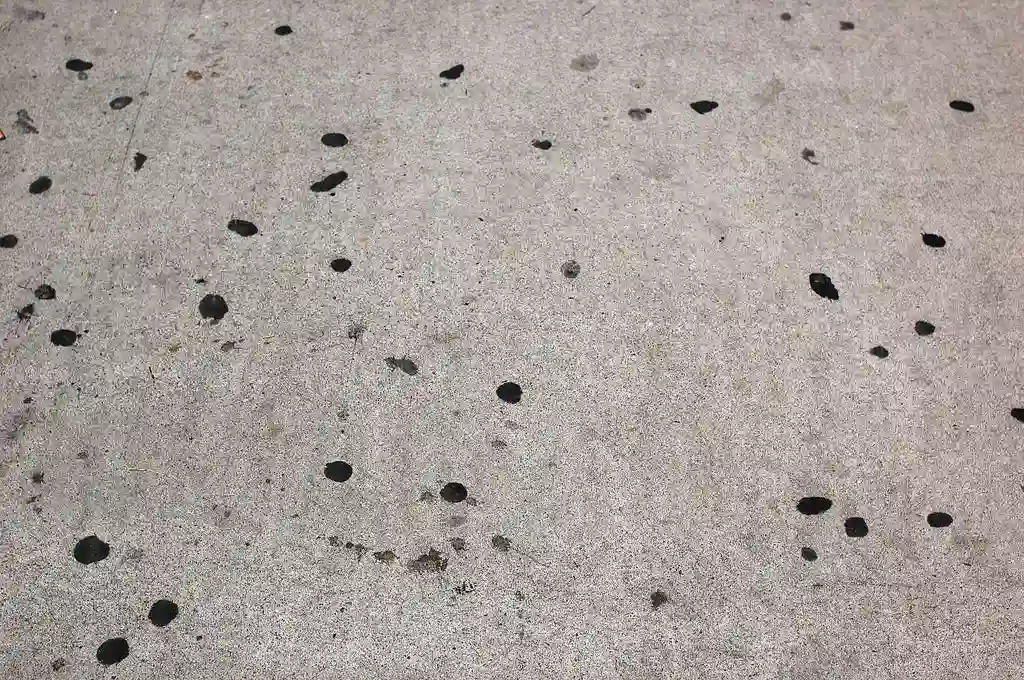
The answer depends on what created the dark marks. Black spots on sidewalk surfaces are often linked to organic growth, especially in damp and shaded areas. Concrete is porous, so moisture and debris can stay inside its small surface pores.
Lichen can create small, dark dots that remain stuck after basic cleaning. Algae and mildew can also leave dark films or patches. In other cases, the marks may not be biological at all.
Oil, tire rubber, food spills, leaf stains, and general grime can all change the color of concrete. This is why simply looking at a spot does not always tell you what caused it.
If the spots are spread across a shaded walkway and look like tiny dark dots, organic growth is one possible cause. If they appear as greasy smears near a driveway entrance, oil or rubber may be more likely.
The cleaning method should match the stain. Treating every dark mark with the same chemical can waste time and may harm the surface.
What Causes Black Spots on Sidewalks?
Several common problems can create dark spots on outdoor concrete.
Algae and organic growth
Algae can grow where concrete stays damp for long periods. Shaded sidewalks often provide the right conditions because they dry more slowly.
Mold and mildew
Mold and mildew can develop where moisture and organic debris collect. They may appear as dark patches, especially around areas that receive little sunlight.
Lichen
Lichen is another common cause of small black dots. It is made from a partnership between a fungus and a photosynthetic organism. Some lichen can attach firmly to concrete and stone.
Leaves and plant debris
Leaves can leave dark stains when they sit on wet concrete. The plant material breaks down and can leave tannins and other residue behind.
Oil and grease
Oil leaks from cars, lawn equipment, and other machines can create dark marks. These stains often have a different look from organic growth and may feel slightly greasy.
Tire and rubber marks
Rubber from tires can transfer onto concrete. These marks often appear near driveways, parking areas, and places where vehicles turn.
Dirt and moisture
Plain dirt can become dark when it mixes with moisture and organic material. Poor drainage can make the problem worse by keeping the surface wet.
Are Black Spots on Sidewalk Mold, Algae, or Lichen?
They can be, but you should not assume every black spot has the same cause.
Mold is a fungus. Algae are different organisms, while lichen is a stable partnership involving a fungus and a photosynthetic organism. For cleaning purposes, the important point is that each can behave differently on a concrete surface.
Lichen often appears as small, firm dots that seem attached to the concrete. Some types can be difficult to remove with normal pressure washing alone. Industry cleaning sources also report that black spotting on concrete and paving can involve lichen, algae, mold, or other organic growth.
Algae may look more like a flat film. Green algae is easy to notice, but some growth can appear dark after it dries.
Mildew may show as dark patches in damp areas. It is often more common where water remains around the sidewalk.
The key is not to guess based only on color. Look at the shape, texture, location, and surrounding conditions. A cleaning professional can also help identify the likely cause before treatment.
Can Pressure Washing Remove Black Spots From a Sidewalk?
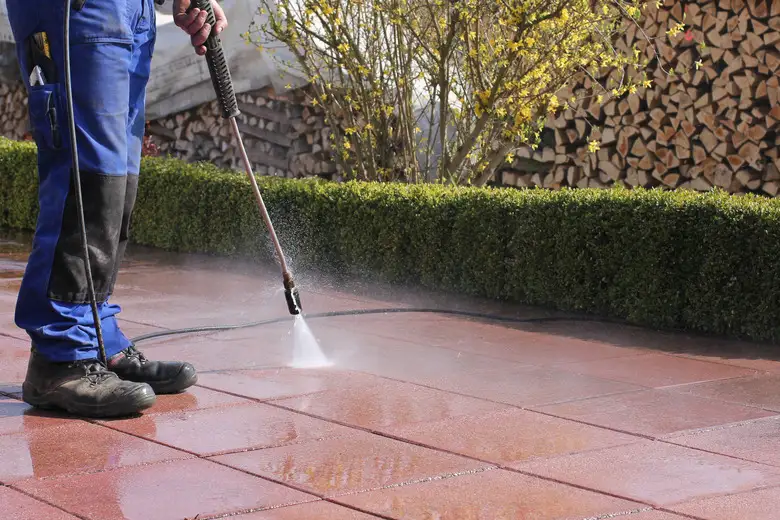
Yes, pressure washing can remove many black stains from concrete sidewalks. It works by using pressurized water to lift dirt, grime, loose organic material, and some surface growth.
However, pressure alone is not always enough.
Some lichen and biological growth can attach firmly inside the surface pores. A pressure washer may remove the visible layer while leaving material behind. The spots can then return.
Using excessive pressure is also a mistake. Concrete can be damaged by aggressive cleaning, especially when the surface is old, cracked, weak, or already worn.
A better approach is to use enough pressure to clean the surface without trying to force every stain away with maximum power. Some organic growth may need a suitable treatment before washing.
The cleaning method should also account for runoff. Dirty water and cleaning chemicals should not be allowed to flow into sensitive garden areas or storm drains.
How to Remove Black Spots From a Concrete Sidewalk
The safest process starts by finding out what you are dealing with.
1. Clear the sidewalk
Remove leaves, sticks, soil, and other loose debris. Sweep the surface before applying water or cleaning products.
2. Inspect the spots
Look for patterns. Small dots in a damp, shaded area may point toward organic growth. Greasy marks near vehicle areas may need a different cleaner.
3. Test a small area
Before cleaning the entire sidewalk, test your chosen method in a less visible spot. Check how the concrete reacts after rinsing and drying.
4. Apply the right cleaner
Choose a product that matches the stain and is approved for concrete. Do not mix cleaning chemicals unless the manufacturer clearly states that the combination is safe.
5. Give the cleaner time to work
Follow the product directions for contact time. Do not allow the solution to dry on the surface.
6. Agitate stubborn areas
A stiff outdoor brush can help loosen growth and buildup. This can reduce the amount of pressure needed during washing.
7. Pressure wash carefully
Use a suitable nozzle and working distance. Keep the wand moving instead of holding it over one spot.
8. Rinse thoroughly
Remove remaining cleaner and loosened debris. Check edges, cracks, and low areas where dirty water can collect.
9. Let the concrete dry
Some marks are easier to judge after the sidewalk has fully dried. If a stain remains, identify it again before applying another product.
This process is more useful than simply increasing pressure until the spots disappear.
Why Do Black Spots Come Back After Cleaning?
Recurring spots are often linked to the conditions that caused them in the first place.
A shaded sidewalk may stay damp after rain. Trees can drop leaves and organic debris. Poor drainage can keep water against the concrete for long periods.
If organic growth is only removed from the surface, some growth may remain in small pores. That can allow dark spots to return.
This is one reason repeated pressure washing may not solve the problem by itself. A recent cleaning source also notes that recurring black spots can be linked to moisture, shade, poor drainage, and biological growth that remains after surface cleaning.
Look at the area around the sidewalk, not only the stain itself. Fixing standing water, clearing leaves, and improving drainage can help slow the return.
Can Black Spots Damage a Concrete Sidewalk?
Most black staining is first a cosmetic problem, but the conditions behind it still matter.
Organic growth often needs moisture to survive. A sidewalk that stays wet for long periods may develop other maintenance problems over time. Heavy buildup can also make the surface more slippery when wet.
Repeated aggressive cleaning can create its own problems. Too much pressure can leave marks, remove weak surface material, or make an older concrete surface look uneven.
That is why concrete pressure washing services should focus on controlled cleaning instead of using the highest pressure possible. VJ Pressure Washing approaches sidewalk cleaning based on the surface condition and the type of buildup present.
If black spots keep returning, cleaning alone may not be the full answer. Look at drainage, shade, nearby plants, and the amount of organic debris around the walkway.
How to Prevent Black Spots From Returning
You cannot control every outdoor condition, but regular care can slow down new staining.
Sweep leaves and dirt from the sidewalk before they remain wet for long periods. Clear nearby drains so water can move away from the concrete.
Trim plants that create heavy shade when practical. This can help the surface dry faster after rain.
Clean spills soon after they happen. Oil, food, and other substances become harder to remove when they sit on porous concrete.
A periodic cleaning schedule can also help. The right frequency depends on rainfall, shade, nearby vegetation, foot traffic, and drainage.
If the sidewalk remains damp for most of the day, focus on the moisture source. Cleaning the surface without addressing standing water may only provide a short-term improvement.
When Should You Hire a Professional Sidewalk Cleaning Service?
DIY cleaning can work for light dirt and small stains. Professional cleaning becomes more useful when the sidewalk has widespread dark growth, heavy buildup, oil stains, or repeated staining.
A professional can assess the surface before choosing a cleaning method. This matters because old concrete may not tolerate the same pressure as newer, stronger concrete.
Professional equipment can also provide more even cleaning across a large sidewalk. A surface cleaner can help reduce visible stripes that may occur when a wand is used incorrectly.
If the sidewalk is next to grass, flower beds, or other sensitive areas, runoff control also becomes important.
The goal should be clean concrete without unnecessary damage to the surface or surrounding property.
Conclusion
What are black spots on sidewalk? In many cases, they are linked to algae, mold, mildew, lichen, or other organic growth. But dark marks can also come from oil, tire rubber, leaves, dirt, and other stains.
The right cleaning method depends on the cause. Pressure washing can remove surface dirt and many stains, but stubborn biological growth may need treatment before washing. Using excessive pressure is not a good way to solve every stain.
Start by checking the pattern, texture, moisture, and location of the spots. Clean loose debris first and choose a product made for the type of stain you are treating. If the spots keep returning, look for moisture, shade, poor drainage, or organic debris around the sidewalk.
VJ Pressure Washing can help homeowners deal with stubborn sidewalk buildup and choose a cleaning method suited to the concrete surface.
Frequently Asked Questions
What are black spots on sidewalk?
They are dark stains or growth that can develop on concrete. Common causes include algae, mold, mildew, lichen, oil, tire rubber, leaves, and dirt.
Can pressure washing remove black spots?
Pressure washing can remove many surface stains and some organic growth. Stubborn lichen or deep growth may need a suitable treatment before washing.
Why do black spots return after pressure washing?
They may return when moisture, shade, organic debris, or biological growth remains around or inside the surface. Cleaning the cause and the surface can provide better long-term results.
Are black marks on concrete always caused by mold?
No. Black marks on concrete can come from mold, algae, lichen, oil, tire rubber, leaves, dirt, and other materials.
Can bleach remove black spots from concrete?
A suitable bleach-based treatment may help with some organic growth, but it is not right for every stain. Always follow the product label and protect plants and nearby surfaces.
How can I stop black spots from coming back?
Keep the sidewalk free from leaves and debris, improve drainage, reduce standing water, and clean new stains early. Regular maintenance can also help.
Should I pressure wash an old concrete sidewalk?
Older concrete needs more care. Excessive pressure can damage a weak or worn surface. Use controlled pressure and choose the cleaning method based on the condition of the concrete.