
Your driveway puts up with a lot. Oil spills, dirt buildup, moss, and tire marks pile up fast. Most people reach for a commercial cleaner without thinking twice. But there’s a cheaper, greener option sitting in your kitchen cabinet.
- What Makes Vinegar Effective for Driveway Cleaning?
- Types of Driveway Surfaces You Can Clean with Vinegar
- Concrete Driveways
- Asphalt Driveways
- Pavers and Brick
- Gravel Driveways
- What Kind of Stains Can Vinegar Remove?
- How to Clean a Driveway with Vinegar
- Best Vinegar-to-Water Ratio for Driveway Cleaning
- Can Vinegar Kill Weeds in Driveway Cracks?
- Pros and Cons of Using Vinegar on a Driveway
- Pros
- Cons
- Vinegar vs Commercial Driveway Cleaners
- When You Should Avoid Using Vinegar
- Tips for Better Driveway Cleaning Results
- Should You Pressure Wash After Using Vinegar?
- Professional Driveway Cleaning vs DIY Vinegar Cleaning
- Conclusion
- FAQs
So, can I use vinegar to clean my driveway? Yes, you can. White distilled vinegar works well on light stains, algae, moss, and general grime. It’s safe, affordable, and chemical-free. That said, it’s not a one-size-fits-all solution. Some surfaces and stains need a different approach.
What Makes Vinegar Effective for Driveway Cleaning?
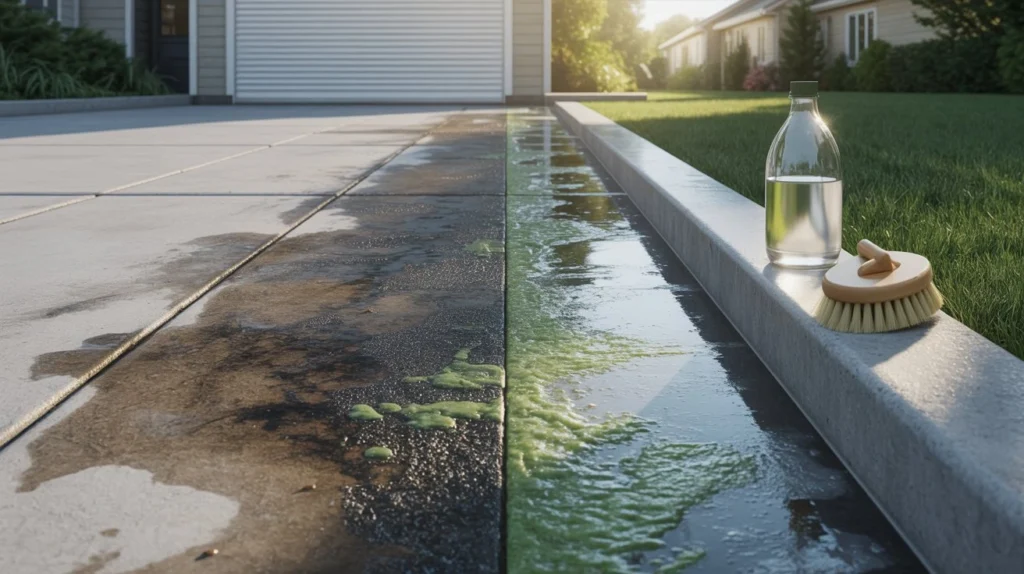
Vinegar is a mild acid. Its main active ingredient is acetic acid, which sits around 5% concentration in standard white vinegar. That acidity breaks down mineral deposits, kills moss and algae, and loosens surface grime.
Here’s why it actually works:
- Acetic acid dissolves calcium and lime deposits
- Low pH kills mold spores and algae on contact
- No harsh chemicals means no damage to nearby soil or grass
- Affordable a gallon costs less than $5
Industrial-strength vinegar (20–30% acetic acid) works faster and stronger. But be careful: it can irritate skin and eyes. Use gloves and eye protection if you go that route.
Types of Driveway Surfaces You Can Clean with Vinegar
Not every surface reacts to vinegar the same way. Before you start, know what your driveway is made of.
Concrete Driveways
Vinegar works well on concrete. It removes algae, moss, and light oil stains. Avoid soaking the surface repeatedly over months. Heavy, frequent vinegar use can slowly etch concrete over time.
Asphalt Driveways
Use vinegar carefully here. Asphalt is petroleum-based, and acidic cleaners can break down the binder that holds asphalt together. For asphalt, stick to diluted solutions and short dwell times.
Pavers and Brick
White vinegar is safe for sealed pavers. Unsealed brick and natural stone like sandstone or limestone — can be damaged by acid. Test a hidden area first.
Gravel Driveways
No surface to damage here. Vinegar works fine for killing weeds between gravel, but it won’t “clean” loose stone the same way it cleans hard surfaces.
What Kind of Stains Can Vinegar Remove?
Vinegar handles a solid range of common driveway stains. Here’s a breakdown:
| Stain Type | Vinegar Effective? | Notes |
| Moss and algae | Yes | Kills and loosens growth |
| Mildew and mold | Yes | Surface-level treatment |
| Hard water stains | Yes | Acid dissolves mineral buildup |
| Rust stains | Partially | Helps lighten, may need repeat |
| Light oil stains | Partially | Works on fresh, small spots |
| Deep oil/grease | No | Needs a degreaser |
| Tire marks | No | Requires stronger cleaners |
| Paint stains | No | Not effective |
For tougher stains, especially deep oil and grease, you’re better off calling in a professional. VJ Pressure Washing offers reliable driveway washing service Tracy CA for exactly this type of problem. A hot-water pressure wash cuts through years of embedded grease in one session.
How to Clean a Driveway with Vinegar
Here’s a simple step-by-step process that works for most concrete and paver driveways.
What you’ll need:
- White distilled vinegar or cleaning vinegar (6–10%)
- Water
- Spray bottle or garden sprayer
- Stiff-bristle brush
- Garden hose or pressure washer
Step 1: Sweep First Remove loose dirt, leaves, and debris. Cleaning works better on a clear surface.
Step 2: Pre-wet the Area Lightly wet the driveway. This prevents vinegar from absorbing too fast into porous concrete.
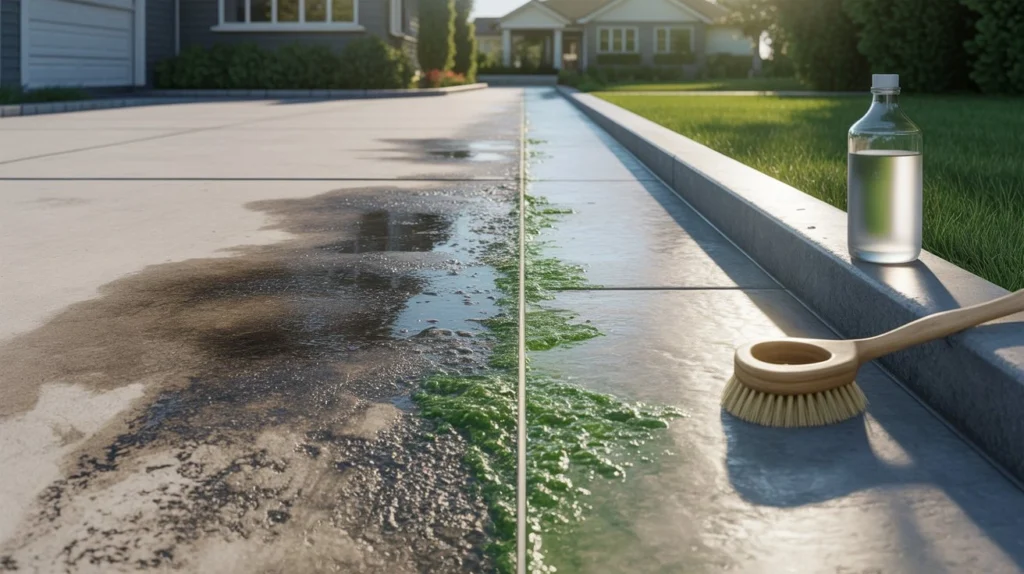
Step 3: Apply Vinegar Solution Spray the vinegar mixture directly onto the stained area. For heavy moss or algae, apply full-strength cleaning vinegar.
Step 4: Let It Sit Allow 15 to 30 minutes of dwell time. Don’t let it dry out. Reapply if needed.
Step 5: Scrub Use a stiff brush to agitate the surface. Work in circular motions on stains.
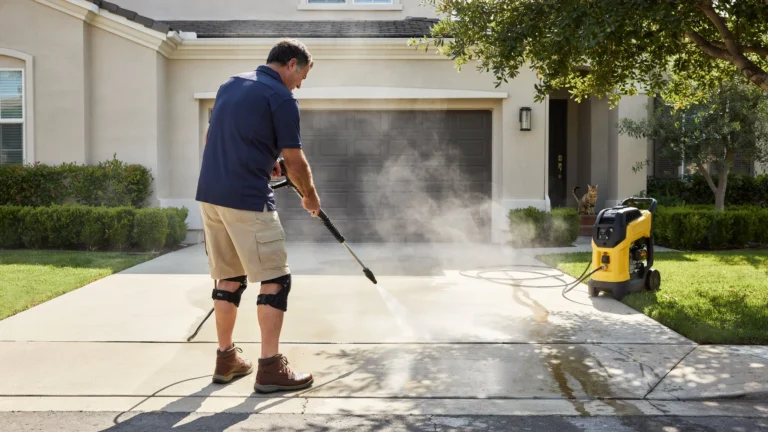
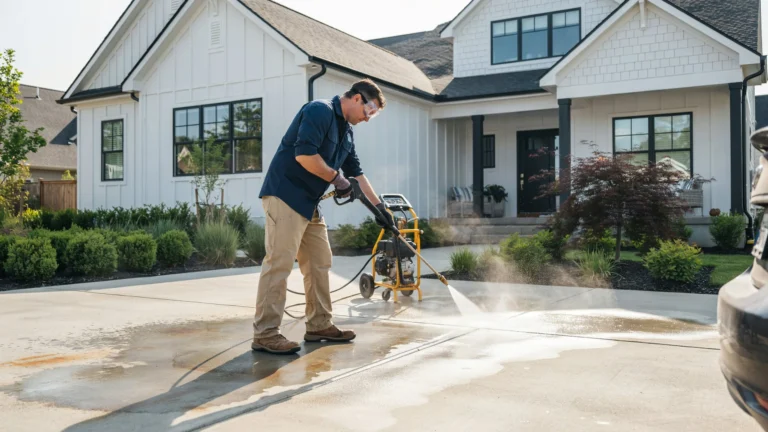
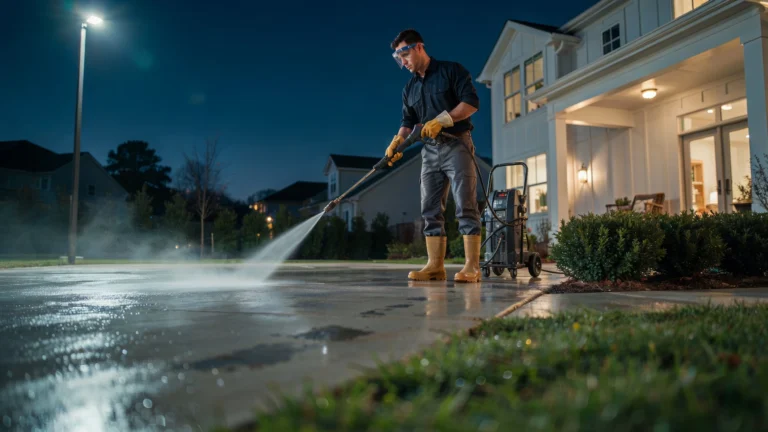
Step 6: Rinse Thoroughly Rinse with a strong stream of water. A pressure washer makes this step much more effective.
Best Vinegar-to-Water Ratio for Driveway Cleaning
The ratio depends on what you’re cleaning.
| Situation | Mix Ratio |
| General cleaning | 1 part vinegar : 1 part water |
| Moss or algae | Full-strength (no dilution) |
| Light dust or film | 1 part vinegar : 3 parts water |
| Hard water stains | Full-strength or 2:1 vinegar to water |
Start with a 1:1 ratio for most jobs. Scale up the vinegar concentration for stubborn buildup.
Can Vinegar Kill Weeds in Driveway Cracks?
Yes. This is actually one of vinegar’s best uses around the driveway.
Acetic acid draws moisture out of plant cells, killing the weed quickly. For cracks and joints between pavers, straight white vinegar works fast. Apply on a sunny day for best results. The heat speeds up the process.
Tips for killing weeds with vinegar:
- Use full-strength white or cleaning vinegar
- Apply directly to the leaves, not just the crack
- Reapply every few weeks since vinegar doesn’t kill the root system
- For deep-rooted weeds, use a 20% horticultural vinegar with care
Keep vinegar off grass and plants you want to keep. It doesn’t discriminate.
Pros and Cons of Using Vinegar on a Driveway
Pros
- Cheap and easy to find — available at every grocery store
- Non-toxic — safe around kids and pets after it dries
- Eco-friendly — biodegradable and won’t contaminate runoff water
- Multi-use — cleans, kills moss, and removes mineral buildup
- No special equipment needed
Cons
- Not strong enough for deep oil stains or tire marks
- Smell — the odor is strong while wet (fades when dry)
- Can etch certain surfaces — risky on natural stone and unsealed pavers
- Temporary weed control — doesn’t kill roots
- Slower than pressure washing for large areas
Vinegar vs Commercial Driveway Cleaners
| Factor | Vinegar | Commercial Cleaner |
| Cost | Very low | Moderate to high |
| Effectiveness | Moderate | High |
| Chemical safety | High | Varies |
| Environmental impact | Low | Moderate to high |
| Dwell time needed | 15–30 min | 5–15 min |
| Best for | Moss, algae, light grime | Oil, grease, deep stains |
Commercial degreasers and driveway cleaners outperform vinegar on oil and grease. But for regular maintenance cleaning, vinegar holds its own well.
When You Should Avoid Using Vinegar
Vinegar isn’t always the right call. Skip it in these situations:
- Natural stone surfaces Limestone, marble, and sandstone are acid-sensitive. Vinegar will etch and dull the surface permanently.
- Freshly sealed concrete Acidic cleaners break down sealant coatings. Wait at least a year after sealing before using vinegar.
- Heavy oil or grease spills Vinegar won’t break down thick petroleum stains. You need a commercial alkaline degreaser.
- Large-scale cleaning jobs spraying vinegar over 500+ square feet is slow and inefficient. A pressure washer with the right detergent is far more practical.
- Colored or stamped concrete Acid can fade dyes and finishes used in decorative concrete work.
Tips for Better Driveway Cleaning Results
These small changes make a real difference:
- Clean on a warm, dry day — heat speeds up vinegar’s reaction
- Don’t rinse too soon — let it dwell the full 15–30 minutes
- Use a brush, not just water — mechanical agitation breaks up stains
- Repeat for stubborn spots — two applications beat one heavy soak
- Add dish soap — a few drops of Dawn with vinegar helps cut grease
- Use cleaning vinegar (6–10%) instead of regular white vinegar (5%) for better results
Should You Pressure Wash After Using Vinegar?
Yes. This combination works really well together.
Vinegar loosens and kills organic growth. The pressure washer blasts it off the surface cleanly. You get a much better final result than using either method alone.
If you don’t own a pressure washer, a garden hose with a high-pressure nozzle works for small areas. For full driveway cleaning, renting or hiring a pressure washing service is worth it.
Recommended process:
- Apply vinegar, let dwell 20 minutes
- Light scrub with a brush
- Pressure wash at 1500–3000 PSI depending on surface type
Professional Driveway Cleaning vs DIY Vinegar Cleaning
Both have their place. Here’s how to decide:
Choose DIY vinegar cleaning when:
- Your driveway has light moss, algae, or general grime
- You want a quick, low-cost maintenance clean
- You have a small driveway area
- The stains are fresh and not deeply embedded
Choose professional cleaning when:
- You have years of built-up oil, grease, or tire marks
- Your driveway hasn’t been cleaned in 2+ years
- You have a large surface area
- You want a deep clean that restores the original look
VJ Pressure Washing removes what vinegar can’t. Their equipment runs at 2000–4000 PSI with commercial-grade detergents, handling the toughest jobs in a fraction of the time.
Conclusion
Can I use vinegar to clean my driveway? Absolutely with the right expectations.
Vinegar is a solid choice for regular maintenance, moss removal, weed control, and light stain treatment. It’s cheap, safe, and effective for everyday driveway upkeep. But it has limits. Deep oil stains, large surface areas, and delicate stone surfaces call for stronger solutions.
Use vinegar as part of your regular driveway care routine. When the job is too tough for a DIY fix, contact us at VJ Pressure Washing for a professional cleaning service that gives you the deep clean that lasts.
FAQs
Is white vinegar or apple cider vinegar better for driveways?
White distilled vinegar is better. It has a higher acetic acid content and no sugars that could attract insects or feed mold.
How long does vinegar take to kill moss on a driveway?
Most moss dies within 24 hours. You’ll see browning within a few hours. Full removal may take 2 to 3 days with scrubbing and rinsing.
Will vinegar damage my grass if it runs off the driveway?
Yes, vinegar can kill grass and plants. Keep runoff away from lawn edges, or rinse the border with water immediately after cleaning.
Can I use baking soda and vinegar together to clean my driveway?
They cancel each other out when mixed. They work better when used separately baking soda as a scrub paste, vinegar as a rinse treatment.
How often should I clean my driveway with vinegar?
Every 3 to 6 months for maintenance. More often in wet, shaded areas where moss and algae grow faster.
Does vinegar remove oil stains from a concrete driveway?
It can lighten fresh, small oil spots. For older or larger oil stains, you’ll need a dedicated concrete degreaser.
Is it safe to use vinegar on a driveway if I have pets?
Yes, once it dries. Keeping pets off the wet surface undiluted vinegar can irritate paws. Once fully dry and rinsed, it’s completely safe.