
Your roof takes a beating every single day. Rain, wind, sun, algae, moss — all of it adds up over time. Black streaks appear. Green patches grow. And suddenly your home looks old, even if it’s not. Most homeowners wonder if cleaning can fix this or if it’s just a waste of money.
So, does roof cleaning really work? Yes, it absolutely does. The right cleaning method removes stains, kills biological growth, and can add years to your roof’s lifespan. Done correctly, the results are visible, lasting, and worth every penny.
- What Causes Roof Stains and Buildup?
- Signs Your Roof Needs Cleaning
- How Roof Cleaning Works
- Step 1: Inspection
- Step 2: Pre-Treatment
- Step 3: Dwell Time
- Step 4: Rinse
- Step 5: Post-Treatment (Optional)
- Benefits of Roof Cleaning
- Does Roof Cleaning Prevent Roof Repairs?
- Roof Cleaning Methods Explained
- Soft Washing
- Pressure Washing
- Chemical Treatment Only (No Rinse)
- Zinc or Copper Strip Installation
- Is Roof Cleaning Safe for All Roof Types?
- How Long Do Roof Cleaning Results Last?
- Common Roof Cleaning Mistakes
- How Often Should You Clean Your Roof?
- Why Roof Maintenance Matters
- Conclusion
- FAQs
What Causes Roof Stains and Buildup?
Before we talk about solutions, it helps to know what you’re dealing with.
Gloeocapsa Magma (Algae) Those dark black or gray streaks you see on asphalt shingles? That’s algae. Specifically, a cyanobacteria called Gloeocapsa Magma. It feeds on the limestone filler in shingles and spreads fast, especially in humid areas.
Moss Moss holds moisture against your shingles. Over time, it causes the edges to lift, which lets water sneak underneath. This is one of the biggest causes of hidden roof damage.
Lichen Lichen is a combination of algae and fungus. It bonds directly to shingles and is much harder to remove than moss or algae alone. If left too long, it can permanently etch into the surface.
Debris Buildup Leaves, twigs, and dirt trap moisture. Wet debris sitting on your roof for weeks at a time is a recipe for rot, mold, and shingle breakdown.
UV Damage and Oxidation Sun exposure causes granule loss from asphalt shingles. When this happens, dark patches appear. These aren’t always biological, sometimes it’s plain weathering.
Knowing what’s growing on your roof helps you (and your roofer) pick the right cleaning approach.
Signs Your Roof Needs Cleaning
Some roof problems are obvious. Others are easy to miss until real damage has already started.
Here are the signs you should not ignore:
- Dark streaks or staining running down from the ridge
- Green or black patches that look fuzzy or spongy
- Lifted or curling shingle edges, often caused by moss
- Granule loss showing up in your gutters
- Water stains on your ceiling, which may point to moisture sneaking under damaged shingles
- Your roof looks much older than homes nearby even if it was built at the same time
- Gutters full of biological debris like clumps of green or black material
If you notice any of these signs, it’s time to call in professionals. The team at VJ Pressure Washing and a qualified roof cleaning company in Tracy, CA can inspect your roof, identify what’s growing, and recommend the safest cleaning method for your specific shingle type.
Don’t wait too long. The longer biological growth sits on your roof, the harder it is to remove and the more damage it causes underneath.
How Roof Cleaning Works
There are a few ways to clean a roof. Each one works differently depending on the material and the type of buildup.
Step 1: Inspection
A professional checks the roof condition, identifies the type of growth, and determines which method is safest.
Step 2: Pre-Treatment
A cleaning solution is applied to the surface. For soft washing, this is usually a sodium hypochlorite mix (similar to bleach, but diluted and targeted). For other methods, a biodegradable cleaner is used.
Step 3: Dwell Time
The solution sits on the surface for several minutes. This is where the real work happens: the chemical kills the biological growth at the root level.
Step 4: Rinse
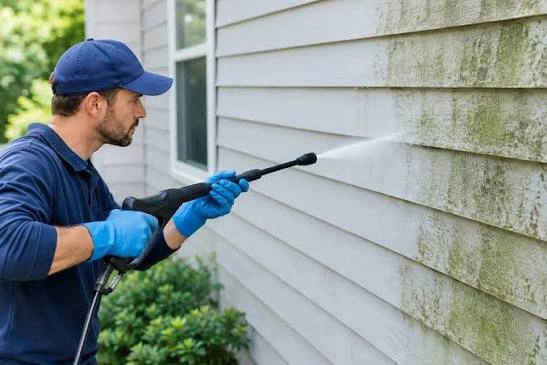
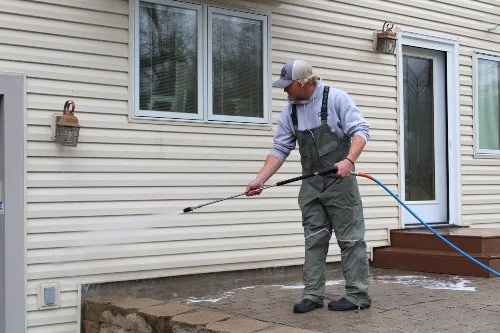
The roof is rinsed off with low or moderate pressure. The dead growth washes away.
Step 5: Post-Treatment (Optional)
Some professionals apply a zinc or copper-based treatment after cleaning. This creates a protective barrier that slows future growth.
The whole process typically takes 2 to 4 hours depending on roof size and condition.
Benefits of Roof Cleaning
Cleaning your roof is not just about looks. Here’s what it actually does:
Extends Roof Lifespan Algae, moss, and lichen physically break down roofing materials. Removing them stops the damage. A clean roof can last several years longer than a neglected one.
Improves Curb Appeal A clean roof makes a home look newer and better maintained. This matters a lot if you plan to sell.
Boosts Energy Efficiency Dark staining from algae absorbs heat. This raises your attic temperature and puts more load on your air conditioning. Cleaning your roof can reduce cooling costs.
Protects Manufacturer Warranties Many roofing material warranties require regular maintenance. Skipping it can void your warranty when you need it most.
Prevents Insurance Issues Some home insurance companies flag roofs that show visible biological growth. A clean roof keeps your coverage intact.
Does Roof Cleaning Prevent Roof Repairs?
This is one of the most common questions homeowners ask. The short answer is yes — but with a condition.
Roof cleaning prevents roof damage that is caused by biological growth. If moss has been lifting shingles for two years, cleaning removes the moss, but it can’t reverse the damage that’s already been done. The lifted shingles may still need to be replaced.
Think of it this way: cleaning is preventive care, not a repair tool. It’s the same as getting your teeth cleaned. It stops future problems from forming, but it won’t fix a cavity that’s already there.
If caught early, regular cleaning can:
- Stop algae from eating through shingle granules
- Prevent moss from creating water pathways under the roof
- Keep lichen from permanently etching into the material
If ignored too long, you may still need repairs even after cleaning. That’s why the timing matters.
Roof Cleaning Methods Explained
Not all roofs are cleaned the same way. Here are the main methods professionals use:
Soft Washing
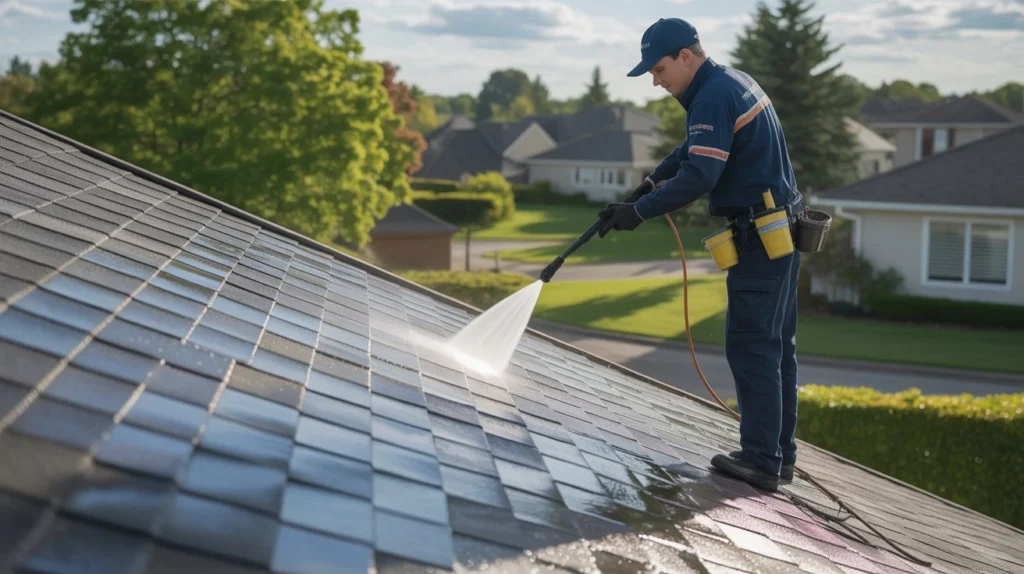
This is the most recommended method for asphalt shingles, tile roofs, and older roofs. It uses low pressure and a chemical solution to kill biological growth. No high-pressure blasting — just chemistry doing the work.
Best for: Asphalt shingles, clay tile, cedar shake, flat roofs
Result: Deep kill of algae, moss, and mold at the root level
Pressure Washing
Uses high-pressure water to blast debris and growth off the surface. Fast and effective on hard surfaces, but risky on shingles. Too much pressure strips granules, shortens shingle life, and voids warranties.
Best for: Concrete tile, metal roofs, concrete surfaces
NOT recommended for: Asphalt shingles
Chemical Treatment Only (No Rinse)
Some professionals apply a cleaning solution and leave it. Rain does the rinsing over the following weeks. This is called the “spray and forget” method.
Best for: Light staining, maintenance treatments
Limitation: Slower results, not ideal for heavy growth
Zinc or Copper Strip Installation
After cleaning, zinc or copper strips are installed near the roof ridge. Rainwater carries metal ions down the roof, which prevents future biological growth.
Best for: Long-term prevention after a professional clean
Is Roof Cleaning Safe for All Roof Types?
This is a critical question. The wrong method on the wrong roof type can cause real damage.
| Roof Type | Safe Method |
| Asphalt Shingles | Soft wash only |
| Metal Roof | Soft wash or low-pressure rinse |
| Clay/Concrete Tile | Soft wash or gentle pressure |
| Cedar Shake | Soft wash no pressure |
| Flat/TPO Membrane | Soft wash gentle only |
| Slate | Hand cleaning or soft wash |
High-pressure washing on asphalt shingles strips the protective granule layer. Once those granules are gone, UV rays hit the shingle directly, and the roof ages fast.
Always ask your contractor what method they use and why. If they say high pressure on asphalt shingles without hesitation, look elsewhere.
How Long Do Roof Cleaning Results Last?
Most professional soft wash treatments last between 1 and 3 years. Several factors affect how long results hold:
- Climate: Humid, rainy climates cause faster regrowth
- Tree coverage: Shade and debris speed up moss and algae growth
- Roof material: Some materials are more resistant than others
- Post-treatment applied: Zinc or copper treatments significantly extend results
In dry climates with good sun exposure, a single cleaning can last up to 4 or 5 years. In wet, shaded areas, annual or biannual maintenance may be more realistic.
Common Roof Cleaning Mistakes
Even well-meaning homeowners make mistakes that cause more harm than good.
Using a Pressure Washer on Shingles: The number one mistake. High pressure feels effective, but it strips granules and voids warranties.
DIY Chemical Mixing Mixing your own sodium hypochlorite solution without experience can damage plants, hurt pets, stain siding, or corrode metal flashing.
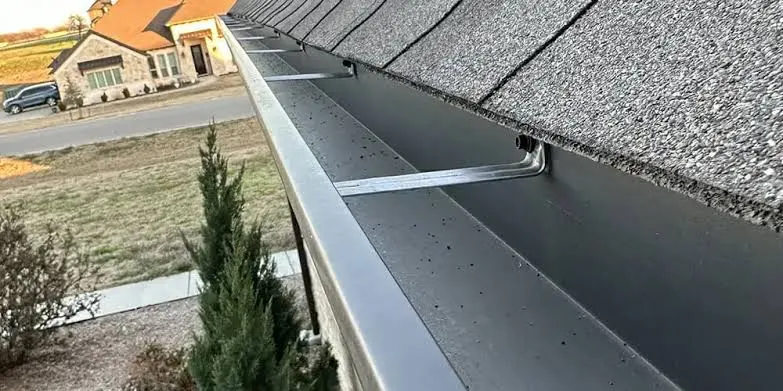
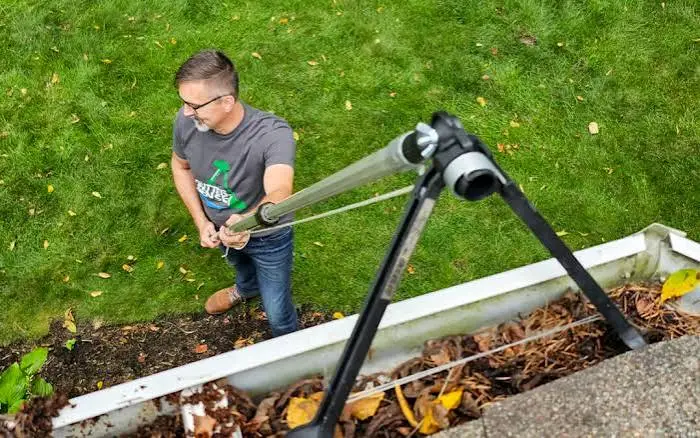
Ignoring Gutters Cleaning the roof without cleaning the gutters just moves the problem. Dead algae and debris collect in the gutters and create new growth points.
Cleaning in Direct Sunlight Cleaning solution dries too fast in direct sun. This reduces effectiveness and can leave residue.
Skipping the Pre-Soak Dry biological material is harder to kill. Wetting the surface first helps the cleaning solution penetrate deeper.
Not Protecting Surrounding Plants Cleaning solutions can damage landscaping. Always wet surrounding plants before and after treatment to dilute any runoff.
How Often Should You Clean Your Roof?
There’s no one-size-fits-all answer, but here are general guidelines:
- Every 1 to 2 years in humid, coastal, or heavily wooded areas
- Every 2 to 3 years in moderate climates
- Every 3 to 5 years in dry climates with minimal shade
Annual visual inspections help. If you see early algae growth forming, treat it early before it spreads. Spot treatment is cheaper and easier than a full clean.
Also check after major storms. Debris buildup after a wind or rain event can trigger fast biological growth.
Why Roof Maintenance Matters
Your roof is not just a cover over your head. It’s the first line of defense for your entire home.
A damaged or neglected roof leads to:
- Water intrusion and interior mold
- Damaged insulation and higher energy bills
- Structural rot in rafters and decking
- Reduced home value
- Insurance complications
Roof replacement costs between $8,000 and $25,000 or more depending on size and material. A professional cleaning with VJ Pressure Washing costs a fraction of that, usually between $300 and $800.
Preventive maintenance is always the smarter investment.
Conclusion
Does roof cleaning really work? Without a doubt. It removes harmful biological growth, restores the appearance of your roof, and protects your home from damage that compounds over time. The key is using the right method, hiring a qualified professional, and staying consistent with maintenance.
Your roof is one of the most valuable parts of your home. Treat it that way. Contact us today and let VJ Pressure Washing take care of it for you.
FAQs
Can I clean my roof myself?
You can, but it comes with real risks. DIY cleaning with the wrong pressure or chemicals can damage shingles, void warranties, and cause personal injury from working at height. Professional results are safer and more effective.
Does roof cleaning remove moss permanently?
It kills existing moss completely. But without preventive treatment, moss can return within 1 to 3 years depending on your climate and environment.
Will roof cleaning fix my leaks?
No. Cleaning removes biological growth, but it doesn’t repair damaged or lifted shingles. If you have leaks, you need a roofer to assess the structural condition.
Is soft washing safe for my gutters and siding?
Yes, when done by a professional. They protect surrounding surfaces and use appropriate dilutions to avoid runoff damage.
How do I know which roof cleaning company to hire?
Look for licensed contractors with experience in your specific roof type. Check reviews, ask about their cleaning method, and confirm they carry liability insurance.
Does insurance cover roof cleaning?
Usually not. Roof cleaning is considered maintenance, not a repair. However, keeping your roof clean can prevent claims from being denied due to neglect.