
Your roof works hard every single day. Rain, wind, algae, and moss slowly build up on tiles over time. Left alone, that grime can shorten your roof’s life and hurt your home’s value. Cleaning it isn’t just about looks. It’s about protecting a big investment.
- What Causes Roof Tiles to Get Dirty?
- Why Hire Professionals for Roof Tile Cleaning?
- How Professionals Clean Roof Tiles
- Step 1: Roof Inspection
- Step 2: Protecting the Property
- Step 3: Applying Biocidal Treatment
- Step 4: Soft Washing or Pressure Washing
- Step 5: Scrubbing Stubborn Areas
- Step 6: Gutter Cleaning
- Step 7: Post-Treatment Application
- Soft Washing vs. Pressure Washing Roof Tiles
- What Do Professionals Actually Use?
- Equipment Professionals Use
- Benefits of Professional Roof Tile Cleaning
- How Often Should Roof Tiles Be Cleaned?
- Signs You Need Professional Roof Tile Cleaning Now
- Common Mistakes to Avoid
- Conclusion
- FAQs
So how do professionals clean roof tiles? They follow a careful process using the right tools, the right pressure, and the right chemicals without causing damage. This guide breaks it all down for you, step by step.
What Causes Roof Tiles to Get Dirty?
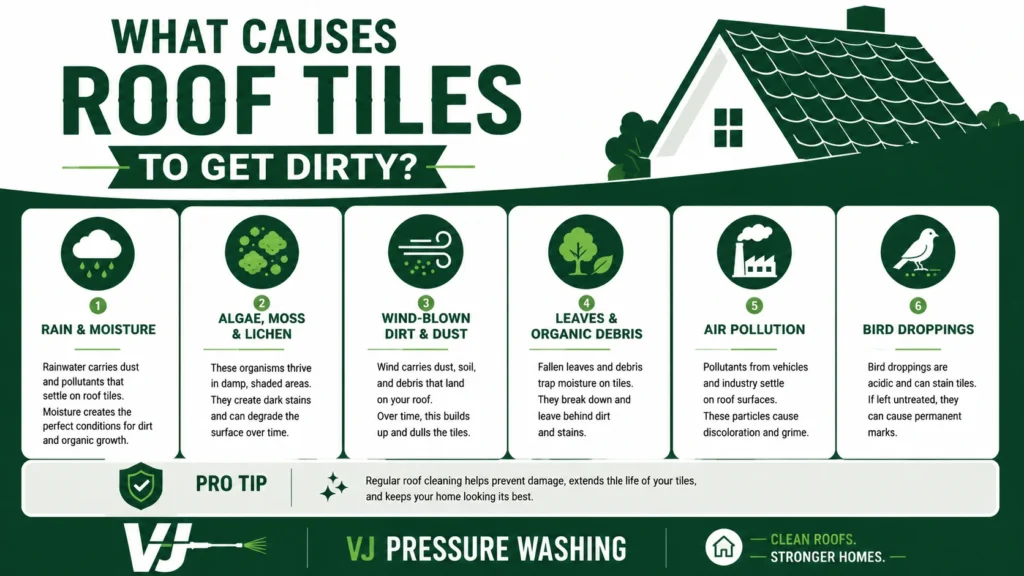
Before cleaning, it helps to understand what you’re dealing with. Roof tiles face constant exposure to the elements. Several things cause that dark, ugly buildup.
Algae and Moss are the most common culprits. Algae thrives in humid, shaded areas and spreads fast. Moss holds moisture against tiles, which can crack them over time.
Lichen is trickier. It’s a combination of algae and fungus. It grips tile surfaces tightly and is harder to remove than algae alone.
Dirt and debris accumulate from wind, nearby trees, and birds. Leaves rot on the roof and create damp patches that encourage organic growth.
Hard Water Stains appear in areas with mineral-rich water. These white or gray streaks are calcium deposits left behind after rain evaporates.
Air Pollution leaves a thin film of grime over time. Urban homes deal with this more than rural ones.
Understanding the type of dirt matters. Different problems need different solutions. A professional identifies what’s on your roof before starting any work.
Why Hire Professionals for Roof Tile Cleaning?
You might think a garden hose and some scrubbing will do the job. It won’t not properly, anyway. And doing it wrong can cost you more than hiring someone in the first place.
Here’s why professional roof tile cleaning is the smarter choice:
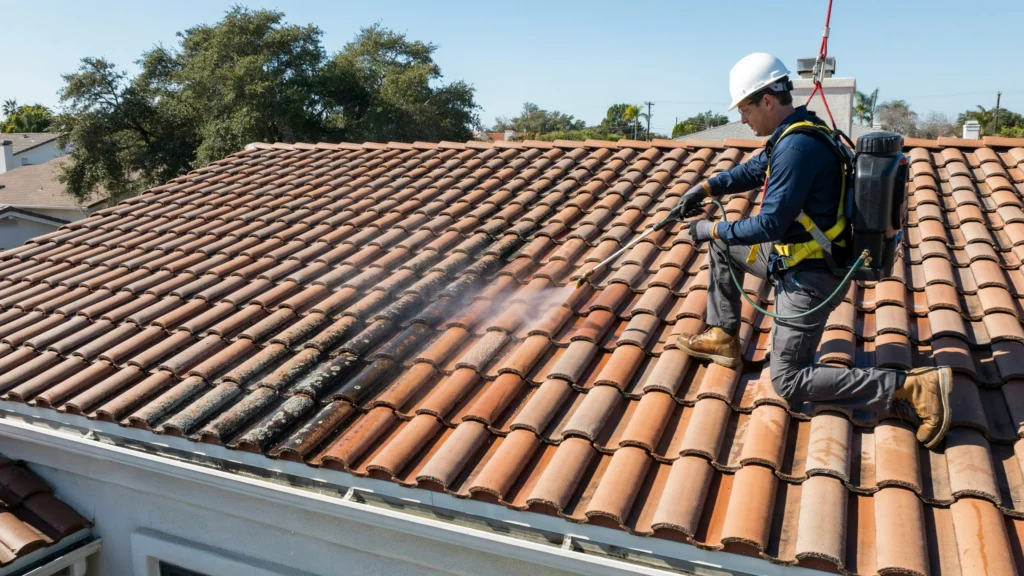
Safety First. Roofs are slippery, especially when wet or covered in moss. Professionals use proper harnesses, non-slip boots, and fall protection equipment. Falls from roofs cause serious injuries every year.
The Right Equipment. Professionals use commercial-grade tools that you simply can’t rent from a hardware store. They know how much pressure each tile type can handle.
No Tile Damage. Too much water pressure cracks tiles, lifts ridge caps, and forces water under the surface. A trained technician knows exactly how to avoid this.
Long-Lasting Results. Professionals apply post-treatment biocides that prevent regrowth for years. DIY cleaning usually only removes visible grime without stopping it from coming back.
Insurance and Liability. Licensed professionals carry insurance. If anything goes wrong on your property, you’re protected.
If you’re in the area and need reliable help, check out our roof cleaning services Tracy CA page. Our team at VJ Pressure Washing handles everything from inspection to final treatment with care and precision.
How Professionals Clean Roof Tiles
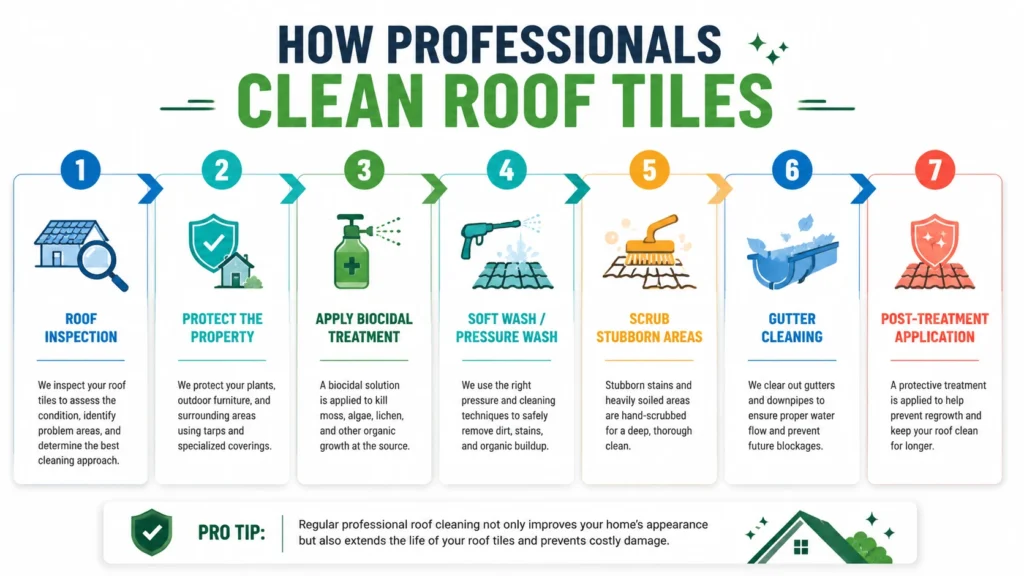
This is the core of what you’re here for. So let’s walk through how professionals clean roof tiles, from the first inspection to the final rinse.
Step 1: Roof Inspection
Every job starts with a walkthrough. The technician checks for cracked, broken, or loose tiles. They note areas with heavy moss or lichen. They look for damaged flashing and clogged gutters.
This matters because cleaning a damaged roof can make problems worse. Cracks let water in. Loose tiles can slide off. A professional won’t start until the roof is safe to work on.
Step 2: Protecting the Property
Before any water or chemicals touch your roof, the area below is protected. This means:
- Covering garden beds and plants with tarps
- Closing windows and doors
- Moving outdoor furniture away from the work zone
- Blocking gutters temporarily to control runoff
Cleaning solutions can harm plants and stain surfaces. A good crew takes time to prep the site properly.
Step 3: Applying Biocidal Treatment
On most tile roofs, professionals apply a biocidal cleaning solution first. This is a mix of water and a surfactant-based chemical designed to kill moss, algae, and lichen at the root level.
The solution is sprayed evenly across the roof surface and left to dwell. Dwell time depends on how heavy the growth is anywhere from 20 minutes to a few hours. This step does the hard work. The chemical breaks down organic material so it’s easier to remove.
Step 4: Soft Washing or Pressure Washing
After the treatment dwells, the roof is rinsed. This is where the debate between soft washing and pressure washing comes in (more on that below).
Most professionals use low to medium pressure for tile roofs. High pressure can crack tiles, especially older concrete or terracotta ones. The goal is to rinse off the treated grime without putting stress on the surface.
The technician works from the ridge (top) downward. This ensures runoff flows naturally with gravity and doesn’t force water under tiles.
Step 5: Scrubbing Stubborn Areas
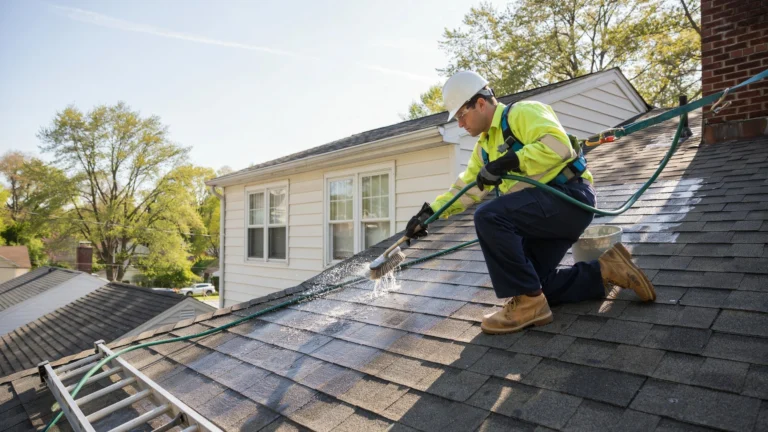
For thick moss or lichen that doesn’t rinse away, professionals use long-handled soft bristle brushes. They scrub gently in the direction of the tile’s profile. This loosens material without scratching the surface.
Wire brushes are never used. They scratch tile coatings and speed up weathering.
Step 6: Gutter Cleaning
All that loosened moss and debris ends up in the gutters. A professional job always includes clearing and flushing the gutters after the roof is done. Blocked gutters cause water damage to fascias and foundations.
Step 7: Post-Treatment Application
This is the step most DIYers skip and it’s the most important one for long-term results.
After the roof is clean, a protective biocide or algae inhibitor is applied. This soaks into the tile surface and kills any remaining spores. It also creates a barrier that slows future growth.
Quality biocide treatments can keep your roof clean for 2 to 5 years, depending on your local climate and tree coverage.
Soft Washing vs. Pressure Washing Roof Tiles
These two roof washing techniques are often confused. They’re very different.
Soft Washing uses low water pressure (under 500 PSI) combined with a cleaning solution. The chemicals do most of the work. Soft wash roof cleaning is the preferred method for most tile roofs because it’s gentle enough not to cause damage while still killing organic growth at the source.
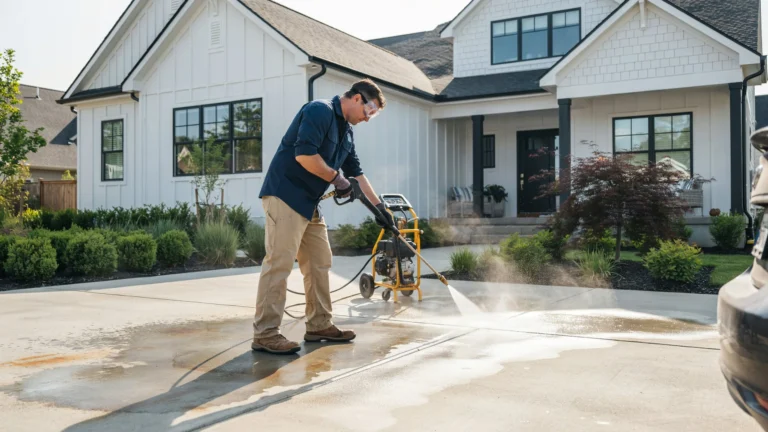
Pressure Washing uses high water pressure (1,500 to 3,000+ PSI) to blast away grime physically. It’s effective on concrete, brick, and driveways. But on roof tiles especially older ones high pressure can:
- Crack tiles
- Strip surface coatings
- Force water under the underlayer
- Dislodge ridge caps and pointed mortar
What Do Professionals Actually Use?
Most experienced technicians use a combination. They apply chemical treatment first, then rinse with low to medium pressure. If pressure washing is used at all, it’s at a controlled, lower setting never blasting directly at tile joints.
The rule of thumb: the older and more fragile the tiles, the gentler the approach.
Equipment Professionals Use
Professional roof tile cleaning requires more than a ladder and a hose. Here’s what a well-equipped crew brings to the job:
Pressure Washer (Commercial Grade): Adjustable PSI, capable of soft wash settings. Usually gas-powered for more flow rate.
Chemical Injection System: This allows the cleaning solution to be diluted and applied at the right concentration. Too strong can bleach tiles. Too weak won’t work.
Soft Wash Nozzles: Low-pressure nozzles that cover a wide area without concentrated force.
Safety Harnesses and Fall Arrest Systems: Anchored to the roof ridge or chimney. Non-negotiable on any pitched roof.
Non-Slip Roof Boots: Specialized footwear designed for working on pitched surfaces.
Long-Handle Soft Brushes: For manually loosening stubborn growth in tight spots.
Water-Fed Pole Systems: For some flat or low-pitch roofs, these allow cleaning from the ground level.
Biocide Sprayers: Backpack or lance sprayers for applying post-treatment solution evenly.
A professional outfit shows up with all of this. If a crew shows up with just a pressure washer and a ladder, that’s a warning sign.
Benefits of Professional Roof Tile Cleaning
The results go beyond a cleaner-looking roof. Here’s what tile roof maintenance tips from industry professionals consistently point to:
Extended Roof Life: Moss and algae hold moisture against tiles. That moisture accelerates wear, causes freeze-thaw cracking in winter, and slowly degrades tile surfaces. Regular cleaning adds years to your roof’s life.
Better Energy Efficiency: Dark algae staining absorbs more heat. Clean, lighter-colored tiles reflect more sunlight. This can reduce attic temperatures and lower cooling costs in summer.
Improved Curb Appeal: A clean roof makes a home look well-maintained. This matters if you’re selling or simply want your home to look its best.
Preserved Warranty: Many tile roof manufacturers require regular professional cleaning as part of warranty maintenance. DIY methods, especially high-pressure washing can void that warranty.
Prevents Structural Issues: Moss roots can work into tile surfaces and mortar joints, causing structural weakening over time. Early removal prevents costly repairs.
Increases Home Value: A clean, well-maintained roof adds real value to a property. Buyers notice roofs. Inspectors definitely notice them.
How Often Should Roof Tiles Be Cleaned?
This depends on several factors. There’s no single answer that works for every home.
Climate: Homes in humid, rainy climates (Pacific Northwest, Southeast US) need cleaning every 1 to 2 years. Drier climates can often go 3 to 5 years between cleanings.
Tree Coverage: Trees over or near your roof drop debris constantly. More shade means more moisture and faster algae growth.
Tile Type: Concrete tiles tend to absorb more than terracotta or slate, so they need more frequent attention.
Previous Treatment: If your last clean included a quality biocide treatment, you’ll go longer before needing the next one.
General Rule: Have your roof inspected every year. Clean it when you see any visible algae, moss, or dark streaking or every 2 to 3 years as preventive tile roof maintenance.
Signs You Need Professional Roof Tile Cleaning Now
Don’t wait until the problem is obvious. Look for these warning signs:
Green or Black Patches: This is almost always algae or moss. It spreads fast once it takes hold.
Dark Streaking: Long dark lines running down roof tiles are usually algae (Gloeocapsa magma) feeding on limestone in the tile.
Raised or Lifted Tiles: Moss roots can physically lift tile edges. If you see tiles that look raised or uneven, moss is likely underneath.
Blocked Gutters: If your gutters fill up quickly with green or brown organic matter, your roof has significant growth.
Higher Energy Bills: If your home feels hotter in summer with no obvious reason, dark algae staining on your roof could be absorbing extra heat.
Common Mistakes to Avoid
Whether you’re watching someone else do the work or trying to evaluate a contractor, know what to look for.
Using Too Much Pressure: The number one mistake. High-pressure washing on roof tiles strips coatings, cracks tiles, and forces water into places it shouldn’t go. Always ask about the PSI being used.
Skipping the Biocide Treatment: Cleaning without treating is like mopping a floor without disinfectant. The surface looks clean, but the problem comes back faster.
Cleaning From Bottom to Top: Water and debris should always run downward. Cleaning upward forces water under tiles.
Ignoring Damaged Tiles: Cleaning over cracked or broken tiles without repairing them first makes things worse. Water gets in during the cleaning itself.
Using Bleach Directly: Undiluted bleach damages tile surfaces and kills surrounding plants. Professional-grade surfactants are far safer and more effective.
Hiring Unlicensed Contractors: Anyone working at height needs proper certification and insurance. Always ask to see proof before work starts.
Conclusion
Roof tile cleaning isn’t complicated but it does require the right knowledge, the right tools, and the right technique. Done correctly, a professional clean extends your roof’s life, improves your home’s appearance, and saves you money on repairs down the line.
Now you know exactly how professionals clean roof tiles: starting with a thorough inspection, applying biocidal treatment, using controlled soft washing techniques, scrubbing stubborn areas by hand, and finishing with a protective post-treatment. That’s the full process.
If your roof has visible algae, moss, or dark staining, don’t ignore it. A clean roof is a healthy roof. And a healthy roof is a protected home. Ready to get started? Contact us today and let VJ Pressure Washing take care of the rest.
FAQs
How do professionals clean roof tiles without causing damage?
They use low-pressure soft washing combined with professional-grade biocidal treatments. The chemical solution does most of the work, reducing the need for aggressive pressure that could crack or lift tiles.
How long does professional roof tile cleaning take?
Most residential roofs take between 2 and 6 hours depending on size, pitch, and the amount of growth present. A heavily mossy roof takes longer due to the extra treatment dwell time needed.
Is soft wash roof cleaning safe for all tile types?
Yes. Soft washing is safe for concrete, terracotta, clay, and slate tiles. High-pressure washing is riskier and should be avoided on older or more fragile tile types.
What chemicals do professionals use to clean roof tiles?
Most use sodium hypochlorite (diluted bleach) or specialist biocide surfactants, depending on the type of growth and tile material. The concentration is carefully controlled to avoid damage.
Can I clean my roof tiles myself?
You can, but it’s not recommended. The safety risks are significant, and DIY methods rarely include the biocide treatment needed to prevent regrowth. Professional roof tile cleaning delivers better, longer-lasting results.
Will roof cleaning remove all the moss and algae in one session?
In most cases, yes. For very heavy growth, a follow-up visit may be needed a few weeks later after the initial treatment has had more time to work.
How much does professional roof tile cleaning cost?
Costs vary by roof size, location, and condition. Typical residential jobs range from $300 to $800. Get a few quotes and make sure each includes post-treatment.