
Vinyl siding can often be cleaned with a pressure washer, but the wrong settings can damage it. High pressure may crack panels, force water behind the siding, or harm nearby windows and trim. The safest method uses low pressure, a wide spray pattern, and the right cleaning solution. Always check your siding manufacturer’s care guide before starting.
If you are wondering, can you power wash vinyl siding without causing damage, the answer depends on your siding’s condition and the cleaning method. Some manufacturers advise against pressure washing, while others allow it with strict limits. Careful preparation and steady cleaning can help remove dirt, green stains, and mildew while protecting your home’s exterior.
- How to Pressure Wash Vinyl Siding Safely
- How to Prepare Vinyl Siding for Pressure Washing
- What Pressure Washer and Nozzle Should You Use?
- What Are the Risks of Pressure Washing Vinyl Siding?
- How to Remove Dirt, Mold, and Mildew From Vinyl Siding
- What Cleaning Products Are Safe for Vinyl Siding?
- How to Clean Vinyl Siding Without a Pressure Washer
- What Should You Avoid When Cleaning Vinyl Siding?
- How to Prevent Water From Getting Behind Vinyl Siding
- When Should You Hire a Professional?
- Conclusion
- Frequently Asked Questions
How to Pressure Wash Vinyl Siding Safely
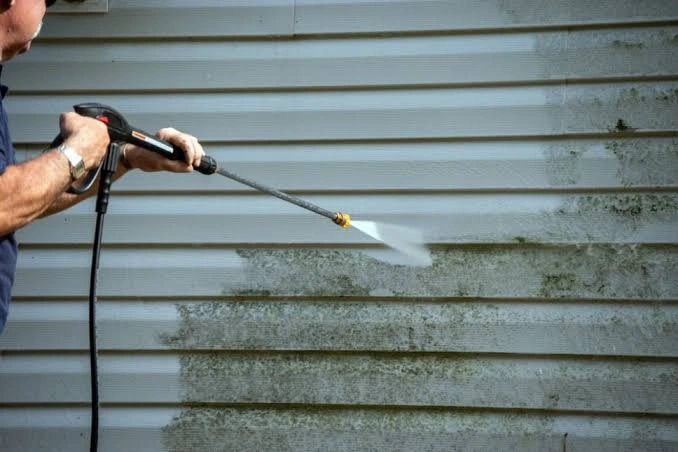
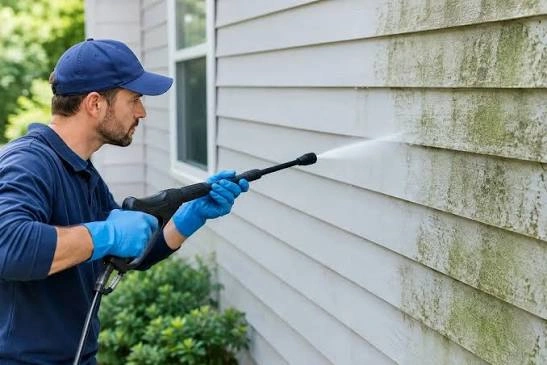
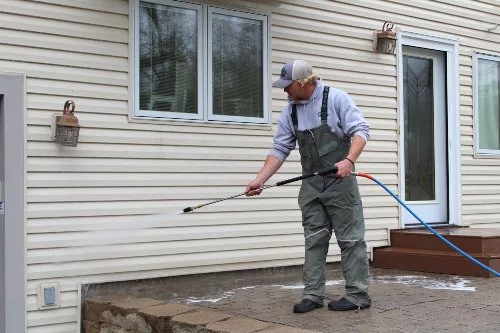
The safest way to clean vinyl siding is to remove dirt without harming the panels. Start with the lowest effective pressure and a wide spray pattern. Test a small area before washing the rest of the house.
Follow these steps for a careful clean.
- Wet nearby plants: Cover delicate plants and move outdoor furniture away from the walls.
- Apply a mild cleaner: Use a siding-safe cleaning product and follow its label.
- Work in small sections: Clean one section at a time so the soap does not dry.
- Keep the spray moving: Hold the wand steadily and avoid aiming directly into seams.
- Rinse with clean water: Remove all soap before it dries on the surface.
- Check the results: Look for leftover stains, loose panels, and signs of water entry.
Always spray from a safe angle that does not push water behind the panels. Avoid spraying upward beneath siding overlaps. If you notice cracks, loose pieces, or damaged caulk, stop and fix the problem before cleaning.
How to Prepare Vinyl Siding for Pressure Washing
Good preparation helps prevent damage and makes the job easier. Before you start, walk around the house and check the siding from ground level.
Look for cracked panels, loose edges, peeling trim, and gaps around doors or windows. Pressure washing can make these problems worse. Repair damaged areas first or use gentle hand cleaning instead.
Close all windows and exterior doors. Check that outdoor electrical outlets have proper covers. Keep the spray away from vents, light fixtures, and other openings. Never spray water into an exhaust vent or an electrical fitting.
Move chairs, grills, and decorations away from the walls. Cover nearby plants if the cleaning product may harm them. Read the pressure washer manual and the siding manufacturer’s care instructions.
If the manufacturer advises against pressure washing, use a garden hose and a soft brush instead. CertainTeed recommends against power washing its vinyl and polymer siding because of possible moisture intrusion, damage, and discoloration.
What Pressure Washer and Nozzle Should You Use?
Choosing the right equipment matters more than using maximum power. Vinyl siding is designed to withstand normal outdoor conditions, but strong water jets can harm its surface or push water behind it.
A pressure washer with adjustable pressure gives you more control. Start with the lowest setting and increase it only if the siding instructions permit it. There is no single PSI setting that is safe for every vinyl siding product.
Use a wide-angle spray tip rather than a narrow, concentrated jet. A wide fan spreads the water across a larger area and reduces the force at one point. Avoid zero-degree nozzles because they create a highly concentrated stream.
Keep the wand at a suitable distance from the wall. Test the spray on a hidden section first. If the surface changes, panels move, or water enters the seams, stop immediately.
Some manufacturers provide their own pressure limits and nozzle guidance. Georgia-Pacific, for example, gives specific instructions for pressure washing its siding, including a 40-degree tip and pressure limits. These instructions should not be treated as universal settings for other brands.
What Are the Risks of Pressure Washing Vinyl Siding?
Pressure washing can clean exterior walls quickly, but using the wrong method creates several risks. Knowing these problems can help you decide whether to use a washer or clean by hand.
- Water behind the panels: Water can enter through seams and openings, potentially causing moisture damage.
- Cracked or loose siding: A strong jet can damage weak panels or loosen sections that are not secure.
- Marks on the surface: Excessive pressure can leave visible lines, scratches, or changes in appearance.
- Damage to windows and trim: Strong spray can harm caulk, screens, paint, and nearby finishes.
- Electrical hazards: Water near outdoor outlets, lights, or damaged wiring can create a safety risk.
- Chemical damage: Strong cleaners may discolor siding or harm plants and nearby surfaces.
Older siding needs extra care because it may be brittle or damaged. If panels are loose or badly cracked, avoid pressure washing until they have been checked.
How to Remove Dirt, Mold, and Mildew From Vinyl Siding
Dirt, green growth, and black spots can make vinyl siding look old. The right cleaning method depends on the type of stain and how firmly it sticks to the surface.
For ordinary dust and dirt, start with a garden hose, mild soap, and a soft-bristle brush. Rinse the wall and gently scrub the dirty areas. This simple method often works without a pressure washer.
For green stains or mildew, choose a cleaner labeled safe for vinyl siding. Follow the directions for mixing, application time, and rinsing. Test it on a hidden spot first to check for changes in color.
Work from the bottom upward when applying soap if the product instructions recommend it. This can help limit streaks. Rinse thoroughly with clean water, following the product directions.
If you are learning how to power wash vinyl siding with stubborn stains, do not hold the nozzle close to the wall to force them off. Use an approved cleaner and gentle brushing instead. Large, recurring patches of growth may point to damp areas, poor drainage, or limited sunlight. Addressing the cause can help reduce future stains.
Never mix cleaning products. In particular, mixing bleach with ammonia or acidic cleaners can release dangerous gases. Wear gloves and eye protection when the label calls for them.
What Cleaning Products Are Safe for Vinyl Siding?
The best cleaner depends on the stain and the siding manufacturer’s instructions. For basic cleaning, mild dish soap mixed with water is often enough. Use a soft brush to loosen dirt without scratching the surface.
For tougher stains, choose a product made for vinyl siding. Read the label to check whether it is suitable for your siding and how it should be applied. Some products require dilution, while others are ready to use.
Avoid strong solvents, abrasive powders, and harsh scrub pads. These can affect the siding’s finish or leave marks. Do not assume that a cleaner is safe just because it works on concrete or brick.
If you use a bleach-based product for mildew, follow its label closely. Protect plants and nearby surfaces, wear suitable safety gear, and never mix it with other cleaners. Rinse the siding as directed and keep children and pets away from the work area.
How to Clean Vinyl Siding Without a Pressure Washer
You do not need a pressure washer to get good results. Hand washing is often the better choice for older siding, delicate areas, and homes where the manufacturer does not allow pressure washing.
Here is a simple cleaning method:
- Mix a mild soap with water according to the product directions.
- Wet a small section of siding with a garden hose.
- Apply the cleaning solution using a soft brush or sponge.
- Gently scrub from bottom to top to reduce streaking.
- Rinse the section thoroughly with clean water.
- Repeat the process for the remaining walls.
Use a long-handled brush to reach higher areas from the ground when possible. Never lean out of a window or use an unstable ladder while handling a hose or cleaning tool.
For stubborn stains, let a siding-safe cleaner work for the time listed on its label. Do not let the solution dry on the wall. If the stain remains, check the manufacturer’s cleaning advice before trying a stronger product.
What Should You Avoid When Cleaning Vinyl Siding?
A few common mistakes can turn a simple cleaning job into an expensive repair. Avoid these practices when washing your home’s exterior.
- Using maximum pressure: More force does not always mean better cleaning. It can damage the siding and force water behind it.
- Using a narrow spray tip: A concentrated stream can leave marks or crack weak panels.
- Spraying upward into seams: Water may enter behind the siding and remain trapped.
- Ignoring damaged panels: Clean around damaged areas by hand until they can be repaired.
- Using harsh chemicals: Strong cleaners can affect the finish and harm nearby plants.
- Letting soap dry: Dried cleaner can leave streaks and make rinsing harder.
- Working in strong sunlight: Soap may dry too quickly, leaving visible marks.
- Skipping a test area: A small test helps reveal possible damage before you clean the whole wall.
Do not use a pressure washer to remove paint or force apart stuck-on material unless the siding manufacturer approves that method. If you are unsure about the surface condition, gentle hand washing is the safer starting point.
How to Prevent Water From Getting Behind Vinyl Siding
Vinyl siding is designed to shed rain, but it is not a solid, waterproof wall. Water can enter through joints and openings if you direct a strong stream at the wrong angle.
To reduce this risk, keep the spray pointed toward the wall at a safe angle. Never aim upward beneath overlapping panels. Avoid spraying directly into corners, window edges, door frames, vents, and other openings.
Keep the nozzle moving instead of holding it over one spot. Do not spray close to the surface to remove a stubborn stain. Use a suitable cleaner and a soft brush when needed.
Before washing, check the caulk around windows and doors for gaps. Look for loose siding and damaged trim. Fix these issues first rather than relying on pressure washing to clean around them.
After cleaning, inspect the walls and nearby indoor areas for signs of moisture. Watch for damp spots, unusual odors, or water marks around windows. If you suspect water has entered behind the siding, stop washing and have the affected area checked.
When Should You Hire a Professional?
Some homes are easy to clean with a garden hose and brush. Others have several stories, difficult access, fragile panels, or heavy staining that needs more care.
Consider hiring a professional if the siding is old, damaged, or heavily stained. A trained cleaner can assess the surface, select an appropriate cleaning method, and protect nearby areas. Professional help is also worth considering when you cannot safely reach upper walls from the ground.
Ask the company how it cleans vinyl siding and whether its method follows the siding manufacturer’s guidance. Confirm which cleaning products it uses and how it protects windows, plants, and outdoor fixtures.
VJ Pressure Washing can use this type of careful approach when explaining its exterior cleaning work to homeowners. The key is to choose a cleaning method that suits the siding, not simply the most powerful machine available.
Conclusion
So, can you power wash vinyl siding? Yes, in some cases, but only when the siding manufacturer’s instructions allow it. The right method depends on the age, condition, and type of siding on your home.
Start with mild soap, clean water, and a soft brush whenever possible. If you use a pressure washer, choose a wide spray pattern and the lowest effective pressure allowed by the manufacturer. Avoid spraying upward into seams or directly at windows and vents.
For homeowners who need help cleaning exterior walls, VJ Pressure Washing can discuss suitable cleaning options. If you need professional pressure washing services, choose a provider who understands vinyl siding and uses methods that protect its surface.
Frequently Asked Questions
Can you power wash vinyl siding without damaging it?
Yes, if the manufacturer allows it and you follow its cleaning instructions. Use suitable pressure, a wide spray pattern, and a safe spray angle. Hand washing is better for fragile or damaged siding.
What PSI should I use to pressure wash vinyl siding?
There is no universal PSI setting for every vinyl siding product. Check the manufacturer’s instructions before choosing a pressure level. Start with the lowest approved setting and test a small area first.
Is it better to power wash or hand wash vinyl siding?
Hand washing gives you more control and carries less risk of forcing water behind the panels. Pressure washing may save time on larger areas, but only use it when the manufacturer permits it.
Can you power wash vinyl siding to remove mold?
You can remove some mold and mildew with an approved cleaner and gentle washing. Use a product labeled safe for vinyl siding and follow its directions. Avoid relying on high pressure alone to remove stubborn growth.
What is the best nozzle for cleaning vinyl siding?
A wide-angle nozzle generally spreads water more gently than a narrow nozzle. The correct nozzle depends on the pressure washer and siding manufacturer’s instructions. Avoid concentrated jets that can damage the surface.
How often should you clean vinyl siding?
Clean vinyl siding when dirt, stains, or green growth become noticeable. The right schedule depends on local weather, nearby trees, shade, and dust levels. Regular visual checks can help you decide when cleaning is needed.
Can you power wash vinyl siding in direct sunlight?
You can clean siding in sunlight, but strong heat may cause cleaning solutions to dry too quickly. Choose a cooler time of day when possible, work in small sections, and rinse before the cleaner dries.