
Gutter guards save time. But they don’t save you from all maintenance. Many homeowners install them and never look up again. That’s a costly mistake that leads to water damage, pest problems, and clogged downspouts.
So, do gutter guards need to be cleaned? Yes, they do. Just less often than open gutters. Debris still builds up on top and around them over time. This guide covers exactly when, why, and how to keep them working right.
- What Are Gutter Guards?
- Why Gutter Guards Still Need Cleaning
- How Often Should Gutter Guards Be Cleaned?
- Signs Your Gutter Guards Need Cleaning
- Different Types of Gutter Guards and Their Cleaning Needs
- Micro-Mesh Guards
- Foam Inserts
- Brush Guards
- Screen Guards
- Reverse Curve (Surface Tension) Guards
- Solid Covers
- What Happens If You Never Clean Gutter Guards?
- Can You Clean Gutter Guards Yourself?
- Professional Gutter Guard Cleaning vs. DIY
- Tips to Reduce Gutter Guard Maintenance
- Are Gutter Guards Worth It?
- Choosing the Best Gutter Guards for Easy Maintenance
- Future Improvements in Gutter Guard Technology
- Conclusion
- FAQs
What Are Gutter Guards?
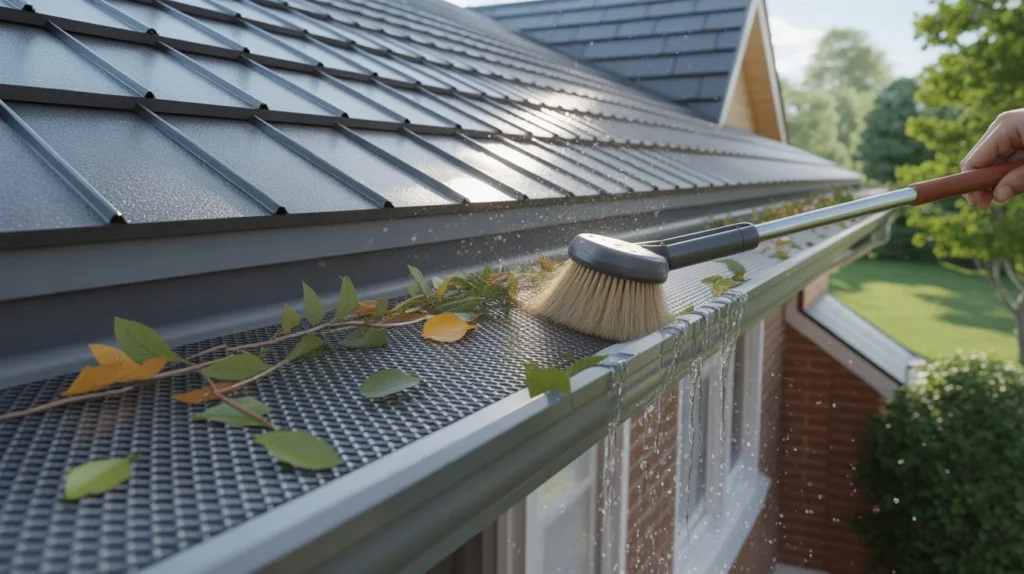
Gutter guards are covers or inserts that sit over or inside your gutters. Their job is simple: block leaves and debris from getting in while letting water flow through.
They come in many forms. Some use fine mesh. Others use foam, brush bristles, or solid covers with a curved edge. Each type works differently and has its own maintenance needs.
Most homeowners install them to reduce how often they need to climb a ladder. And they do help. But they’re not a “set it and forget it” solution.
Why Gutter Guards Still Need Cleaning
Here’s the truth most gutter guard companies don’t advertise: debris still collects.
Leaves land on top of mesh guards. Small seeds get lodged in foam inserts. Pine needles slide through openings. Shingle grit washes into fine-mesh systems. Algae and mold grow in moist spots.
Over time, this buildup slows water flow. Water starts sitting on top of guards instead of draining through. That means overflow, fascia damage, and foundation issues.
The guards do their job, but they still need help doing it.
How Often Should Gutter Guards Be Cleaned?
Most homes need gutter guard maintenance once or twice a year. A spring check and a fall clean are the standard. If you have heavy tree cover, especially pine trees, you may need three visits per year.
Here’s a simple guide:
- Low tree cover: Once a year
- Moderate tree cover: Twice a year
- Heavy tree cover or pine trees: 2 to 3 times a year
If you live in Tracy, CA, and want a local team to handle it, VJ Pressure Washing offers professional gutter cleaning service Tracy CA residents trust. Regular maintenance visits keep your system running clean without the guesswork.
Skipping a year might seem fine. But two or three skipped years? That’s when real damage starts.
Signs Your Gutter Guards Need Cleaning
You don’t always need a schedule. Your gutters will tell you when something’s wrong. Watch for these signs:
Water overflows during rain. If water pours over the sides instead of draining down the spout, that’s a blockage.
Plants growing in gutters. Seeds and dirt collect in moist debris. If you see weeds or moss, your gutters need attention.
Sagging gutters. Standing water and heavy debris put stress on gutter hangers. Sag means weight buildup.
Stains on fascia boards. Dark streaks on the wood behind your gutters signal overflow and moisture damage.
Pest activity near the roofline. Birds, squirrels, and insects nest in clogged gutters. If you see activity up there, debris has gathered.
Mold or mildew near the foundation. Overflowing water that pools at the base of your home leads to mold growth below.
Any one of these signals means it’s time to inspect your gutter guards.
Different Types of Gutter Guards and Their Cleaning Needs
Not all gutter guards clean the same way. The type you have shapes how much work you’ll do.
Micro-Mesh Guards
These are among the best at blocking debris. Fine holes let water in but keep most particles out. Still, fine dust and shingle grit can clog the mesh. Clean with a soft brush and garden hose once or twice a year.
Foam Inserts
Foam fills the gutter channel and lets water seep through. Seeds and dirt get stuck in the foam fast. These need the most frequent cleaning. In heavy debris areas, check them every few months.
Brush Guards
Bristles catch large leaves but trap smaller debris deep in the fibers. Over time, they become dense with buildup. Pull them out annually and rinse well.
Screen Guards
Basic metal or plastic screens block large leaves. Wind blows lighter debris off. These are easier to clean. A rinse from the hose usually does the job.
Reverse Curve (Surface Tension) Guards
Water clings to the curved surface and drops into the gutter. Large debris falls off. But small stuff like seeds can sneak in. Check these once a year and clear any openings.
Solid Covers
These keep almost everything out. But they depend on slope and angle. Snow, ice, and heavy rain can overwhelm them. Inspect after winter storms.
What Happens If You Never Clean Gutter Guards?
Ignoring gutter guard maintenance leads to a chain of problems. It starts slow and gets expensive fast.
Step 1: Debris builds up. Leaves, dirt, and seeds pile on top of or inside the guards.
Step 2: Water backs up. Blocked guards can’t drain properly. Water sits and eventually overflows.
Step 3: Fascia and soffit rot. Constant moisture damages the wood trim behind and below your roof edge.
Step 4: Foundation damage. Water that pours off the side of your home pools at the base. Over years, this weakens your foundation.
Step 5: Pest and mold problems. Standing water and wet debris create the perfect habitat for mosquitoes, rodents, and mold.
Step 6: Gutter collapse. The combined weight of wet debris and standing water can pull gutters away from your home entirely.
A simple cleaning twice a year prevents all of this.
Can You Clean Gutter Guards Yourself?
Yes. Many homeowners handle this on their own. Here’s what you need:
- A stable ladder
- Work gloves
- A garden hose with a spray nozzle
- A soft bristle brush
- A gutter scoop (optional)
Step-by-step process:
- Set your ladder on solid ground. Have someone hold it if possible.
- Remove any visible debris from the top of guards by hand.
- For removable guards, take them out and rinse them on the ground.
- Use a brush to scrub off algae or stuck-on grime.
- Flush the gutter channel with the hose to clear any buildup inside.
- Check that water flows freely through downspouts.
- Reattach guards and inspect for damage.
Safety first. If your roof pitch is steep or your gutters are high up, hire a professional. No cleaning job is worth a fall.
Professional Gutter Guard Cleaning vs. DIY
Both options work. The right choice depends on your situation.
| Factor | DIY | Professional |
| Cost | Low (your time) | $100 to $300 per visit |
| Safety | Risk if high roof | Trained and insured |
| Results | Good if done right | Thorough and documented |
| Frequency control | Flexible | Scheduled visits |
| Equipment | Basic tools | Professional gear |
DIY works well for single-story homes with easy gutter access. For multi-story homes, steep roofs, or if you’re not comfortable on a ladder, go professional.
VJ Pressure Washing handles gutter cleaning with care. A trained crew spots damage, checks downspout flow, and leaves your system in top shape.
Tips to Reduce Gutter Guard Maintenance
You can’t eliminate gutter maintenance. But you can make it lighter.
Trim trees near your roofline. The fewer branches hanging over your home, the less debris falls in.
Choose the right guard type. Micro-mesh guards need less cleaning than foam or brush types. Invest in quality upfront.
Install downspout strainers. These catch debris before it blocks the spout. They’re cheap and easy to clean.
Check after big storms. Wind and heavy rain push debris into areas it wouldn’t normally reach. A quick check after a storm prevents buildup.
Use a leaf blower on dry days. A quick pass over the guards in fall removes loose leaves before they decompose and stick.
Consider a gutter flushing service. Some companies offer annual flushes that push out any buildup inside the channels.
These habits add up. Homeowners who follow them rarely deal with serious gutter problems.
Are Gutter Guards Worth It?
For most homeowners, yes. Gutter guards reduce how often you clean and protect against the most common types of blockage.
But they’re not magic. The value depends on a few things:
- Your tree coverage: Heavy trees mean more maintenance even with guards.
- The type of guard: Quality micro-mesh guards outperform cheap plastic screens.
- Your climate: Areas with heavy rain, snow, or pine trees challenge any guard system.
Good gutter guards cost between $1 and $10 per linear foot installed. Premium micro-mesh systems can run higher. But compared to foundation repairs or fascia replacement, they’re a smart investment.
The key is matching the guard to your specific situation and still planning for maintenance.
Choosing the Best Gutter Guards for Easy Maintenance
If low maintenance is your goal, look for these features:
Fine micro-mesh. Stainless steel mesh with small openings blocks the most debris while draining well.
Durable materials. Aluminum and stainless steel outlast plastic. They don’t warp, crack, or degrade in UV light.
Easy removal. Guards that clip or slide out make cleaning much faster. Avoid ones that need screws to remove.
Compatibility with your gutter size. Most gutters are 5 or 6 inches wide. Make sure the guard fits snugly.
Reputable brands. LeafFilter, MasterShield, and Raptor are consistently rated high for performance and durability.
Cheap guards create more work in the long run. A one-time investment in quality saves years of hassle.
Future Improvements in Gutter Guard Technology
Gutter guard technology keeps getting better. A few trends worth watching:
Self-cleaning mesh coatings. Some manufacturers are testing nano-coatings that repel debris and reduce sticking. Early results look promising.
Smart sensors. Sensor-equipped gutters can alert homeowners when flow is blocked. Some systems connect to home apps.
Heated guards. In cold climates, heated gutter guards prevent ice dams from forming. These are already available and growing in popularity.
Better foam materials. New antimicrobial foam inserts resist mold and break down less over time.
The category is improving. Homeowners installing systems today will likely upgrade in 10 to 15 years as better options hit the market.
Conclusion
So, do gutter guards need to be cleaned? Absolutely. They reduce the work, but they don’t end it. Most homes need cleaning once or twice a year. Pay attention to the signs: overflowing water, stains, pests, and sagging gutters. Match your cleaning routine to your tree coverage and guard type.
Whether you do it yourself or hire a professional like VJ Pressure Washing, the goal is the same: keep water moving freely through your system and away from your home. That one habit protects your roof, walls, and foundation for years to come. Contact us today for reliable gutter cleaning and exterior maintenance services that help keep your home protected year-round.
FAQs
Do gutter guards eliminate the need for cleaning?
No. They reduce cleaning frequency but don’t replace it. Debris still builds up on top and inside guards over time.
How long do gutter guards last?
Quality aluminum or stainless steel guards last 20 or more years. Plastic guards may need replacement in 5 to 10 years.
Can gutter guards handle heavy rain?
Most quality guards handle normal and heavy rainfall well. Very high flow rates can overwhelm cheaper screen-style guards.
What’s the best type of gutter guard for pine trees?
Micro-mesh guards work best in pine-heavy areas. Pine needles are narrow and can slip through larger openings in other guard types.
Should I clean gutters before or after installing guards?
Always clean and flush gutters thoroughly before installing guards. Installing over existing debris traps the blockage inside.
How do I know if my downspout is clogged?
Run water from a hose into the top of the downspout. If it backs up instead of draining, there’s a blockage. Use a plumber’s snake or pressure flush to clear it.
Are expensive gutter guards worth the cost?
Yes, in most cases. Premium guards block more debris, last longer, and need less maintenance. The upfront cost pays off over time.