
Gutters do one job: move water away from your home. But when they fill up with leaves, dirt, and debris, they fail fast. Most homeowners ignore them until something goes wrong, and that’s where the real damage starts. A little maintenance now saves you a lot of money later.
So, how often should I clean gutters? For most homes, twice a year is the standard. But depending on your trees, roof type, and local weather, you may need to clean them more. This guide covers everything you need to know to stay ahead of it.
- How Often Should I Clean Gutters?
- How Often Should I Clean Gutters?
- Why Regular Gutter Cleaning Is Important
- Signs Your Gutters Need Cleaning
- What Happens If You Don’t Clean Gutters?
- Factors That Affect Gutter Cleaning Frequency
- Tree Coverage
- Your Roof Pitch
- Your Climate
- Type of Gutters
- Gutter Guards
- Your Home’s Age
- DIY Gutter Cleaning vs Professional Service
- DIY Gutter Cleaning
- Professional Gutter Cleaning
- Best Tools for Cleaning Gutters
- How to Prevent Gutters From Clogging
- When Is the Best Time to Clean Gutters?
- Professional Gutter Cleaning Checklist
- Conclusion
- FAQs
How Often Should I Clean Gutters?
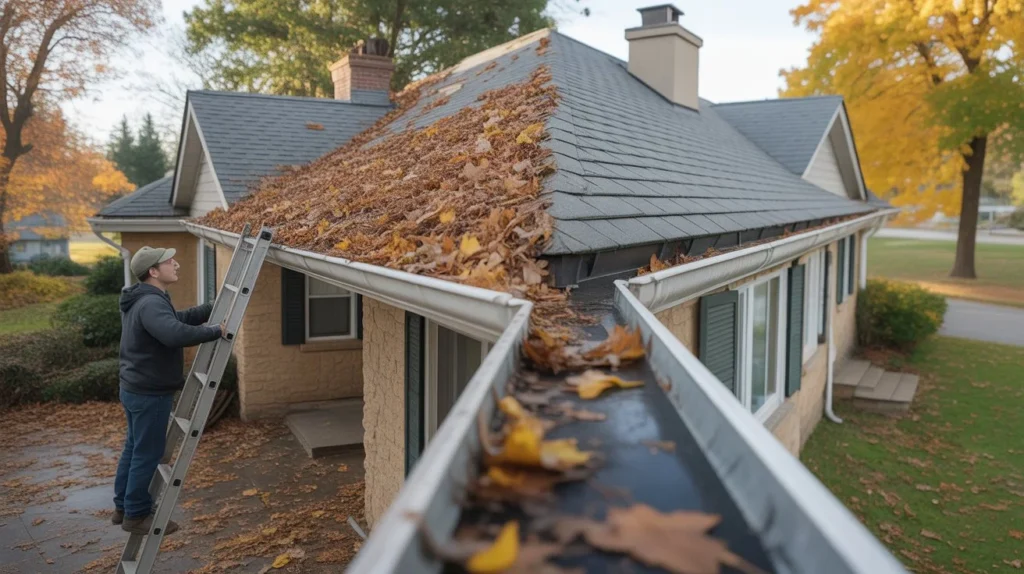
How Often Should I Clean Gutters?
The short answer: clean your gutters at least twice a year. Once in late spring and once in late fall.
But that’s a baseline, not a rule for everyone.
Here’s a quick breakdown based on your situation:
| Situation | Recommended Frequency |
| Few trees nearby | Twice a year |
| Moderate tree coverage | 3 times a year |
| Heavy tree coverage (pine, oak) | 4+ times a year |
| After major storms | As needed |
| Gutter guards installed | Once a year minimum |
If you live in an area with heavy rainfall or frequent storms, check your gutters after each major weather event. Even a “cleaned” gutter can collect fast-moving debris in a single bad storm.
Why Regular Gutter Cleaning Is Important
Gutters protect your home’s foundation, walls, roof, and landscaping. When they clog, water has nowhere to go. It overflows, seeps into places it shouldn’t, and causes damage that builds silently.
Here’s what regular cleaning actually protects:
- Your foundation — Overflowing water pools around the base of your home and can cause cracks over time.
- Your roof — Standing water in a clogged gutter can back up under shingles and rot the wood.
- Your siding — Water constantly running down the outside of your walls stains and warps siding.
- Your basement — Flooded gutters are one of the top reasons basements take on water.
- Your landscaping — A waterfall effect from clogged gutters destroys flower beds and erodes soil.
Regular gutter maintenance isn’t just about the gutters. It’s about protecting your entire home.
If you’re in the Central Valley and want this handled by professionals, VJ Pressure Washing offers a trusted gutter cleaning service Tracy CA homeowners rely on for thorough, reliable results.
Signs Your Gutters Need Cleaning
Don’t wait for the calendar to tell you it’s time. Your gutters will show you.
Watch for these warning signs:
- Water spilling over the sides This is the most obvious sign. If rain pours over the edges instead of through the downspout, there’s a blockage.
- Plants growing in your gutters Dirt, seeds, and moisture are all that a weed needs. If you see greenery sprouting from your gutters, they’ve been neglected too long.
- Sagging gutters Wet, heavy debris weighs down gutters. If they’re pulling away from the fascia board, clean them immediately before the hardware fails.
- Staining on siding Dark streaks running down your exterior walls mean water is overflowing consistently.
- Animals or pests near your roof line Birds, squirrels, and insects love clogged gutters. Debris makes a perfect nesting spot.
- No water coming from downspouts during rain If it’s raining hard and nothing’s coming out of your downspout, the gutter or the downspout is blocked.
- Basement dampness after rain This one isn’t always obvious, but consistent moisture in the basement after rainstorms often traces back to gutters that are dumping water against the foundation.
What Happens If You Don’t Clean Gutters?
Skipping gutter cleaning isn’t just a maintenance issue. It’s a financial risk.
Here’s what can happen when gutters go uncleaned for too long:
Roof damage — Water backing up under shingles leads to rot, mold, and leaks. A roof repair can cost thousands.
Foundation cracking — Water that pools around the foundation due to overflowing gutters puts pressure on concrete. Foundation repair is one of the most expensive fixes a homeowner faces.
Fascia and soffit rot — The wood behind your gutters absorbs standing moisture and begins to rot. This weakens the structure that holds your gutters in place.
Mold growth — Moisture from clogged gutters seeps into walls and attic spaces, creating conditions for mold to spread. Mold remediation is costly and disruptive.
Ice dams in winter — In colder climates, clogged gutters trap water that freezes and expands. Ice dams form and push back under shingles, causing serious leaks when things thaw.
Pest infestations — Stagnant water in gutters breeds mosquitoes. Wet debris attracts rodents, birds, and insects. These pests can work their way into your home.
The cost of cleaning gutters twice a year is minor compared to any one of these repairs.
Factors That Affect Gutter Cleaning Frequency
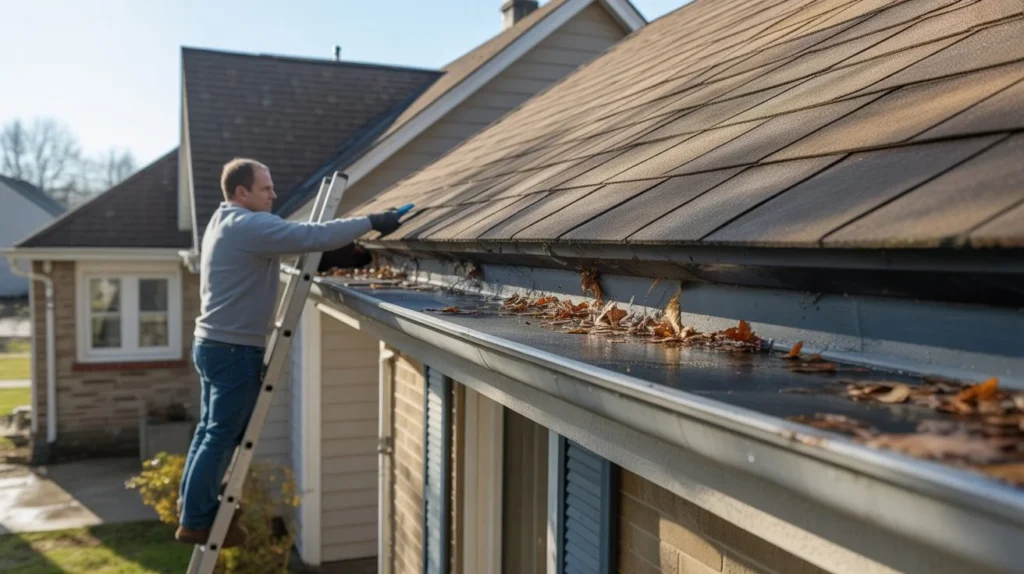
How often do you need to clean gutters? That depends on several factors specific to your property.
Tree Coverage
This is the biggest factor. If you have oak, pine, maple, or other heavy-shedding trees near your roofline, debris falls constantly. Pine needles in particular are notorious for getting past gutter guards and causing blockages.
Your Roof Pitch
Steeper roofs shed debris faster into gutters. Low-pitched or flat roofs collect more debris on the surface, which eventually slides into gutters during rain.
Your Climate
Areas with heavy rain, frequent storms, or strong seasonal winds will need more frequent cleaning. If you get a lot of fall foliage, budget for at least one cleaning after the leaves drop.
Type of Gutters
Wider gutters (6-inch K-style) handle more debris than standard 5-inch gutters. If your gutters are older or smaller, they clog faster.
Gutter Guards
Gutter guards reduce cleaning frequency but don’t eliminate it. You still need to check and clean at least once a year. Fine mesh guards handle small debris better than cheaper screens.
Your Home’s Age
Older homes often have gutters that weren’t installed correctly. Poor slope, low-quality hangers, or undersized downspouts mean faster clogging. Inspect older systems more often.
DIY Gutter Cleaning vs Professional Service
Both options work. The right choice depends on your comfort level, safety, and how complicated your roof is.
DIY Gutter Cleaning
Pros:
- Lower cost
- Can be done on your own schedule
- Good for single-story homes with simple layouts
Cons:
- Ladder safety risk
- Easy to miss sections or damage gutters
- Physically demanding
DIY cleaning works well for simple, one-story homes. If you’re comfortable on a ladder, have the right tools, and have a straightforward roof, you can handle this yourself twice a year.
Professional Gutter Cleaning
Pros:
- Safer, especially for two-story homes
- Professionals spot damage you might miss
- Faster and more thorough
- Includes downspout flushing in most cases
Cons:
- Higher cost than DIY
Professional cleaning is worth it for multi-story homes, complex rooflines, or when you notice signs of damage. The team at VJ Pressure Washing is trained to catch small issues (loose hangers, small cracks, misaligned sections) before they turn into big repairs.
Best Tools for Cleaning Gutters
If you’re doing it yourself, these are the tools that make the job faster and safer.
- Extension ladder A fiberglass ladder is safer than aluminum. Make sure it reaches comfortably without forcing you to overreach.
- Gutter scoop A plastic scoop removes wet debris without scratching the gutter surface. A small garden trowel works too.
- Garden hose with a spray nozzle Use this to flush out remaining debris and test that water flows freely to the downspout.
- Gutter cleaning wand or attachment These attach to a garden hose and allow you to clean from the ground. Good option for low-pitched, single-story homes.
- Leaf blower with gutter attachment Dry debris cleans out quickly with a blower attachment. Less effective on wet, compacted leaves.
- Wet/dry shop vac A powerful option for pulling out packed debris without spreading it across your yard.
- Safety glasses and gloves are non-negotiable. Debris in gutters contains mold, bacteria, and sharp materials.
How to Prevent Gutters From Clogging
You can’t stop leaves from falling, but you can make clogging less frequent.
Install gutter guards Micro-mesh guards are the most effective option. They block debris while letting water flow through. Quality matters here. Cheap plastic screens collapse, warp, and fail.
Trim overhanging branches The closer a tree limb hangs over your roof, the more debris falls directly into the gutter. Trim branches back regularly.
Add downspout strainers A simple wire cage at the top of each downspout catches debris before it causes a blockage inside the pipe.
Check your gutter slope Gutters should slope about 1/4 inch for every 10 feet toward the downspout. If water is pooling, the slope is off. Adjust the hangers.
Flush after every storm season Even if you cleaned recently, flushing gutters with a hose after a big storm takes five minutes and prevents buildup.
When Is the Best Time to Clean Gutters?
Spring (Late April to May) Winter storms, ice, and early spring pollen leave behind a lot of debris. Clean once the weather stabilizes and before heavy spring rains hit.
Fall (Late November, after leaves drop) Wait until the majority of leaves have fallen before cleaning. Cleaning too early in fall means you’ll need to clean again after the rest of the leaves come down. Late November is typically the right window in most climates.
After major storms don’t wait for a scheduled cleaning if you just had a heavy wind event or a big rainstorm. A quick check and flush takes less than 30 minutes.
Before winter In cold climates, it’s important to have clean gutters before the first freeze. Clogged gutters filled with water turn into ice problems fast.
Professional Gutter Cleaning Checklist
If you’re hiring a professional or want to know what a thorough job should include, here’s what to expect:
- [ ] Remove all debris from gutters by hand or with a blower
- [ ] Bag and remove all debris from the property
- [ ] Flush gutters with water to check flow
- [ ] Clear all downspout blockages
- [ ] Test downspout drainage at the base
- [ ] Inspect gutter hangers and fasteners
- [ ] Check for cracks, holes, or separated seams
- [ ] Inspect fascia boards for signs of rot or water damage
- [ ] Note any sections with improper slope
- [ ] Provide a written summary of findings
A good service doesn’t just clean. They tell you what they found. If a company doesn’t offer any kind of inspection or feedback after cleaning, that’s a red flag.
Conclusion
Gutters are one of those things that only get attention when they fail. But failure usually comes with a repair bill attached. How often should I clean gutters? Twice a year is the right starting point. Adjust based on how many trees are near your home, your local climate, and what you see when you look at them. Don’t wait for a waterfall over your siding to take action.
Whether you do it yourself or hire a professional, staying consistent is what protects your home. Build it into your seasonal routine and your gutters will last longer, perform better, and save you from far more expensive problems down the road.
If you need help, contact us today at VJ Pressure Washing for reliable and professional gutter cleaning service.
FAQs
How often should you clean your gutters if you have a lot of trees?
If you have heavy tree coverage, especially pine or oak, clean gutters 3 to 4 times per year. Pine needles fall year-round and pack densely.
Can I clean gutters myself?
Yes, for single-story homes with simple layouts. Use a stable ladder, gloves, a scoop, and a hose. For two-story homes or complex rooflines, a professional is safer.
Do gutter guards mean I never have to clean gutters?
No. Gutter guards reduce frequency but don’t eliminate maintenance. Micro-mesh guards are the best option, but you should still check and flush at least once a year.
How long does gutter cleaning take?
For a standard home, a professional team typically finishes in 1 to 2 hours. DIY may take 2 to 4 hours depending on your comfort and the condition of the gutters.
What time of year is best to clean gutters?
Late spring and late fall are the two best windows for most climates. In cold climates, clean before the first freeze to avoid ice dam problems.
How much does professional gutter cleaning cost?
Pricing varies by region and home size. Most single-family homes run between $100 and $250 per cleaning. Homes with multiple stories or complex rooflines cost more.
What happens if I don’t clean my gutters for years?
Long-term neglect leads to roof damage, foundation issues, fascia rot, basement leaks, and pest infestations. The repair costs far exceed the cost of regular cleaning.