
Your roof takes a beating every single day. Rain, wind, heat, and moisture all leave their mark over time. Algae, moss, and black streaks are not just ugly. They actually eat away at shingles and cut your roof’s life short. Cleaning your roof is not optional if you want to protect your home investment.
Knowing how to clean roof shingles the right way makes a real difference. Do it wrong and you can crack shingles, void warranties, or cause leaks. Do it right and your roof can look brand new and last years longer. This guide covers everything from tools to techniques, so you get it right the first time.
- What Are Roof Shingles and Why Do They Get Dirty?
- Common Problems Found on Roof Shingles
- Tools and Materials Needed for Roof Cleaning
- Safety Tips Before Cleaning Roof Shingles
- Step-by-Step Guide on How to Clean Roof Shingles
- Step 1: Inspect the Roof First
- Step 2: Clear Debris Off the Roof
- Step 3: Protect Surrounding Plants and Surfaces
- Step 4: Mix Your Cleaning Solution
- Step 5: Apply the Solution
- Step 6: Rinse Gently
- Step 7: Repeat If Needed
- Soft Washing vs Pressure Washing Roof Shingles
- Soft Washing
- Pressure Washing
- DIY Roof Cleaning vs Professional Roof Cleaning
- Best Cleaning Solutions for Roof Shingles
- How Often Should You Clean Roof Shingles?
- How to Prevent Algae and Moss from Coming Back
- Mistakes to Avoid When Cleaning Roof Shingles
- Benefits of Cleaning Roof Shingles Regularly
- Should You Hire Professional Roof Cleaners?
- Conclusion
- FAQs
What Are Roof Shingles and Why Do They Get Dirty?
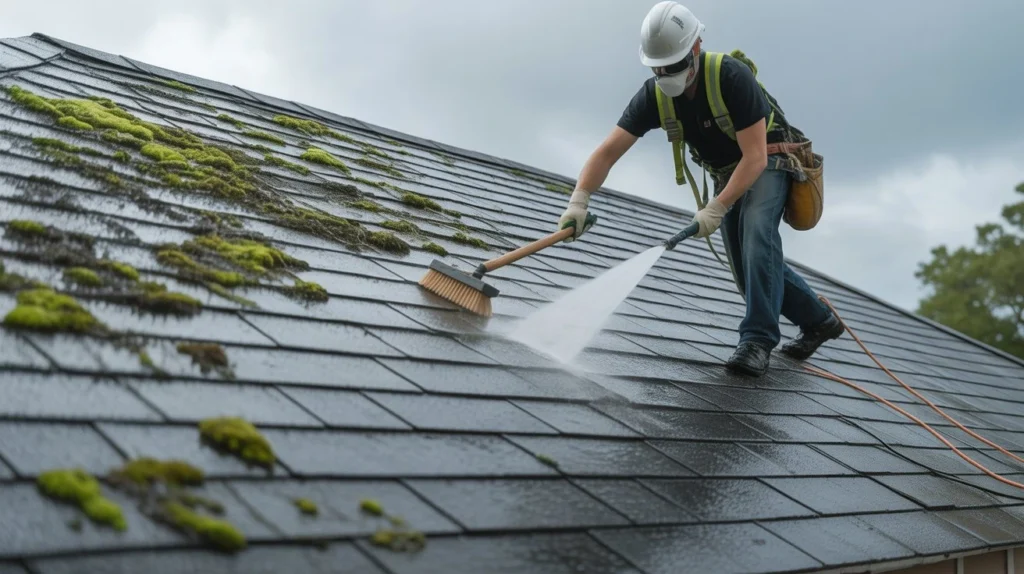
Roof shingles are layered panels that protect your home from rain and weather. Most are made from asphalt, though wood, slate, and metal shingles also exist. Asphalt shingles are the most common in the U.S.
Over time, shingles collect:
- Algae (Gloeocapsa magma) — causes those dark black streaks you see on roofs
- Moss — holds moisture against shingles and causes rot
- Lichen — bonds tightly to shingles and is hard to remove
- Dirt and debris — blocks drainage and traps moisture
All of these shorten your roof’s lifespan if left untreated.
Common Problems Found on Roof Shingles
Before you start shingles cleaning, know what you are dealing with. Different stains need different approaches.
Black Streaks This is algae growth. It spreads fast in humid climates. It feeds on the limestone filler in asphalt shingles.
Green Moss Moss grows thick on shaded, damp areas of your roof. It lifts shingle edges and lets water sneak underneath.
Lichen Patches Lichen looks like grey or green crusty patches. It actually bonds into the shingle surface and is the hardest to remove.
Granule Loss You may notice bare spots or granules in your gutters. This is a sign the shingles are aging and need gentle cleaning not harsh scrubbing.
Mold and Mildew Common in rainy or humid regions. Mold does not just look bad. It can spread to your attic if left unchecked.
Tools and Materials Needed for Roof Cleaning
Having the right gear saves time and protects your shingles. Here is what you need before starting.
Equipment:
- Garden hose with adjustable nozzle
- Low-pressure sprayer or pump sprayer
- Soft-bristle brush (long handled)
- Ladder with standoff stabilizer
- Safety harness and rope
- Non-slip rubber-soled shoes
Cleaning Solutions:
- Oxygen bleach (sodium percarbonate) — roof-safe and eco-friendly
- Diluted chlorine bleach solution (1 part bleach to 3 parts water)
- Commercially made roof cleaner (look for “shingle-safe” on the label)
- Dish soap as a surfactant to help solution spread
Protective Gear:
- Safety goggles
- Chemical-resistant gloves
- Old clothes you do not mind staining
Avoid wire brushes or metal tools. They scratch and damage shingles badly.
Safety Tips Before Cleaning Roof Shingles
Roof work is one of the most dangerous DIY jobs. Falls cause serious injuries every year. Do not skip these steps.
- Check the weather first. Never clean a wet or damp roof. Work on a dry, overcast day. Direct sun causes cleaning solutions to dry too fast.
- Use a proper ladder. Set it on solid ground. Use a ladder stabilizer so it does not rest on the gutters.
- Wear a safety harness. Attach it to a roof anchor. One slip can be fatal. This is not optional.
- Wet down plants below. Cleaning solutions can kill grass and shrubs. Wet them down before you start and rinse them after.
- Never walk on wet shingles. Wet shingles are extremely slippery. Work from the ladder when possible.
- Know your limits. Steep roofs, two-story homes, or large roofs are not beginner DIY jobs. If you are unsure, it is smarter to call a pro.
If you live in the Tracy, California area, VJ Pressure Washing offers a trusted roof cleaning service Tracy CA that handles all the safety and hard work for you. No risk, no hassle.
Step-by-Step Guide on How to Clean Roof Shingles
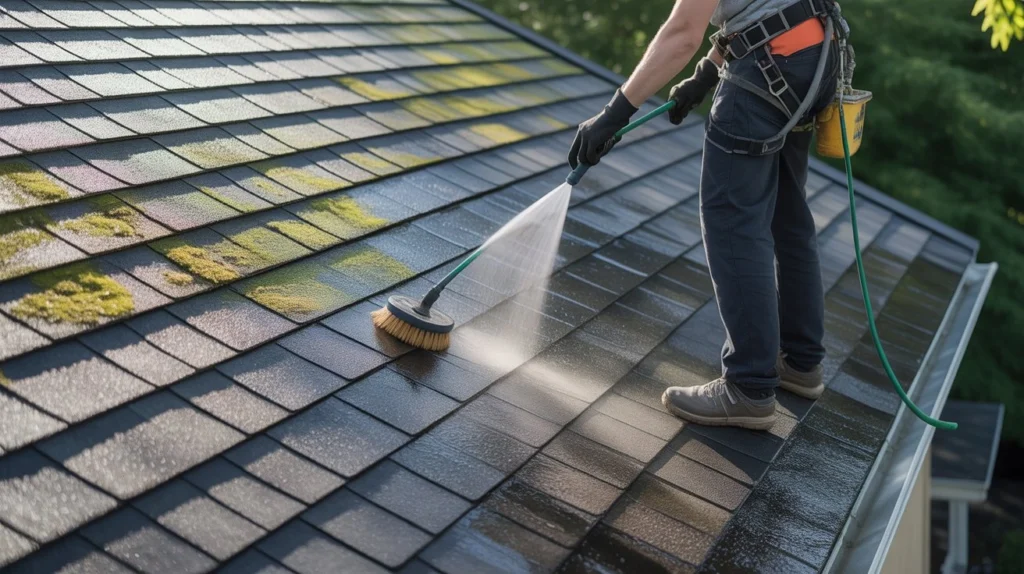
Here is the full process for how to clean roof shingles safely and effectively.
Step 1: Inspect the Roof First
Walk around your home and look at the roof from the ground. Use binoculars if needed. Spot where the moss, algae, or stains are concentrated. Check for missing, cracked, or curling shingles. Do not clean a structurally damaged roof fix it first.
Step 2: Clear Debris Off the Roof
Use a leaf blower or soft broom to clear leaves, twigs, and loose debris. Always work from the peak down toward the gutters. Never blow debris under shingles.
Step 3: Protect Surrounding Plants and Surfaces
Wet down all plants, grass, and garden beds below the roofline. Cover sensitive shrubs with plastic sheeting if they are close to the house.
Step 4: Mix Your Cleaning Solution
For a basic DIY mix:
- 1 gallon of water
- 1 quart of household bleach (5.25% sodium hypochlorite)
- 1/4 cup of dish soap
For an eco-friendly option, use oxygen bleach mixed per package directions. Let it dissolve fully before applying.
Step 5: Apply the Solution
Use a low-pressure pump sprayer. Start at the bottom of the affected area and spray upward. This prevents the solution from running under shingles. Let it soak for 15 to 20 minutes. Do not let it dry on the shingles.
Step 6: Rinse Gently
Use a garden hose with a standard nozzle. Rinse from the top down. Use low pressure only. High pressure damages shingles. Let the water carry the dead algae and moss off naturally.
Step 7: Repeat If Needed
Heavy moss or lichen may need a second treatment. For stubborn lichen, use a soft-bristle brush with light, downward strokes. Never scrub across shingles.
That is the full breakdown of how to clean roof shingles safely. Take your time at each step.
Soft Washing vs Pressure Washing Roof Shingles
This is one of the most debated topics in roof care. Here is the honest answer.
Soft Washing
Soft washing uses low water pressure (around 100 PSI or less) combined with a chemical cleaning solution. The solution does the work, not the water pressure.
Best for: Asphalt shingles, algae, moss, and most residential roofs
Pros: Safe for shingles, kills algae at the root, longer-lasting results
Cons: Takes longer, needs proper chemical handling
Pressure Washing
Pressure washers push water at 1,500 to 3,000+ PSI. That is way too powerful for most shingles.
What it does to shingles: Strips granules, breaks seals between shingles, pushes water into the roof deck, and voids most manufacturer warranties.
Verdict: Do not pressure wash asphalt shingles. Period. Soft washing is the best way to clean roof shingles without causing damage.
Some tile roofs and metal roofs can handle low-pressure washing, but even then, be careful.
DIY Roof Cleaning vs Professional Roof Cleaning
Should you do it yourself or hire someone? Here is a simple breakdown.
| Factor | DIY | Professional |
| Cost | Lower upfront | Higher but thorough |
| Safety | High risk | Handled by experts |
| Results | Variable | Consistent |
| Time | Half a day to full day | A few hours |
| Equipment | You provide it | They bring it all |
| Warranty safe | Risk of voiding | Pros know roof specs |
DIY works well if:
- Your roof is one story and low-pitch
- You are comfortable working at heights
- The staining is mild and surface level
Go professional if:
- Your roof is two stories or steeply pitched
- You have heavy moss or lichen growth
- You are unsure about chemicals or methods
Best Cleaning Solutions for Roof Shingles
Not every cleaner is safe for shingles. Here are the tested options.
- Diluted Chlorine Bleach Solution The Asphalt Roofing Manufacturers Association (ARMA) actually recommends a 1:1 bleach-to-water mix for algae removal. It works fast. Rinse thoroughly afterward to protect plants.
- Oxygen Bleach (Sodium Percarbonate) Slower acting but plant-safe and biodegradable. Great for areas near gardens. Needs more dwell time (30+ minutes).
- Commercial Roof Cleaners Products like Wet & Forget, Roof Wash, and Behr Wet & Forget are proven and shingle-safe. Follow label directions exactly.
- Vinegar Some people swear by white vinegar for mild algae. It works, but weakly. Not ideal for heavy growth. Best as a preventive rinse.
Avoid: Ammonia-based cleaners, abrasive powders, and anything with high alkalinity. They degrade asphalt shingles fast.
How Often Should You Clean Roof Shingles?
There is no single rule. It depends on your local climate and environment.
General guideline:
- Humid or rainy climates: every 1 to 2 years
- Dry or sunny climates: every 3 to 5 years
- Homes near trees: every 1 to 2 years (debris and moisture)
- After a major storm: inspect and spot-clean as needed
Watch for these signs it is time to clean:
- Black streaks or dark patches on shingles
- Visible green or yellow moss growth
- Clogged gutters full of shingle granules
- Shingles that look dark or discolored overall
Regular shingles cleaning prevents small problems from becoming big repairs.
How to Prevent Algae and Moss from Coming Back
Cleaning the roof is only half the job. Prevention keeps it clean longer.
Install zinc or copper strips. These metal strips run along the roof ridge. When it rains, trace amounts of metal wash down and kill algae. Very effective, low maintenance.
Trim overhanging tree branches. Less shade means a drier roof, which means less moss and algae growth.
Keep gutters clean. Clogged gutters cause water to back up and stay wet on your roof edge. Clean them twice a year.
Apply a roof sealant or algae-resistant coating. Some products add a protective layer that resists regrowth for 1 to 3 years.
Mistakes to Avoid When Cleaning Roof Shingles
Even experienced homeowners make these errors. Avoid them and save yourself headaches.
Using too much water pressure. This is the number one mistake. High pressure strips granules and voids warranties.
Scrubbing upward. Always brush downward. Brushing up lifts shingle edges and causes leaks.
Applying solution in direct sunlight. It dries too fast and leaves streaks.
Skipping plant protection. Bleach runoff kills grass and plants. Always wet them down first.
Not rinsing thoroughly. Leftover cleaner degrades shingles over time.
Ignoring damaged shingles. Cleaning a cracked or curling shingle does not fix it. Replace damaged shingles before or after cleaning.
Working alone. Always have someone on the ground when you are on the roof. Safety rule, not a suggestion.
Benefits of Cleaning Roof Shingles Regularly
Regular shingles roof cleaning is one of the best investments a homeowner can make.
Extends roof lifespan. Algae and moss accelerate shingle decay. Removing them adds years to your roof.
Improves curb appeal. A clean roof makes the whole house look better. Great if you plan to sell.
Saves money. Cleaning costs far less than early roof replacement.
Prevents water damage. Moss lifts shingles and causes leaks. Removing it prevents interior water damage.
Maintains home value. Buyers and appraisers notice roof condition. A clean roof signals a well-maintained home.
Lowers energy bills. Dark algae stains absorb more heat. A clean roof reflects more sunlight and keeps attic temps lower.
Should You Hire Professional Roof Cleaners?
For most homeowners, the answer is yes — at least for the first cleaning or for heavy growth.
Here is why professionals are worth it:
- They have commercial-grade soft wash equipment
- They know which cleaners are safe for your specific shingle type
- They carry liability insurance in case of damage
- They can spot and flag other roof problems while up there
- They work faster and more safely than most DIYers
The cost of professional shingles roof cleaning typically runs between $250 and $600 depending on roof size and condition. That is a fraction of what a new roof costs.
If you are in the Tracy, CA area, VJ Pressure Washing specializes in safe, effective roof cleaning using proven soft wash methods. Their team uses shingle-safe solutions and takes every safety precaution seriously.
Conclusion
A clean roof is a healthy roof. Algae, moss, and grime do real damage over time that shortens your roof’s life and leads to expensive repairs. Whether you tackle it yourself or call a pro, shingles cleaning should be a regular part of home maintenance.
The best way to clean roof shingles is soft washing with a proper chemical solution, gentle rinsing, and a little patience. Avoid high pressure. Work safely. And when in doubt, hire someone who does this for a living.
Knowing how to clean roof shingles correctly means your roof protects your home the way it should for decades, not just years. If you want safe, professional results without risking damage to your roof, contact VJ Pressure Washing today for expert roof cleaning services and long-term roof care.
FAQs
Can I use a pressure washer on asphalt shingles?
No. High pressure strips granules and voids warranties. Use soft washing with low pressure and a cleaning solution instead.
How long does roof cleaning take?
For an average home, DIY cleaning takes 4 to 6 hours. Professionals usually finish in 2 to 3 hours.
Is bleach safe for roof shingles?
Yes, when diluted properly. A 1:1 water-to-bleach mix is what ARMA recommends. Rinse thoroughly after application.
Will cleaning remove all the black streaks?
In most cases, yes. Heavy staining may need a second treatment. Some very old stains take longer to fade after the algae dies.
How do I keep moss from growing back?
Install zinc or copper ridge strips, trim nearby trees, and keep gutters clean. Preventive roof treatments also help.
What is the best time of year to clean my roof?
Late spring or early fall is ideal. Avoid freezing temps or peak summer heat. Overcast days work best.
Does roof cleaning void my shingle warranty?
It can if you use high pressure or unapproved chemicals. Soft washing with manufacturer-recommended solutions keeps your warranty intact.