
Dirty windows do more than look bad. They block natural light, leave mineral deposits that etch glass over time, and make even a clean home feel dull. Most people wipe them down and still end up with streaks. The problem is usually technique, not effort.
Knowing how to clean windows the right way saves you time and gives you results that actually last. This guide covers every step, from the right tools to streak-free technique, so you get crystal-clear glass every single time.
- Why Clean Windows Regularly?
- Tools and Supplies You’ll Need
- Preparing Your Windows for Cleaning
- Step-by-Step Guide to Cleaning Windows
- Step 1: Mix Your Cleaning Solution
- Step 2: Wet the Glass
- Step 3: Scrub Stubborn Spots
- Step 4: Squeegee from Top to Bottom
- Step 5: Wipe the Edges
- Step 6: Buff if Needed
- How to Clean Window Screens
- Tips for Streak-Free Windows
- Common Mistakes to Avoid
- Cleaning Window Tracks and Frames
- How Often Should You Clean Windows?
- Safety Tips for Window Cleaning
- Conclusion
- FAQs
Why Clean Windows Regularly?
Most homeowners clean windows once a year if at all. That is not enough.
Dirt, pollen, hard water, and pollution build up on glass over time. Left too long, mineral deposits from sprinklers or rain can etch into the surface permanently. At that point, no amount of cleaning fixes it.
Regular cleaning also protects your window frames and seals. Dirt that sits in frame corners traps moisture, which leads to rot on wood frames and mold on rubber seals.
Beyond protection, clean windows make a real difference in how your home feels. More light comes through, rooms look bigger, and the view outside is actually enjoyable.
Tools and Supplies You’ll Need
Using the wrong tools is the number one reason people end up with streaks. Skip the paper towels and old rags.
What you need:
- A good squeegee (10 to 14 inches for standard windows)
- A scrubber sleeve or applicator wand
- Two buckets (one for solution, one for rinsing)
- Dish soap or a dedicated window cleaning solution
- Microfiber cloths or a lint-free chamois
- A soft-bristle brush for frames and tracks
- A spray bottle for spot cleaning
- A ladder for upper-floor windows
- Rubber gloves
Optional but helpful:
- A window cleaning extension pole for high windows
- A water-fed pole system for exterior second-story glass
- A detail brush for corners and edges
Avoid newspapers. It used to work when ink was oil-based. Modern newspaper ink smears on glass.
Preparing Your Windows for Cleaning
Jumping straight to scrubbing is a mistake. A little prep makes the whole job faster and cleaner. At VJ Pressure Washing, we always start with a full prep check before touching the glass. It is a small step that makes a big difference in the final result.
Remove dust and loose debris first. Use a dry microfiber cloth or a soft brush to wipe down the glass, frame, and surrounding wall. Wet cleaning over dry dust turns it into mud.
Check the weather. The best way to clean windows is on a cloudy day. Direct sunlight dries your cleaning solution before you can squeegee it off, leaving streaks baked into the glass.
Protect your floors and sills. Lay an old towel on the sill and floor below the interior windows. Cleaning solution drips, and it leaves marks on wood or tile if left to dry.
Remove window screens. Take screens out before cleaning the glass. Clean them separately. Screens left in place block your squeegee path and trap dirty water against the glass.
Step-by-Step Guide to Cleaning Windows
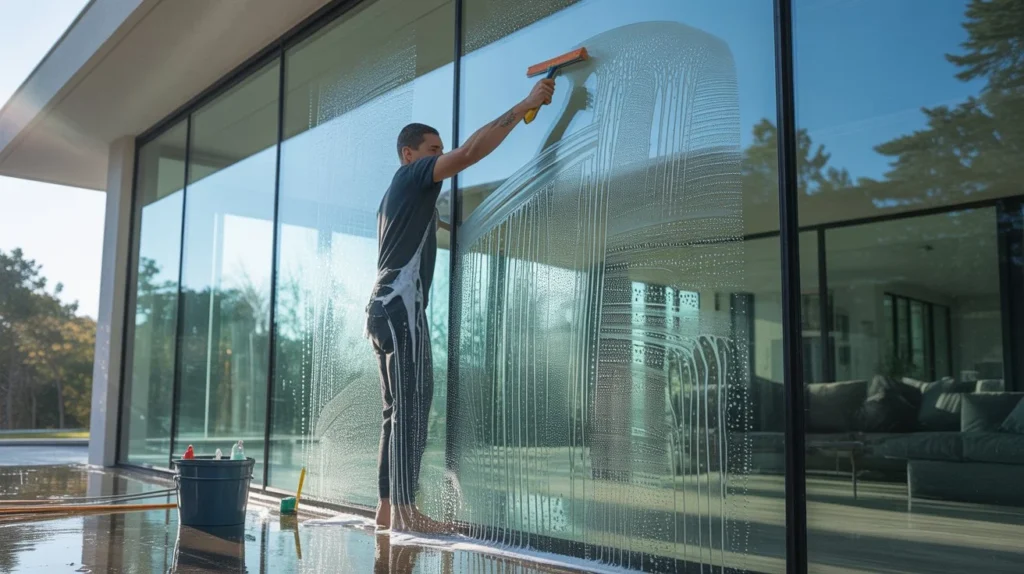
This is the core of how to clean windows properly. Follow each step in order.
Step 1: Mix Your Cleaning Solution
Fill a bucket with warm water. Add a few drops of dish soap. That is it. You do not need expensive cleaners for most windows. For heavy grease or hard water stains, add a small amount of white vinegar to the mix.
Step 2: Wet the Glass
Dip your scrubber sleeve into the solution. Wring it out slightly so it is wet but not dripping. Apply it to the entire glass surface using horizontal strokes. Work from top to bottom.
For exterior windows with heavy buildup, let the solution sit for 30 seconds before scrubbing. This softens the grime and makes it easier to remove.
Step 3: Scrub Stubborn Spots
Use a non-scratch scrubbing pad for any stuck-on debris, bird droppings, or sap. A razor blade scraper held at a 45-degree angle works well on paint specks or hard water deposits. Always keep the glass wet when using a scraper to avoid scratching.
Step 4: Squeegee from Top to Bottom
Start at the top corner of the glass. Pull the squeegee across in a single smooth stroke. Wipe the blade with a clean cloth after each pass. Overlap each stroke slightly to avoid leaving lines.
For tall windows, do horizontal passes across the top half, then finish the bottom with vertical strokes. This is the technique professional window cleaning crews use to avoid drips on already-clean sections.
Step 5: Wipe the Edges
Use a dry microfiber cloth to wipe any water left along the edges and corners of the glass. This is where streaks usually form. A clean, dry edge is the difference between good and perfect results.
Step 6: Buff if Needed
If you spot a streak after the glass dries, buff it out with a dry microfiber cloth using small circular motions. Do not re-wet the glass. Dry buffing removes light streaks without starting over.
How to Clean Window Screens
Screens collect dust, pollen, and pollution faster than the glass itself. Cleaning them separately gives you much better results.
Remove the screen from the window frame. Most screens lift out or have small tabs you press to release them.
Rinse with a garden hose on a low setting. High pressure pushes dirt through the mesh rather than washing it off.
Scrub gently with a soft brush dipped in warm soapy water. Work in small circles across the entire screen. Pay attention to the frame edges where dirt collects most.
Rinse again until the water runs clear. Shake off excess water and stand the screen upright to air dry completely before reinstalling. Never reinstall a wet screen. Moisture trapped between the screen and glass causes water spots.
For large homes with many screens or screens that have not been cleaned in years, professional window cleaning in Tracy, CA from VJ Pressure Washing gets the job done faster and more thoroughly than DIY, especially for second-story screens that require ladder work.
Tips for Streak-Free Windows
Streaks are the most common complaint after cleaning. Here is what actually prevents them.
Use distilled water. Tap water contains minerals that leave spots when they dry. Distilled water has none of those minerals. It makes a noticeable difference, especially in hard water areas.
Do not use too much soap. Excess soap leaves a film that attracts dust and shows every smear. A few drops per bucket is enough.
Clean in the shade. Sun dries your solution before the squeegee can remove it. Always try to work on the shaded side of your home first.
Keep your squeegee blade clean. A dirty or nicked blade drags across the glass and leaves lines. Replace rubber blades once a year or when they start leaving marks.
Work top to bottom always. Dirty water runs down. If you start at the bottom, you will be cleaning over drips from above.
Common Mistakes to Avoid
Even experienced cleaners make these errors.
Using paper towels. They leave lint and fibers on the glass. Use microfiber cloths instead.
Cleaning in direct sunlight. The solution dries before you squeeze it off. This is the single biggest cause of streaks.
Using too much cleaning solution. More soap means more residue. Keep the mixture light.
Skipping the frame and tracks. Clean glass with dirty frames just looks half-done. Always clean frames and tracks as part of the process.
Pressing too hard with the squeegee. Light, even pressure gives a cleaner result. Pressing hard causes the blade to skip and leaves marks.
Not drying the edges. Water left along the glass edges dries into streaks. Always wipe edges with a dry cloth after squeegeeing.
Cleaning Window Tracks and Frames
Tracks and frames hold more dirt than the glass. Ignoring them means dirty water will drip back onto your clean glass every time it rains.
For tracks: Use a vacuum with a brush attachment to remove loose dirt first. Then dip an old toothbrush or detail brush in soapy water and scrub the track grooves. Wipe clean with a damp cloth and dry thoroughly.
For vinyl and aluminum frames: Wipe with a damp microfiber cloth and mild soap. Rinse and dry. Avoid abrasive cleaners that scratch the surface.
For wood frames: Use a barely damp cloth. Too much water causes wood to swell and warp over time. Dry immediately after cleaning.
For rubber seals: Clean with a soft cloth and mild soap only. Harsh chemicals degrade rubber and cause it to crack, which leads to drafts and water leaks.
How Often Should You Clean Windows?
There is no single answer. It depends on your environment.
Interior windows: Every 3 to 6 months is enough for most homes. Kitchens may need more frequent cleaning due to grease and cooking residue.
Exterior windows: Every 2 to 3 months in dusty or pollen-heavy areas. Coastal homes near salt water may need monthly cleaning to prevent salt buildup from etching the glass.
After storms: Always clean exterior windows after heavy rain or wind. Storms deposit dust, pollen, and mineral-rich water that leaves spots as it dries.
A good rule is to check your windows in direct sunlight twice a year. Light reveals buildup that is invisible in normal conditions.
Safety Tips for Window Cleaning
Cleaning upper-floor windows carries real risk. Do not skip these precautions.
Use a stable ladder. Set it on flat ground. Never lean a ladder against the glass or window frame. Use a ladder stabilizer on the wall beside the window.
Have a spotter. Someone holding the base of the ladder prevents it from shifting while you work above.
Do not overreach. Move the ladder rather than stretching to the side. Overreaching is the most common cause of falls.
Use an extension pole. For second-story exterior windows, a water-fed extension pole lets you clean from the ground safely. Many best window cleaning tips from professionals involve extension poles precisely because they eliminate ladder risk.
Wear rubber-soled shoes. Wet surfaces near windows can be slippery. Rubber soles give you grip on wet decks, patios, and ladder rungs.
Conclusion
The best way to clean windows comes down to the right tools, the right technique, and the right conditions. Work on cloudy days, use a quality squeegee, keep your solution light, and always dry the edges.
How to clean windows properly is not complicated once you know what actually works. A little time and the right approach gives you results that last weeks, not days.
For large homes, hard-to-reach windows, or a full exterior cleaning that includes frames, tracks, and screens, VJ Pressure Washing delivers professional results without the hassle. Contact us for a free quote today.
FAQs
What is the best way to clean windows without streaks?
Use a squeegee, work top to bottom, and wipe edges dry with a microfiber cloth after each pass. Clean on a cloudy day to prevent the solution from drying too fast.
What cleaning solution works best for windows?
Warm water with a few drops of dish soap works for most windows. Add white vinegar for hard water stains or heavy mineral deposits.
How do you clean windows on the second floor safely?
Use an extension pole or water-fed pole from the ground. If you must use a ladder, always have a spotter and never overreach.
How often should exterior windows be cleaned?
Every 2 to 3 months for most homes. Coastal properties and dusty climates may need monthly cleaning to prevent buildup and etching.
Can I use a pressure washer to clean windows?
Only on exterior glass with a low-pressure setting and a wide fan nozzle. Never use high pressure on glass or window seals. It can crack glass and destroy rubber seals.
Why do my windows streak after cleaning?
Usually too much soap, cleaning in direct sunlight, or not drying the edges. Switch to distilled water and a squeegee for streak-free results.
Is professional window cleaning worth it?
For multi-story homes, large glass surfaces, or windows that have not been cleaned in years, professional cleaning saves time and gives better results than DIY.