
Knowing what chemicals to use when pressure washing concrete can make a big difference in the final result. Water and pressure can remove loose dirt, but some stains bond more strongly to porous concrete and need a suitable cleaning solution first. The right product depends on what you are trying to remove. A general concrete cleaner may be enough for dirt and grime, while oil, rust, algae, and efflorescence may need different treatments.
Using the strongest chemical available is not necessarily the best approach. The goal is to choose a product that targets the stain without unnecessarily damaging the concrete, nearby landscaping, or surrounding surfaces.
- Quick Answer
- What Chemicals Are Used for Pressure Washing Concrete?
- Best Chemicals for Different Concrete Stains
- 1. Dirt and General Grime
- 2. Oil and Grease
- 3. Mold, Mildew, and Algae
- 4. Rust Stains
- 5. Efflorescence
- How to Choose the Right Chemical for Concrete Cleaning
- How to Use Chemicals Before Pressure Washing
- Step 1: Remove Loose Debris
- Step 2: Protect Nearby Areas
- Step 3: Test a Small Area
- Step 4: Apply the Cleaner as Directed
- Step 5: Allow the Cleaner to Work
- Step 6: Pressure Wash and Rinse
- Step 7: Inspect the Result
- Can You Use Bleach on Concrete?
- Chemicals to Avoid or Use With Extra Caution
- Strong Acid-Based Cleaners
- Solvents
- Unlabeled Chemical Mixtures
- What Chemical Should You Use for Concrete Driveways?
- Safety Tips When Using Concrete Cleaning Chemicals
- Wear Appropriate Protection
- Read the Label
- Keep People and Pets Away
- Protect Plants
- Control Runoff
- Common Mistakes to Avoid
- Using Too Much Chemical
- Using the Same Cleaner for Every Stain
- Skipping the Test Area
- Leaving Chemicals on Too Long
- Increasing Pressure Instead of Changing the Cleaner
- Mixing Chemicals
- When Should You Hire a Professional?
- Key Takeaways
- Conclusion
- FAQs
Quick Answer
The best chemical for pressure washing concrete depends on the type of stain. A concrete detergent or degreaser works well for general dirt, oil, and grease. Specialty cleaners can help with rust and efflorescence, while products designed for organic growth may help with algae and mildew. Always follow the product label, test a small area first, and never mix cleaning chemicals.
What Chemicals Are Used for Pressure Washing Concrete?
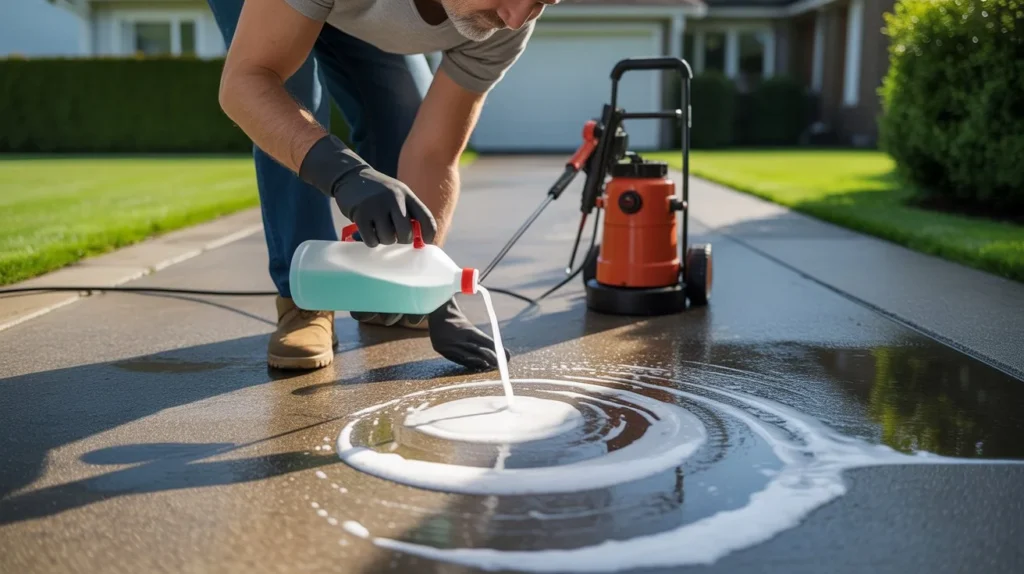
Common pressure washing chemicals for concrete include:
- Concrete detergents
- Concrete and masonry cleaners
- Degreasers
- Oil stain removers
- Products designed for algae, mold, or mildew
- Rust removers
- Efflorescence removers
- Acid-based cleaners for specific applications
The right choice depends on the stain and the condition of the concrete.
For ordinary dirt, soil, and light grime, a concrete-safe detergent may be all you need. For oil and grease, a dedicated degreaser or oil stain remover is generally more appropriate. Manufacturers also make specialty products for rust and efflorescence.
A useful rule is simple: identify the stain before choosing the chemical.
Best Chemicals for Different Concrete Stains
1. Dirt and General Grime
For everyday dirt, mud, dust, and surface grime, start with a concrete-safe detergent or general-purpose concrete cleaner.
You usually do not need an aggressive chemical for this type of cleaning. Apply the cleaner according to the manufacturer’s instructions, allow it to work for the recommended time, and then pressure wash the surface.
Some concrete cleaners are specifically formulated to remove soil, grease, and oil while being non-acidic.
2. Oil and Grease
Oil stains are more difficult because concrete is porous. Oil can penetrate below the surface rather than remaining only on top.
For these stains, look for a concrete-safe degreaser or oil stain remover. A specialty oil stain remover can be more appropriate than a general detergent.
QUIKRETE, for example, lists an oil stain remover specifically for oil and grease on concrete, pavers, and masonry. Its concrete and asphalt cleaner is also intended for removing soil, grease, and oil.
For an older or heavily penetrated oil stain, one pressure-washing pass may not completely remove the discoloration. Avoid assuming that increasing pressure will solve the problem. Excessive pressure can damage the concrete surface without necessarily removing deeply absorbed oil.
3. Mold, Mildew, and Algae
Green, black, or slippery organic growth can often be treated with a cleaner formulated for exterior organic staining.
Some products use bleach or other active ingredients designed to break down organic growth. However, you should always check the label to make sure the product is approved for concrete and suitable for the intended application.
Do not automatically reach for household chemicals simply because they are strong. The product’s intended use, concentration, contact time, and rinsing requirements all matter.
Also consider what is around the concrete. Runoff from a cleaning solution can reach grass, plants, soil, drains, or other surfaces, so take appropriate precautions before applying chemicals.
4. Rust Stains
Rust requires a different approach from ordinary dirt.
A rust-removal product formulated for concrete or masonry can target iron-based staining more effectively than a general detergent. Specialty products may also address mineral deposits or efflorescence.
QUIKRETE’s efflorescence and rust remover, for example, is specifically designed for rust and efflorescence on concrete, pavers, brick, masonry, and stucco. The manufacturer recommends testing the product in an inconspicuous area first and warns that stronger concentrations can increase the risk of etching.
Do not assume that more product or a longer contact time will produce better results.
5. Efflorescence
Efflorescence appears as a white, chalky or powdery deposit on concrete and masonry.
It is not the same thing as ordinary dirt. It is associated with soluble salts moving to the surface, so a standard pressure washing treatment may not fully address it.
A specialty efflorescence remover can be used when appropriate. Follow the manufacturer’s dilution and application instructions carefully. Some products can etch concrete if they are too concentrated or left on the surface too long.
How to Choose the Right Chemical for Concrete Cleaning
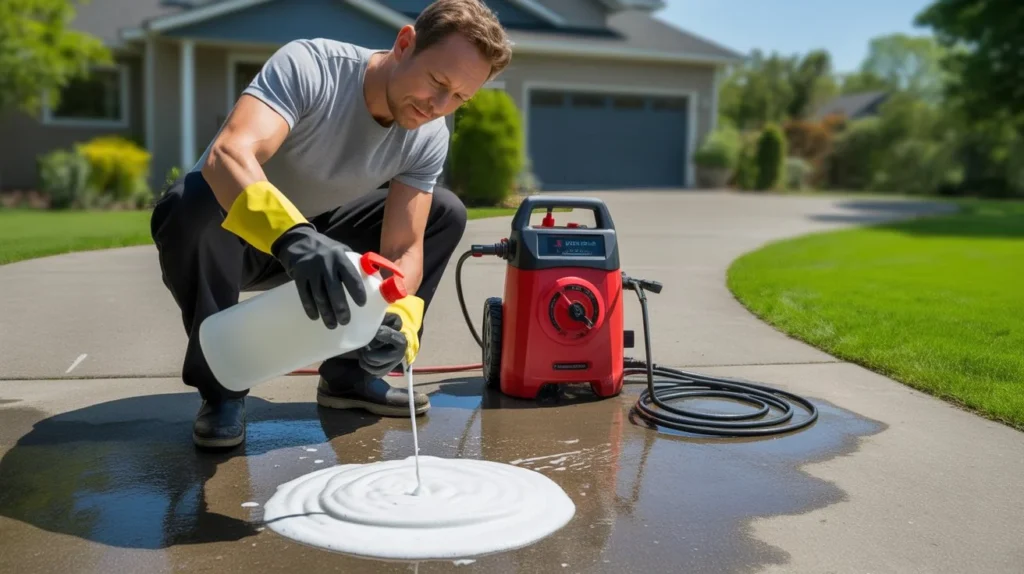
When deciding between different chemicals for concrete cleaning, ask these questions:
- What type of stain am I removing?
- Is the product specifically intended for concrete or masonry?
- Is the concrete sealed, painted, stained, or bare?
- Does the product contain acid or another aggressive ingredient?
- What dilution does the manufacturer recommend?
- How long should it remain on the surface?
- How should the product be rinsed or removed?
- Could runoff affect plants, drains, or nearby surfaces?
Reading the label before using the product is important. The manufacturer’s instructions are more reliable than assuming that a particular chemical concentration is appropriate for every concrete surface.
How to Use Chemicals Before Pressure Washing
Using chemicals correctly is just as important as choosing the right product.
Step 1: Remove Loose Debris
Sweep away leaves, dirt, sticks, and loose debris before applying the cleaner.
This prevents unnecessary buildup and allows the cleaning solution to contact the actual stain.
Step 2: Protect Nearby Areas
Move items away from the work area and consider nearby plants, painted surfaces, vehicles, metal fixtures, and other materials that could react with the cleaning solution.
Step 3: Test a Small Area
Before treating the entire driveway, patio, walkway, or other concrete surface, test the chemical in a small, less noticeable area.
This can help you determine whether the product causes discoloration, etching, or another unwanted reaction.
Specialty concrete-cleaning products may specifically recommend test application before treating the entire surface.
Step 4: Apply the Cleaner as Directed
Follow the product’s instructions for dilution, application method, and contact time.
Do not make the solution stronger simply because the stain looks difficult.
Step 5: Allow the Cleaner to Work
Many cleaning products need time to loosen or react with the stain.
However, leaving a chemical on concrete longer than recommended is not automatically better. Some products can damage or etch the surface when misused.
Step 6: Pressure Wash and Rinse
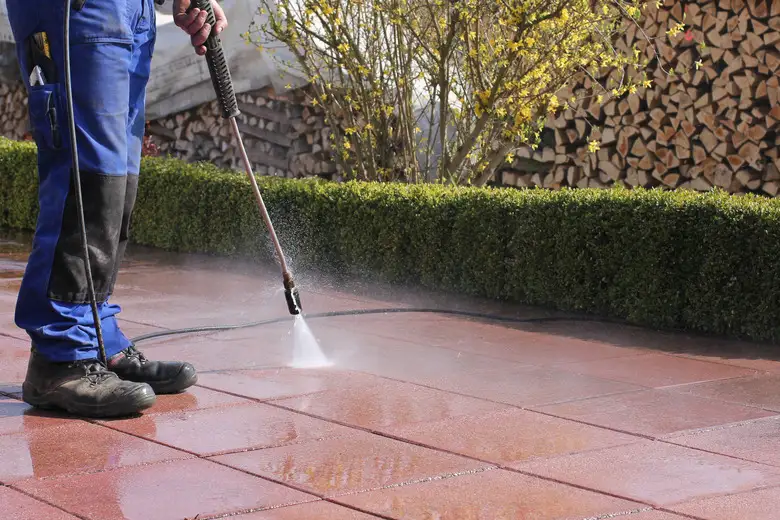
Once the cleaner has done its job, pressure wash the concrete using an appropriate technique for the surface.
Keep the spray moving rather than holding it in one spot. Excessive pressure or an incorrect nozzle can leave visible marks or damage the surface.
Step 7: Inspect the Result
After rinsing, look at the concrete while it is clean and wet.
If a stain remains, determine why before applying another chemical. Deep oil, rust, or mineral staining may require a different treatment rather than simply increasing pressure.
Can You Use Bleach on Concrete?
Bleach is sometimes used for organic staining, but it should not be treated as a universal concrete cleaner.
Bleach can be useful in certain cleaning applications when the product and surface are appropriate, but improper use can create safety and surface-care problems.
Most importantly, never mix bleach with acids or other cleaning chemicals unless the product manufacturer specifically states that the combination is safe.
OSHA documented an incident in which bleach was mixed with an acidic scale remover during concrete cleaning, producing chlorine gas and causing respiratory injuries.
If you use a bleach-containing product, follow its label directions and take appropriate precautions for people, plants, pets, surrounding materials, and runoff.
Chemicals to Avoid or Use With Extra Caution
Some chemicals to clean concrete require much more care than ordinary detergents.
Strong Acid-Based Cleaners
Acidic products can be effective for certain mineral deposits and stains, but they can also etch concrete if used incorrectly.
QUIKRETE notes that acid washing can damage existing concrete when it is not performed properly.
If an acid-based product is appropriate for the job, follow the manufacturer’s instructions closely and use the required protective equipment.
Solvents
Do not assume that a solvent designed for another type of surface is suitable for concrete.
Chemical-cleaning guidance notes that solvents can spread some contaminants rather than simply removing them.
Use a product specifically intended for the stain and surface whenever possible.
Unlabeled Chemical Mixtures
Avoid mixing cleaners to create a stronger solution.
Different chemicals can react with each other and create dangerous fumes or unexpected reactions. The safest approach is to use one appropriate product according to its instructions.
What Chemical Should You Use for Concrete Driveways?
For a typical concrete driveway, start with the least aggressive cleaner that matches the problem.
A practical approach is:
| Concrete problem | Cleaner to consider |
| Light dirt and grime | Concrete detergent or general concrete cleaner |
| Grease | Concrete degreaser |
| Oil stains | Concrete oil-stain remover |
| Algae or organic growth | Product formulated for organic staining |
| Rust | Concrete-safe rust remover |
| Efflorescence | Efflorescence remover |
| Heavy mineral deposits | Appropriate specialty cleaner, with extra caution |
This does not mean every product will work on every stain. Always check the product label and the condition of your concrete before application.
Safety Tips When Using Concrete Cleaning Chemicals
Chemical safety should be part of the cleaning process, not an afterthought.
Wear Appropriate Protection
Depending on the product, protective gloves, eye protection, boots, and other protective equipment may be necessary.
For example, manufacturer instructions for a specialty efflorescence and rust remover call for protective gloves, eye protection, and boots.
Read the Label
Check the label for:
- Required dilution
- Recommended surfaces
- Contact time
- Protective equipment
- Storage instructions
- First-aid information
- Rinsing requirements
- Chemical incompatibilities
Keep People and Pets Away
Do not allow children or pets into the work area while chemicals are being applied or rinsed.
Protect Plants
Cleaning solutions can affect vegetation. Protect nearby plants when appropriate and avoid unnecessary chemical exposure.
Control Runoff
Do not assume that dirty chemical-laden water can simply flow into the street or a storm drain.
Before cleaning a large concrete area, consider where the wastewater will go and follow applicable local requirements.
Common Mistakes to Avoid
Using Too Much Chemical
More chemicals does not necessarily mean better cleaning. Excess product can make rinsing harder and may increase the risk of surface damage.
Using the Same Cleaner for Every Stain
Oil, rust, algae, and efflorescence are different problems. A single cleaner may not be appropriate for all of them.
Skipping the Test Area
A small test can reveal how the concrete reacts before you treat the entire driveway or patio.
Leaving Chemicals on Too Long
Follow the recommended dwell or contact time. Some products can etch or discolor concrete if misused.
Increasing Pressure Instead of Changing the Cleaner
If a stain remains, the problem may be the cleaning chemical rather than the amount of pressure.
Mixing Chemicals
Never improvise chemical combinations. Bleach and acids, for example, can produce dangerous chlorine gas.
When Should You Hire a Professional?
DIY pressure washing can make sense for straightforward dirt and grime, but some concrete cleaning jobs are more complicated.
Consider professional help when:
- The concrete has deep oil staining
- Rust covers a large area
- Efflorescence keeps returning
- The surface is old, cracked, or deteriorated
- You are unsure which chemical is appropriate
- The concrete has a special coating, stain, or sealer
- Chemical runoff is difficult to control
- You are uncomfortable handling specialty cleaners
A professional pressure washing company can assess the surface and choose a cleaning approach based on the type and condition of the concrete.
VJ Pressure Washing can help property owners determine the appropriate approach for concrete cleaning instead of simply relying on maximum pressure or the strongest available chemical.
Key Takeaways
- The best chemical to clean concrete depends on the type of stain.
- Use concrete detergents for ordinary dirt and grime.
- Degreasers and oil-removal products are better suited to oil and grease.
- Rust and efflorescence may require specialty cleaners.
- Acid-based products require extra caution because improper use can etch concrete.
- Never mix bleach with acids or unknown cleaning chemicals.
- Test specialty products on a small area before treating the entire surface.
- Follow the manufacturer’s dilution, contact-time, safety, and rinsing instructions.
- Choose the least aggressive product that can reasonably address the stain.
- Pressure washing should complement the chemical treatment rather than replace proper stain identification.
Conclusion
Knowing what chemicals to use when pressure washing concrete starts with identifying the stain. Dirt may only need a concrete detergent, while oil, rust, algae, and efflorescence can require more specialized products.
The safest approach is to choose a cleaner made for the surface, follow the manufacturer’s instructions, test it in a small area, use appropriate protective equipment, and avoid mixing chemicals. Pressure washing should then be used carefully to rinse away the loosened dirt and cleaning solution.
When the stain is difficult to identify or the concrete is already damaged, professional assessment can help prevent unnecessary chemical or pressure damage. VJ Pressure Washing can provide a practical cleaning approach based on the condition of the concrete and the type of buildup that needs to be removed.
FAQs
What is the best chemical for pressure washing concrete?
There is no single best chemical for every concrete surface. A concrete detergent can work for ordinary dirt, while oil, rust, efflorescence, and organic stains may require specialty products.
What chemicals are good for cleaning concrete?
Common options include concrete detergents, degreasers, oil stain removers, organic-growth cleaners, rust removers, and efflorescence removers. The appropriate choice depends on the stain and the condition of the concrete.
Can I use bleach to pressure wash concrete?
Bleach may be appropriate for certain organic stains when used according to the product’s instructions, but it is not a universal concrete cleaner. Never mix bleach with acids or other incompatible chemicals.
What should I use to remove oil from concrete?
A concrete-safe degreaser or oil stain remover is generally more appropriate than an ordinary household cleaner. Older oil stains may require repeated treatment or professional cleaning.
Can chemicals damage concrete?
Yes. Some chemicals can discolor, weaken, or etch concrete when they are too concentrated, left on too long, or used on an unsuitable surface. Acid-based cleaners require particular caution.
Should I apply chemicals before or after pressure washing?
For many concrete-cleaning jobs, a cleaner is applied first to loosen the stain, followed by pressure washing and rinsing. The exact process depends on the product and the type of stain.
Can I mix different concrete cleaners?
It is safest not to mix cleaning chemicals unless the manufacturer specifically provides instructions for doing so. Unexpected chemical reactions can create dangerous fumes or damage the surface.