Your home’s exterior collects dirt, mold, algae, and grime over time. Regular garden hoses do not cut it. And plain pressure washing can crack siding, strip paint, or damage roof shingles. There is a better way to clean the outside of your home without causing harm.
What is soft washing? It is a low-pressure cleaning method that uses water mixed with cleaning solutions to safely remove biological growth and stains from exterior surfaces. It cleans deeper than a hose and gentler than a pressure washer.
- What Is Soft Washing?
- The Science Behind Soft Washing
- Soft Washing vs. Pressure Washing
- Benefits of Soft Washing
- Common Problems Soft Washing Removes
- What Is Soft Washing a House? (How the Process Works)
- DIY Soft Washing vs. Hiring a Professional
- DIY Soft Washing
- Hiring a Professional
- How Often Should You Soft Wash Your Home?
- How Much Does Soft Washing Cost?
- Signs Your Home Needs Soft Washing
- Choosing the Right Soft Washing Company
- Final Thoughts
- FAQs
What Is Soft Washing?
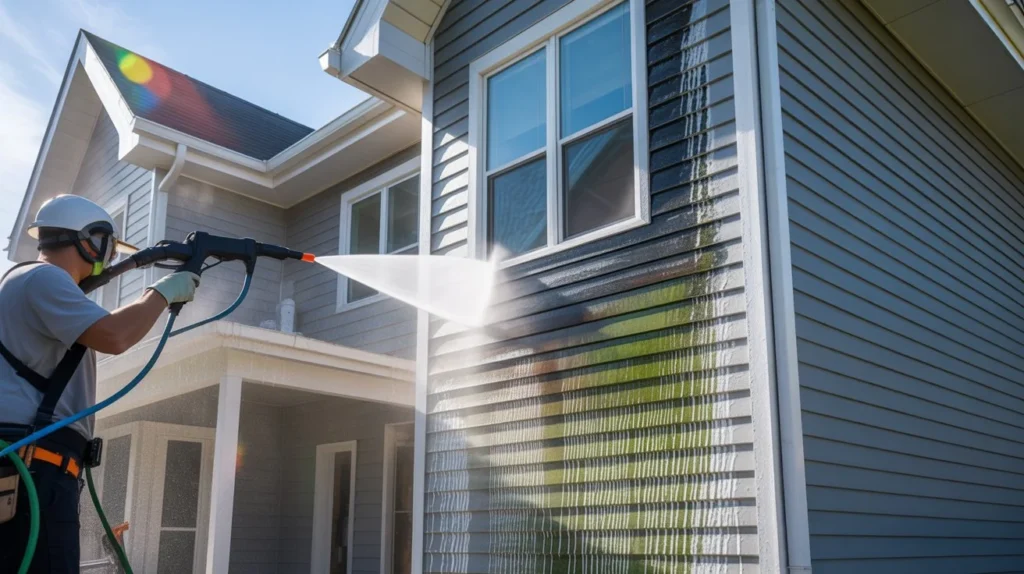
Soft washing uses water pressure below 500 PSI far lower than a standard pressure washer, which runs between 1,500 and 4,000 PSI. The real work is done by the cleaning solution, not the water force.
The solution typically contains:
- A surfactant (helps the solution cling to surfaces)
- Sodium hypochlorite (kills mold, algae, bacteria, and mildew at the root)
- Water (to dilute and rinse)
This mix is applied to the surface, left to dwell for several minutes, and then rinsed off with low-pressure water. The result is a deep, lasting clean without physical damage to the surface.
If you need soft exterior house washing Tracy CA, VJ Pressure Washing uses professional-grade solutions and equipment built for residential surfaces of all types.
The Science Behind Soft Washing
Understanding the science behind soft washing helps explain why it works so well.
Mold, algae, mildew, and lichen are living organisms. They attach to surfaces and reproduce. Pressure washing blasts them off physically, but it does not kill the spores. Those spores stay behind and regrow within weeks.
Soft washing uses sodium hypochlorite (similar to bleach but applied in controlled concentrations) to kill these organisms at the cellular level. When the solution contacts algae or mold, it breaks down the cell membrane. The organism dies completely. It cannot regrow from dead cells.
This is why soft-washed surfaces stay clean longer. Pressure-washed surfaces often look dirty again in 30 to 60 days. Soft-washed surfaces typically stay clean for 1 to 3 years.
The surfactant also plays a key role. It acts like dish soap. It reduces surface tension so the solution spreads evenly and penetrates into pores and cracks where organisms hide.
Soft Washing vs. Pressure Washing
People often use these terms as if they mean the same thing. They do not. Here is a clear breakdown:
|
Feature |
Soft Washing |
Pressure Washing |
|
Water Pressure |
Under 500 PSI |
1,500 – 4,000 PSI |
|
Cleaning Agent |
Yes (chemical solution) |
Sometimes |
|
Best For |
Roofs, siding, wood, painted surfaces |
Concrete, driveways, patios |
|
Risk of Damage |
Very low |
Higher on delicate surfaces |
|
How Long Results Last |
1 – 3 years |
A few months |
Use soft washing for:
- Roof shingles
- Vinyl, wood, or fiber cement siding
- Painted surfaces
- Fences and decks (with care)
- Stucco and EIFS (synthetic stucco)
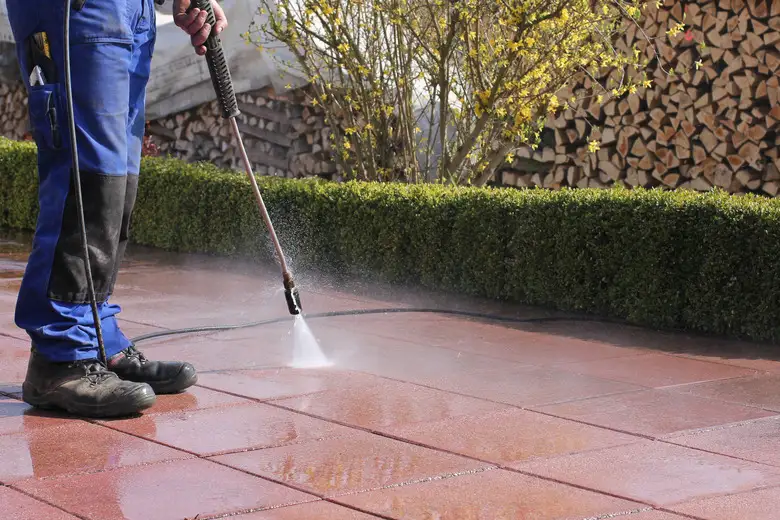
Use pressure washing for:
- Concrete driveways and sidewalks
- Brick pavers
- Garage floors
- Unsealed stone surfaces
Many professionals use both methods on the same property. The approach depends entirely on the surface.
Benefits of Soft Washing
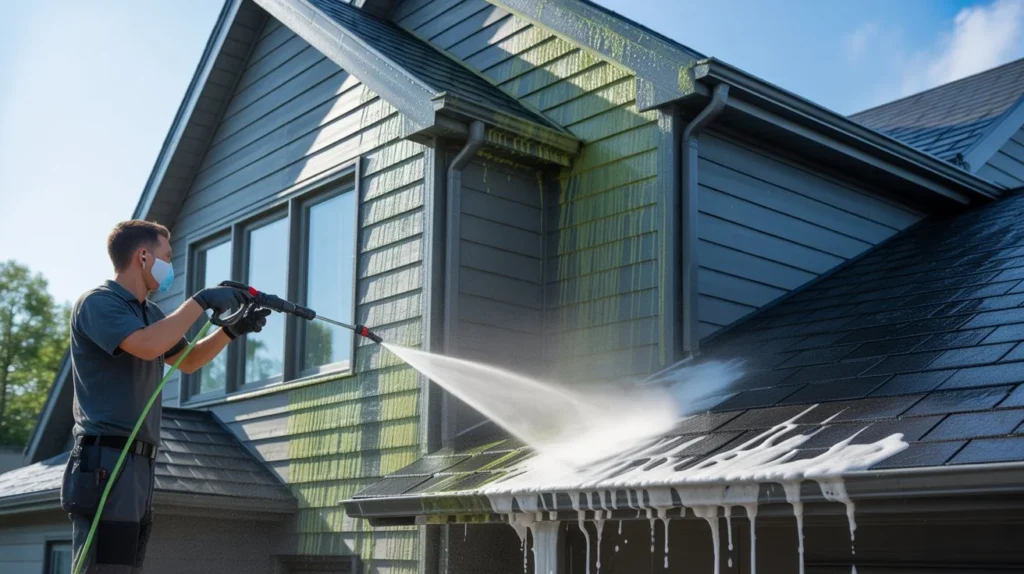
There are real, practical reasons why soft washing has become the preferred method for exterior home cleaning.
It protects your surfaces. High pressure can crack mortar, chip paint, lift shingles, and force water under siding. Low-pressure soft washing eliminates that risk entirely.
It kills what causes the staining. Algae, mold, and mildew are the main causes of dark streaks, green patches, and black discoloration on home exteriors. Soft washing kills them instead of just moving them around.
Results last much longer. Because the organisms are dead, not just dislodged, they cannot grow back immediately. Most homeowners see clean surfaces for 1 to 3 years after a single soft wash.
It is safer for landscaping. Runoff from soft washing is diluted and manageable. A professional will also pre-wet your plants and rinse them after to prevent any solution from sitting on leaves.
It extends the life of your home’s exterior. Mold and algae are not just cosmetic problems. Over time, they break down roofing materials, wood, and siding. Removing them regularly extends the life of those surfaces and saves you money on repairs.
Common Problems Soft Washing Removes
Soft washing handles a wide range of exterior problems that pressure washing often cannot fully address:
Algae (Gloeocapsa Magma): The most common cause of black streaks on roofs. This blue-green algae spreads through airborne spores. Soft washing kills it completely.
Mold and mildew: Common on shaded or north-facing surfaces. They appear as green, gray, or black patches. The cleaning solution kills them at the root.
Lichen: A tough combination of fungus and algae that bonds tightly to surfaces. It is very difficult to remove with pressure alone. Chemical treatment breaks the bond.
Moss: Often found on older roofs and shaded decks. Moss holds moisture, which accelerates deterioration. Soft washing removes and kills it.
Dirt and pollution staining: Traffic exhaust, dust, and airborne particles settle on siding over time. The surfactant in soft wash solutions lifts this type of grime effectively.
Oxidation on vinyl siding: The dull, chalky look on older vinyl often responds well to soft washing with the right cleaning agents.
What Is Soft Washing a House? (How the Process Works)
If you are wondering what is softwashing a house step by step, here is exactly how it goes:
- Pre-inspection: The technician checks the surface type, staining level, and any areas that need extra care.
- Plant and surface protection: Nearby plants, outdoor furniture, and fixtures get rinsed or covered as needed.
- Solution application: The soft wash mix is applied using low-pressure spray equipment, starting from the bottom and working up to avoid streaking.
- Dwell time: The solution sits on the surface for 5 to 15 minutes. This is when it does most of its work.
- Rinse: A low-pressure rinse removes the solution and dead biological matter from the surface.
- Post-rinse of plants: Any nearby plants are rinsed again to wash away any runoff.
The full process for an average home takes 2 to 4 hours.
DIY Soft Washing vs. Hiring a Professional
You can buy soft washing equipment and solutions online. Some homeowners prefer to do it themselves. Here is an honest look at both options.
DIY Soft Washing
- Equipment cost: $100 – $400 for a decent setup
- Cleaning solution: $20 – $60 per batch
- Risk: Mixing solutions incorrectly can damage surfaces or harm plants
- Time: 3 to 6 hours for a full home exterior
- Roof work: Very risky without proper training and safety gear
DIY works on low-risk surfaces like fences or ground-level siding. For roofs or second-story work, the danger is real.
Hiring a Professional
- Cost: $300 – $700 for a full home exterior (see cost section below)
- Equipment: Commercial-grade, calibrated for correct dilutions
- Safety: Insured, trained, and equipped for heights
- Results: Consistent and guaranteed in most cases
If “What Is Soft Washing?” is a new concept for you, starting with a professional company like VJ Pressure Washing is the smart choice. You get safer cleaning, better results, and a clear idea of what proper soft washing should look like for your home.
How Often Should You Soft Wash Your Home?
For most homes, once every 1 to 3 years is enough. But several factors change that timeline.
Wash more often if:
- You live in a humid or coastal climate
- Your home is surrounded by trees (shade promotes algae and moss growth)
- You notice algae or mold returning within a year
- Your roof has dark streaks forming again
Once every 2 to 3 years works if:
- Your home gets good sun exposure
- You live in a dry climate
- You had the surfaces treated with a protective solution after the last wash
Roofs tend to need attention more often than siding. Check your roof annually for dark streaks. Early treatment costs less than waiting until heavy growth takes hold.
How Much Does Soft Washing Cost?
Here is a general cost guide for soft washing services:
|
Service |
Typical Cost Range |
|
Full home exterior |
$300 – $700 |
|
Roof only |
$250 – $600 |
|
Siding only |
$150 – $400 |
|
Fence (per 100 linear ft) |
$50 – $150 |
|
Deck (per 100 sq ft) |
$80 – $200 |
Prices depend on your location, home size, level of buildup, and number of stories. Most companies offer free quotes.
Soft washing typically costs less than a full roof replacement or siding repair caused by years of unchecked biological growth. It is one of the better value-to-cost services in home maintenance.
Signs Your Home Needs Soft Washing
Not sure if it is time? Look for these:
- Black or dark streaks on your roof running down from the ridge
- Green patches on siding, especially on north-facing walls
- Fuzzy or slimy texture on any exterior surface
- White or gray chalky buildup on vinyl or painted siding
- Moss or lichen on the roof or deck
- General dull, dirty appearance that does not go away after rain
Any one of these signs means biological growth is active in your home. Left alone, it spreads and causes surface damage.
Choosing the Right Soft Washing Company
Not every pressure washing company knows soft washing. Here is what to look for:
Ask if they use true low-pressure equipment. Some companies call it soft washing but still use too-high pressure. Real soft washing stays below 500 PSI.
Ask about the solution they use. A reputable company will explain their mix, concentration levels, and how they protect your landscaping.
Check for insurance. Roof work and exterior chemical application carry real liability. Make sure the company carries both general liability and workers’ compensation insurance.
Read reviews for surface-specific results. Look for mentions of roof cleaning, siding cleaning, and how long results lasted. This tells you more than a general star rating.
Ask for a written quote. A good company gives you itemized pricing before starting any work.
Final Thoughts
What is soft washing? It is the safest, most effective way to clean the exterior of your home. It removes mold, algae, moss, and staining without high-pressure water that damages surfaces. The results last far longer than pressure washing alone.
If your home has dark streaks, green patches, or a dull appearance, soft washing is likely the right solution. It protects your surfaces, extends their life, and restores your home’s appearance quickly.
VJ Pressure Washing serves homeowners who want clean results done right. Whether you need a full exterior wash or just the roof treated, the goal is always the same: clean surfaces that stay clean longer. Contact us today to schedule your soft washing service and get a free estimate for your home cleaning needs.
FAQs
What is soft washing used for?
Soft washing is used to clean roofs, siding, fences, and other delicate exterior surfaces. It removes mold, algae, mildew, moss, and staining using low-pressure water and a cleaning solution.
Is soft washing safe for all surfaces?
Yes, when done correctly. Soft washing is safe for asphalt shingles, vinyl siding, wood, stucco, and painted surfaces. The low pressure eliminates damage risk.
How long does soft washing last?
Most soft-washed surfaces stay clean for 1 to 3 years. This is significantly longer than the results from pressure washing alone.
Can soft washing damage plants?
A professional will pre-wet and post-rinse nearby plants to protect them. Properly diluted solutions at low pressure pose minimal risk when handled correctly.
What is the difference between soft washing and pressure washing?
Pressure washing uses high-force water to blast away dirt. Soft washing uses a cleaning solution at low pressure to kill biological growth. Soft washing lasts longer and is safer for delicate surfaces.
How much does it cost to soft wash a house?
Most full home exteriors cost between $300 and $700. Roof-only jobs typically run $250 to $600. Prices vary based on size, condition, and location.
Do I need to be home during soft washing?
Not necessarily. Most professionals can complete the job without you present, as long as they have access to the exterior and a water source.