What Is the Black Stuff on My Roof? 7 Causes Homeowners Miss
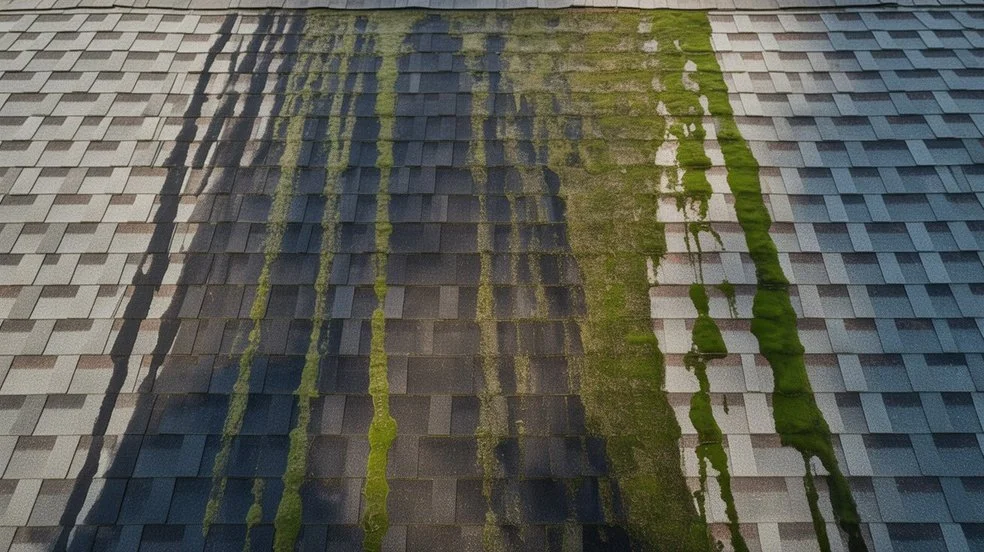
You walk outside one morning and notice dark stains creeping across your shingles. It looks dirty, maybe even a little alarming. You might think it is mold, mildew, or just built-up grime from years of rain. So what is the black stuff on my roof? In most cases, it is a living organism called Gloeocapsa Magma, a type of blue-green algae that feeds on your roofing materials. It spreads fast, looks bad, and can cause real damage if left alone. What Is the Black Stuff on a Roof? Those dark streaks are not just cosmetic. They are alive. Gloeocapsa Magma is a cyanobacteria, meaning it is part algae and part bacteria. It forms a dark, protective coating around its cells, and that coating is exactly what you see on your shingles. It typically shows up as: Dark gray or black streaks running down the slope of your roof Patches of discoloration that spread over time A dirty appearance that looks like the roof needs replacing But it is not always algae. Here is a quick breakdown of what else can cause that dark look: What You See What It Likely Is Long dark streaks Gloeocapsa Magma (algae) Fuzzy black or green patches Moss or lichen Uniform dark coating Mold or mildew Granule loss with dark areas Aging shingles Soot-like stains near edges Air pollution or debris Understanding what you are dealing with is step one. Treating the wrong problem can waste money and even damage your roof more. What Causes Black Streaks on Roofs? Roof discoloration does not happen randomly. Several factors speed it up. 1. Humidity and Moisture Algae loves moisture. If your area gets regular rainfall or morning dew, your roof stays damp long enough for algae to thrive. 2. Tree Shade Trees block sunlight. Sunlight dries out moisture. Less sun means a wetter, darker roof environment where black streaks on roof surfaces grow faster. 3. Limestone Filler in Shingles Modern asphalt shingles contain crushed limestone. It adds weight and durability, but Gloeocapsa Magma feeds on it like food. This is why newer roofs are not immune. 4. Poor Roof Ventilation When air does not circulate well under your roof, heat and moisture build up. That trapped moisture encourages algae and mold growth from the inside out. 5. Nearby Vegetation Leaves, branches, and organic debris land on your roof and decompose. That organic matter feeds algae and accelerates staining. 6. North-Facing Slopes The north side of a roof gets the least sunlight. It stays damp longer. That is why most homeowners notice roof discoloration causes are worse on one side than the other. 7. Existing Algae Spores in the Neighborhood Algae spores travel by wind. If your neighbor has it, chances are your roof will develop it too, especially if you share similar tree cover or shade patterns. Is the Black Stuff on My Roof Harmful? Yes, and in more ways than one. To Your Roof Gloeocapsa Magma eats into the limestone granules on your asphalt shingles. Over time, this degrades the shingle’s surface, reduces its UV protection, and shortens its lifespan. What looks like a cosmetic issue can become a structural one. Moss and lichen are even more aggressive. They grow roots that physically lift and crack shingles, letting water get underneath. To Your Home Damaged shingles mean less protection against rain and leaks. A roof that looks stained today could be leaking in a few years if the algae is left untreated. To Your Wallet Roof algae removal done early is far cheaper than replacing shingles or fixing water damage inside your home. Average roof replacement costs thousands. A cleaning costs a fraction of that. To Your Home’s Value Buyers notice roof stains. Real estate agents report that visible roof discoloration can reduce a home’s perceived value and make it harder to sell. How to Identify Roof Algae vs. Other Roof Problems Not every dark spot is algae. Here is how to tell the difference: Algae (Gloeocapsa Magma) Appears as long, dark streaks Usually starts near the top and runs down Color is black, dark gray, or dark green No texture when viewed up close Spreads slowly over months or years Moss Looks green and fuzzy Clumps in shaded areas Has visible plant-like structure Holds water against the shingle surface Lichen Flat, crusty patches Often gray-green or orange Harder to remove because it bonds to the shingle A mix of algae and fungus Mold or Mildew Often appears in low-ventilation zones Can spread under shingles May smell musty if you are in the attic Typically requires professional treatment Aging Shingles Granule loss creates uneven dark patches No streaking pattern Often paired with curling or cracking shingles If you are unsure, get a professional to take a look. Misidentifying the problem leads to the wrong treatment, which wastes time and money. Why DIY Roof Cleaning Can Be Risky Many homeowners see the black streaks and grab a pressure washer. That is one of the worst things you can do. High-Pressure Water Strips Shingle Granules Those granules protect your shingles from UV rays and rain. Blast them off and you shorten your roof’s life significantly. Ladders and Steep Roofs Are Dangerous Falls from roofs are among the leading causes of home accident injuries. Wet surfaces make it worse. Wrong Chemicals Cause More Damage Bleach-based products used at wrong concentrations can kill nearby plants, corrode metal flashing, and stain siding. Using too little means the algae comes back fast. DIY Methods Can Void Your Roof Warranty Many manufacturers have specific cleaning guidelines. DIY methods that go outside those guidelines can void your warranty. The smarter move is to understand what you are dealing with, then decide if it is something you can safely handle or if a professional is the right call. The Best Way to Remove Black Roof Stains The industry-recommended method is soft washing. Soft washing uses low-pressure water combined with a biodegradable cleaning solution. The solution does the heavy lifting, breaking down and killing algae,
Can a Soft Wash Damage a Roof?
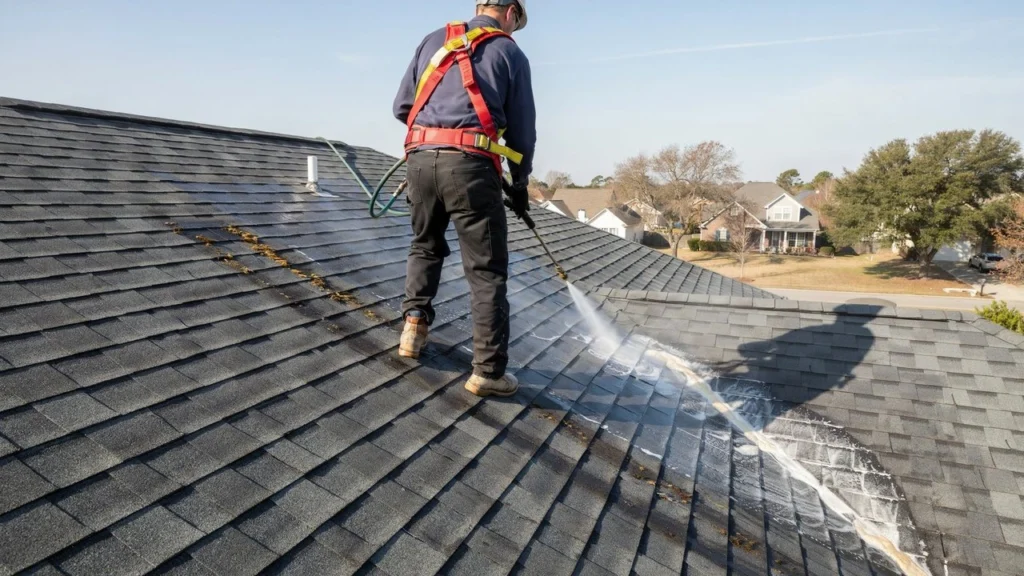
Roof cleaning is a key aspect of home upkeep. Algae, moss, lichen, and mold are just some of the contaminants that will build up on your roof and, over time, will cause degradation to the structure, around the gutters, and internally. Soft washing has gained popularity as one of the best roof cleaning methods in recent years because it is more gentle than traditional pressure washing. Still, many homebuyers face this important question: Can a soft wash damage a roof? The bottom line is soft washing is likely the safest way to clean your roof, but only if it’s done correctly. But as with any cleaning procedure, excessive application of chemicals or improper technique could cause damage. If you are interested in roof soft washing safety as well as in whether soft washing harms shingles, then you will want to familiarize yourself with safe roof cleaning tips and the risk of low-pressure roof cleaning before you decide to maintain your roof, before it maintains you. Understanding Roof Soft Washing Safety Safe roof soft washing has become a hot topic lately, but before we go there, we need to first understand why soft washing became popular to begin with. Conventional power washing may push water under shingles or shakes, and can loosen roofing materials, as well as wash off the protective granules. Such problems are avoided by cleaning at a much lower pressure with soft washing, however. Key Roof Soft Washing Safety Advantages 1. Reduced Water Pressure Soft washing normally uses water pressure that’s about the same as a garden hose. This lower pressure reduces the probability of: shingles cracking; distortion of the surface; ingress of water; damage to the building structure. 2:Effective removal of organic growth on surfaces. Cleaning solutions kill the organisms rather than blasting the algae off the surface. This helps stop rapid regrowth. 3:Longer Roof Life: Eliminating harmful pollutants can contribute to a longer life for roofing materials, especially when using a trusted roof cleaning service Tracy CA. 4:Less Physical Stress: The roof is subjected to less forceful contact than with conventional pressure washing. Soft wash advocates are a common sight in the roofing community, who argue that it is the best way to maintain a roof without causing damage. Does Soft Washing Harm Shingles? There are two things I hear homeowners worrying about all the time: Is soft washing going to damage my shingles? In general, no. Soft washing is safe for asphalt shingles when done properly. In fact, most roofing professionals would tell you it’s the safest way to remove algae and stains. Soft washing maintains the integrity of the following: Protective granules Integrity of shingles Roof appearance Water-shedding ability Because the pressure remains low, the high impact of pressure washing is not inflicted on the shingles. Situations Where Problems May Occur While soft washing is generally safe, there are situations when shingles can be damaged. 1:Too Potent Chemicals Incorrectly prepared cleaning products may also: 2:Fade shingles Impact sealants and protective coatings Speed up the deterioration of materials. 3:Old or Fragile Roofs A dying roof may have compromised shingles to begin with. In such situations, even mild cleaning should be done with caution. 4:Poor Application Techniques: Beginner users can: Oversaturate the roofing material Treat chemicals unevenly Rinse incorrectly Safe Roof Cleaning Methods Before beginning a roof cleaning project, homeowners may be concerned about safe cleaning methods and whether their roof is at risk of damage from high-pressure washing techniques. At VJ Pressure Washing, we use proven soft washing methods that effectively remove dirt, algae, and stains while protecting roofing materials from unnecessary wear and damage. 1:Soft Washing Soft washing is a low-risk method of roof cleaning that uses a combination of low-pressure water and unique detergents and cleaning additives to do the job safely. Pros Include: Fewer Physical insults Better Algae Removal Longer-lasting effects. The Benefits Manual cleaning is cleaning with a brush or hand tool to physically remove the dust or debrisAdvantages: precise cleaningwater savingless waste Disadvantage: Labor consumption can destroy the shingles if brushed too hard. 2:Air Blowing Leaf blowers are also capable of removing loose leaves and debris. Advantages: No water exposure Applies the entire treatment quickly. Removes debris quickly. Negative aspects: Limited effectiveness against algae and mold 3:Chemical Treatments A few roof care regimens employ treatments for prevention of algae growth. Advantages: Prevention in the long run Disadvantages: Needs to be administered by a professional Soft washing is a gentle and effective way to clean your roof and kill algae, amongst other things. But when considering all these safe roof cleaning methods, soft washing has got to be the most effective and most recommended. Low Pressure Roof Cleaning Risks Soft washing is safe, but there are some risks when it comes to low-pressure roof cleaning that every homeowner should know of. Knowledge of these dangers enables one to take proper precautions. 1:Chemical Exposure: Very low-pressure wash solution products can affect: Plants Landscaping Grass Flowers Plants close by. With Adequate Rinsing and Protection of the Plants, the risk can be minimized. Roof saturation Overwatering can also lead to moisture problems. Professional technicians prevent over-saturation by applying products in a controlled manner. Incomplete Rinsing Detergents can cause discoloration and staining if left on the surface for too long. So rinse the surface properly. Risk of Falling Professional roof cleaners will usually use safety equipment to reduce accidents.So, here are a few of the biggest low-pressure roof cleaning risks that homeowners should be aware of. Conclusion So, Can the Soft Wash Damage Roofs? Typically, the answer is no. When done properly, soft washing is one of the safest and most effective roof cleaning methods available. Good roof soft washing safety awareness will help homeowners keep their roofs clean without putting shingles through the perils of power washing. For the record, does soft washing damage shingles, or is it double roof washing? Soft washing is a significant viable option in today’s methods of safe roof cleaning for removing algae, mold, and stains without causing
What Are the Three Methods of Washing? A Complete Guide
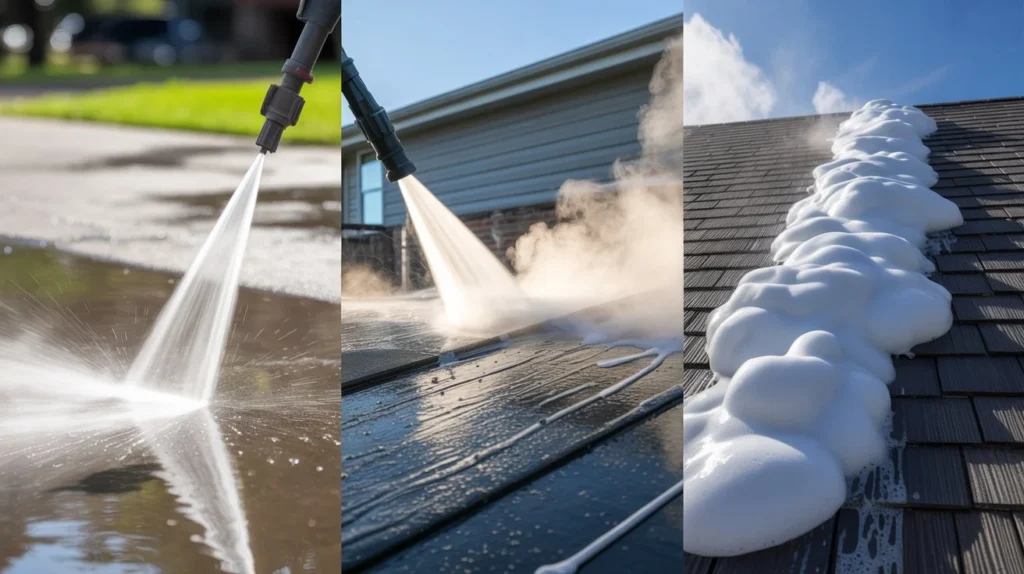
When it comes to cleaning the outside of your home, not all washing methods work the same way. Some surfaces need gentle care. Others need serious force. Picking the wrong method can damage your property or waste your money. That’s why knowing your options matters before you start. So, what are the three methods of washing? They are pressure washing, power washing, and soft washing. Each one works differently and suits different surfaces. This guide breaks all three down in simple terms so you can make the right call. Understanding Different Washing Methods Most homeowners don’t think much about exterior cleaning until things look bad. By then, dirt, mold, and algae have already done damage beneath the surface. Exterior washing isn’t just about looks. It protects your siding, driveway, roof, and deck from long-term wear. Moisture, organic growth, and grime all break down surfaces over time. Regular cleaning stops that from happening. If you live in the Tracy area, house washing Tracy CA is something many locals are now taking seriously. VJ Pressure Washing works with homeowners across the region to find the right washing method for every surface type and condition. Understanding washing ingress is also important here. Washing ingress refers to how water penetrates surfaces during cleaning. The wrong pressure or angle can push water into walls, windows, or gaps, causing moisture damage inside your home. Knowing this helps you avoid costly mistakes. Method #1 – Pressure Washing What Is Pressure Washing? Pressure washing uses cold water at very high pressure to blast away dirt and grime. The machine forces water through a narrow nozzle at high speed. That force does all the heavy lifting. Pressure levels are measured in PSI (pounds per square inch). Most pressure washers used for home cleaning run between 1,500 and 3,000 PSI. What Surfaces Work Best? Pressure washing works great on hard, durable surfaces like: Concrete driveways Brick walls Stone pathways Wooden decks (with care) Fences When Should You Use It? Use pressure washing when you are dealing with heavy buildup. Tire marks on concrete, mud on brick, or years of grime on a patio all respond well to high-pressure cold water. It is also the go-to method for driveways and sidewalks that take a beating from daily traffic and weather. What to Watch Out For Cold water pressure washing does not kill mold or bacteria. It removes visible dirt, but organic growth can return fast if not treated. Also, using too much pressure on softer surfaces like wood siding can strip paint or cause cracks. Method #2 – Power Washing What Is Power Washing? Power washing works just like pressure washing with one key difference. It uses heated water. That heat makes a big difference when dealing with grease, oil, mold, and tough biological stains. Think of it like washing dishes. Hot water cuts through grease faster than cold. The same idea applies to your driveway or exterior walls. What Surfaces Work Best? Power washing is ideal for: Driveways with oil stains Commercial parking lots Industrial equipment Heavily soiled concrete Surfaces with mold or mildew buildup When Should You Use It? Use power washing when regular pressure washing isn’t enough. If you have grease stains from vehicles, stubborn mold, or thick grime that has built up over years, heated water will break it down more effectively. This is also where code 3 power washing comes into play. Code 3 power washing refers to high-intensity cleaning jobs that require maximum heat, pressure, and sometimes chemical treatments together. It’s reserved for the toughest cleaning situations, often in commercial or industrial settings where standard methods just won’t cut it. What to Watch Out For The heat from power washing can damage certain surfaces. Soft wood, older paint, and some types of siding can warp or peel if exposed to high-temperature water. Always check whether your surface can handle heat before choosing this method. Method #3 – Soft Washing What Is Soft Washing? Soft washing uses low pressure and cleaning solutions to remove dirt, algae, mold, and mildew. The pressure is low enough that it won’t damage delicate surfaces. The cleaning agents do the real work instead of force. Soft washing solutions typically contain biodegradable chemicals that kill organic growth at the root. This means results last much longer than pressure or power washing alone. What Surfaces Work Best? Soft washing is the right choice for: Roof shingles Vinyl siding Stucco Wood siding Painted surfaces Gutters Screened enclosures When Should You Use It? Use soft washing when the surface is delicate or when you want longer-lasting results. Roofs, for example, should never be pressure washed. The force can lift shingles and void your warranty. Soft washing cleans the surface and kills the organisms causing the staining without causing damage. What to Watch Out For The cleaning solutions need time to work. Soft washing is not instant. You also need to make sure the chemicals used are safe for your plants and landscaping. A professional will rinse surrounding areas and use plant-safe solutions to avoid damage. Comparing the Three Washing Methods Here’s a quick side-by-side look: Feature Pressure Washing Power Washing Soft Washing Water Temperature Cold Hot Cold Pressure Level High High Low Uses Chemicals Sometimes Sometimes Yes Best For Hard surfaces Grease & heavy grime Delicate surfaces Kills Mold at Root No Partially Yes Risk of Damage Medium Medium-High Low How to Choose the Right Washing Method Choosing the right method comes down to three things: surface type, level of dirt, and what results you want. Choose pressure washing if: You have a concrete driveway, brick patio, or stone path The dirt is heavy but not greasy You want a fast, effective clean Choose power washing if: You have oil or grease stains The buildup is extreme and long-standing You are cleaning a commercial or industrial surface Choose soft washing if: You are cleaning a roof, siding, or painted surface You want results that last longer You want to kill mold and algae at
What Is the Difference Between Washing and Cleaning? A Complete Guide
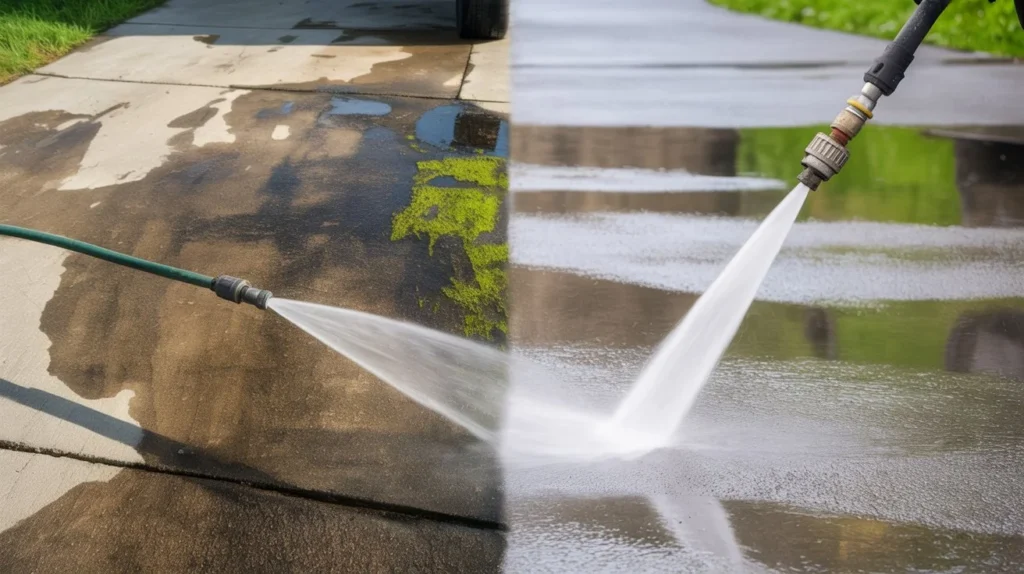
You rinse your hands and call it done. But is that washing or cleaning? Most people use these words like they mean the same thing. They don’t. Washing removes visible dirt using water. Cleaning goes further. It removes bacteria, allergens, stains, and buildup that water alone can’t touch. Think of washing as step one and cleaning as the full job. So, what is the difference between washing and cleaning? Washing is about rinsing and removing loose debris. Cleaning restores a surface to a safe, healthy, and fully treated state. Both matter, but they serve different purposes. Knowing which one you need can save you time, money, and real headaches. What Does Washing Mean? Washing means using water, sometimes with a mild soap, to remove dirt from a surface. It is a physical process. You are pushing grime away, not destroying it. When you hose down your driveway, you are washing it. When you rinse mud off your boots, that is washing too. Water does the heavy lifting here. Washing works well for light surface dirt. But it has real limits. It does not kill germs. It does not remove embedded stains or grease that has soaked into a surface. It leaves behind biofilm, mold spores, and microscopic buildup that water simply cannot touch. Common examples of washing include: Rinsing a plate under the faucet Spraying down a car before a proper wash Hosing mud off a patio or walkway Rinsing a surface before applying a cleaning product Washing is often just prep work. A surface that has been washed is ready to be cleaned properly. What Does Cleaning Mean? Cleaning means removing contaminants that affect health, appearance, and surface integrity. It goes beyond water and loose dirt. Cleaning uses detergents, degreasers, or pressure to break down and remove what washing leaves behind. When you clean a bathroom sink, you remove soap scum, bacteria, hard water deposits, and germs. When a pressure washing company cleans a driveway, they remove oil stains, mold, algae, and deep grime that has bonded to the concrete. Cleaning is a complete process. It makes a surface safe, hygienic, and visually restored. Key goals of cleaning include: Removing bacteria and allergens Breaking down grease, oil, and organic buildup Eliminating mold, mildew, and algae Restoring a surface to its original condition Preventing long-term damage from embedded debris Key Differences Between Washing and Cleaning Here is where it gets practical. What is the difference between washing and cleaning in everyday use? Let’s break it down clearly. 1. Depth of Action Washing removes what sits on top. Cleaning removes what has bonded to the surface. A washed patio still has algae in the pores. A cleaned patio has had the algae treated and fully removed. 2. Products Used Washing uses water and maybe a light soap. Cleaning uses specialized products. Degreasers, disinfectants, surfactants, and pressure washing detergents are all chosen based on the contaminant, not just the surface. 3. Time and Effort Washing is fast. You run water over something, and you are done. Cleaning takes time. You apply the right product, let it dwell, agitate it, then rinse. Skipping any step means the surface is still not clean. 4. Results and Longevity A washed surface gets dirty again quickly. A cleaned surface stays cleaner longer because the source of the problem has been removed, not just disturbed. Proper cleaning also protects materials and extends surface life. 5. Health and Safety Impact Washing may not remove pathogens at all. Cleaning, with the right products and technique, actively reduces health risks. This matters most for kitchens, bathrooms, children’s play areas, and high-traffic outdoor surfaces. Is Washing the Same as Deep Cleaning? No. Not even close. Deep cleaning goes beyond both regular washing and standard cleaning. It addresses what neither can reach. Deep cleaning means getting into cracks, removing buildup that has formed over months or years, and treating surfaces at the pore level using professional-grade equipment or products. A regular cleaning might handle visible dirt on your deck. Deep cleaning removes years of embedded mold, weathered stain, and structural grime. It restores the surface to near-original condition. Here is a simple breakdown of the three levels: Washing: removes loose surface debris using water Cleaning: removes contaminants using products and technique Deep Cleaning: removes embedded buildup and restores surfaces to baseline condition Most exterior surfaces need deep cleaning at least once per year. Driveways, siding, and roofs accumulate damage faster than most homeowners realize. Washing vs. Cleaning for Exterior Surfaces Outdoor surfaces face a different level of exposure. Rain, sun, traffic, organic growth, and pollution all take a toll. This is where the difference between washing and cleaning becomes most visible. Driveways and Concrete A garden hose washes mud and dust from a driveway. But concrete is porous. Oil, fertilizer runoff, mold spores, and algae sink into those pores. Surface washing does not reach them. Pressure washing with the right detergent breaks down and lifts those contaminants out. Home Siding Vinyl and painted siding collect chalking, mildew, and spider webs. Rinsing with water moves some of it around. Proper soft washing applies a low-pressure detergent solution that kills mold and lifts grime without damaging the surface. Decks and Wood Surfaces Wood is vulnerable to mold, rot, and UV damage. Washing a deck with a hose does nothing for the gray, oxidized layer or the mildew growing in the grain. A proper cleaning with a deck brightener and controlled pressure restores color and prevents further decay. Roofs High-pressure washing can damage shingles and void warranties. Proper roof cleaning uses low-pressure soft washing with algaecide solutions. This kills the organism causing those black streaks and removes it safely. Why Professional Pressure Washing Companies Focus on Cleaning Most homeowners think pressure washing is just washing with more force. It is not. VJ Pressure Washing is in the business of cleaning, not rinsing. Pressure alone moves debris. It does not kill mold, treat algae, or remove oily film. That is why professionals use the right
What Are the 7 Stages of Cleaning?: The Complete Step-by-Step Guide (2026)
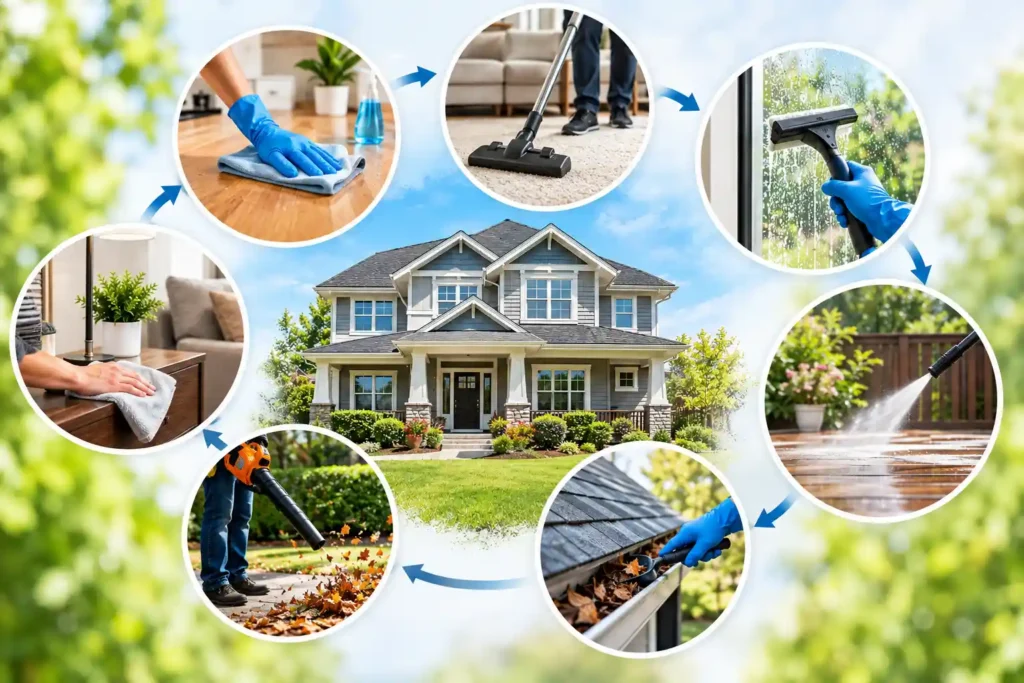
Cleaning your home or workplace takes more than a quick wipe down. Real cleaning follows a set process that removes dirt, dust, and germs in the right order. Skip a step, and grime builds up where you cannot see it. Pros use this method every single day. So what are the 7 stages of cleaning? They are prep, dust removal, washing, rinsing, sanitizing, drying, and a final check. Each stage builds on the last one to leave your space spotless and safe. What Are the 7 Stages of Cleaning? Most people think cleaning means grabbing a rag and spraying some cleaner. That is only part of the picture. A true cleaning routine has a clear order, and each part has a job to do. This order is often called the 7 step cleaning process. It is used in homes, restaurants, hospitals, and offices because it works every time. When you follow each stage in order, you remove dirt first, then bacteria, then moisture. Skipping ahead causes problems. For example, if you sanitize before you remove loose dirt, the cleaner cannot reach the surface underneath. Cleaning is the first level of any good hygiene plan, and the stages of cleaning give you a map to follow. You do not need fancy tools to get this right. You need the right steps, done in the right order, every time. Stage 1: Preparation Preparation is where everything starts. Before you touch a single cleaner, look at the space. Clear off clutter, move small items, and gather your tools and supplies in one spot. This stage also means checking what surfaces you are working with. Wood, tile, granite, and fabric all need different products. Using the wrong one can cause damage or leave a dull finish. Read labels before you mix anything. Good prep also includes safety. Open windows for airflow, put on gloves if needed, and keep kids or pets away from cleaning chemicals. A few extra minutes here saves you time and trouble later. Stage 2: Dry Cleaning or Dust Removal Once the space is ready, remove loose dirt and dust first. This step is sometimes skipped, but it matters a lot. If you skip it, you end up smearing dust around with a wet rag instead of removing it. Use a vacuum, dry mop, or microfiber duster for this stage. Work from top to bottom so dust falls onto surfaces you have not cleaned yet, not ones you just finished. Pay attention to corners, vents, and baseboards, since dust collects there fast. This stage is one of the 4 stages of cleaning that most cleaning checklists highlight, because it sets up every step that follows. A clean dry surface means your wet cleaning tools will actually work better. Stage 3: Washing or Wet Cleaning Now it is time to use water and a cleaning solution. This stage breaks down grease, grime, and stuck on dirt that dry methods cannot touch. Choose a cleaner made for the surface you are working on, whether that is glass, tile, or fabric. Work in small sections instead of trying to clean a whole room at once. Use a clean cloth or sponge, and change your water often so you are not just spreading dirt around. Let the cleaner sit for a minute on tough spots before you scrub. This gives the chemicals time to break down dirt without you needing to scrub hard. Stage 4: Rinsing Rinsing removes leftover soap, cleaner, and loosened dirt from the surface. If you skip this step, residue builds up and attracts even more dust over time. It can also leave streaks or a sticky film behind. Use clean water and a fresh cloth or mop for this stage. On hard floors, change your rinse water at least once per room. For countertops and appliances, wipe the surface twice with clean water to make sure no soap residue is left behind. Rinsing also matters for health reasons. Some cleaning chemicals can irritate skin or lungs if they are not fully rinsed away, especially in kitchens where food touches these surfaces. Stage 5: Sanitizing or Disinfecting This is the stage most people forget, but it is one of the most important. Washing removes dirt, but it does not always kill germs. Sanitizing and disinfecting target bacteria and viruses that you cannot see. Sanitizers reduce germs to a safe level, while disinfectants kill a higher percentage of germs and viruses. Kitchens, bathrooms, and door handles need this step the most, since these are high touch areas. Always check the label for contact time. Most disinfectants need to sit wet on a surface for several minutes to actually work. Spraying and wiping right away does not give the product enough time to do its job. Let it sit, then wipe or let it air dry based on the instructions. Stage 6: Drying Wet surfaces attract dirt, dust, and bacteria faster than dry ones. That is why drying is its own stage, not just an afterthought. Mold and mildew also grow fast in damp spots, especially in bathrooms and kitchens. Use a clean towel, air drying, or a fan depending on the surface. Floors should be dried or allowed to air dry fully before foot traffic returns, both to prevent slips and to stop dirt from sticking to a wet surface. For glass and mirrors, a dry microfiber cloth helps avoid streaks. Drying also protects materials like wood and metal from water damage or rust over time. Stage 7: Inspection and Maintenance The last stage is often skipped, but it closes the loop on the entire process. Walk through the space and check your work. Look for spots you missed, streaks, or areas that need a second pass. This is also the time to check your tools. Rinse out mops, wash cleaning cloths, and store supplies properly so they are ready for next time. Dirty tools spread germs instead of removing them, which defeats the purpose of everything you just did. Maintenance also
Is Powerwashing Your House a Good Idea?
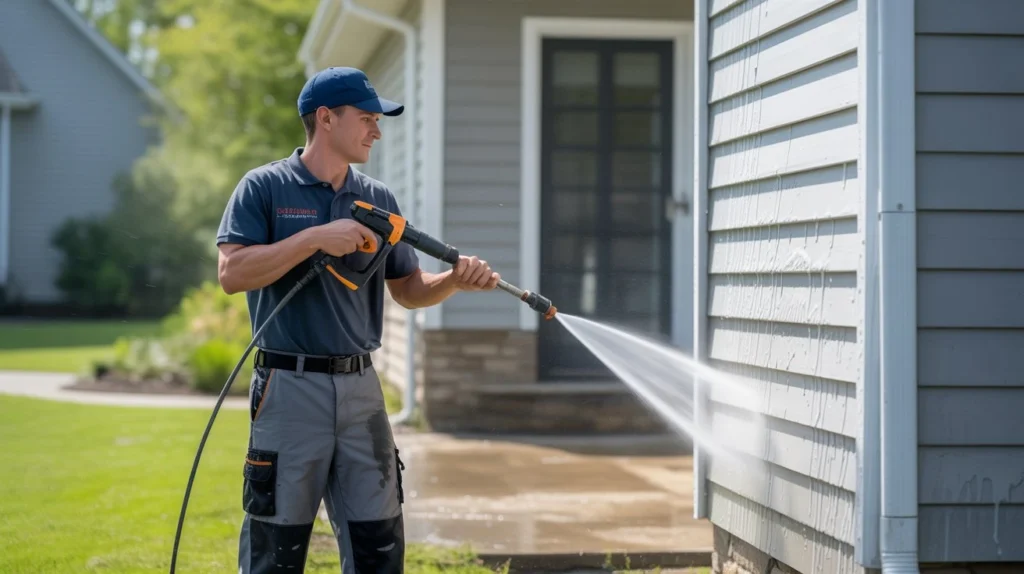
Power washing can strip years of dirt and grime off your house in a single afternoon. It also strips paint, damages wood, and forces water behind siding if done wrong. The tool itself is not the problem. The skill behind it is. So is powerwashing your house a good idea? Yes, when you use the right pressure, the right nozzle, and the right approach for your siding type. Done wrong, it causes real damage fast. What Is Power Washing? Power washing uses hot or cold water at high pressure to blast away dirt, mold, and grime from outdoor surfaces. The machine pushes water through a narrow nozzle, which builds up force strong enough to remove years of buildup in minutes. This is different from a garden hose, which only rinses the surface. Power washers reach deep into pores on concrete, brick, and some siding materials. That extra force is what makes power washing so effective, and also what makes it risky on the wrong surface. Most residential machines run between 1,300 and 3,000 PSI, depending on the job. Driveways and brick can handle the higher end. Vinyl siding and wood need a much gentler touch. Benefits of Power Washing Your House The benefits of power washing your home go beyond looks. A clean exterior protects your investment and your health at the same time. Dirt, algae, and mold eat away at paint and siding over time. Removing buildup regularly slows that damage down and helps materials last longer. This is one of the clearest benefits of power washing that homeowners notice within the first year. There is also a side to power washing for health that gets overlooked. Mold and mildew on your siding can spread spores near windows and vents, which affects indoor air quality. Removing that buildup outside helps keep those spores away from your home. Power washing also boosts curb appeal instantly. A clean house photographs better, sells faster, and simply looks cared for. Many real estate agents recommend a wash before listing a home, since buyers notice exterior conditions right away. When Power Washing Is a Good Idea Power washing makes sense on tougher surfaces that can handle higher pressure. Concrete driveways, brick walkways, and stone patios are good candidates. These materials are dense and do not absorb water the way wood or vinyl can. It also works well before painting or staining a house. A clean surface helps new paint stick better and last longer. Skipping this step often leads to peeling within a year or two. Power washing is a smart choice when mold, algae, or green stains cover a large area. Scrubbing by hand would take days, while a power washer clears the same area in hours. When You Should Avoid Power Washing Some surfaces should never see high pressure water. Older wood siding, stucco, and asbestos shingles can crack or crumble under direct blasts. Roof shingles are another surface to avoid, since high pressure lifts granules and shortens the roof’s life. Windows and window seals are also risky. Water forced at high pressure can break through old caulking and seep into the wall behind it. This often leads to hidden water damage that shows up months later as mold or rot. If your house has any of these surfaces, a gentler method works better and protects your home from accidental damage. Risks of Incorrect Power Washing Incorrect technique causes more damage than people expect. Holding the nozzle too close to siding can strip paint right off the wall. Using too much pressure on wood can leave deep grooves that never look right again. Water can also force its way behind siding panels if the angle is wrong. Once moisture gets trapped there, it leads to mold growth and wood rot that you cannot see until it gets serious. Incorrect chemical use adds another risk. Some cleaning solutions used with power washers can kill nearby plants or grass if they are not rinsed away properly. Always check what is safe for your landscaping before starting. Soft Washing vs. Power Washing: Which Is Better? Soft washing uses low pressure combined with cleaning solutions to break down dirt, mold, and algae. Instead of blasting grime off with force, the solution does the work, and a gentle rinse removes the rest. This method works better on delicate surfaces like vinyl siding, stucco, and painted wood. It cleans just as deep without the risk of cracking or stripping paint. Power washing still wins on hard surfaces like concrete and brick, where strength matters more than gentleness. For most full house exteriors, soft washing is the safer choice, while power washing handles the driveway, patio, and walkways. A good cleaning company often uses both methods on the same property, matching the right approach to each surface. DIY vs. Hiring a Professional Renting a power washer seems simple, but the learning curve is steeper than most people expect. Holding the wrong angle or standing too close for even a few seconds can damage siding or paint. DIY makes sense for small jobs like cleaning a patio or sidewalk, where mistakes are easy to fix. For full exterior house washing, professionals bring the right equipment, the right pressure settings, and years of experience reading different siding materials. Hiring reliable power washing & cleaning professionals also saves time. A job that might take a homeowner an entire weekend often takes a trained crew just a few hours, with far less risk of damage. How Often Should You Power Wash Your House? Most homes benefit from a full exterior wash once a year. Homes near trees, in humid climates, or close to busy roads may need it twice a year, since dirt and mold build up faster in those conditions. Watch for warning signs between scheduled washes. Green or black streaks, a dull or chalky look, and visible mold near gutters all signal it is time to clean again. If you live in the Central Valley and want a team that
Does Roof Cleaning Really Work? The Honest Answer Homeowners Need
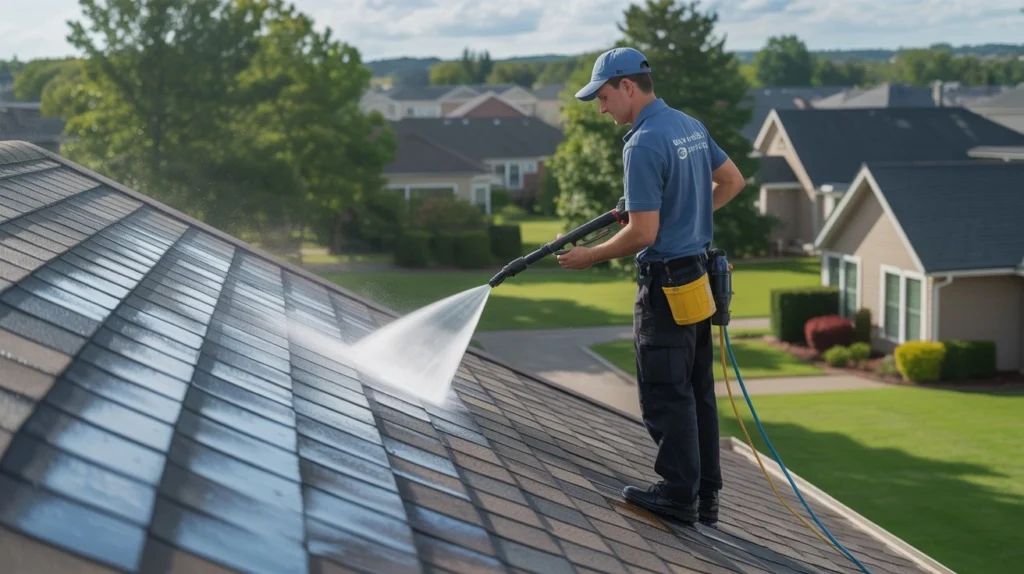
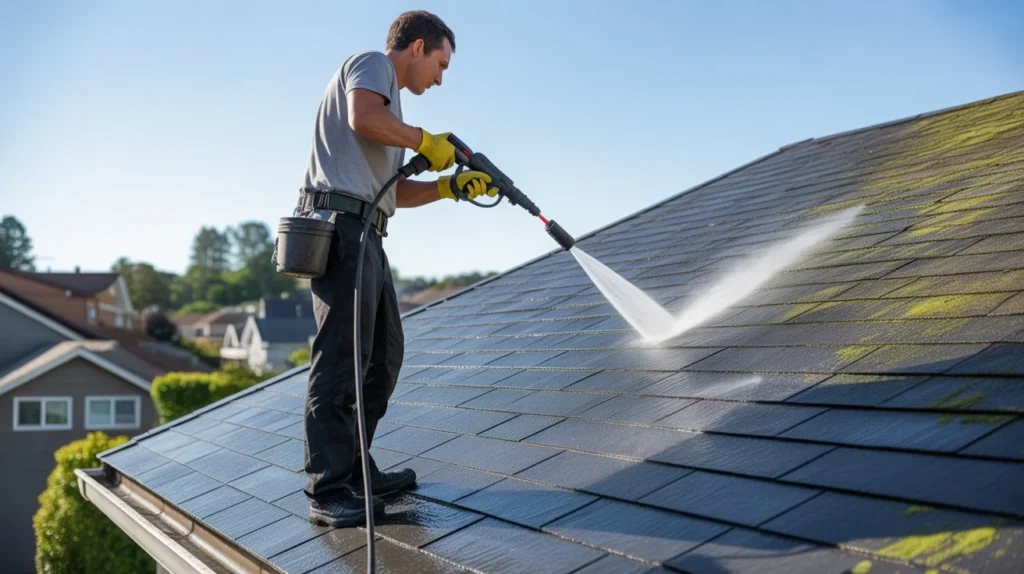
Your roof takes a beating every single day. Rain, wind, sun, algae, moss — all of it adds up over time. Black streaks appear. Green patches grow. And suddenly your home looks old, even if it’s not. Most homeowners wonder if cleaning can fix this or if it’s just a waste of money. So, does roof cleaning really work? Yes, it absolutely does. The right cleaning method removes stains, kills biological growth, and can add years to your roof’s lifespan. Done correctly, the results are visible, lasting, and worth every penny. What Causes Roof Stains and Buildup? Before we talk about solutions, it helps to know what you’re dealing with. Gloeocapsa Magma (Algae) Those dark black or gray streaks you see on asphalt shingles? That’s algae. Specifically, a cyanobacteria called Gloeocapsa Magma. It feeds on the limestone filler in shingles and spreads fast, especially in humid areas. Moss Moss holds moisture against your shingles. Over time, it causes the edges to lift, which lets water sneak underneath. This is one of the biggest causes of hidden roof damage. Lichen Lichen is a combination of algae and fungus. It bonds directly to shingles and is much harder to remove than moss or algae alone. If left too long, it can permanently etch into the surface. Debris Buildup Leaves, twigs, and dirt trap moisture. Wet debris sitting on your roof for weeks at a time is a recipe for rot, mold, and shingle breakdown. UV Damage and Oxidation Sun exposure causes granule loss from asphalt shingles. When this happens, dark patches appear. These aren’t always biological, sometimes it’s plain weathering. Knowing what’s growing on your roof helps you (and your roofer) pick the right cleaning approach. Signs Your Roof Needs Cleaning Some roof problems are obvious. Others are easy to miss until real damage has already started. Here are the signs you should not ignore: Dark streaks or staining running down from the ridge Green or black patches that look fuzzy or spongy Lifted or curling shingle edges, often caused by moss Granule loss showing up in your gutters Water stains on your ceiling, which may point to moisture sneaking under damaged shingles Your roof looks much older than homes nearby even if it was built at the same time Gutters full of biological debris like clumps of green or black material If you notice any of these signs, it’s time to call in professionals. The team at VJ Pressure Washing and a qualified roof cleaning company in Tracy, CA can inspect your roof, identify what’s growing, and recommend the safest cleaning method for your specific shingle type. Don’t wait too long. The longer biological growth sits on your roof, the harder it is to remove and the more damage it causes underneath. How Roof Cleaning Works There are a few ways to clean a roof. Each one works differently depending on the material and the type of buildup. Step 1: Inspection A professional checks the roof condition, identifies the type of growth, and determines which method is safest. Step 2: Pre-Treatment A cleaning solution is applied to the surface. For soft washing, this is usually a sodium hypochlorite mix (similar to bleach, but diluted and targeted). For other methods, a biodegradable cleaner is used. Step 3: Dwell Time The solution sits on the surface for several minutes. This is where the real work happens: the chemical kills the biological growth at the root level. Step 4: Rinse The roof is rinsed off with low or moderate pressure. The dead growth washes away. Step 5: Post-Treatment (Optional) Some professionals apply a zinc or copper-based treatment after cleaning. This creates a protective barrier that slows future growth. The whole process typically takes 2 to 4 hours depending on roof size and condition. Benefits of Roof Cleaning Cleaning your roof is not just about looks. Here’s what it actually does: Extends Roof Lifespan Algae, moss, and lichen physically break down roofing materials. Removing them stops the damage. A clean roof can last several years longer than a neglected one. Improves Curb Appeal A clean roof makes a home look newer and better maintained. This matters a lot if you plan to sell. Boosts Energy Efficiency Dark staining from algae absorbs heat. This raises your attic temperature and puts more load on your air conditioning. Cleaning your roof can reduce cooling costs. Protects Manufacturer Warranties Many roofing material warranties require regular maintenance. Skipping it can void your warranty when you need it most. Prevents Insurance Issues Some home insurance companies flag roofs that show visible biological growth. A clean roof keeps your coverage intact. Does Roof Cleaning Prevent Roof Repairs? This is one of the most common questions homeowners ask. The short answer is yes — but with a condition. Roof cleaning prevents roof damage that is caused by biological growth. If moss has been lifting shingles for two years, cleaning removes the moss, but it can’t reverse the damage that’s already been done. The lifted shingles may still need to be replaced. Think of it this way: cleaning is preventive care, not a repair tool. It’s the same as getting your teeth cleaned. It stops future problems from forming, but it won’t fix a cavity that’s already there. If caught early, regular cleaning can: Stop algae from eating through shingle granules Prevent moss from creating water pathways under the roof Keep lichen from permanently etching into the material If ignored too long, you may still need repairs even after cleaning. That’s why the timing matters. Roof Cleaning Methods Explained Not all roofs are cleaned the same way. Here are the main methods professionals use: Soft Washing This is the most recommended method for asphalt shingles, tile roofs, and older roofs. It uses low pressure and a chemical solution to kill biological growth. No high-pressure blasting — just chemistry doing the work. Best for: Asphalt shingles, clay tile, cedar shake, flat roofs Result: Deep kill of algae, moss, and mold at the root level
What Is the 3 Second Rule in Cleaning? A Simple Habit That Keeps Your Home Spotless
Most people clean when things get too dirty to ignore. But there is a smarter way. Small habits, done fast, stop messes before they spread. The best cleaners do not wait. They act in the moment, every time. So, what is the 3 second rule in cleaning? It is simple: if a cleaning task takes 3 seconds or less, do it right now. Do not put it off. This one habit builds a cleaner home without long scrubbing sessions. What Is the 3 Second Rule in Cleaning? The 3 second rule in cleaning is a mindset rule. If you can clean or tidy something in 3 seconds, you do it immediately. No waiting. No “I’ll do it later.” Wipe the counter after cooking. Pick up the sock on the floor. Rinse the coffee cup before it stains. These tiny actions take almost no time alone. But skipping them causes buildup that takes hours to fix later. The idea comes from productivity thinking. It is similar to the 2-minute rule but focused on physical cleaning. The goal is to stop dirt and clutter before they pile up. This rule works for both homeowners and professional cleaners. It is one of the most practical cleaning tips for maintaining a tidy home every single day. How the 3 Second Rule Works The rule is built on one core idea: prevention beats deep cleaning. Here is how it plays out in real life: You cook dinner. Sauce splashes on the stovetop. Instead of leaving it, you grab a cloth and wipe it in 3 seconds. Done. No scrubbing baked-on grease later. You brush your teeth. Toothpaste hits the mirror. You wipe it off right away. The mirror stays clear all week. You come home. Shoes go directly to the rack, not the floor. Mail goes in a tray, not on the table. Three seconds each. The rule stops the snowball effect. One mess leads to another. When your kitchen is already dirty, you feel less motivated to clean the next spill. The 3 second rule breaks that cycle. This is the same philosophy used by professional cleaning teams. At VJ Pressure Washing, we always say that consistent small actions keep surfaces in better shape than one big cleaning day. It is also why services like roof cleaning in Tracy, CA focus on regular maintenance rather than waiting for heavy buildup to take hold. When you let grime sit, it bonds to surfaces and becomes far harder to remove. Apply the 3 second rule to every room. Train yourself to see small messes as 3-second fixes, not tasks to save for the weekend. Benefits of the 3 Second Rule Why does this rule change how you clean? Here are the real results people notice. 1. Less Deep Cleaning Overall When you stop messes at the source, heavy cleaning happens far less often. Your home stays in a baseline clean state every day. 2. Lower Stress Clutter and mess trigger mental stress. A tidy space feels calmer. The 3 second rule keeps your home at a level that does not feel overwhelming. 3. Faster Daily Cleaning Routines When nothing is severely dirty, your daily wipe-down takes minutes, not hours. You spend less time cleaning total. 4. Better Hygiene Bacteria grow fast on countertops and wet surfaces. Acting in 3 seconds means spills do not sit long enough to become health problems. 5. Builds Good Habits Automatically After a few weeks, the rule becomes muscle memory. You do not even think about it. Clean behavior becomes your default. 6. Protect Your Home Surfaces Stains set. Grease bonds. Rust forms. Acting fast prevents permanent damage to counters, floors, and fixtures. Examples of the 3 Second Rule in Action Let us walk through real daily examples. These show how the rule fits into normal life without adding stress. Kitchen: Wipe stovetop splash right after cooking Rinse dishes before food dries on them Wipe the sink after washing hands Close pantry doors and cabinet handles after use Bathroom: Wipe toothpaste off the sink right after brushing Hang the towel back on the rack Close the shampoo bottle and put it back Wipe the toilet handle after flushing Living Room: Return remote controls to their spot Take cups and plates to the kitchen, not the coffee table Fold the blanket after using it Pick up any item from the floor as you walk past Bedroom: Hang or place clothes immediately after taking them off Make your bed right when you get up Put items back in drawers after use Entryway: Shoes on the rack, not the floor Keys in the bowl, not on the counter Wipe shoes before entering Every single one of these takes 3 seconds or less. But skipping them daily creates clutter and grime that takes real effort to reverse. Areas Where the Rule Works Best Bathrooms Moisture and soap scum build up fast. A quick daily wipe of the sink and mirror takes seconds and prevents hard water stains from forming. Floors Near Entryways Dirt, mud, and debris come in from outside. Catching it at the door prevents it from spreading through the whole house. Laundry Areas Lint, detergent spills, and damp clothes all create issues fast. Handling each one at the moment prevents mold and odors. Outdoor Surfaces Patios, driveways, and walkways collect leaves, dust, and stains. While these often need professional equipment, regular quick sweeps reduce buildup between professional cleanings. Tips to Make the 3 Second Rule Effective The rule only works if you set yourself up for success. Here are practical tips to make it stick. Keep Cleaning Tools Within Reach A microfiber cloth near the sink. A small brush by the stovetop. A trash bin in every room. When the tool is already there, you do the 3-second task without thinking. Do It Now, Always The rule breaks the moment you say “in a minute.” Train yourself to act on sight. If you see a mess, clean it right now. Do Not
What Are the 5 Rules of Smart Cleaning?
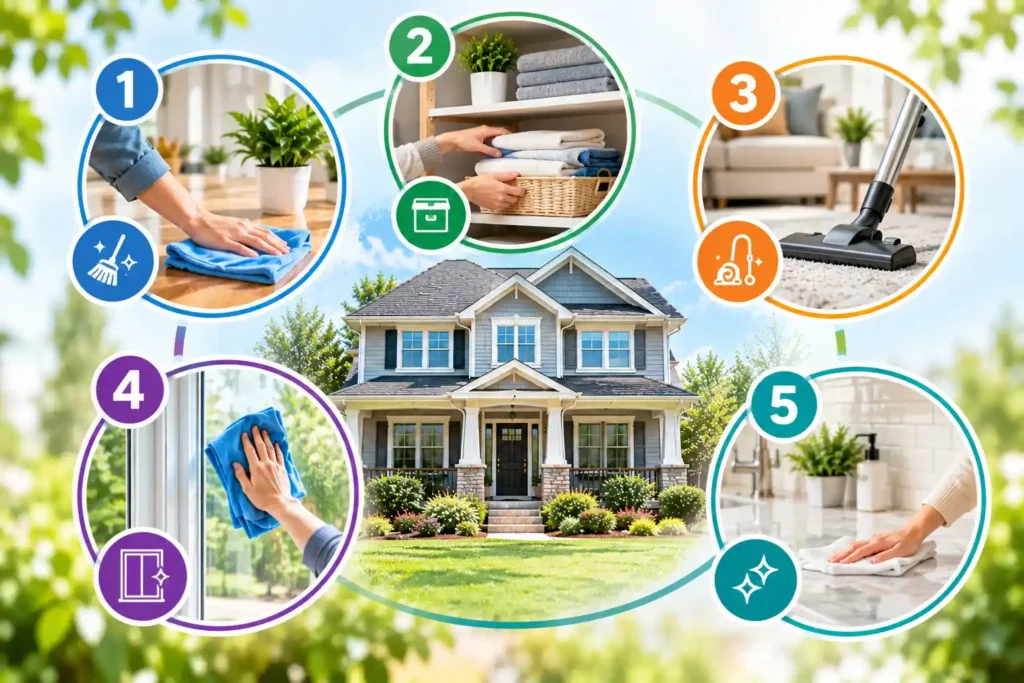
A clean home does not happen by accident. It takes the right approach, the right tools, and a system that actually works. What are the 5 rules of smart cleaning? They are the foundation every homeowner needs to stop wasting effort and start seeing real results. Whether you are cleaning a bathroom, a kitchen, or your outdoor spaces, these rules apply across the board. At VJ Pressure Washing, we have seen firsthand how following a smart cleaning system transforms a home from dull and grimy to fresh and well-maintained. Skipping these rules means more time spent cleaning and less satisfying results. Follow them and every cleaning session becomes faster, safer, and more effective. Rule #1 – Clean From Top to Bottom This is the most basic rule in smart cleaning. And it is the one most people ignore. When you clean a ceiling fan before sweeping the floor, the dust falls down onto the floor you already cleaned. You end up doing double the work. Always start at the top and work your way down. Here is the correct order: Ceiling fans and light fixtures first Shelves and countertops next Furniture and appliances after Floors and ground surfaces last This rule applies indoors and outdoors. If you are cleaning your home’s exterior, the same logic holds. At VJ Pressure Washing, our crew always starts from the top of the wall and works downward. This prevents dirty water from running over clean surfaces. The same principle applies when you need power washing driveway tracy ca services. Professionals start from one end and push dirt in a single direction, so they never re-contaminate a clean section. Pro Tip: When cleaning a room, dust and wipe all surfaces before you vacuum or mop. Never vacuum first. Rule #2 – Use the Right Cleaning Products Using the wrong product is one of the most common smart cleaning mistakes. The wrong cleaner can damage surfaces, leave residue, or simply not work at all. Different surfaces need different products. Here is a quick reference: Wood floors: pH-neutral cleaner only. Harsh chemicals strip the finish. Glass and mirrors: Streak-free glass cleaner or diluted white vinegar. Stainless steel: Microfiber cloth with a small amount of dish soap. Always wipe with the grain. Grout and tile: Baking soda paste or a grout-specific cleaner. Carpets: Enzyme-based cleaner for stains. Avoid soaking the carpet. Concrete driveways: Degreaser for oil stains. High-pressure water for general grime. Upholstery: Always check the fabric code before using any cleaner. One product does not clean everything. Using a bathroom cleaner on wood floors or a glass cleaner on stainless steel creates more problems than it solves. Always read the label. A cleaner that says “all-purpose” still has limits. Check what surfaces it is safe for before using it. Using eco-friendly, biodegradable cleaners is also a smart move. They are safer for your family, your pets, and your home’s surfaces. Rule #3 – Clean Regularly Instead of Deep Cleaning Rarely Most homeowners wait until their home is visibly dirty before they clean. That is the wrong approach. Regular light cleaning is far more effective than occasional deep cleaning. Here is why. Dirt and grime build up in layers. The longer you wait, the harder it is to clean. A quick wipe-down of your kitchen counters every day takes 2 minutes. Letting grease build up for three weeks turns that into a 30-minute scrubbing session. The Smart Cleaning Schedule Daily tasks (5 to 10 minutes): Wipe kitchen counters after use Rinse the sink Do a quick sweep of high-traffic floors Make the bed Weekly tasks (30 to 60 minutes): Vacuum all rooms Mop hard floors Clean bathrooms Wipe down appliances Monthly tasks (1 to 2 hours): Clean inside the fridge Dust blinds and window sills Wipe down walls and baseboards Clean light switches and door handles Seasonal tasks (every 3 to 6 months): Wash windows inside and out Power wash outdoor surfaces Clean gutters Deep clean carpets A consistent schedule keeps your home clean with less effort. You never have to deal with a massive backlog of cleaning again. Rule #4 – Declutter Before You Clean You cannot clean a cluttered space properly. Clutter hides dirt, traps dust, and makes every cleaning task take longer than it should. Before you pick up a mop or a sponge, clear the space. Put things away. Throw away what you do not need. Move items off surfaces so you can actually clean those surfaces. This step feels like extra work but it saves you time overall. Here is what happens when you skip decluttering: You clean around objects instead of cleaning under and behind them Dust and dirt accumulate in hidden corners You spend extra time moving things mid-clean The space never feels truly clean The 3-Box Method When decluttering before cleaning, use three boxes or bags: Keep – Items that belong in this room Relocate – Items that belong elsewhere in the home Remove – Items to donate, sell, or throw away This method speeds up decluttering and prevents you from standing still trying to make decisions. Make a quick choice and move on. Decluttering also makes your cleaning products more effective. Cleaning a clear countertop takes seconds. Cleaning around a pile of objects takes minutes and often gets missed. Rule #5 – Focus on High-Touch Areas Not all surfaces carry the same amount of germs, dirt, and bacteria. High-touch areas collect the most contamination and need more frequent cleaning. Most homeowners spend time cleaning visible surfaces like floors and countertops. But they ignore the areas touched dozens of times every day. High-Touch Areas You Must Not Skip Door handles and knobs – Touched by everyone, cleaned by almost no one Light switches – One of the germiest spots in any room TV remotes and phone screens – Cleaned rarely despite constant use Faucet handles – Touched before and after hand washing Toilet flush handles – High bacteria zone Keyboard and mouse – Collect oils, food particles, and bacteria
What Is the Best Pressure for Pressure Washing?
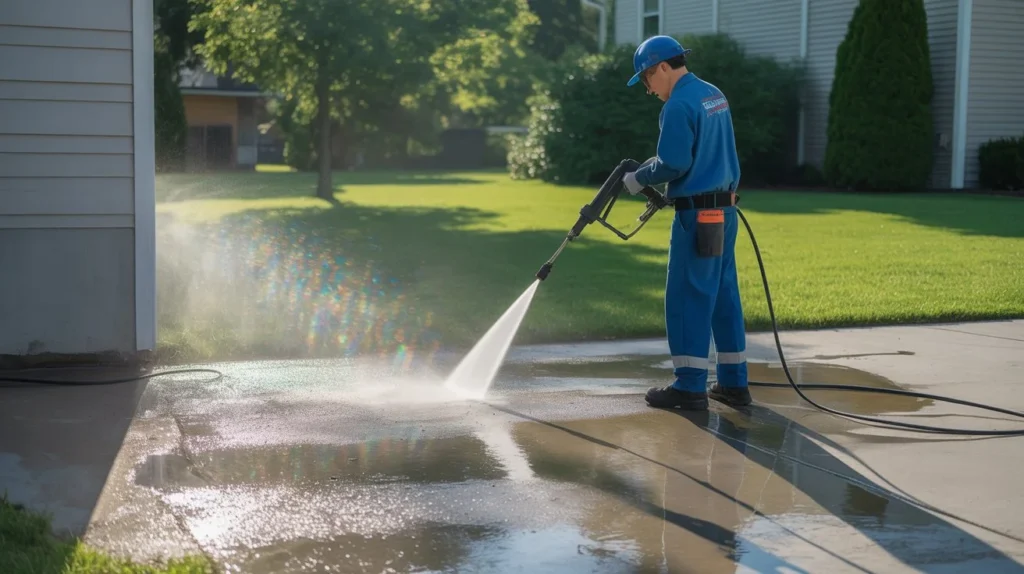
Pressure washing provides a fast and effective method for cleaning the outdoor areas of your home or business. From greasy driveways to slippery pool decks, a pressure washer can take away dirt, grease, stains, algae and more. But a lot of homeowners share the same crucial question: What is the best pressure washer pressure? That depends on the surface to clean, the level of dirt on the surface and the type of pressure washer you are using. When you’re soaping up your car, yard or house with a pressure washer, make sure you’re not overdoing it, dear readers: excess pressure can have disastrous results and imperil your well-being. If the pressure is too low, you will get the expected poor cleaning results. To wash safely and effectively, you really should know the necessary PSI levels and cleaning methods. Understanding Pressure Washer PSI Pressure washers can mostly be categorised into three types: 1:Light-duty pressure washer 13,00-19,00 PSI Best for cars, patio furniture, grills and small outdoor areas 2:Medium-duty pressure washers2,000 to 2,800 PSI Ideal for decks and fences, siding and driveways 3:Heavy-duty pressure washers2,900 to 4,000+ PSI Best for commercial use: concrete, brick, and industry cleaningCar, patio furniture, grills, and moreBest for cleaning wagons, fences, siding, and driveways suitable for decks, fences, siding and drivewaysMedium-duty pressure washers2,000 to 2,800 PSILight-duty pressure washers Heavy-duty pressure washers 2,000 to 2,800 PSIBest for decks and fences, siding and drivewaysHeavy-duty pressure washers2,900 to 4,000+ PSIFree Shipping on Orders Over $75Buy 1993112 12 Amp High Performance Water Blaster $69.99 Medium-duty pressure washers2,000 to 2,800 PSILight-duty pressure washersHeavy-duty pressure washers2,900 to 4,000+ PSISuitable for commercial work; concrete, brick, industry cleaningKnowing these categories is a first step in figuring out the Best PSI for pressure washing different surfaces. What Is the Best Pressure for Pressure Washing? What PSI Should I Use for Pressure Washing? At VJ Pressure Washing, we understand that nothing online can give you a definitive answer on what PSI to use for each type of work. Different materials need different amounts of pressure. Here is a more in-depth description of the suggested PSI ranges for some of the more popular residential surfaces. 1: House Siding Vinyl siding & wood siding need a medium pressure. Pressure washing too hard or too close can break the siding and can push water in behind your walls. Recommended PSI: 1,300–1,800 PSI Best Method: Soft Washing with Detergent Safe distance: 3/4 feet from the surface In many cases, soft washing is better than high-pressure washing for house exteriors since it cleans without causing damage. 2: Wooden Decks and Fences Wood is softer than concrete and is also prone to splintering when the pressure is too high. Suggested Pressure Levels: 500–1,200 PSI Spray with a fan spray nozzle. Spray always in the direction of the wood grain. One of the best tips for residential pressure washing is to begin at a low pressure and gradually increase as needed until the dust is safely removed. 3: Concrete Driveways Strong pressure can be applied to concrete as opposed to wood or siding. Gasoline spots and tyre marks may require you to work at a higher pressure. PSI recommended: 2,500-3,000 PSI. If you have one, use a rotating surface cleaner. Hot water removes grease stains. Pressure Washing Concrete Driveway Areas: Stronger Pressure for Deep Cleaning and Faster Results when cleaning concrete with a pressure washer? Yes, pressure washers – or power washers, as they’re sometimes called – are great for cleaning concrete surfaces of all sorts, but there are some things you should bear in mind before you start. 4: Cars and Vehicles Vehicles need to be washed gently to protect the paint and finishes. Recommended PSI: 1,200–1,900 PSI Use foam soap and wide-angle nozzles Do not use soap that is too old or too new Agent concentrations in the doser must not change Avoid spraying too closely to the glass because it may cause spots (warranty does not cover damages caused by spots) Soap pH: 11 Two phases: Slow slow Fast slow you can go in fast mode if necessary (make sure all users are informed and warning is visible) Please remove all dirt or ice from windscreen before Ejaculation glass stove oven 1″. 5″ and pieces 0.12″). 5: Brick and Stone Can be long-lasting, but older mortar may deteriorate. Recommended PSI: 1,500–2,500 PSI. Check cracks before cleanings. Use medium pressure initially. A good Pressure washer PSI guide also helps to avoid unintended damage to the old bricks. Residential Pressure Washing Tips Maintenance-free has a new face: pressure washing! These Residential Pressure Washing Tips will enable you as a homeowner to clean effectively and efficiently without doing any damage. Whether you are tackling your siding, deck, or looking for a professional driveway pressure washing service tracy ca, following the right tips will always deliver safer and better results. 1: Try Out On A Small Area Wait and see how the surface reacts to the pressure before you work on the entire area of the surface. This should help you avoid any surprises. 2: Obligation To Wear Safety Equipment Is Required Apply: Safety goggles Closed-toed shoes or boots Gloves Hearing protection when required Water under high pressure can injure the eyes and skin. 3: Risks for Electric Shock Are Avoided Stay clear of electrical outlets, light fixtures and power lines when using water. 4: Use Appropriate Detergent There are different cleaners made for concrete, wood, cars, vinyl and so on. The incorrect cleaner may harm surfaces. 5: Keep the Right Distance Spraying too closely can lead to discolouration or cracking. Begin at a distance and gradually go closer. 6: Never Spray People or Pets Pressure washers are strong and dangerous weapons; they should be treated as such forever. These Residential pressure washer tips will help you achieve better results and still remain safe. Pressure Washing a Concrete Driveway Properly Concrete is harder and more solid than wood or vinyl siding. The high pressure will also help to lift deep set sTips for pressure