

How to Install Solar Panels Guard
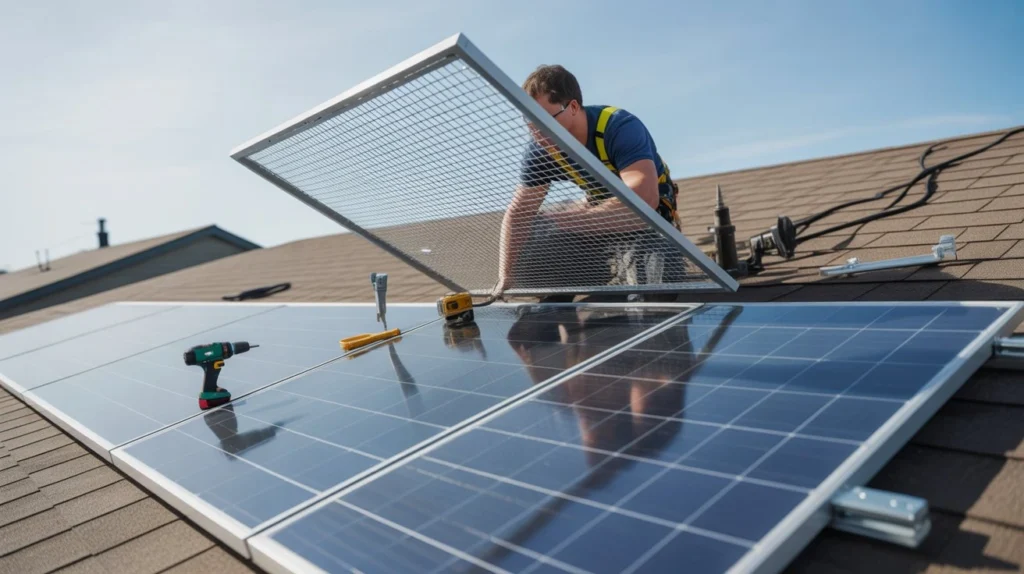
Solar panels save money and cut power bills. A proper guard system protects them from birds, debris, and damage. If you install both the panels and the guard the right way, your system lasts longer and works better. This guide explains how to install solar panels Guard step by step. You will learn planning, tools, safety, and real tips used by professionals. Understanding Solar Panel Systems Before installing solar panels, you need to know the basics. A solar setup is simple once you break it down. A standard system includes: Solar panels (capture sunlight) Inverter (turns DC into usable power) Mounting system (holds panels in place) Wiring (connects all parts) Battery (optional for storage) When you install solar energy, all these parts must work together. A guard system is added around the edges. It blocks birds, leaves, and dust from getting under panels. Assessing Your Home for Solar Installation Start with a full home check. This step decides how smooth your solar energy system installation will be. Check these key factors: 1. Roof Condition Your roof must be strong and in good shape before you start installing solar panels. Check for cracks, leaks, or weak spots. If your roof is old, it is better to repair or replace it first. A solid roof will support the weight of the panels and prevent future damage or costly fixes. 2. Sunlight Exposure Solar panels need direct sunlight for most of the day to work well. Look at your roof during different times of the day and check for shadows from trees, buildings, or poles. Even small shaded areas can reduce energy output, so try to choose the most open and sunny spot. 3. Roof Direction The direction your roof faces plays a big role in energy production. South-facing roofs usually get the most sunlight and give the best results. East- and west-facing roofs can still work, but they may produce slightly less energy. Proper angle and tilt can also improve performance. 4. Space Availability Make sure your roof has enough open space for the number of panels you need. You also need extra room for mounting structures and guard rails. Avoid placing panels too close together, as proper spacing helps with airflow and makes maintenance easier later. 5. Solar Panel Guard Installation Planning This is where you plan your Solar Panel Guard Installation. It ensures no gaps are left under panels. Companies like VJ Pressure Washing often suggest proper spacing and guard mesh to prevent nesting. Calculating Your Energy Needs Before installing solar panel system, know how much power you use. Follow these steps: Check your monthly electricity bill Find your average daily usage Decide how much you want solar to cover Example: If your home uses 900 kWh per month, you need a medium-sized system. This step helps you avoid overspending or underbuilding your system. Planning and Permits Every area has rules for install solar energy projects. You may need: Building permits Electrical approvals Utility company permission Check local laws before starting. Skipping permits can cause fines or delays. You can also decide here: DIY installation Hiring professionals DIY can save money, but professional help ensures safety and better results. Choosing the Right Equipment Your system quality depends on your equipment choices. Solar Panels Monocrystalline panels offer high efficiency and take up less space, making them a good choice for smaller roofs. Polycrystalline panels are more budget-friendly and still provide reliable performance, though they may need a bit more space to produce the same energy. Inverter Types A string inverter is a common and cost-effective option that connects multiple panels in one system. A microinverter is installed on each panel, which helps improve performance and makes it easier to monitor individual panel output. Guard Materials Galvanized steel mesh is strong, durable, and resists rust, making it ideal for long-term use. PVC-coated wire adds an extra layer of protection against weather and corrosion while also giving a cleaner finish around your panels. Choose strong and rust-resistant guard material. It should last as long as your panels. Tools and Materials Required Before you start installing solar panels, gather all tools. You will need: Drill machine Mounting brackets Bolts and screws Safety gloves Ladder Measuring tape Wire cutters Solar guard mesh Having everything ready saves time and avoids mistakes. Step-by-Step Installation Process Now let’s go through how to install solar panels Guard in simple steps. Step 1: Install Mounting Structure Fix the mounting brackets firmly on your roof. These brackets will hold the full weight of the panels, so placement matters. Make sure they are aligned properly, level, and tightly secured to avoid movement during strong wind or rain. Step 2: Place Solar Panels Carefully lift and place the solar panels onto the mounting structure. Handle them with care to avoid damage. Once positioned, secure each panel using bolts and clamps so they stay stable and do not shift over time. Step 3: Connect Wiring Now connect the panels using electrical wiring. You can join them in series or parallel depending on your system design. After that, run the wires safely toward the inverter, keeping them organized and protected from damage. Step 4: Install Inverter Mount the inverter close to your main electrical panel. This device converts solar energy into usable electricity for your home. Connect the DC wires from the panels to the inverter carefully, following proper safety guidelines. Step 5: Install Solar Panel Guard This step is often skipped, but it is very important for long-term protection. Attach a strong mesh around the edges of the panels Use clips or fasteners to secure it properly Make sure there are no open gaps where birds or debris can enter Keep enough space for airflow to prevent overheating This step completes the core part of how to install solar panels Guard properly and helps protect your system from damage. Step 6: Connect to Main Power Link the inverter to your home’s electrical system. This allows solar energy to power your home. If required,
How Much Does It Cost to Install Gutter Guard In 2026?
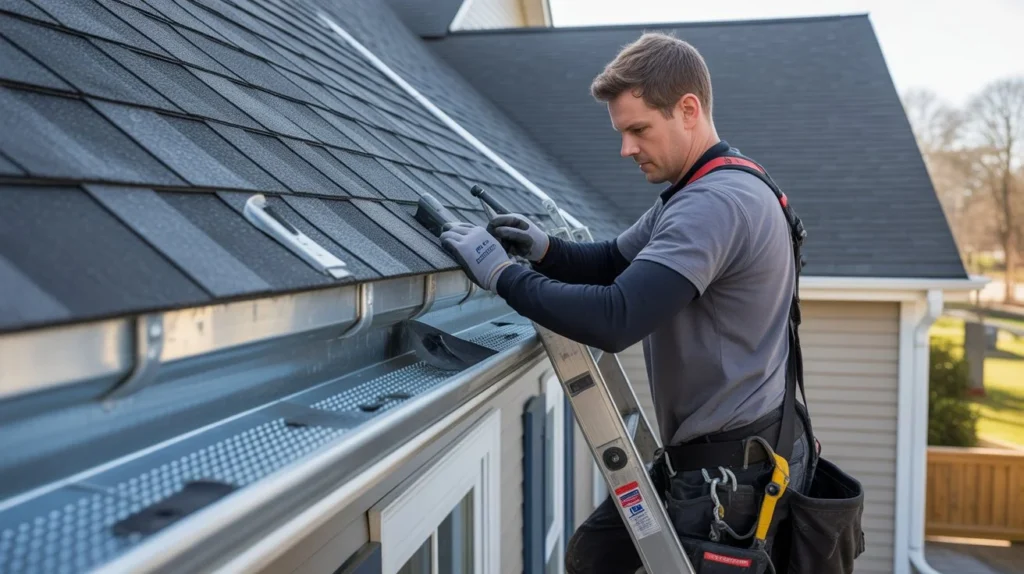
Gutter guards stop leaves, twigs, and debris from clogging your gutters. They save you from climbing a ladder twice a year and protect your home from water damage. But before you buy, you need to know the real numbers. If you’re wondering how much does it cost to install gutter guard, the typical range is $600 to $2,400 for a standard home. Most homeowners pay around $1,000 to $1,500 depending on the type of guard, linear footage, and labor in your area. This guide breaks it all down. What Is a Gutter Guard? A gutter guard is a cover or filter placed over your gutters. It lets water flow in while keeping debris out. Without one, leaves and dirt pile up inside gutters. Water backs up, overflows, and eventually damages your fascia, foundation, and siding. Gutter guards prevent that. They come in several materials and styles. Some sit inside the gutter. Others clip on top. Each type has a different price point and performance level. Average Cost to Install Gutter Guard Here’s the short answer: most homeowners spend between $1 and $13 per linear foot for gutter guard installation, including both materials and labor. For a typical single-story home with 150 to 200 linear feet of guttering, total costs look like this: Home Size Linear Feet Low Estimate High Estimate Small home 100–150 ft $300 $900 Average home 150–200 ft $600 $1,800 Large home 200–300 ft $900 $3,500 Two-story home 200–250 ft $1,200 $4,500 The gutter guard installation price varies most based on the type of guard you choose and how accessible your roofline is. If you’re in the Tracy, CA area and want an accurate quote from professionals who know the local terrain, VJ Pressure Washing offers trusted best gutter guard installers Tracy CA services with transparent pricing. Types of Gutter Guards and Their Costs Not all gutter guards are created equal. Here’s a breakdown by type. 1. Screen Gutter Guards Cost: $0.50 – $2 per linear foot (material only) These are the most affordable options. They’re flat mesh screens that sit over the gutter opening. They block large debris but let smaller particles through over time. Best for: Homeowners on a tight budget who want basic protection. 2. Micro-Mesh Gutter Guards Cost: $2 – $6 per linear foot (material only) Micro-mesh guards have very fine openings that block even small debris like shingle grit and pine needles. They’re considered the most effective type available. Best for: Homes surrounded by pine trees or fine-leafed plants. 3. Foam Gutter Guards Cost: $2 – $3.50 per linear foot (material only) Foam inserts sit inside the gutter and let water pass through while blocking debris on top. They work initially but tend to collect algae and small debris over time. Best for: Short-term use or mild debris environments. 4. Brush Gutter Guards Cost: $3 – $5 per linear foot (material only) These look like large pipe cleaners placed inside the gutter. Debris sits on top of the bristles while water flows through. Like foam, they can trap smaller debris between bristles. Best for: Homes with mostly large leaf debris. 5. Reverse Curve (Surface Tension) Guards Cost: $3 – $6 per linear foot (material only) Water follows the curve around the guard and drops into the gutter while debris falls off the edge. These work well in heavy rain but can struggle with light drizzle. Best for: Areas with frequent heavy rainfall. 6. Perforated Aluminum or Steel Guards Cost: $1 – $4 per linear foot (material only) These solid covers have small punched holes for water entry. They’re durable and low maintenance but can struggle with very fine debris. Best for: General use in most climates. Factors That Affect Gutter Guard Installation Cost The gutter guard install cost for your home depends on more than just the product you pick. Roof Height and Accessibility Single-story homes are the cheapest to work on. Two-story and steep-pitch roofs require more safety equipment and take longer. Expect to pay 20% to 40% more for two-story installations. Linear Footage of Gutters More gutters mean more material and more labor hours. Measure your home’s perimeter at roofline level for an estimate. Most homes run 150 to 200 linear feet. Gutter Condition If your gutters are sagging, rusted, or pulling away from the fascia, they need repair before guards go on. Gutter repair adds $75 to $350 on top of the installation cost. Location and Labor Rates Labor costs vary significantly by region. In high-cost-of-living cities, labor alone can run $1 to $3 per linear foot. In rural areas, that number is lower. Brand and Warranty Premium brands like LeafFilter, HomeCraft, and Gutter Helmet charge more partly because of the warranty they offer. Some come with lifetime transferable warranties. Budget brands offer no such guarantee. DIY vs Professional Installation Cost DIY Gutter Guard Cost If you buy the materials yourself and do the work, you can pay as little as $150 to $600 for a full home. Screen guards and micro-mesh clips are the easiest to install without professional help. What you save: Labor, which typically runs $0.50 to $1.50 per linear foot. What you risk: Improper installation can void your roof warranty, cause water to overflow in the wrong direction, or create gaps that let debris in anyway. Professional Installation Cost Professional gutter cover installation cost runs $600 to $4,500 depending on type and home size. You’re paying for experience, proper tools, and a warranty on the work something VJ Pressure Washing ensures with every installation. Most professional installs take 2 to 6 hours for an average-sized home. Bottom line: DIY saves money upfront. Professional installation saves money long-term through proper fit and lasting results. Benefits of Installing Gutter Guards Here’s why people pay for them. Fewer cleanings. Standard gutters need cleaning 2 to 4 times per year. With guards, that drops to once every 1 to 3 years. Prevents water damage. Clogged gutters cause overflow. That overflow damages foundations, basements, and siding. Guards keep water flowing
Is Solar Panel Cleaning Worth It?
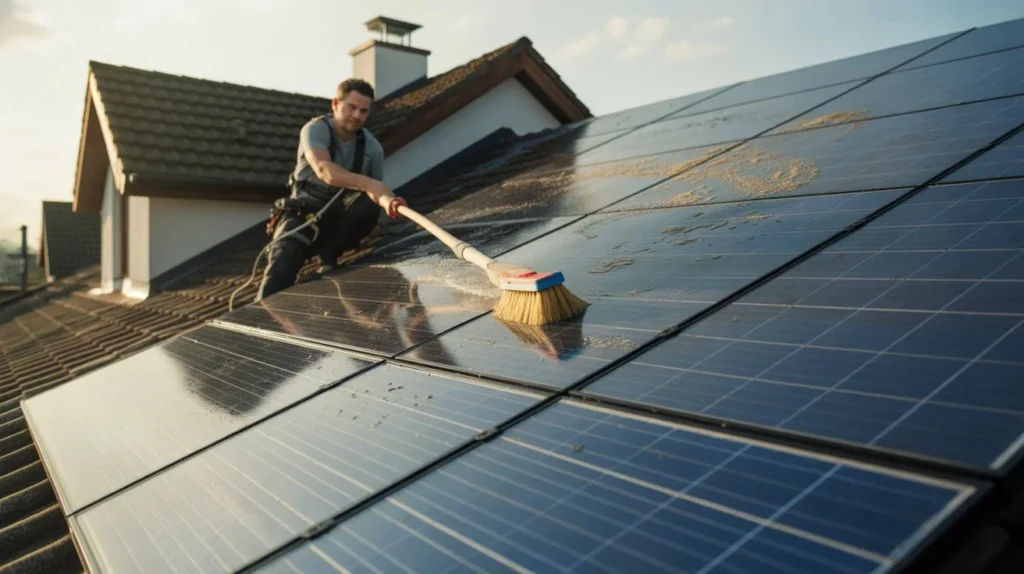
Solar panels work best when they get full sunlight. Dust, dirt, and bird droppings can block light and reduce output. Many homeowners install panels to save money, but small issues like dirt can lower those savings over time. This leads to one simple question: does cleaning really matter? Is Solar Panel Cleaning Worth It? Yes, in most cases it is. Clean panels produce more power, last longer, and give better returns. If your panels collect dust or debris, regular cleaning can make a real difference. How Do Solar Panels Work? Solar panels convert sunlight into electricity using photovoltaic cells. These cells absorb sunlight and turn it into usable energy for your home or business. For this process to work well, sunlight must reach the panel surface without blockage. Even a thin layer of dust can reduce how much sunlight gets through. That means less power and lower efficiency. This is why solar panel maintenance plays a key role in system performance. Keeping panels clean helps them work at full capacity. What Happens When Solar Panels Get Dirty Over time, panels collect dust, pollen, bird droppings, and pollution. In dry or urban areas, this buildup happens faster. The solar panel dirt impact can be bigger than many people expect. Studies show that dirty panels can lose 10% to 25% of their energy output. In some cases, losses can be even higher. Here’s what happens when panels stay dirty: Less sunlight reaches the cells Energy production drops Electricity bills increase System efficiency declines In extreme cases, dirt can cause uneven shading. This may lead to hot spots, which can damage panels over time. Benefits of Solar Panel Cleaning There are clear cleaning solar panels benefits that make it worth considering. 1. Better Energy Output Clean panels absorb more sunlight without any blockage. Even a thin layer of dust can reduce how much light reaches the cells. When panels are clean, they capture maximum sunlight and convert it into electricity more efficiently. This leads to higher daily energy production and better overall system performance. 2. Improved Savings When your solar panels produce more energy, you depend less on grid electricity. This directly lowers your monthly power bills. Over time, even small efficiency gains can add up to noticeable savings. Clean panels help you get the most value from your solar investment every day. 3. Longer Panel Life Dirt buildup can cause uneven heating on the panel surface. This may lead to long-term wear or damage if ignored. Regular cleaning prevents these issues and keeps the system in good condition. It also supports proper solar panel maintenance, helping your panels last for many years. 4. Higher Return on Investment Solar systems require a significant upfront cost. To recover that cost faster, your panels need to work at full efficiency. Keeping them clean ensures you get maximum energy output over time. This improves your return on investment and makes your system more cost-effective in the long run. 5. Consistent Performance Clean panels deliver steady and reliable energy output. Dirt and debris can cause sudden drops in performance, especially during peak sunlight hours. By keeping panels clean, you avoid these fluctuations and maintain stable energy production throughout the day and across seasons. When Is Solar Panel Cleaning Worth It? Is Solar Panel Cleaning Worth It? The answer depends on your location and environment. Cleaning is worth it in these situations: Dusty or Dry Areas Places with low rainfall and high dust levels need more frequent cleaning. Dust settles quickly on panels and stays there for long periods without rain to wash it away. This buildup blocks sunlight and reduces efficiency, making regular cleaning more important. Near Roads or Construction Panels installed near busy roads or construction sites collect dirt faster. Air pollution, vehicle exhaust, and fine debris settle on the surface daily. Over time, this layer becomes thick enough to impact performance, so cleaning is needed more often. Bird Activity Bird droppings are one of the most common causes of blocked panels. They do not wash away easily and can harden on the surface. If not cleaned quickly, they can create stubborn stains and reduce sunlight exposure in specific spots. Flat or Low-Angle Panels Panels that are installed at a low angle tend to hold more dust and water. Unlike tilted panels, they do not allow debris to slide off easily. This leads to faster buildup and increases the need for regular cleaning. Commercial Systems Large solar systems produce more energy, so even a small drop in efficiency can mean significant losses. Regular cleaning helps maintain consistent output and protects long-term performance, making it more valuable for commercial setups. If your panels look dirty or your energy output drops, cleaning is usually worth it. How Often Should You Clean Solar Panels? Cleaning frequency depends on your environment and system setup. General Recommendation Every 3 to 6 months for most homes More often in dusty regions Less often in rainy climates Signs Your Panels Need Cleaning Visible dust or stains Sudden drop in energy output Bird droppings or leaves If you are looking for expert help, services like best solar panel cleaning tracy ca offered by VJ Pressure Washing can ensure safe and effective cleaning. Regular checks are part of smart solar panel maintenance and help maintain peak performance. DIY vs Professional Solar Panel Cleaning DIY Cleaning Many homeowners choose to clean solar panels themselves because it costs less and works well for small systems. It can be a good option if the panels are easy to reach and only lightly dirty. However, there are some risks. Cleaning panels on a roof can be unsafe, and using the wrong tools may scratch the surface. DIY cleaning also may not remove deep or stubborn dirt. It is best for simple jobs where safety is not a concern. Professional Cleaning Hiring experts is often safer and more effective for cleaning solar panels. Professionals use the right tools and proper techniques, which helps avoid damage and gives better results.
Is Pressure Washing Driveway Illegal?
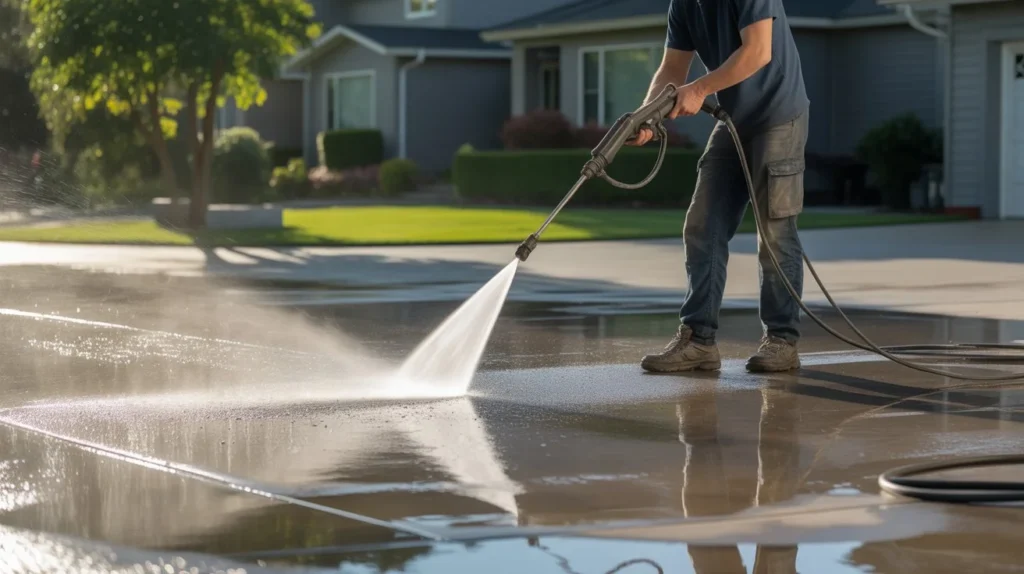
Is Pressure Washing Driveway Illegal? The answer depends on where you live and how the washing is performed.In many places, homeowners can clean their own driveways, but that does not mean there are no rules. Local governments may restrict the use of potable water on hard surfaces, particularly during water shortages. Stormwater regulations can also restrict where driveway wash water is allowed to flow. For example, the City of Tracy, California currently lists restrictions on using potable water to wash driveways, patios, sidewalks, buildings, and similar hardscape surfaces. The city’s current Stage III conservation measures specifically include pressure washing, with an exception for certain work such as surface preparation for painting or masonry. That means the safest answer is not simply “yes” or “no.” You need to check the rules that apply to your location, water use, and property. Quick Answer Pressure washing a driveway is not automatically illegal everywhere, but local rules can restrict when and how you can do it. Water conservation laws, stormwater regulations, HOA rules, and public-property restrictions may apply. Before washing, check your local requirements and make sure dirty water does not enter a storm drain. Is Pressure Washing a Driveway Illegal? Not necessarily. Pressure washing a driveway is not universally illegal, but some cities and water agencies restrict it under water conservation or stormwater rules. The important distinction is between the act of cleaning the driveway and how water is used and where the resulting runoff goes. Local regulations may address: Potable water use Water waste Runoff Storm drains Wastewater disposal Drought restrictions Public sidewalks and streets HOA requirements A homeowner in one city may be allowed to pressure wash a driveway under certain conditions, while a homeowner somewhere else may face restrictions. That is why checking your local city or water utility before starting the job is important. Why Do Local Rules Matter? Pressure washing uses water to remove dirt, oil residue, algae, mud, and other material from a hard surface. That cleaning process creates wastewater. The wastewater can contain substances that were already sitting on the driveway, such as: Dirt and sediment Oil or vehicle fluids Cleaning chemicals Lawn and landscaping debris Pet waste Small pieces of trash If that water flows into a storm drain, it may be discharged through a stormwater system rather than being treated like ordinary household wastewater. California’s Water Boards explain that wash water from driveways and other impervious surfaces should not be allowed to enter storm drains and recommend using appropriate best management practices to control the runoff. This is one reason local pressure washing rules can involve more than simply conserving water. What Are the Pressure Washing Rules in Tracy, CA? If you live in Tracy, California, the answer is especially important because the city currently has Stage III water conservation measures. The City of Tracy states that using potable water to wash driveways, patios, sidewalks, buildings, and similar hardscape surfaces is not allowed unless an applicable exception applies. The city’s guidance specifically says the restriction also applies to pressure washing, except when the washing is being done for purposes such as preparing a surface for painting, masonry, or similar work. The Tracy Municipal Code also defines a driveway as hardscape and establishes restrictions related to water waste and runoff. Because local rules can change, homeowners should verify the current requirements before starting a driveway cleaning project. For homeowners who want professional assistance with their property, Driveway Washing in Tracy CA is a relevant service option from VJ Pressure Washing. Can Driveway Wash Water Go Into a Storm Drain? You should not allow driveway wash water to flow into a storm drain unless local authorities specifically allow that discharge. Storm drains are designed to manage stormwater, but they can also carry pollutants into local waterways. This is particularly important when pressure washing a driveway because the water may pick up oil, dirt, chemicals, metals, and other contaminants from the surface. California Water Boards guidance specifically identifies driveway and patio wash water as a type of non-stormwater discharge that should be prevented from entering municipal storm drain systems. Recommended approaches can include controlling the water, preventing it from reaching the drain, and directing or recovering the wash water appropriately. What Should You Do With Driveway Runoff? The appropriate method depends on your local requirements and the type of wastewater involved. Before pressure washing: Identify nearby storm drains. Check your local runoff requirements. Avoid allowing dirty water to flow into the street. Use appropriate runoff-control methods. Follow local instructions for collecting or disposing of wash water. Do not assume that because the water looks relatively clean, it is automatically acceptable to send it into a storm drain. Do You Need a License to Pressure Wash Driveways? A homeowner generally should not assume that a special professional pressure washing license is required simply to clean their own driveway, but requirements for operating a pressure washing business can be different. Licensing and business registration are location-specific. A person washing their own residential driveway is in a different situation from a company charging customers for pressure washing services. If you are hiring a professional, you can ask whether the business has the registrations, permits, or local business requirements applicable to its services. Also remember that a requirement applying to a pressure washing business does not automatically mean a homeowner needs the same credential to clean their own property. Is Power Washing Safe for Concrete Driveways? Yes, pressure washing can be safe for concrete when the equipment and technique are appropriate, but excessive pressure or improper technique can damage the surface. Concrete may develop surface damage if it is cleaned too aggressively. Potential problems include: Surface etching Uneven cleaning Damage to weak or deteriorated concrete Removal of surface material Damage around cracks or joints A driveway power washer can produce significant pressure, so the nozzle should not be held extremely close to the concrete simply to remove stubborn stains. Before cleaning, inspect the driveway for: Existing cracks Crumbling areas Loose
How to Clean Windows: A Complete Step-by-Step Guide
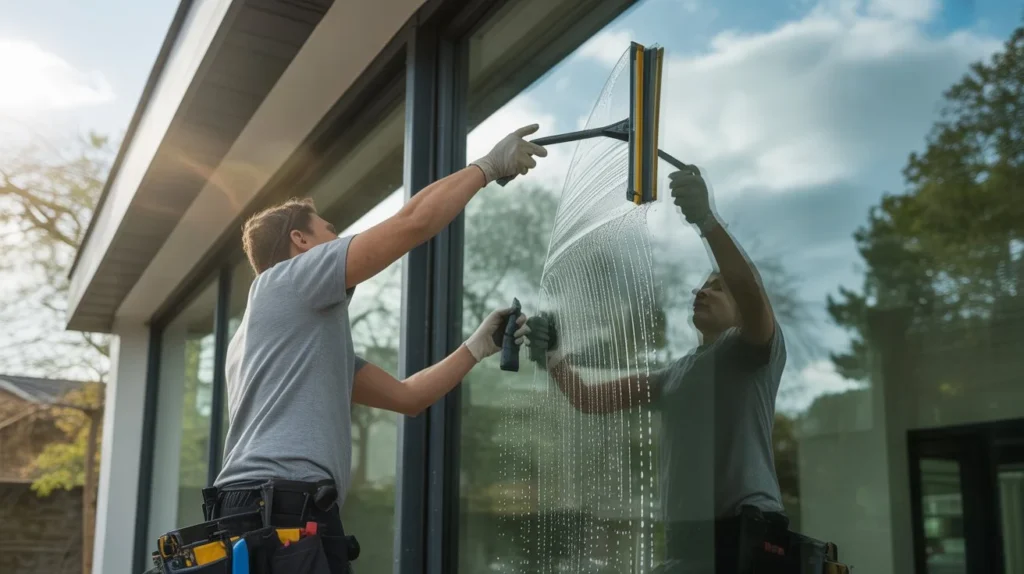
Dirty windows do more than look bad. They block natural light, leave mineral deposits that etch glass over time, and make even a clean home feel dull. Most people wipe them down and still end up with streaks. The problem is usually technique, not effort. Knowing how to clean windows the right way saves you time and gives you results that actually last. This guide covers every step, from the right tools to streak-free technique, so you get crystal-clear glass every single time. Why Clean Windows Regularly? Most homeowners clean windows once a year if at all. That is not enough. Dirt, pollen, hard water, and pollution build up on glass over time. Left too long, mineral deposits from sprinklers or rain can etch into the surface permanently. At that point, no amount of cleaning fixes it. Regular cleaning also protects your window frames and seals. Dirt that sits in frame corners traps moisture, which leads to rot on wood frames and mold on rubber seals. Beyond protection, clean windows make a real difference in how your home feels. More light comes through, rooms look bigger, and the view outside is actually enjoyable. Tools and Supplies You’ll Need Using the wrong tools is the number one reason people end up with streaks. Skip the paper towels and old rags. What you need: A good squeegee (10 to 14 inches for standard windows) A scrubber sleeve or applicator wand Two buckets (one for solution, one for rinsing) Dish soap or a dedicated window cleaning solution Microfiber cloths or a lint-free chamois A soft-bristle brush for frames and tracks A spray bottle for spot cleaning A ladder for upper-floor windows Rubber gloves Optional but helpful: A window cleaning extension pole for high windows A water-fed pole system for exterior second-story glass A detail brush for corners and edges Avoid newspapers. It used to work when ink was oil-based. Modern newspaper ink smears on glass. Preparing Your Windows for Cleaning Jumping straight to scrubbing is a mistake. A little prep makes the whole job faster and cleaner. At VJ Pressure Washing, we always start with a full prep check before touching the glass. It is a small step that makes a big difference in the final result. Remove dust and loose debris first. Use a dry microfiber cloth or a soft brush to wipe down the glass, frame, and surrounding wall. Wet cleaning over dry dust turns it into mud. Check the weather. The best way to clean windows is on a cloudy day. Direct sunlight dries your cleaning solution before you can squeegee it off, leaving streaks baked into the glass. Protect your floors and sills. Lay an old towel on the sill and floor below the interior windows. Cleaning solution drips, and it leaves marks on wood or tile if left to dry. Remove window screens. Take screens out before cleaning the glass. Clean them separately. Screens left in place block your squeegee path and trap dirty water against the glass. Step-by-Step Guide to Cleaning Windows This is the core of how to clean windows properly. Follow each step in order. Step 1: Mix Your Cleaning Solution Fill a bucket with warm water. Add a few drops of dish soap. That is it. You do not need expensive cleaners for most windows. For heavy grease or hard water stains, add a small amount of white vinegar to the mix. Step 2: Wet the Glass Dip your scrubber sleeve into the solution. Wring it out slightly so it is wet but not dripping. Apply it to the entire glass surface using horizontal strokes. Work from top to bottom. For exterior windows with heavy buildup, let the solution sit for 30 seconds before scrubbing. This softens the grime and makes it easier to remove. Step 3: Scrub Stubborn Spots Use a non-scratch scrubbing pad for any stuck-on debris, bird droppings, or sap. A razor blade scraper held at a 45-degree angle works well on paint specks or hard water deposits. Always keep the glass wet when using a scraper to avoid scratching. Step 4: Squeegee from Top to Bottom Start at the top corner of the glass. Pull the squeegee across in a single smooth stroke. Wipe the blade with a clean cloth after each pass. Overlap each stroke slightly to avoid leaving lines. For tall windows, do horizontal passes across the top half, then finish the bottom with vertical strokes. This is the technique professional window cleaning crews use to avoid drips on already-clean sections. Step 5: Wipe the Edges Use a dry microfiber cloth to wipe any water left along the edges and corners of the glass. This is where streaks usually form. A clean, dry edge is the difference between good and perfect results. Step 6: Buff if Needed If you spot a streak after the glass dries, buff it out with a dry microfiber cloth using small circular motions. Do not re-wet the glass. Dry buffing removes light streaks without starting over. How to Clean Window Screens Screens collect dust, pollen, and pollution faster than the glass itself. Cleaning them separately gives you much better results. Remove the screen from the window frame. Most screens lift out or have small tabs you press to release them. Rinse with a garden hose on a low setting. High pressure pushes dirt through the mesh rather than washing it off. Scrub gently with a soft brush dipped in warm soapy water. Work in small circles across the entire screen. Pay attention to the frame edges where dirt collects most. Rinse again until the water runs clear. Shake off excess water and stand the screen upright to air dry completely before reinstalling. Never reinstall a wet screen. Moisture trapped between the screen and glass causes water spots. For large homes with many screens or screens that have not been cleaned in years, professional window cleaning in Tracy, CA from VJ Pressure Washing gets the job done faster and more thoroughly than DIY,
Do Gutter Guards Need to Be Cleaned?
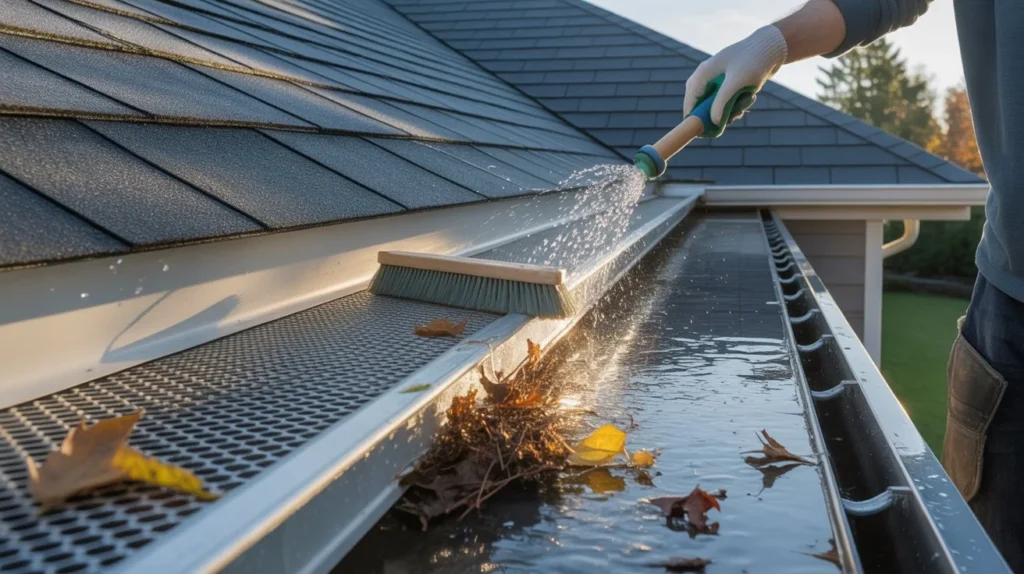
Gutter guards save time. But they don’t save you from all maintenance. Many homeowners install them and never look up again. That’s a costly mistake that leads to water damage, pest problems, and clogged downspouts. So, do gutter guards need to be cleaned? Yes, they do. Just less often than open gutters. Debris still builds up on top and around them over time. This guide covers exactly when, why, and how to keep them working right. What Are Gutter Guards? Gutter guards are covers or inserts that sit over or inside your gutters. Their job is simple: block leaves and debris from getting in while letting water flow through. They come in many forms. Some use fine mesh. Others use foam, brush bristles, or solid covers with a curved edge. Each type works differently and has its own maintenance needs. Most homeowners install them to reduce how often they need to climb a ladder. And they do help. But they’re not a “set it and forget it” solution. Why Gutter Guards Still Need Cleaning Here’s the truth most gutter guard companies don’t advertise: debris still collects. Leaves land on top of mesh guards. Small seeds get lodged in foam inserts. Pine needles slide through openings. Shingle grit washes into fine-mesh systems. Algae and mold grow in moist spots. Over time, this buildup slows water flow. Water starts sitting on top of guards instead of draining through. That means overflow, fascia damage, and foundation issues. The guards do their job, but they still need help doing it. How Often Should Gutter Guards Be Cleaned? Most homes need gutter guard maintenance once or twice a year. A spring check and a fall clean are the standard. If you have heavy tree cover, especially pine trees, you may need three visits per year. Here’s a simple guide: Low tree cover: Once a year Moderate tree cover: Twice a year Heavy tree cover or pine trees: 2 to 3 times a year If you live in Tracy, CA, and want a local team to handle it, VJ Pressure Washing offers professional gutter cleaning service Tracy CA residents trust. Regular maintenance visits keep your system running clean without the guesswork. Skipping a year might seem fine. But two or three skipped years? That’s when real damage starts. Signs Your Gutter Guards Need Cleaning You don’t always need a schedule. Your gutters will tell you when something’s wrong. Watch for these signs: Water overflows during rain. If water pours over the sides instead of draining down the spout, that’s a blockage. Plants growing in gutters. Seeds and dirt collect in moist debris. If you see weeds or moss, your gutters need attention. Sagging gutters. Standing water and heavy debris put stress on gutter hangers. Sag means weight buildup. Stains on fascia boards. Dark streaks on the wood behind your gutters signal overflow and moisture damage. Pest activity near the roofline. Birds, squirrels, and insects nest in clogged gutters. If you see activity up there, debris has gathered. Mold or mildew near the foundation. Overflowing water that pools at the base of your home leads to mold growth below. Any one of these signals means it’s time to inspect your gutter guards. Different Types of Gutter Guards and Their Cleaning Needs Not all gutter guards clean the same way. The type you have shapes how much work you’ll do. Micro-Mesh Guards These are among the best at blocking debris. Fine holes let water in but keep most particles out. Still, fine dust and shingle grit can clog the mesh. Clean with a soft brush and garden hose once or twice a year. Foam Inserts Foam fills the gutter channel and lets water seep through. Seeds and dirt get stuck in the foam fast. These need the most frequent cleaning. In heavy debris areas, check them every few months. Brush Guards Bristles catch large leaves but trap smaller debris deep in the fibers. Over time, they become dense with buildup. Pull them out annually and rinse well. Screen Guards Basic metal or plastic screens block large leaves. Wind blows lighter debris off. These are easier to clean. A rinse from the hose usually does the job. Reverse Curve (Surface Tension) Guards Water clings to the curved surface and drops into the gutter. Large debris falls off. But small stuff like seeds can sneak in. Check these once a year and clear any openings. Solid Covers These keep almost everything out. But they depend on slope and angle. Snow, ice, and heavy rain can overwhelm them. Inspect after winter storms. What Happens If You Never Clean Gutter Guards? Ignoring gutter guard maintenance leads to a chain of problems. It starts slow and gets expensive fast. Step 1: Debris builds up. Leaves, dirt, and seeds pile on top of or inside the guards. Step 2: Water backs up. Blocked guards can’t drain properly. Water sits and eventually overflows. Step 3: Fascia and soffit rot. Constant moisture damages the wood trim behind and below your roof edge. Step 4: Foundation damage. Water that pours off the side of your home pools at the base. Over years, this weakens your foundation. Step 5: Pest and mold problems. Standing water and wet debris create the perfect habitat for mosquitoes, rodents, and mold. Step 6: Gutter collapse. The combined weight of wet debris and standing water can pull gutters away from your home entirely. A simple cleaning twice a year prevents all of this. Can You Clean Gutter Guards Yourself? Yes. Many homeowners handle this on their own. Here’s what you need: A stable ladder Work gloves A garden hose with a spray nozzle A soft bristle brush A gutter scoop (optional) Step-by-step process: Set your ladder on solid ground. Have someone hold it if possible. Remove any visible debris from the top of guards by hand. For removable guards, take them out and rinse them on the ground. Use a brush to scrub off algae or stuck-on grime. Flush the gutter channel
How to Clean a Dumpster?
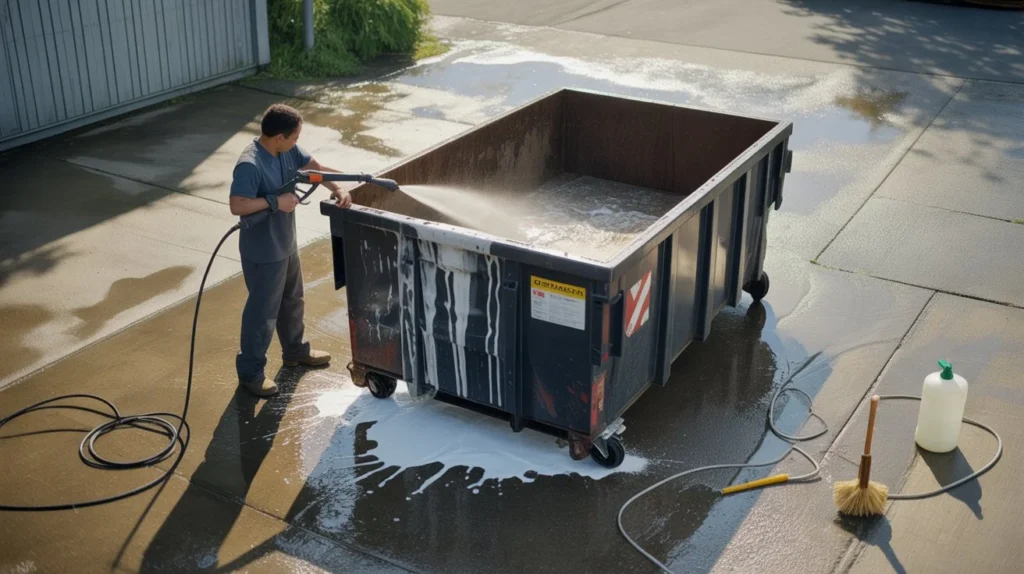
A dirty dumpster is more than an eyesore. It breeds bacteria, attracts pests, and spreads foul odors fast. Whether it’s at your home, business, or rental property, a neglected dumpster becomes a real hygiene problem. Most people ignore it until the smell becomes unbearable or flies start swarming. Knowing how to clean a dumpster properly is the difference between a quick fix and a lasting solution. This guide gives you a clear, step-by-step method using supplies you likely already have, so you can get the job done safely and effectively. Why Dumpsters Get Dirty So Fast Dumpsters take daily abuse. Food waste, liquids, and household trash all mix together in a confined metal space. Heat speeds up bacterial growth. Moisture creates the perfect breeding ground for mold and mildew. Here’s why the buildup happens so fast: Leaking bags leave residue on the bottom and walls Food scraps rot quickly and release gases and liquid Heat in summer months accelerates decomposition Infrequent emptying lets waste sit and bake in the sun Animal access spreads garbage and adds more bacteria A metal dumpster holds heat. That trapped heat turns minor spills into major odor and grime problems within days. Signs Your Dumpster Needs Cleaning Your nose is usually the first alert. But there are other clear signs too. Look for these: A strong, persistent smell even when the dumpster is empty Visible sludge, black residue, or buildup on the interior walls Flies, maggots, or rodents around or inside the dumpster Staining or discoloration on the ground underneath it Mold growth on the walls or lid If you spot any of these, don’t wait. The longer you leave it, the harder it gets to clean. Pro tip from VJ Pressure Washing: If the pad or concrete area around your dumpster is stained and smells as bad as the bin itself, you may need more than a basic rinse. Check out our dumpster pad cleaning companies service page to see how professional cleaning handles the full area, not just the container. Tools and Supplies You’ll Need You don’t need commercial equipment for a basic clean. Here’s what works: For DIY cleaning: Garden hose with a strong spray nozzle (or pressure washer) Long-handled scrub brush Heavy-duty rubber gloves Safety goggles Old clothes you don’t mind ruining Rubber boots Two buckets Drop cloth or tarp (to collect runoff) Cleaning agents: Situation Recommended Cleaner General dirt and grime Dish soap + warm water Grease and oil buildup Degreaser or enzyme cleaner Mold and mildew Diluted bleach solution (1:10 ratio) Heavy odor Baking soda + white vinegar Bacteria and sanitizing Quaternary ammonium disinfectant Avoid mixing bleach with ammonia-based cleaners. It creates toxic fumes. Safety Tips Before Cleaning a Dumpster Dumpster cleaning is a dirty job. Safety first, always. Wear gloves, goggles, and rubber boots every time Never lean into a dumpster without checking for sharp objects first Work in a well-ventilated area Avoid inhaling fumes from cleaning solutions Keep children and pets away during the process Never pour contaminated rinse water directly into a storm drain Where should the wastewater go? This is important. Dirty rinse water from dumpster cleaning contains bacteria, grease, and chemicals. It should go into a sanitary sewer drain, not onto the street or into a garden. If you’re unsure, your local municipality can advise on proper disposal. How to Clean a Dumpster Step by Step This method works for both residential and commercial bins. Follow it in order for the best results. Step 1: Empty the Dumpster Completely Never clean a dumpster that still has trash in it. Schedule your cleaning for the day after a scheduled pickup when the bin is fully empty. Step 2: Remove Loose Debris Scrape out any loose material from the bottom. Use a long-handled scraper or shovel. Bag and dispose of this separately. Step 3: Pre-Rinse with Water Use a garden hose or pressure washer to rinse the interior from top to bottom. This removes loose grime and softens caked-on residue. Hot water works better than cold if you have access to it. Step 4: Apply Your Cleaning Solution Spray or pour your chosen cleaner inside the bin. Use a degreaser for oily buildup or dish soap for general cleaning. Let it sit for 5 to 10 minutes to break down grime. Step 5: Scrub Thoroughly Use a long-handled brush to scrub all interior surfaces: walls, bottom, and the inside of the lid. Pay extra attention to corners where sludge collects. For heavy buildup, a pressure washer with a rotating nozzle makes this step much faster and more effective. Step 6: Rinse Again, Completely Rinse out all soap and loosened grime. Make sure no cleaning solution residue remains. Leftover soap attracts dirt and can cause foam buildup with the next batch of rain or moisture. Step 7: Disinfect and Deodorize Spray the interior with a disinfectant. Let it sit for at least 5 minutes. Then sprinkle baking soda along the bottom before closing the lid. This absorbs future odors between cleanings. Step 8: Clean the Exterior and Lid Don’t stop at the inside. Wipe down the outside walls, the lid, and any handles. Grime on the exterior attracts pests too. Step 9: Allow It to Air Dry Leave the lid open for 30 to 60 minutes to let the interior dry. Closing a wet dumpster traps moisture and encourages mold growth. Best Cleaning Solutions for Dumpsters Not every cleaner is equal. Here’s what actually works for cleaning dumpsters in different conditions. Enzyme-based cleaners are the gold standard. They break down organic waste at a biological level, eliminating odor at the source rather than just masking it. Great for food waste buildup. Degreasers handle oily residue from food scraps, restaurant waste, or automotive use. Apply and let it sit before scrubbing. Diluted bleach (one part bleach to ten parts water) kills mold, mildew, and bacteria. Use it as a final disinfecting rinse. Don’t use it on rubber seals. White vinegar is a safe, natural option for light
How to Clean Roof Shingles the Right Way (Step-by-Step Guide)
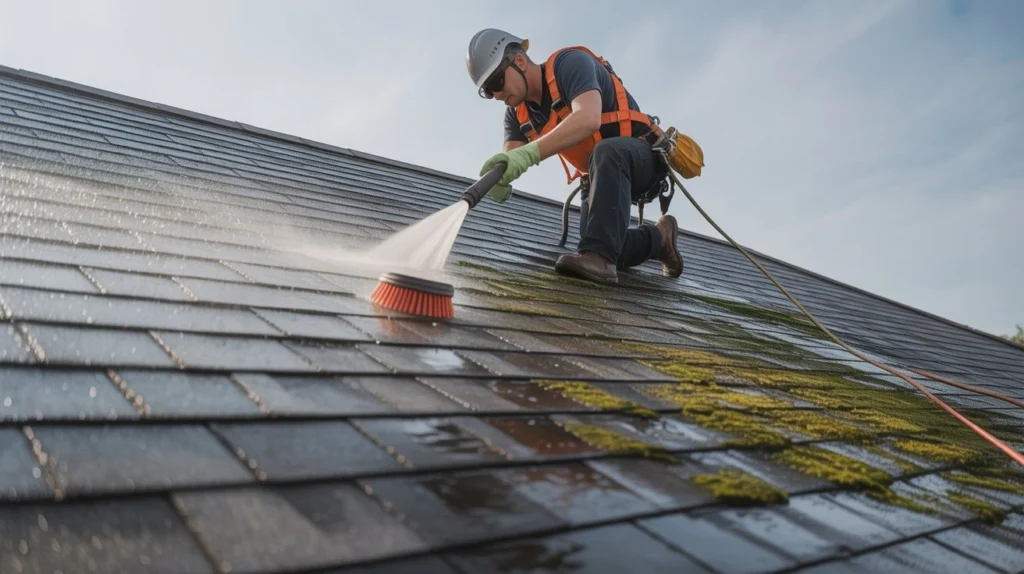
Your roof takes a beating every single day. Rain, wind, heat, and moisture all leave their mark over time. Algae, moss, and black streaks are not just ugly. They actually eat away at shingles and cut your roof’s life short. Cleaning your roof is not optional if you want to protect your home investment. Knowing how to clean roof shingles the right way makes a real difference. Do it wrong and you can crack shingles, void warranties, or cause leaks. Do it right and your roof can look brand new and last years longer. This guide covers everything from tools to techniques, so you get it right the first time. What Are Roof Shingles and Why Do They Get Dirty? Roof shingles are layered panels that protect your home from rain and weather. Most are made from asphalt, though wood, slate, and metal shingles also exist. Asphalt shingles are the most common in the U.S. Over time, shingles collect: Algae (Gloeocapsa magma) — causes those dark black streaks you see on roofs Moss — holds moisture against shingles and causes rot Lichen — bonds tightly to shingles and is hard to remove Dirt and debris — blocks drainage and traps moisture All of these shorten your roof’s lifespan if left untreated. Common Problems Found on Roof Shingles Before you start shingles cleaning, know what you are dealing with. Different stains need different approaches. Black Streaks This is algae growth. It spreads fast in humid climates. It feeds on the limestone filler in asphalt shingles. Green Moss Moss grows thick on shaded, damp areas of your roof. It lifts shingle edges and lets water sneak underneath. Lichen Patches Lichen looks like grey or green crusty patches. It actually bonds into the shingle surface and is the hardest to remove. Granule Loss You may notice bare spots or granules in your gutters. This is a sign the shingles are aging and need gentle cleaning not harsh scrubbing. Mold and Mildew Common in rainy or humid regions. Mold does not just look bad. It can spread to your attic if left unchecked. Tools and Materials Needed for Roof Cleaning Having the right gear saves time and protects your shingles. Here is what you need before starting. Equipment: Garden hose with adjustable nozzle Low-pressure sprayer or pump sprayer Soft-bristle brush (long handled) Ladder with standoff stabilizer Safety harness and rope Non-slip rubber-soled shoes Cleaning Solutions: Oxygen bleach (sodium percarbonate) — roof-safe and eco-friendly Diluted chlorine bleach solution (1 part bleach to 3 parts water) Commercially made roof cleaner (look for “shingle-safe” on the label) Dish soap as a surfactant to help solution spread Protective Gear: Safety goggles Chemical-resistant gloves Old clothes you do not mind staining Avoid wire brushes or metal tools. They scratch and damage shingles badly. Safety Tips Before Cleaning Roof Shingles Roof work is one of the most dangerous DIY jobs. Falls cause serious injuries every year. Do not skip these steps. Check the weather first. Never clean a wet or damp roof. Work on a dry, overcast day. Direct sun causes cleaning solutions to dry too fast. Use a proper ladder. Set it on solid ground. Use a ladder stabilizer so it does not rest on the gutters. Wear a safety harness. Attach it to a roof anchor. One slip can be fatal. This is not optional. Wet down plants below. Cleaning solutions can kill grass and shrubs. Wet them down before you start and rinse them after. Never walk on wet shingles. Wet shingles are extremely slippery. Work from the ladder when possible. Know your limits. Steep roofs, two-story homes, or large roofs are not beginner DIY jobs. If you are unsure, it is smarter to call a pro. If you live in the Tracy, California area, VJ Pressure Washing offers a trusted roof cleaning service Tracy CA that handles all the safety and hard work for you. No risk, no hassle. Step-by-Step Guide on How to Clean Roof Shingles Here is the full process for how to clean roof shingles safely and effectively. Step 1: Inspect the Roof First Walk around your home and look at the roof from the ground. Use binoculars if needed. Spot where the moss, algae, or stains are concentrated. Check for missing, cracked, or curling shingles. Do not clean a structurally damaged roof fix it first. Step 2: Clear Debris Off the Roof Use a leaf blower or soft broom to clear leaves, twigs, and loose debris. Always work from the peak down toward the gutters. Never blow debris under shingles. Step 3: Protect Surrounding Plants and Surfaces Wet down all plants, grass, and garden beds below the roofline. Cover sensitive shrubs with plastic sheeting if they are close to the house. Step 4: Mix Your Cleaning Solution For a basic DIY mix: 1 gallon of water 1 quart of household bleach (5.25% sodium hypochlorite) 1/4 cup of dish soap For an eco-friendly option, use oxygen bleach mixed per package directions. Let it dissolve fully before applying. Step 5: Apply the Solution Use a low-pressure pump sprayer. Start at the bottom of the affected area and spray upward. This prevents the solution from running under shingles. Let it soak for 15 to 20 minutes. Do not let it dry on the shingles. Step 6: Rinse Gently Use a garden hose with a standard nozzle. Rinse from the top down. Use low pressure only. High pressure damages shingles. Let the water carry the dead algae and moss off naturally. Step 7: Repeat If Needed Heavy moss or lichen may need a second treatment. For stubborn lichen, use a soft-bristle brush with light, downward strokes. Never scrub across shingles. That is the full breakdown of how to clean roof shingles safely. Take your time at each step. Soft Washing vs Pressure Washing Roof Shingles This is one of the most debated topics in roof care. Here is the honest answer. Soft Washing Soft washing uses low water pressure (around 100 PSI or less) combined
What Is House Washing? A Complete Guide for Homeowners
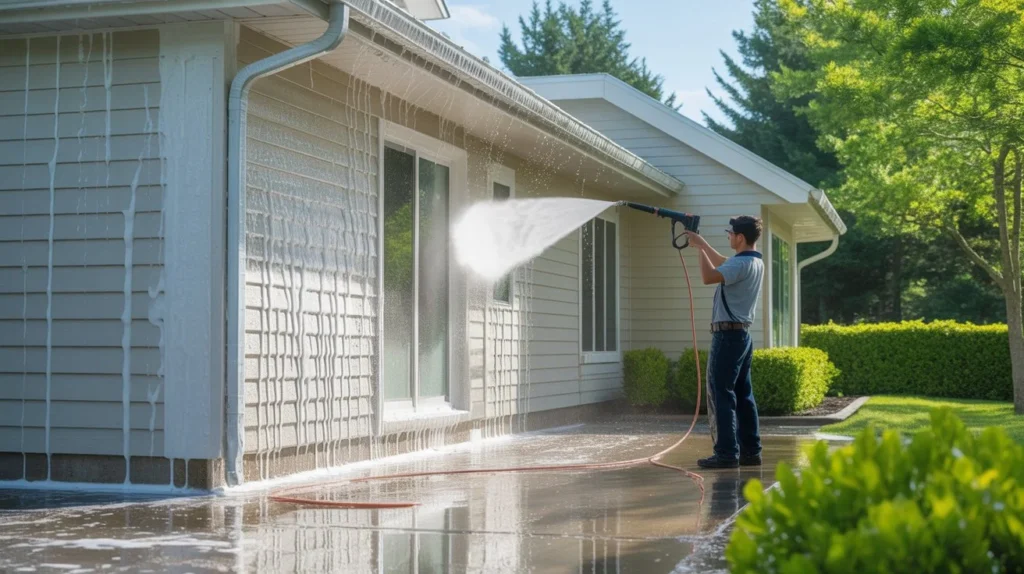
Your home’s exterior takes a beating every single day. Rain, wind, pollen, algae, and pollution all leave their mark on your siding, roof, and walkways. Over time, that buildup doesn’t just look bad it actually damages your home. Most homeowners don’t realize it until the problem is already expensive. So, what is house washing? It’s the process of cleaning a home’s exterior surfaces using water, cleaning solutions, and controlled pressure to remove dirt, mold, mildew, algae, and stains. Done right, it protects your home and keeps it looking sharp for years. What Is House Washing? House washing is a professional exterior cleaning method. At VJ Pressure Washing, we target the outside of your home siding, brick, stucco, wood, concrete, and more. There are two main methods used: Soft Washing: Low-pressure water combined with biodegradable cleaning solutions. Best for vinyl siding, painted surfaces, and delicate materials. The solution does the cleaning work, not the pressure. Pressure Washing: High-pressure water stream used for tougher surfaces like driveways, concrete, and decks. More aggressive than soft washing. Most professional house washing services use a combination of both. They match the method to the surface so nothing gets damaged. House washing removes: Green and black algae Mold and mildew stains Bird droppings Dirt and grime buildup Pollen and environmental debris Spider webs and insect nests It’s not just about looks. Washing your house is one of the most cost-effective ways to protect your investment long term. Why Is House Washing Important? Skipping regular exterior cleaning costs more in the long run. Here’s why it matters. 1. Prevents Structural Damage Algae, mold, and mildew don’t just sit on the surface. They feed on organic materials in your siding and roofing. Left untreated, they break down the material itself. That means rot, warping, and expensive repairs. 2. Improves Curb Appeal First impressions matter. A clean home looks well-maintained and cared for. Whether you’re selling or simply proud of where you live, washing a house makes an immediate visual difference. 3. Protects Your Health Mold and mildew spores on exterior surfaces can make their way inside your home. That’s a real concern for people with allergies, asthma, or other respiratory issues. 4. Saves Money on Repainting Dirt and biological growth wear down paint faster. Regular washing extends the life of your paint job by years saving hundreds or thousands of dollars. 5. Increases Property Value A clean exterior adds perceived value. Real estate studies consistently show that curb appeal affects home sale prices. If you’re in the Central Valley and need a trusted local team, VJ Pressure Washing offers professional house washing service in Tracy, CA that covers everything from soft washing siding to full exterior cleanings. They use the right techniques for every surface type. House Washing vs Pressure Washing People use these terms interchangeably. They are not the same thing. Feature House Washing Pressure Washing Pressure Level Low (soft wash) or moderate High Best For Siding, roofs, painted surfaces Concrete, driveways, patios Cleaning Solution Yes, chemical agents used Sometimes Risk of Damage Lower when done correctly Higher on soft surfaces Results Duration Longer lasting (kills algae at root) Shorter (surface-level clean) House washing focuses on the entire exterior of your home and adjusts methods per surface. Pressure washing is one technique within that broader process. Washing the house properly almost always involves soft washing for the siding and pressure washing for hard surfaces like driveways and sidewalks. The two work together. Signs Your House Needs Washing Not sure if it’s time? Here are the clear signals to look for: Green or Black Streaks on Siding This is algae or mold. It spreads if you ignore it. It won’t go away on its own. Dark Staining on the Roof Usually gloeocapsa magma is a type of algae that feeds on limestone filler in asphalt shingles. It shortens roof life significantly. Chalky or Faded Paint Dirt and oxidation leave a chalky residue on painted surfaces. Washing restores the color and prepares surfaces for repainting. Visible Dirt and Grime If you can see it, it’s already been there a while. Most buildup happens gradually and becomes obvious only after it’s heavily set in. It’s Been Over a Year Even if things look okay, most experts recommend washing your house at least once a year. Twice a year in humid or high-pollen climates. You’re Preparing to Paint or Sell Washing a house before painting helps paint adhere better and last longer. Before listing a home, it’s one of the highest-ROI prep steps you can take. DIY House Washing vs Hiring Professionals You can rent a pressure washer for around $50 to $100 a day. So why do people hire professionals? Here’s an honest breakdown. DIY House Washing Pros: Lower upfront cost Immediate availability Satisfying for people who like hands-on projects Cons: High risk of surface damage without experience Most DIYers use too much pressure on siding Rented equipment often lacks the soft wash capability Cleaning solutions must be mixed correctly or they damage plants and surfaces Ladder work on two-story homes is genuinely dangerous Missing algae at the root means it comes back fast Hiring a Professional Pros: Proper equipment and commercial-grade cleaners Trained to match technique to surface type Insured so if something breaks, you’re covered Results last longer because the job is done right Faster and safer Cons: Higher cost than DIY For single-story homes with vinyl siding and flat driveways, a confident DIYer can get decent results. But for two-story homes, delicate materials like wood or stucco, or any roof cleaning — hire a pro. The risk simply isn’t worth the savings. How to Choose a House Washing Company Not all companies are equal. Here’s what to look for before you hire anyone. Check for InsuranceThis is non-negotiable. Accidents happen. A company without liability insurance leaves you holding the bill. Ask About Their Method Do they soft wash siding or blast everything at full pressure? If they don’t mention soft washing for siding, walk away. Look
Do You Tip the Window Cleaner? 5 Honest Answers You Need to Know
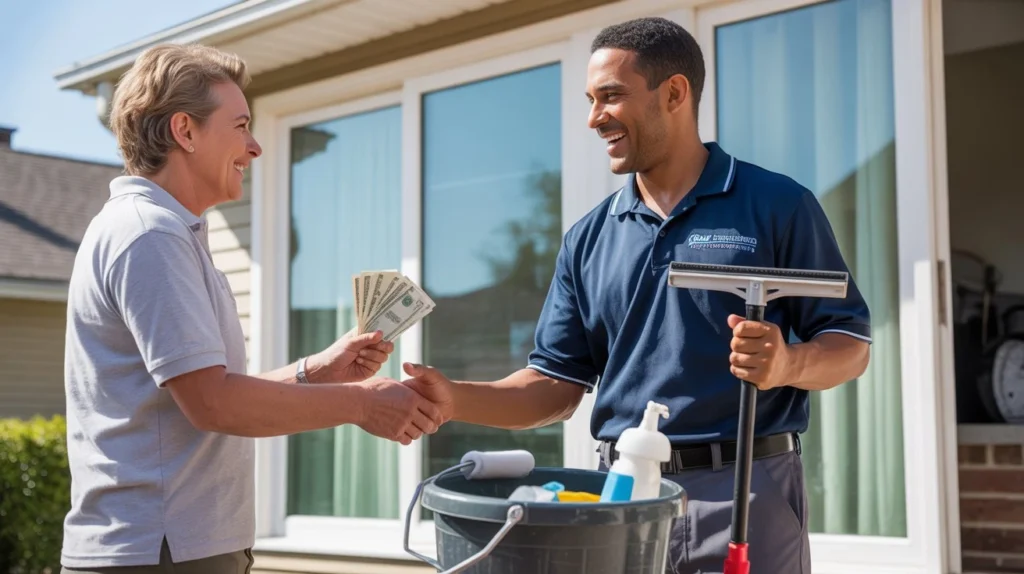
Window cleaners work hard. They climb ladders, handle heavy equipment, and deal with streaks, grime, and rough weather. It is a physical job most people would rather not do themselves. So when they finish and your windows look spotless, it is natural to wonder if you should hand them something extra. Do you tip the window cleaner? The short answer is: it is not required, but it is always appreciated. This guide breaks down when to tip, how much, and when skipping it is completely fine. 1. Is It Customary to Tip a Window Cleaner? Tipping a window cleaner is not as standard as tipping a waiter or a hairdresser. Most people do not tip for home services the same way they do in restaurants. But that does not mean it is unusual or wrong. In the United States, tipping home service workers has grown more common over the past decade. Window cleaners fall into a gray zone. They are skilled tradespeople, not servers. Their pricing usually reflects their labor. But a tip is still a kind and welcome gesture. Customs also vary by region and job size. For a quick residential visit, many homeowners skip the tip entirely. For a tough multi-story clean or a big commercial job, tipping feels much more fitting. If you are in Tracy, CA and use VJ Pressure Washing for professional window cleaning in Tracy, CA, you may notice technicians go the extra mile on larger homes. A tip in those cases is a great way to say thank you. The bottom line: tipping window cleaners is not required, but it is always a thoughtful option. 2. When Should You Consider Tipping a Window Cleaner? Some jobs call for a tip more than others. Here are the situations where tipping makes the most sense: The Job Was Harder Than Expected Tight spaces, heavy build-up, or extra equipment all mean more effort than a standard visit. The Weather Was Rough Working in heat, cold, or wind is no fun. If your cleaner showed up on a tough day and still delivered great results, a tip honors that. They Went Above and Beyond Did they clean window sills without being asked? Point out a cracked pane? Those small extras are worth recognizing. It Was a Large Job A 4,000 square foot home with 30 windows is a full day of work. Large jobs are a strong reason to tip. They Were Professional and On Time If your cleaner arrived on schedule, communicated well, and left no mess behind, that reliability is worth rewarding. None of these situations require a tip. But they all make one feel natural and deserved. 3. How Much Should You Tip a Window Cleaner? If you decide to tip window washers, the amount depends on the size and difficulty of the job. Here are common ranges: $5 to $10 for a small or quick visit $10 to $20 for a standard residential clean $20 to $50 for a large home or multi-story job 10% to 15% of the total bill for bigger projects For commercial cleaning, tips are less common. But if a crew does excellent work over several hours, a group tip of $20 to $50 split between workers is a fair gesture. When deciding how much to tip window washers, think about job size, effort, and your budget. You do not need to stretch your wallet. Even a small tip given with a smile means something. Cash is always best. It goes directly to the worker with no delays. If you do not have cash, some cleaners accept tips through apps like Venmo or PayPal. 4. When Is Tipping Not Necessary? There are times when skipping a tip is completely fine. Poor Service Streaks, late arrivals, or bad communication are valid reasons to hold back. Premium Pricing Some high-end services build labor appreciation into their rates. Workers may already be well compensated. Large Corporate Companies Big franchise operations often have policies around tipping. Many do not accept them at all. If unsure, just ask. You Already Tipped Recently Regular customers do not need to tip every visit. A seasonal tip or holiday bonus works just as well. The Job Was Tiny A single window or a quick two-minute wipe-down does not carry the same expectation as a full home clean. Knowing when tipping is not necessary saves you from unnecessary guilt. 5. Alternative Ways to Show Appreciation Not everyone prefers to tip in cash. That is fine. Here are other ways to show you value their work: Leave a Google Review A five-star review helps their business more than you might think. It takes two minutes and has a lasting impact. Refer Them to a Neighbor Word-of-mouth is gold for small service businesses. A new client referral is one of the most valuable things you can give. Offer a Cold Drink A bottle of water or a soda on a hot day is a simple, human gesture that goes a long way. Book Them Again Repeat business shows loyalty. For an independent cleaner, a steady client is worth more than a one-time tip. Write a Thank-You Note It sounds old-fashioned, but a short handwritten note means a lot to someone who spends their day working outdoors. These work especially well if you are unsure whether to tip window cleaners or just prefer not to deal with cash. 6. Factors That Influence Tipping Decisions Several things shape whether people tip window cleaners and how much they give. Type of Provider Is it a solo operator or a large company? Independent cleaners often depend more on tips than employees at bigger firms. Frequency of Service If someone cleans monthly, you might tip less per visit but more during the holidays. For a one-time deep clean, a tip right after the job feels natural. Local Tipping Culture Norms vary by city and region. In some areas, tipping home service workers is standard. In others, it is rare. Following local customs is always